
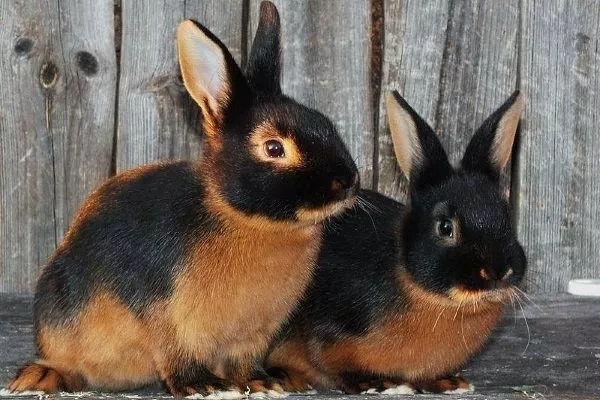
The Black-and-Flame rabbit, also known as the "Fire Rabbit," is considered one of the most beautiful and unique breeds in the world. These animals have an interesting and slightly unusual coloring. Care requirements are the same as for other breeds. However, their temperament is not the most placid, so breeders should know how to approach them properly.
History of the breed
The breed described here dates back to the 19th century. In 1880, meticulous British breeders succeeded in developing a completely new and truly unique breed. Silver, Dutch, wild, and Belgian hares were used to create this variety.
The first representatives of the species exhibited a vicious nature, were quite aggressive, and were also very small. Scientists then crossed the animals with Belgian giants, which had a calm and docile disposition and were also quite large.
The result is a beautiful and active animal. Its body size is medium, and its meat is tender, juicy, and nutritious, boasting high quality.
Description of the Black-Fiery Rabbit
Today, finding purebred representatives of this species in Russia is quite difficult. To be completely sure of the animal's identity, it's worth familiarizing yourself with the main characteristics and appearance of the species in question.
- ✓ Presence of all characteristic colors: black top and fiery bottom.
- ✓ No white spots on the fur.
- ✓ The weight of an adult animal corresponds to breed standards (2.5-3.5 kg).
Appearance
It's extremely rare to find a purebred British Shorthair. If you're looking for a true "fire cat," consider the following characteristics:
- the body is small, stocky and dense;
- the chest is narrow, the legs are powerful, the back is straight;
- the head is small and neat;
- the length of the ears is 8-11 cm, they stand straight;
- eyes can be brown, but if the main color has a blue tint, they can be blue;
- On average, the weight of an adult animal is 3 kg, in rare cases – more than 5 kg.
Color variations
| Name | Weight of an adult animal (kg) | Fur color | Temperament |
|---|---|---|---|
| Black-fire rabbit | 3 | Black-fire | Active, sometimes aggressive |
| Blue rabbit | 3.5 | Blue | Calm |
| Squirrel rabbit | 2.5 | Squirrel | Playful |
| Havanna rabbit | 3 | Havanna | Friendly |
The basic color is black-fiery, however, it is customary to differentiate the tones:
- The lower part of the head, chest, area around the eyes, belly, bottom of the tail, inner part of the paws, wedge on the back of the head and ear lining should be yellowish.
- The top of the head, the top of the ears, the lower back, the back, the croup, the outer part of the legs, and the top of the tail should be black.
According to German standards, this breed is divided into the following subspecies: –
- black;
- squirrel;
- Havanna;
- blue.
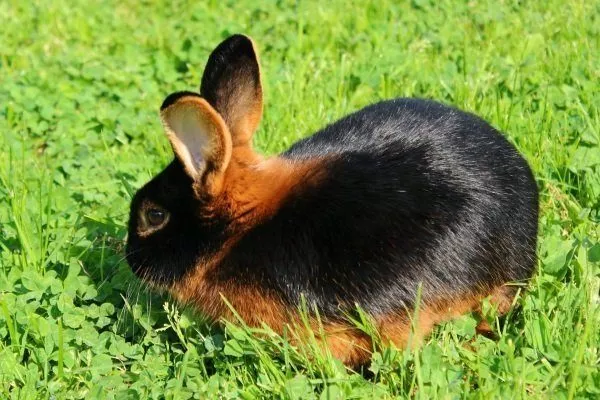
Black-fire rabbit color "black"
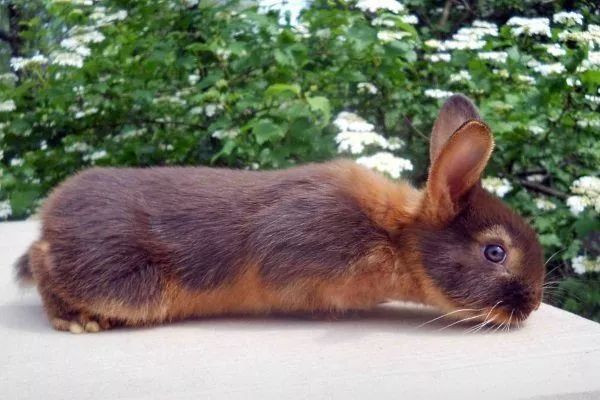
Black and fiery rabbit, squirrel color
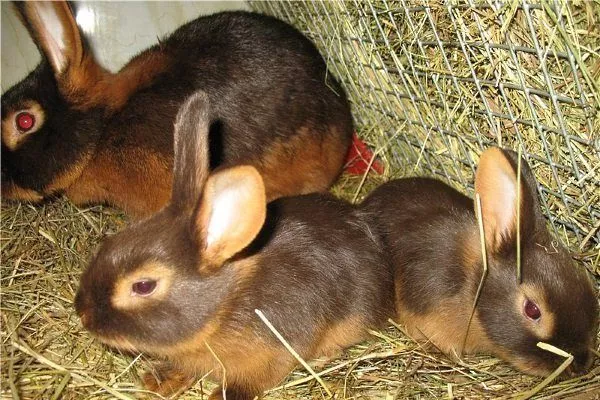
Black and fiery rabbit color "Havana"
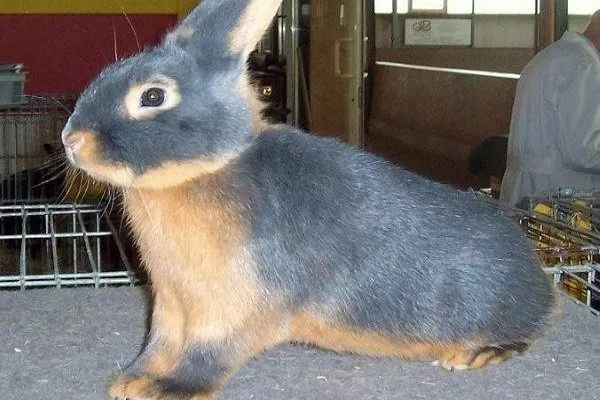
Black and fiery rabbit, color "blue"
If the animal's fur has white spots, it's a breed defect. It's best not to purchase such an animal, especially if you plan to use it for breeding.
Productivity
This rabbit species can be used for meat production. The average adult weighs 2.5-3.5 kg, but some animals reach record weights of over 5 kg. The meat is highly prized, as it is incredibly tasty, tender, juicy, and, most importantly, nutritious.
| Breed | Average weight (kg) | Fur quality |
|---|---|---|
| Black-fire rabbit | 3 | High |
| Dutch rabbit | 2.5 | Average |
| Belgian giant | 7 | Low |
The pelt is covered with soft, delicate fur and can be medium or small in size. It is widely used in the production of various fur products without undergoing dyeing. This product is in high demand.
Temperament
These animals are very active and have a vibrant personality. When raising rabbits for show, training and raising them takes a lot of time. They have a gentle nature, but sometimes they can display aggression.
Maintenance and care
This breed doesn't require any special conditions or breeding techniques. Most importantly, these animals shouldn't be kept in pits, as this will seriously damage the quality of their fur.
You can purchase ready-made cages or make your own using materials you have on hand. It's important that the animals feel as comfortable as possible in them. They should also meet basic hygiene standards and meet the rabbits' needs.
Place young animals along the walls, with mature adults in the middle. If necessary, tiered cages are available.
Divide the enclosures into two parts:
- the first light one, in which all the animals can be;
- The second one should be smaller, warmer and a little darker – this is where the females and their offspring should be.
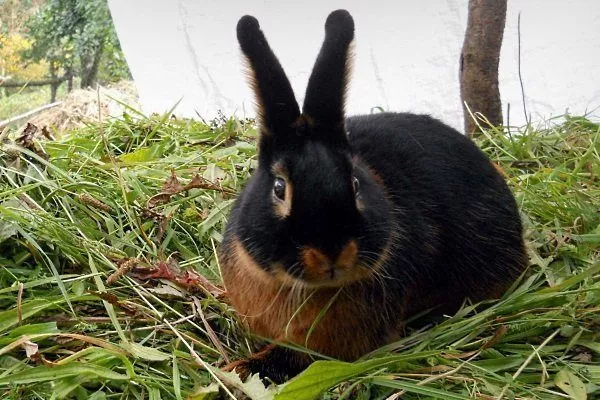
Be sure to equip each cage with feeders and waterers, and lay a layer of hay and grass on the floor. The animals should have free access to food and water at all times. Remember to clean and tidy the cages regularly to maintain optimal health and a beautiful coat.
Feeding Features
Rabbits of this breed have the same food preferences as other animals. There are no special requirements; simply follow these guidelines:
- females need more food after giving birth;
- A nursing doe can produce about 180 mg of milk per day, so triple her ration;
- add more fresh herbs to your diet;
- in the cold season, give the animals root vegetables, silage, hay, and potatoes;
- Increase the volume of concentrates by 70%.
The rabbits' menu should include:
- green fodder – grains, vegetable tops, wild herbs;
- roughage, since the animals' teeth continue to grow throughout their lives - give dry hay and dry branches;
- succulent foods – for example, root vegetables;
- concentrated feeds, as they are very nutritious and saturate the animal’s body with all the necessary substances;
- vitamin and mineral supplements - give them in February and March, when the animals' diet becomes quite poor and limited;
- Standard nutrition should include fish oil, bone meal, and chalk.
Breeding and propagation
At six months of age, females become sexually mature and can be mated. If the female rabbit becomes restless, bites, becomes aggressive, or tries to escape from the cage, it's time to introduce a male. If the female becomes calmer, fertilization has been successful.
Read about mating rabbits Here.
After 1.5 months, feel the doe's abdomen, but be very careful not to injure the babies. The appearance of a chain of firm balls in the lower abdomen is a sign of impending labor, which will occur in approximately 10-14 days.
Prepare the nesting box by placing a box of any size inside the cage. The entrance should be round and resemble a burrow. It's important that the nesting box be warm, dark, and dry. This will ensure the females feel comfortable and calm. Install a removable roof to the nesting box to help keep an eye on the doe and her young.
Females make excellent mothers and care for their offspring with great attention from the moment they are born – licking them, covering them with down, and feeding them milk. A litter typically contains approximately 6-7 kits. Providing the female with extra food will increase lactation.
The pros and cons of the black-fire rabbit
The main advantages of representatives of this breed are the following qualities:
- the meat is tasty, tender, dietary;
- beautiful and soft fur;
- there is a high demand for skins;
- Females are very fertile and ready to mate as early as 5 months.
There are also some disadvantages:
- small animals;
- a small amount of meat and small skins.
The video below provides an overview of the Black and Fire Rabbit:
Breed profitability
Breeding this breed can be a profitable and rewarding business. Despite the animals' small weight, their meat is incredibly tasty and nutritious, making it highly prized. Their pelts are also highly sought after, as their fur has an unusual and interesting coloring. Even during the production of fur products, the pelts are not dyed.
If you need advice on how to properly tan a rabbit skin at home, this article is located here.
Reviews
Black-and-red rabbits are among the most striking breeds bred for both meat and fur. They are a favorite among most farmers, requiring minimal care but able to withstand good grooming. They also make wonderful pets, boasting a playful nature and attractive appearance.