
The Baran is a popular ornamental rabbit breed used for meat production. These animals are distinguished not only by their high productivity but also by their ease of care and docile nature, making them suitable for keeping as pets. This article will explain the breed's varieties, their advantages and disadvantages, and the intricacies of caring for these ornamental animals.
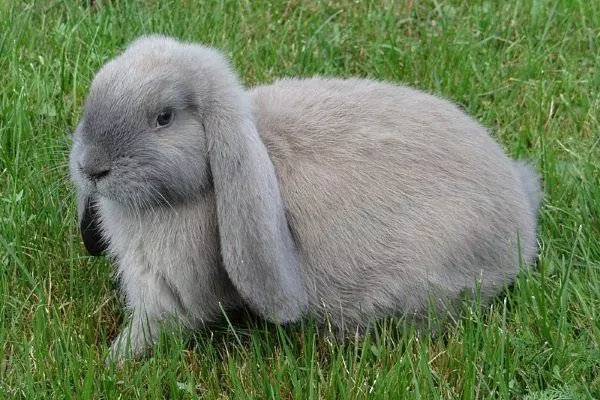
History of the breed
This breed was developed in England in the 1850s. The ancestors of the Baran rabbit are wild rabbits of Western Europe and the Mediterranean. While breeders were trying to develop a new breed, they encountered an unusual mutation—drooping ears—in their test animals. This trait appealed to the scientists so much that they decided to genetically engineer it, resulting in the creation of a new breed of lop-eared rabbit.
These rodents got their name from the unusual shape of their heads and the prominent hump on their noses, which makes them resemble rams. These rabbits quickly gained popularity, and after some time, several more subspecies of this unusual breed emerged.
In Europe, rams are bred on both large farms and small private farms. This breed is relatively new to Russia, but its popularity is growing every year.
Description
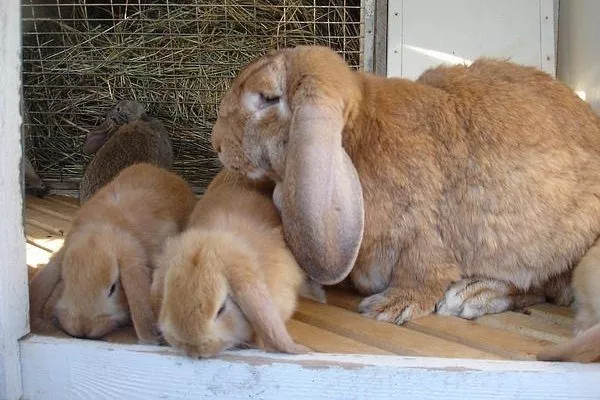
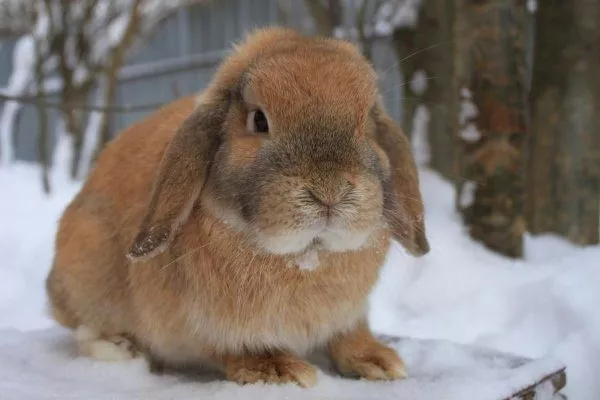
Rams are easily recognized by their distinctive hump on their nose and drooping ears. Some individuals' ears can reach over half a meter in length, requiring special clips for easy handling. Distinguishing features of Rams include a broad forehead and rounded, thick cheeks. Their eyes are large and expressive.
The drooping ears give the Baran rabbit a special charm and cuteness. However, this ear structure makes them less sensitive to environmental sounds, so they are not afraid of rustling sounds and may notice impending danger too late.
Rabbits have impressive muscle mass and are physically well-developed. The average adult weight is 4-5 kg, but individuals weighing over 10 kg have been observed. They have thick, long, and soft fur. The most common colors for these animals are black, blue, red, and brick-red.
Rams have a peaceful nature and get along well with other farm inhabitants. They are easy to train, recognize their owners, and enjoy interacting with them. With proper care, rabbits live on average about 10 years.
Standards and Marriage
The Baran rabbit breed includes many subspecies, differing in both size and appearance. Each subspecies has its own clearly defined standards. However, there are some common traits among all Baran rabbits:
- large head with a wide forehead;
- long drooping ears;
- crook in the nose;
- round cheeks;
- massive body;
- early maturity;
- thick wool.
Individuals with a narrow chest and poorly developed muscles are considered a fault in the breed. Purebred rabbits' ears are erect by 2-3 months of age. They should not lie too close to the head or protrude. Short (less than 24 cm) or narrow ears are also considered a fault.
Subspecies of Rams and their characteristics
Currently, there are several varieties of this breed. Some are raised by farmers for their dietary meat, while others are bred solely for ornamental purposes.
Breeders have strived to develop versatile, hardy subspecies that thrive in a variety of climates. They have succeeded, as Rams can be found in Europe, the Americas, and Asia.
| Name | Weight of an adult (kg) | Ear length (cm) | Wool type |
|---|---|---|---|
| French | 8 | 35 | Thick and soft |
| Velvet (plush) | 3 | 35 | Plush |
| English | 5 | 60 | Thick |
| Dutch | 1.8 | 2.5 | Glossy |
| Meissen | 5.5 | 35 | Shiny with silver plating |
| Nappy | 1.8 | 35 | Very thick and soft |
| German rabbits | 4 | 35 | Soft with a dense undercoat |
French
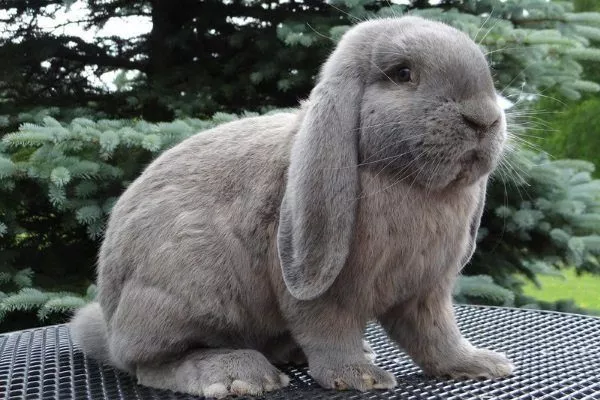
This hybrid is characterized by rapid muscle gain and can reach a weight of 8 kg. Due to its large size, this subspecies is not suitable for cage keeping. Due to their friendly and docile nature, French Rams are most often kept as pets, given spacious enclosures.
The French Long-eared sheep have a stocky body and strong, short legs. This breed is prone to developing a "skirt"—a fold of skin and fat—at the bottom of the body with age. In purebreds, the ears are unfolded and hang at least 4 cm below the chin. The coat of French Long-eared sheep is not very long, but it is thick and soft.
Velvet (plush)
Velvet rabbits are a relatively new breed that doesn't yet have clear standards. Adults weigh no more than 3 kg on average. Their body type is semi-arched, tapering evenly from the tail to the shoulders. They have a broad back and a rounded chest.
Velvet Sheep have short front legs, giving them a somewhat squat appearance. Their ears hang loosely, reaching a minimum length of 35 cm. The subspecies's most distinctive feature is its thick, plush fur, which measures approximately 1.6 cm in length.
English
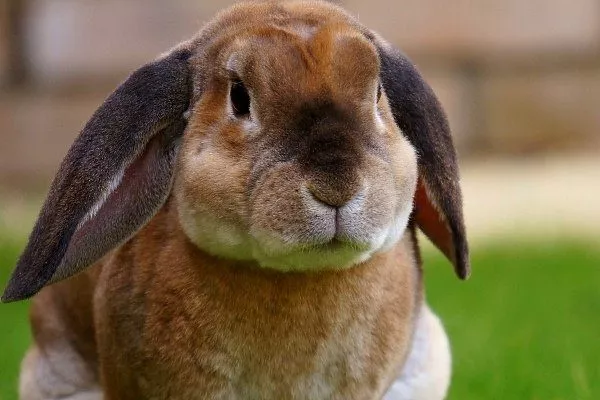
This variety was one of the first to be bred, and it is the English Rams that are the ancestors of most of the currently widespread subspecies.
Rabbits are distinguished by their long (about 60 cm) and wide ears, which can almost completely cover the rodent's body. English Rams are considered a large breed, as the average adult weight reaches 5 kg.
The rodents have a large head with a hooked profile and a weakly defined neck. The front legs are short, and the hindquarters are rounded.
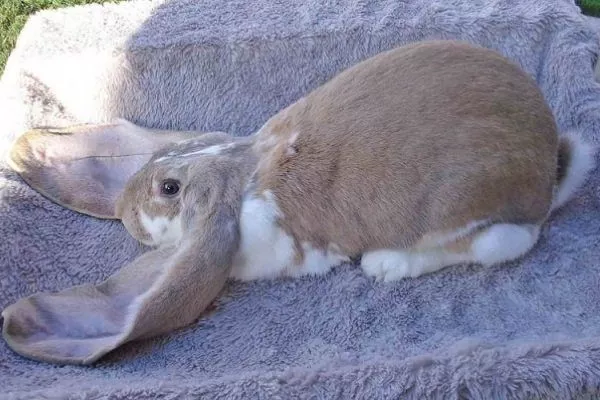
Unlike other varieties, English Rams do not have cartilage on the back of the head; moreover, its presence is considered a breed defect.
Dutch
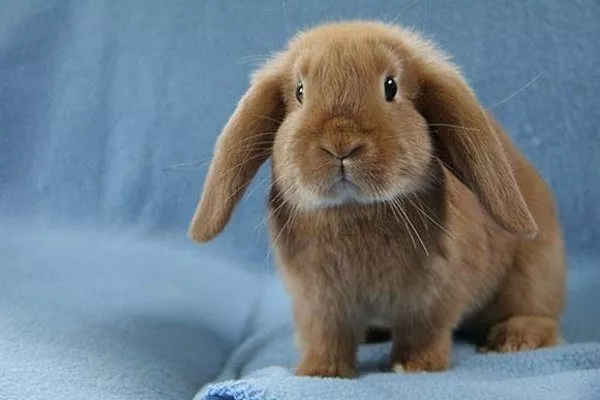
The Dutch Lop is one of the smallest lop-eared rabbit breeds. Adults weigh between 900 g and 1.8 kg. Their body is compact, their muscles are well developed, and their body length to head size ratio is 2:1. Their ears hang no more than 2.5 cm below the chin and are rounded at the tips.
The fur has a dense, uniform texture and a glossy finish. The most common color is tortoiseshell, but specialized breeders can find Dutch Rams in a wide variety of colors.
Meissen
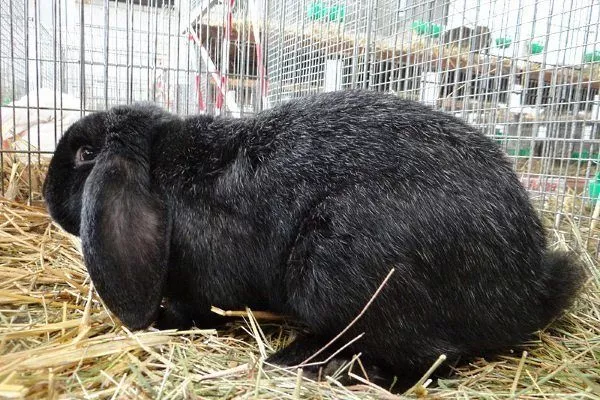
Meissen rabbits were developed in the late 19th century in Meissen, Germany. They are distinguished by their thick, shiny fur, which comes in a variety of shades and is often silvered. This effect is created by the white tips of the hairs, which appear after the rodents' second molt. The main colors of the Meissen breed are:
- blue;
- black;
- agouti;
- Havana.
Rabbits typically weigh no more than 5.5 kg, making them considered medium-sized. Their bodies are elongated and well-muscled. Meissen rams are compact, with the underparts and chest being of equal width.
Nappy
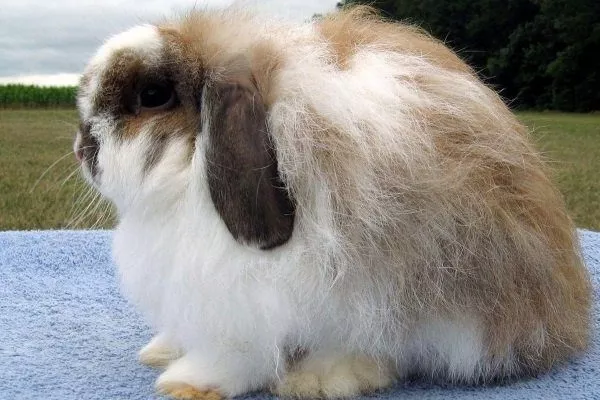
The fluffiest members of the lop-eared ram family are the shaggy rabbits. Their fur is soft and dense, with hairs that can reach over 5 cm in length. Approximately 20 fur colors are officially recognized, but breeders can find shaggy rabbits in every conceivable color.
The breed's ancestors are Dutch Lop rabbits, from which the Shaggy Rams inherited their shortened muzzle and compact, square body. These animals weigh between 1.6 and 1.8 kg. They are bred for ornamental purposes and require special housing conditions and constant care for their long fur.
German rabbits
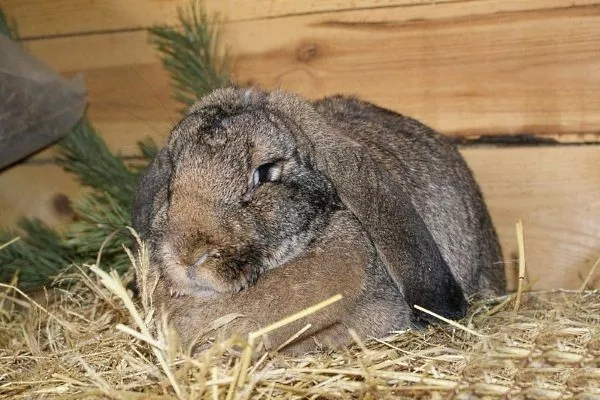
This lop-eared rabbit variety was developed in Germany in the mid-20th century. German lop-eared rabbits weigh between 2.9 and 4 kg and are one of the most popular medium-sized breeds. Their bodies are compact and stocky. The head is large and round, and the neck is short. The front legs are small and strong.
The average ear length is 35 cm. The head has a distinctive cartilage, which rabbit breeders call the "crown." The fur is medium-length, soft, with a dense undercoat. Due to frequent shedding, the rabbit's fur requires regular brushing.
Care and maintenance as a pet
Keeping a lop-eared rabbit at home requires a serious approach and specific knowledge. It's advisable to acquire all the necessary equipment before bringing home your new pet. You'll need:
- cell;
- drinking bowl and food bowl;
- special brush for wool;
- feed;
- toilet tray;
- house;
- leash for walking;
- toys.
Read on to learn how to make a drinking bowl yourself.Here.
It's also important to choose a suitable location in the house for the cage. Rams don't tolerate direct sunlight, heat, or drafts. Try to select a spot near the wall opposite the window, away from radiators. Lop-eared rabbits feel most comfortable at temperatures between 18 and 20 degrees Celsius.
What kind of cage do you need?
Pet stores offer a variety of cages for decorative rabbits, varying in both material and size. The best option is a cage made of durable wire with a plastic tray underneath.
- ✓ The cage size should be at least 1.5x0.6x0.6 m for miniature breeds, with an increase for larger individuals.
- ✓ Cages made of strong wire with a plastic tray for easy cleaning are preferred.
A small breed will benefit from a home measuring 1.5 x 0.6 x 0.6 m. For larger specimens, choose a more spacious cage. Keep in mind that after installing the litter box and other equipment, there should still be room for the rodent to move freely.
What and how to feed?
The diet of ornamental rabbits consists primarily of hay, green branches, mixed feed, and mineral stones. Hay should be kept in the feeder at all times so that the rodent can satisfy its hunger at any time. For an adult rabbit weighing approximately 2 kg, 200 g of hay should be provided per day.
Feed 1 tablespoon of compound feed twice daily. It's best to choose granulated, homogeneous, grass-based feed. Fruits, vegetables, and green herbs can be added to the main diet. Fresh, boiled water should be freely available.
Read another article of ours about When and what to feed rabbits.
Hygiene
Rabbits are quite good at grooming themselves. Bathing your pet should only be done in extreme cases, using a special shampoo or baby soap. Avoid getting water on your pet's ears and head.
Lop-eared rabbits have a thick, dense undercoat that takes a long time to dry. Even if the fur appears dry on the outside, it's best to keep the rodent warm for a while to avoid hypothermia. They are very sensitive to drafts and quickly catch cold, especially after a steamy bath.
Additional information
Pet rabbits can be kept in both a private house and an apartment. If you don't plan to spend a lot of time caring for your pet, choose short-haired breeds.
Rams are very inquisitive and friendly, so try to interact with your pet as often as possible.
Many rabbit breeders recommend neutering their rabbits at a young age. This will not only resolve a number of behavioral issues but also help prevent certain dangerous diseases. Rabbits are fragile creatures, so be careful not to let them jump from heights or injure themselves on household items.
Productive qualities
Rabbits of this breed are renowned for their meat production. They mature quite early, reaching a weight of 2 kg at three months and around 5 kg at six months. The slaughter yield is approximately 60%. Rabbit breeders note the excellent taste of the meat produced by the Baran breed.
The pelts of these rabbits are also in high demand. A single carcass of a medium-sized rabbit can yield a pelt up to 70 cm long. These pelts are commonly used for making fur products.
Advantages and disadvantages of the breed and its breeding
The breed's main advantage is its early maturity. Raising rams for their dietary meat is profitable. Additionally, you can earn additional income by selling high-quality pelts. Learn how to properly tan pelts at home. this article.
Other advantages of the breed include:
- pretty appearance;
- variety of colors;
- friendly disposition;
- unpretentiousness in food;
- trainability;
- stress resistance.
However, this breed also has its disadvantages:
- small number of offspring;
- tendency to gluttony;
- weak immunity;
- demanding conditions of detention.
The video below provides an overview of the different color variations of the "Baran" rabbit breed:
Care and cage maintenance on farms
On farms, rabbits are usually kept in spacious cages. It's advisable to purchase cages with wooden or plastic floors to prevent the rodents from getting frostbite on their paws during the cold season. In regions with cold winters, portable cages are preferable, allowing the animals to be moved indoors if necessary.
Cages are typically set up in 2-3 tiers. Juveniles are kept separately, while adults are separated into breeders, pregnant females, and lactating females.
Sawdust or paper is recommended as bedding in the cage. In addition to feeders and waterers, each cage should be equipped with a small house to provide timid rodents with a place to hide and to allow female rabbits to raise their young away from prying eyes.
Content Principles
Rams are demanding of hygienic conditions and do not tolerate overcrowding well. It's best to choose a location for their cages behind tall buildings that will protect them from drafts and scorching sun. The optimal temperature for outdoor housing is 25 degrees Celsius, but no more than 30 degrees Celsius.
Indoor rabbit hutches should be well-ventilated, as high levels of ammonia, carbon dioxide, and dust in the air can seriously harm the health of the animals. The hutches should be cleaned at least twice a week. Every couple of months, all equipment and housing should be disinfected.
Conditions
Rams do not tolerate sudden temperature fluctuations and high humidity well. They gain weight best when kept in outdoor cages. If, for some reason, the hutch can only be located indoors, it is recommended to install windows to ensure the rams receive sufficient daylight.
The standard stocking density for one rabbit is 0.5 square meters, but the lower the density, the greater the weight gain. A more cost-effective option is enclosure housing. This will allow the rabbits to roam freely and live in conditions as close to their natural habitat as possible. Just be sure to prevent them from digging or venturing outside the enclosure.
Feeding the livestock
Rams have a good appetite and can overeat, so it's important to adhere to a strict feeding schedule. Hay and green branches should be available in cages without limitation, as these are the rodents' primary food. Due to their weak digestive system, vegetables and fruits should be given in limited quantities.
Prepared pelleted feed is offered twice daily, at a rate of 40 g per kg of body weight. Grain crops include wheat and oats. Fruit is given once a week, such as bananas, apples, or pears.
Winter maintenance
In cold climates, rabbit hutches should be moved to a closed, insulated room with a temperature of 12-18 degrees Celsius for the winter. Ensure that humidity does not exceed 75%; if it does, install a heater. The room should be regularly ventilated and cleaned.
If winter temperatures don't drop below -25 degrees Celsius, insulating the cage can be a solution. To do this, lay planks on the floor and cover them with a thick layer of hay. Cover the ceiling and mesh walls with chipboard sheets, leaving openings for ventilation. During the cold season, rabbits require a high-calorie diet rich in vitamins and minerals.
Diseases and vaccinations
To ensure good weight gain, high-quality fur, and health, rabbits require regular care and attention. The best prevention of rodent diseases is regular sanitization of cages and disinfection of equipment. However, even with proper care, rabbits may exhibit symptoms of various ailments. The table below will help you identify the problem and take appropriate measures.
Main diseases and methods of their treatment:
| Name | Symptoms | Treatment |
| Pododermatitis | Hematomas and cracks on the soles of the paws, lack of appetite, stamping in place. | Treatment of wounds with 10% zinc ointment, application of sterile bandages to the paws. |
| Invasive coccidiosis | Lack of appetite, weakness, diarrhea, bloating. | Taking Sulfadimethoxine, Norsulfazole, drinking 0.2% iodine solution. |
| Myxomatosis | The appearance of pinpoint tumors in the head, genitals, inflammation of the mucous membranes of the eyes. | There is no treatment. Isolate and slaughter the sick rabbit, and burn the carcass. Notify the veterinary service. |
| Hemorrhagic disease | Fever, shortness of breath, cramps, bleeding from the nose, mouth, anus. | There is no cure. |
| Pasteurellosis | Fever, rapid breathing, refusal to eat, conjunctivitis, nasal discharge. | Antibiotic therapy is carried out with Terramycin, Biomycin. |
| Infectious stomatitis | Coating on the tongue, increased salivation, lethargy, inflammation of the skin on the lower jaw. | Treatment of the oral cavity with a 2% solution of copper sulfate, Streptocide. |
- First vaccination against myxomatosis and hemorrhagic disease at 45 days of age.
- Revaccination is carried out annually, preferably at the same time of year.
Vaccination is the only way to prevent dangerous diseases in rabbits. Core vaccinations include myxomatosis and hemorrhagic disease. These can be administered as individual vaccines or as a combination. The first vaccination is administered at 45 days of age, with boosters administered annually.
Breeder reviews of the Baran rabbit breed
Breeders speak very positively about the Baran rabbit breed:
The Baran rabbit breed is distinguished by its early maturity and striking appearance. They are suitable for both commercial breeding and home keeping. These rodents are docile and friendly, but have a weak immune system.