
Butterfly rabbits are highly sought after by farmers. Their main distinguishing feature from other breeds is their unusual fur color. This characteristic is what makes them so popular. The breed is raised for both meat and valuable fur. These animals are easy to care for and don't require any special housing conditions.
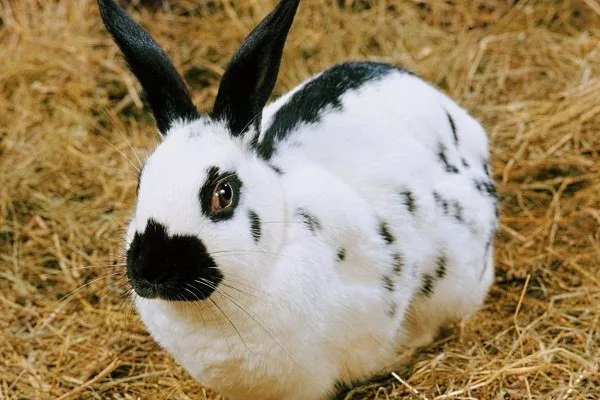
History of appearance
In the 19th century, the English bred a unique breed of rabbit, which they named "Butterfly." This was due to its interesting and unusual coloring, reminiscent of a butterfly with its wings spread. At the time, a single animal weighed over 3 kg.
Over time, breeders from various countries continued their work based on the dwarf Butterfly breed. Geneticists painstakingly refined the breed's decorative qualities and increased the animals' weight, while simultaneously improving the quality of their fur.
It was necessary to adapt the animals to living in harsher climatic conditions. To this end, crossbreeding with rabbits of the breed Viennese blue, White giant, Soviet chinchilla, etc. As a result, animals were obtained whose weight could reach 5 kg.
Butterflies gradually moved from the decorative category to the category of meat and fur breeds.
Description and characteristics
Butterflies have distinctive external differences from other rabbit breeds. If they are crossed with other animals, the breed's purity and unique coat coloration are lost. Therefore, to be sure you're buying a Butterflies rabbit, it's important to understand the animals' key external characteristics and traits.
Appearance
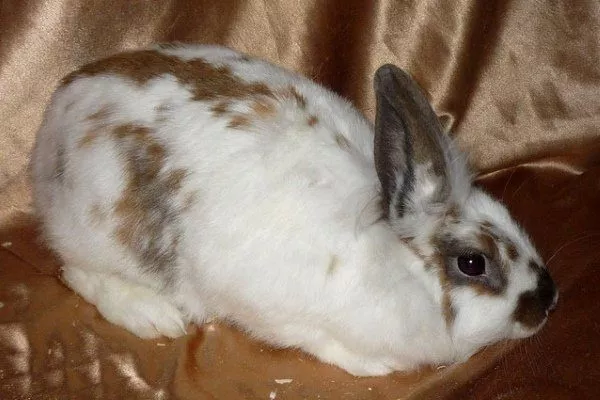
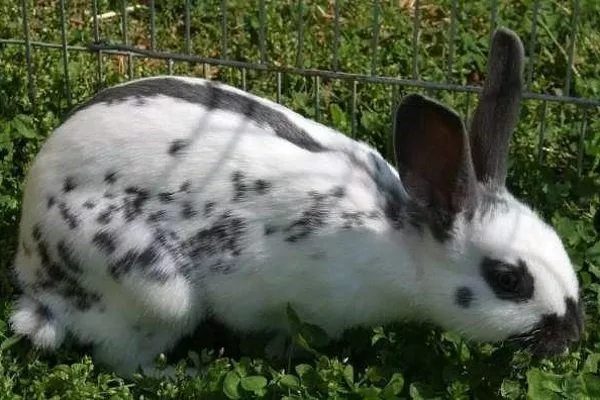
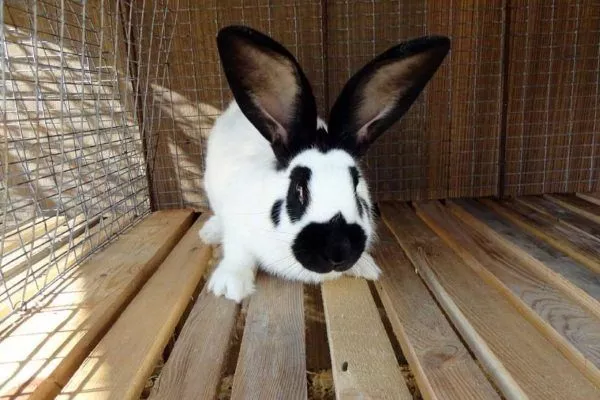
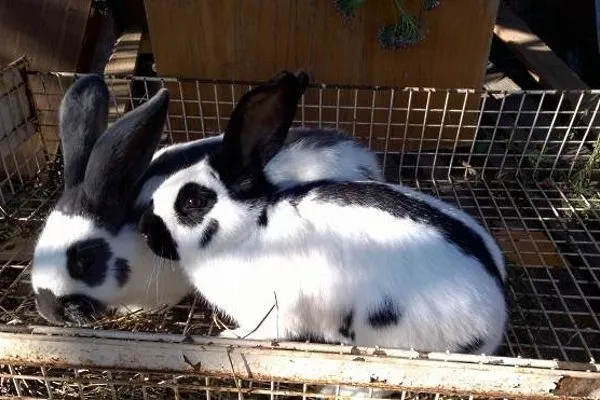
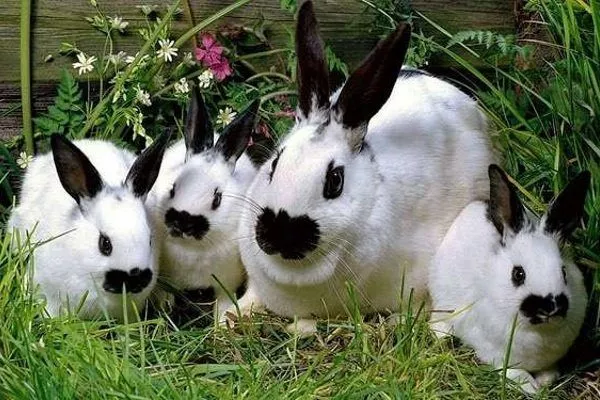
The spots are symmetrically arranged on the face and sides of the body. Combined with the longitudinal jagged stripe on the back, they create the effect of open butterfly wings. The nose also has a distinctive black pattern.
There are certain standard requirements directly related to the color of the fur and appearance, which indicate the breed of the animal:
- ears are dark;
- the fur around the eyes is dark in color, but the border should not converge with the pattern on the nose, cheeks or ears;
- the nose has a specific color;
- the head is small;
- legs straight and strong;
- along the ridge there is a wide strip with protruding teeth;
- paws and lower part of tail are light;
- Females have dark spots around their nipples.
Color
The spots on the coat don't necessarily have to be black. They can also be blue or brown. The larger the animal, the less distinct the spots' borders. Don't confuse Butterflies with other breeds that also have spotted markings.
Butterflies can include animals with spots of several colors—brown, black, and yellow. However, they are not very common.
Productivity
Rabbits of this breed produce a large amount of lean, tender, and tasty meat. The weight of one animal can range from 4-5.5 kg.
Females can give birth to 6-8 kits at a time. They have a well-developed maternal instinct, which is why almost all kits in a litter survive. A female rabbit produces a good litter within a year.
Butterflies can be bred not only for their meat but also for their high-quality pelts with interesting fur colors. Sometimes the spots are not only black, but also blue or yellow.
The video below provides an overview of the Butterfly rabbit breed:
Usage
This breed is widely used for both meat and high-quality fur. Due to its unique and unusual coloring, its pelts are used in their natural form to make various fur products.
Read the article about How to properly tan rabbit skins at home.
Farmers most often breed this breed for its tasty and nutritious meat. An adult rabbit can weigh up to 5 kg. The price of this breed is quite high. A female can give birth to 6-8 babies at a time.
Signs of a purebred breed
To be sure you've made the right choice and that the animal is purebred, pay attention to the following signs:
- the colored spots do not merge with each other;
- claws are colorless;
- there is a dark border around the eyes, which should be separate from other spots on the muzzle;
- the head is small in size, in males it is more massive and larger, unlike in females;
- dark colored ears;
- there is a dark spot on the nose that resembles a butterfly;
- on the cheeks and on both sides of the body there are spots located symmetrically relative to each other;
- a dark and fairly wide stripe on the back;
- large and massive paws, straight.
The coat should look like a canvas, covered with a symmetrical and beautiful pattern—this is the first sign of a purebred breed. The fur is fluffy, thick, smooth, and shiny.
Advantages and disadvantages
Representatives of the breed described have a number of positive qualities, due to which they enjoy such great popularity:
- not too capricious in maintenance and care;
- quickly adapt to a new habitat;
- safely handle long-distance transportation;
- significantly less feed is required than for larger breeds;
- the wool has a clear and unusual pattern;
- There is no need for large cages to keep rabbits, as they are compact in size;
- can be kept in an apartment as a pet.
One of the disadvantages of butterflies is their low productivity. Not all animals are very heavy, and their skins are also small.
If the diet of females is poor, they may eat their own offspring.
Types of Butterflies
Butterflies are among the larger rabbit breeds. However, the specific variety chosen by the farmer is crucial. To this end, it's worth familiarizing yourself with the key features and characteristics of a particular subspecies.
| Name | Weight of an adult (kg) | Color | Life expectancy (years) |
|---|---|---|---|
| The motley giant | 5-9 | white with blue and black patterns | 5-7 |
| Dwarf butterfly | 3 | various | 5-7 |
| Czech butterfly | 2-4.5 | golden | 5-7 |
| Rhineland rabbit | 3 | black, white, golden-red | 5-7 |
| English butterfly | 1.5-4.5 | lilac, gray, tortoiseshell, chocolate, blue, black | 9-13 |
The motley giant
This species is the largest of all butterflies, so keeping it as a pet can be challenging. However, the variegated giant is ideal for breeding on large farms, as the animals provide ample amounts of both meat and fur.
Representatives of this subspecies have the following characteristics:
- the weight of the animals can vary between 5-9 kg;
- body length about 60 cm;
- the head is not large, rounded in males, slightly elongated in females;
- the chest is wide, females may have a dewlap;
- the body is slightly elongated, but dense and strong;
- the back has an arched shape;
- paws of medium length, strong and straight;
- The coat color is white with blue and black patterns.
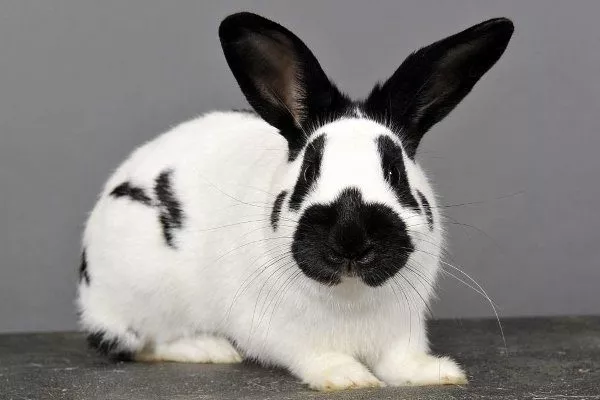
Dwarf butterfly
These are the smallest butterflies and are the original progenitors of the breed described. Their compact size and calm nature make them ideal for home keeping. They possess all the characteristics necessary for breeding.
The main parameters of the dwarf butterfly are:
- body weight about 3 kg;
- the body has a cylindrical shape;
- the head is large;
- the ears are set close to each other, sticking out noticeably, with rounded tips;
- On average, life expectancy is about 5-7 years.
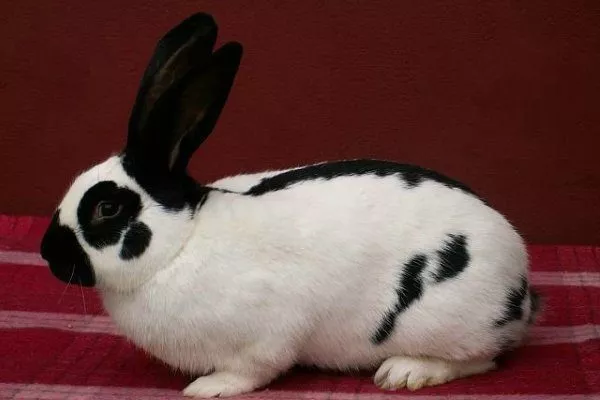
Czech butterfly
No rabbit breeder can remain indifferent to the golden fur of the Czech butterfly. These small animals are ideal for large farms.
Representatives of this subspecies have the following characteristics:
- the weight of the animal can vary between 2-4.5 kg;
- strong and robust body, cylindrical in shape;
- there may be a small dewlap;
- the legs are straight, strong and sturdy;
- there are no spots on the chest and stomach;
- the head has a slightly elongated shape;
- straight ears, not too long;
- even coat, often having a slight sheen;
- The tail is small, white below.
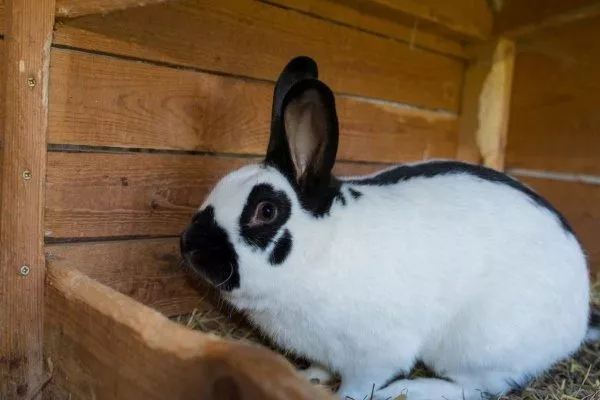
Rhineland rabbit
This subspecies of butterfly rabbits quickly gained popularity among rabbit breeders and is widely sought after in various countries. Their main distinguishing feature is their calm, kind, and docile nature.
Representatives of the described subspecies may have the following characteristics:
- fur shades can be black, white, golden-red;
- brown eyes;
- an adult can weigh more than 3 kg;
- females are heavier than males;
- body of regular cylindrical shape;
- shoulders and hips are the same width;
- hind legs are strong, slightly rounded;
- The fur is pleasant to the touch, dense, reminiscent of soft silk.
English butterfly
Representatives of this subspecies are very refined and sophisticated animals, incredibly intelligent. They have a cheerful and active nature and require plenty of space to roam and play.
The main parameters of English butterflies are:
- the coat is well-groomed and beautiful;
- the head is small and slightly elongated, the profile is clear;
- straight ears, set close together;
- the animal's weight can vary between 1.5-4.5 kg;
- females are much larger than males and the difference can be 1 kg;
- elastic and flexible fur, pleasant to the touch;
- the color can be of various shades - purple, gray, tortoiseshell, chocolate, blue or black;
- on the nose there is a dark spot, shaped like a butterfly with outstretched wings;
- On average, life expectancy is 9-13 years.
Maintenance and care
Butterflies can be kept in several ways: caged, semi-free-range, or in corrals. Cages are the ideal option. This method allows for complete control over the feeding process. rabbit mating, and also calculate the pregnancy period of females.
Keeping animals in cages allows for regular and easy preventative maintenance to combat various diseases. It helps prevent the widespread spread of bacteria. Animals don't require large areas, and most importantly, drafts are avoided.
Content Features
Butterflies aren't picky, so even novice rabbit farmers can keep them. They also make wonderful pets; all you need is a small cage.
Factory, in enclosures/pavilions
It's best to choose a small enclosure for keeping rabbits. The animals thrive in a variety of conditions, especially if they are provided with a small, cozy, warm, and draft-free space.
If you'd like, you can build your own pet shelter. A three-story pavilion would be an excellent choice. Use natural wood, slate, welded mesh, polycarbonate, and sheet metal.
To build a cage correctly, follow these tips:
- build wooden doors into the queen cell, also make a wooden frame and partitions;
- Use welded mesh for cage doors and rear floor fittings;
- Slate is a great option for the main floor, and you can also use it for the ceiling of the lower cells;
- Insert doors using polycarbonate; animals can damage the beams, so cover them with sheet metal.
Remember that animals need a constant supply of fresh air, so you can set up a pavilion or outdoor enclosure. This will make the rabbits' fur thicker and denser.
The ideal option would be to adjust the content depending on the time of year:
- During warm periods, keep it outside, but in a place where there are no drafts;
- in winter, move cages or enclosures indoors.
At home, like a pet
When keeping animals as pets, it's best to use cages. For maintenance, they need to be regularly ventilated, but avoid drafts. If possible, place the cage outside during warmer months, at least for a few hours. These treatments will only benefit the animals—their fur will thicken, they'll develop a beautiful shine, and their appetite will improve.
Make sure the butterflies have constant and free access to water and food. Don't forget to provide fresh, hard food so the rabbits can sharpen their teeth. Otherwise, they may start chewing on the cage bars.
Feeding
Butterflies need a proper, and most importantly, varied, diet. This diet should consist of:
- tree branches;
- in summer – green grass, maybe a little wilted;
- grain types of feed;
- in the cold season - fresh and fragrant hay;
- When fattening, it is recommended to use special concentrates;
- The diet must necessarily include mineral and vitamin supplements.
Make sure there's always clean, fresh water in the cage. Failure to do this can result in the mother eating her litter. If the mother is extremely thirsty, she may completely abandon her maternal instincts.
If you follow a few simple feeding rules, your pets will not only gain weight quickly, but also feel quite comfortable:
- When selecting food, make sure that the food is not spoiled, there are no signs of rot, and the expiration date has not expired.
- The animals need to be fed at least twice a day, preferably at about the same time of year.
When and what to feed rabbits, read Here.
- In the summer, green food must be included in the menu.
- Keep the cage perfectly clean – change the bedding at least once every 2-3 days, and wash the feeders and drinkers every day.
- Make sure the cage is dry and warm, as dampness and dirt are the main causes of death for animals.
If favorable conditions and comfort are created, pets can live up to 10 years.
Diseases and preventive measures
Representatives of this breed suffer from such dangerous diseases as necrotic hepatitis and myxomatosis. These viruses can instantly affect an entire herd, infecting both adults and young animals. There is a risk of death and destruction of the entire herd.
These problems can be easily avoided with timely preventative vaccinations. It is recommended to vaccinate rabbits immediately after weaning. During the first weeks after birth, young animals have their strongest immunity, thanks to their mother's milk. This protective effect can last for up to three months.
Vaccination is recommended for animals weighing at least 0.5 kg. The first vaccination is administered at 6 weeks of age, but 10 days before the procedure, the young animals must be checked for worms. If necessary, deworming is mandatory.
When the rabbits reach one year of age, they undergo a comprehensive vaccination program. If you plan to breed the rabbits, keep in mind that females should not be vaccinated during pregnancy or lactation. Vaccination is contraindicated for sick animals.
- First vaccination at 6 weeks: against myxomatosis and VGBK.
- Revaccination 3 months after the first vaccination.
- Annual vaccination to maintain immunity.
During vaccination, weakened pathogens of hemorrhagic disease and myxomatosis enter the animals' bodies, triggering the production of their own antibodies against hostile cells. Sick rabbits and pregnant females are already under significant stress, so vaccination should be scheduled at a different time.
Reproduction
If you plan to breed this breed yourself, it's important to familiarize yourself with all the intricacies and peculiarities of the procedure beforehand. To determine whether a female is ready for mating, observe her behavior—she becomes active and restless, prepares her bedding, and begins scattering fluff throughout the cage.
Reddening and swelling of the genital vulva indicates the female rabbit is ready to mate. This process only takes a few days. For the first mating, choose an experienced male. If the female is experienced, choose a younger male for the mating.
Seven days after the first mating, a check is performed. If the female became pregnant the previous time, she will not allow the male to approach her. After 10-14 days, a final check is performed to confirm pregnancy: the doe's abdomen is gently palpated.
Optimal timing
Butterflies are ready to mate as early as four months. It is not recommended to perform this procedure earlier, as it can cause significant harm not only to the health of the future offspring but also to the mother rabbit. This species reproduces throughout the year, so there are no seasonal restrictions.
Mating can only be carried out on completely healthy animals throughout the year.
Experienced farmers recommend adhering to the following schedule for when kindling can take place:
- from January 15 to February 1 – in winter;
- from April 1 to April 15 – in spring;
- from June 1 to June 15 – in summer.
It is recommended to use males for mating as often as possible. Excessively long breaks can negatively impact the animals' health. Ideally, a herd of one male and eight to nine females would be ideal.
How does kindling take place?
After mating, the doe and male are placed in separate cages. A couple of days before the birth, the doe begins preparing, creating favorable conditions for the kittens. She creates a comfortable nest, lining the inside with her own down.
Labor most often occurs at night and can last approximately 15-65 minutes. After birth, the doe's activities should be closely monitored. It's important to keep clean water available in the cage at all times. After birth, the doe experiences intense thirst.
Butterflies become caring mothers, but they can also abandon their offspring. If the doe starts scattering her babies around the cage and doesn't nurse them, it's time to remove them. The babies can be placed in a cage with another doe, who will begin caring for them.
A female can give birth to approximately 8-10 kits at a time. The offspring, reaching one month of age, gradually begin to sample the food provided to the female. By three months of age, they are fully sexually mature and ready for mating.
Breeding
If you plan to breed representatives of the breed described, you should follow several simple conditions:
- Build comfortable and spacious enclosures. You can raise animals in small cages, open-air enclosures, or on a balcony. For small rabbits, enclosures measuring 60 cm wide and 40 cm long are suitable. Don't forget to insulate the cage floors to prevent the animals from catching a cold, and provide them with a place to roam.
- Rapid weight gain. As this breed matures, it gains weight rapidly. By 4 months of age, rabbits weigh approximately 3-3.5 kg. Most of the weight gain occurs during the first six months.
- Pregnant female rabbits should be kept separately. The female should be placed in an empty cage until the litter is born. It's important that the cage be at least 45 cm tall.
- Be sure to administer preventative vaccinations. Vaccinations are administered at 6 weeks of age. Use only high-quality vaccines.
- ✓ Optimum temperature: 16-20°C, humidity 60-70%.
- ✓ Minimum cage size for one rabbit: 60x40x40 cm.
How to choose a good specimen?
Avoid expensive animals, as price doesn't always reflect quality. When choosing a pet, consider the following:
- the coat is thick, silky to the touch, with a slight shine;
- if the animal is healthy, active, curious, constantly chewing something and observing everything around it;
- a sick animal is indifferent and quiet, can literally crawl into a far corner and hide, the nose is hot to the touch, the eyes become cloudy;
- If you can see traces of feces on the fur and the animal constantly tries to scratch the anus, it means there are worms;
- The animal is healthy and well-fed, the skin is taut and not loose.
Average cost
The price varies depending on the animal's age. Avoid purchasing rabbits younger than one month, as they are at risk of contracting enteritis. A one-month-old rabbit costs around 350 rubles. Each month older rabbit will cost approximately 350 rubles more. Therefore, a four- to five-month-old rabbit costs over 1,500 rubles.
Why is it worth breeding this breed?
The main advantage of this species is its ability to easily adapt to virtually any climate. This species can be bred in various regions of the country. These rodents can be kept not only in enclosures but also at home. By following simple care guidelines, they can produce delicious, nutritious, tender meat and valuable fur.
Breeding zones
Butterfly rabbits are in high demand in various countries, including France, Germany, Czechoslovakia, Russia, and elsewhere. They reproduce well and grow quickly in northern regions and temperate latitudes. These animals have thick fur, which provides excellent protection even in severe frosts.
Reviews of the Butterfly rabbit breed
Butterfly rabbits are incredibly beautiful and sociable animals. They are very active and inquisitive, and have a habit of constantly chewing. They possess many advantages and positive traits, making them very popular among both experienced and novice farmers. Simply provide them with optimal living conditions and a balanced diet.