
Thanks to a special nesting box, or brooding box, rabbit breeders can successfully raise rabbits and produce healthy flocks. Any rabbit owner can build this structure themselves, with minimal time and expense.
What is a queen cell for?
Rabbits are naturally very shy, and they raise their young in secluded burrows. A nesting box is a special box that serves as a maternity ward, providing a safe environment for both the mother and her newborns.
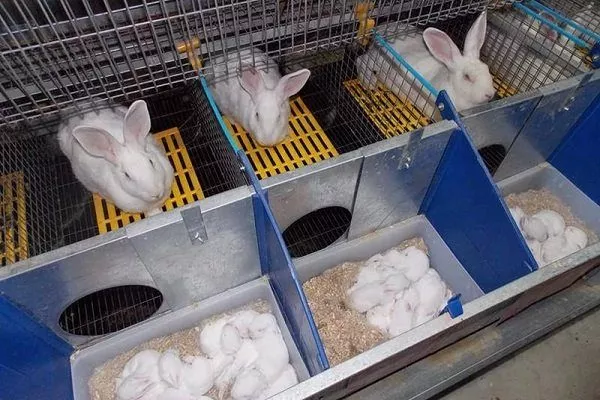
When building and equipping a nesting box, rabbit breeders strive to create conditions as close to natural as possible. It's cozy, warm, and away from prying eyes.
Why a female rabbit shouldn't give birth in a regular cage:
- Due to anxiety, the female will begin to release stress hormones, which can provoke her illness or the death of the rabbits;
- Baby rabbits can become ill due to small drafts, which are often found in rabbit cages.
Rabbits are born naked, blind, with no thermoregulation and a weak immune system, so rabbit breeders often equip their nesting boxes with lamps, which also serve as heat sources.
Structurally, a nesting box resembles a regular wooden box with a single opening for entry and exit. To keep the newborns warm, the structure is insulated like a sandwich. Then the box can be used in winter.
Buy or make it yourself?
Rabbit breeders who lack the time, inclination, or skill to use tools can purchase or order a custom-made nesting box online. Plastic nesting boxes of various designs are available. They are hygienic, lightweight, and relatively inexpensive.
There are queen cells on the market that can be built into the cage, collapsible, zinc-lined, or with doors equipped with latches or latches. The average cost of a commercially manufactured queen cell is 1,500 rubles.
Queen cells can also be purchased at pet stores or bird markets. Cages with built-in queen cells cost around 4,000 rubles. Heating equipment costs 3,000 rubles.
Avoid used cages, as they can transmit a wide variety of diseases. If you do decide to purchase used equipment, thoroughly disinfect it.
Types and designs
Despite their extreme simplicity, there are several types of queen cells that differ from each other in their design nuances.
The choice of design is influenced by various factors:
- number of livestock;
- dimensions of cells;
- the area of the room in which the cages are located;
- breeding season;
- frequency of use of the box.
There are two types of queen cells:
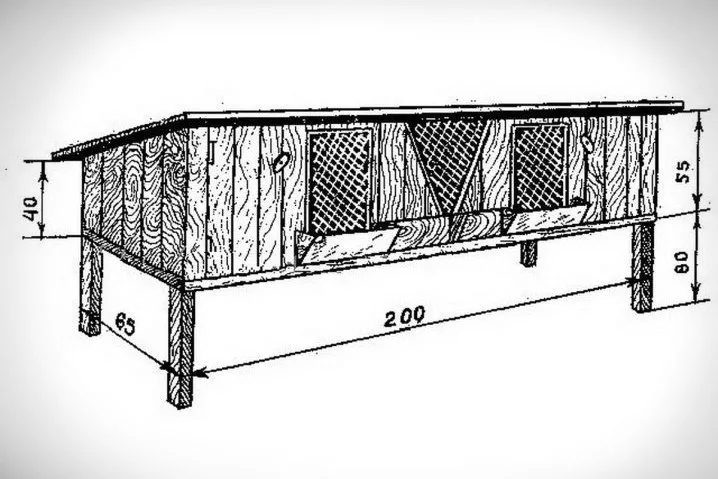
- Stationary. The rabbit hutch is divided into two sections. The smaller section is used for the birthing nest. It is partitioned off with a partition, leaving a rounded opening for the doe. The lower edge of the entrance is 10 cm from the bottom.
The simplest solution is to install a board in the cage. It should be 15 cm wide and placed in the darkest corner of the cage. This will prevent the rabbits from crawling around the cage and will help conserve heat.

- Temporary. They can be placed in and taken out of the cage. It's a plywood box with a round entrance measuring 20 cm in diameter. It's a very simple and practical solution, easy to transport and clean.
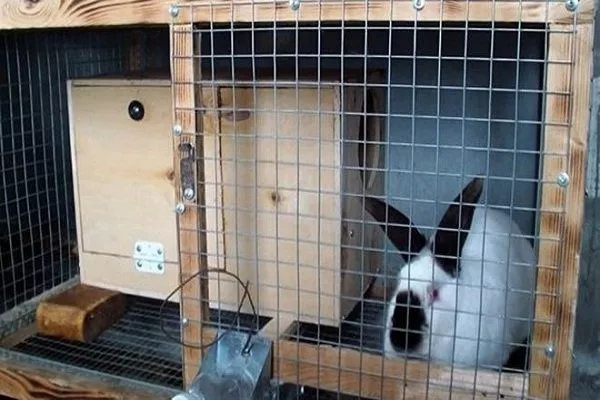
Such a sow box is placed in the cage of a doe expecting to give birth. Once it is no longer needed, it is removed, freeing up useful space.
Permanent cages are chosen if the hutch space allows. Temporary cages are suitable for confined spaces.
Dimensions and drawings
A mother box is a wooden structure into which a special box (nest) is inserted during the birthing process. There are no strict guidelines for creating a mother box, but there are recommendations based on the size and weight of the animals.
Types of rabbits:
- Large – 70-75 cm long and weighing 10-12 kg.
- Average – 60 cm and 3-6 kg.
- Small ones – 45 cm and 2-3 kg.
- Dwarf - 32 cm and 0.7-2 kg.
Dimensions of the queen cell:
| A species of rabbit | Length, mm | Width, mm | Height, mm | Hole diameter, mm |
| Large | 950 | 500 | 800 | 200 |
| Average | 700 | 400 | 600 | 180 |
| Small ones | 600 | 350 | 400 | 150 |
| Dwarf | 400 | 250 | 250 | 100 |
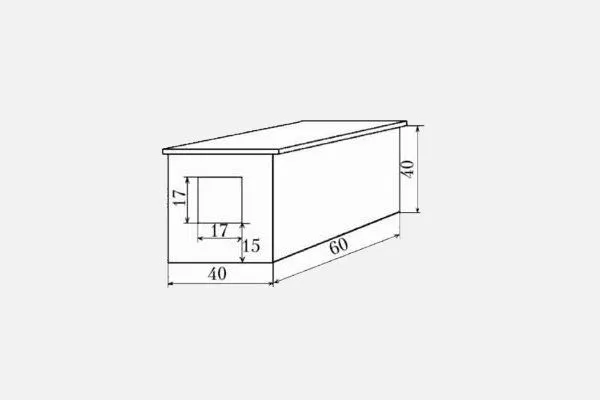
There are many options for nesting box designs; below are some drawings of designs popular with rabbit breeders:
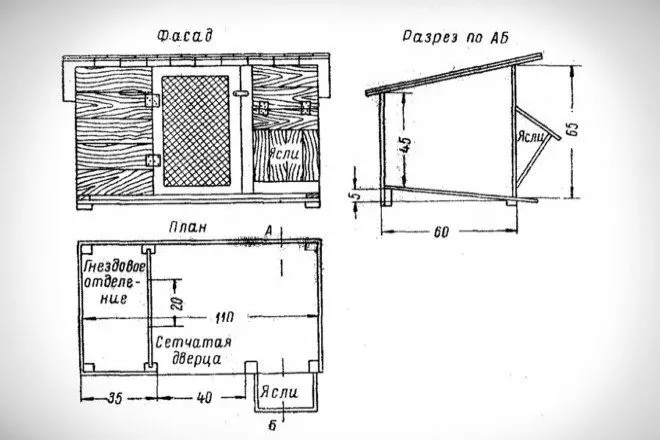
Necessary tools and materials
The easiest way to make a homemade box is from plywood. It's an affordable and eco-friendly material. It's easy to work with, lightweight yet durable, and, most importantly, requires only basic tools.
To build a simple rabbit nest box, you will need:
- several sheets of plywood (thickness up to 5 mm);
- slats;
- pressed sawdust;
- galvanized steel sheet;
- self-tapping screws/nails;
- saw;
- a pair of loops;
- marker;
- roulette.
Making a queen cell step by step
For someone skilled with tools, the manufacturing process is straightforward. A simple option is sufficient to start: make a regular plywood box with a round entrance.
To ensure the crate's durability, make the bottom galvanized. The lid should open so that cleaning is easy without removing the babies. Make the walls double-walled, lining them with sawdust for warmth.
The procedure for making a mother cell:
1. Cut out the parts from plywood according to the drawing.
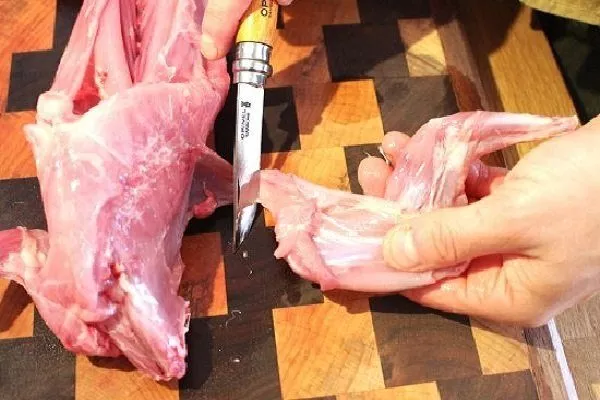
Queen cell details:
- drawer front and back wall - 56x30, 4 pcs.;
- sides - 35x30 cm, 4 pcs.;
- lid and bottom - 56x35 cm, 4 pcs.
2. Cut off several 2 cm thick slats.
Dimensions and number of slats:
- for the lid, front and back wall - 56 cm, 8 pcs.;
- for sides and bottom - 31 cm, 6 pcs.
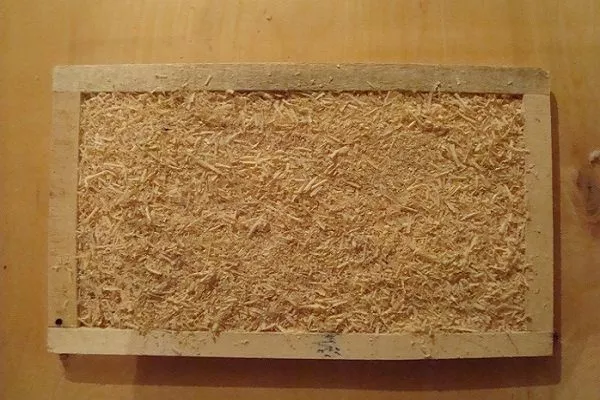
3. Take one piece of plywood and nail it to the slats around the perimeter. Fill the resulting mini-box with sawdust and compact it. Place a piece of plywood of the same dimensions on top and nail it to the slats. This will create an insulated "sandwich" wall. Make four more walls using the same pattern.
You should have a total of 5 insulated pieces. In the sixth (56x30 cm), first cut a 16 cm diameter hole for the entrance, and only then insulate it. To simplify the work, you can insulate only half of the façade.
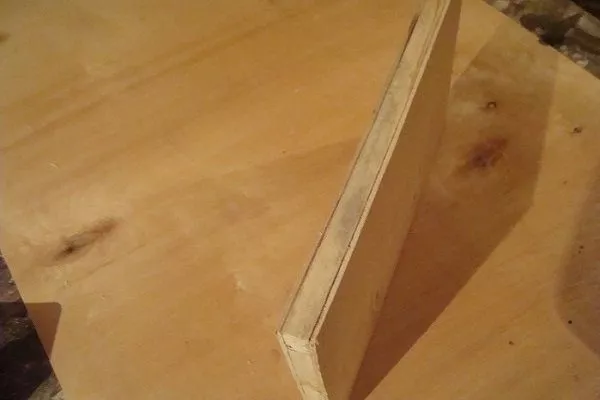
4. Cut a galvanized steel sheet 52x31 cm. Attach it to the bottom with screws. This underlayment will prevent premature wood rot.
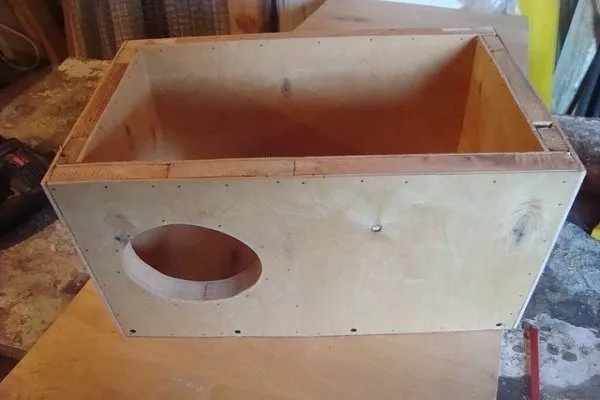
5. Once you've prepared all the structural parts, assemble them. Nail the sides together one at a time. You should end up with a lidless box.
6. Don't nail the top down, but attach it with hinges. It will look like a chest lid. Screw the hinges to the top of the back wall and secure the lid to them. That's it—the house is basically ready; all that's left is to furnish it.
Making a queen cell yourself is best for those who enjoy tinkering, have an arsenal of tools, and the skills to use them. Otherwise, creating a box will be prohibitively expensive—you'll need to find materials and tools, invest time and effort, and there's no guarantee the end result will be what you envisioned.
Filling the structure and arrangement
Once the carpentry work is complete, install the nesting box in the cage. Make sure there's enough room for the rabbits. The box should be installed approximately seven days before the doe gives birth. This will give the doe time to prepare the nest, insulating it with her own down.
Bedding
Place bedding material on the bottom of the box. The doe will use it to prepare the nest. The bedding should be loose and dry.
- ✓ The bedding thickness should be at least 10 cm for effective thermal insulation.
- ✓ The bedding should be dry and changed every 3-4 days to prevent diseases.
The bedding can be made from:
- cotton wool;
- sawdust;
- dry grass;
- straw.
Please note that young females may forget to build a nest, causing the kits to be born on a cold floor. This can result in the death of the kits. Experienced females, however, always diligently prepare the nest, and the main thing is to provide them with the necessary materials.
Heating
One of the biggest challenges in raising rabbits is creating comfortable conditions for the hairless babies. Lacking fur, newborns quickly freeze and die. Artificial heating of the nesting box helps prevent this.
Female rabbits typically breed during the warmer months, but it's possible that the kits will be born during the colder months. In this case, they need to be provided with appropriate temperatures—24 to 27°C. This can be achieved in a variety of ways.
Methods of heating the queen cell:
- Electric heaters. It's important to protect the heater from moisture, preventing damage to the device and potentially electrocuting animals. Once the cold weather subsides, turn it off.
- Rubber hot water bottle. This is an affordable and safe option. A heating pad is filled with hot water, placed on the floor of the crate, and covered with bedding. The downside of this method is the time, money, and effort required to heat the water. Heating pads are difficult to accurately regulate.
- Medical heating pad. It resembles a rag mat with wires connected to it. The heating pad is placed on the floor and covered with cloth and bedding. It's important that the rabbits don't have access to the wires.
The heating pad operates on a 220V power supply and can be turned on as needed. It is recommended that the heating pad have a temperature control and a waterproof cover. - Infrared heaters. It has a built-in thermal switch, preventing rabbits from overheating in the nesting boxes. It's a safe device that operates without a power plug.
- Bottles. A simple and affordable heating method. It has virtually the same pros and cons as traditional hot water bottles. The maximum water temperature for filling the plastic container is 40°C. It cools quickly, so you need to refill it frequently.
- Film with heating elements. This is the most modern option for heating rabbit nesting boxes. To implement this method, you need to purchase film with built-in heating elements. It is cut into 25 cm wide sections. One section is sufficient for the nesting boxes.
The film is secured to a piece of plywood, and blocks are placed across it to create an air gap. Next, a queen cell is placed on the structure. A thermostat is installed in the nest to eliminate the need to regulate the temperature.
Preventing rot
At first, cleaning the crate won't be possible, as you shouldn't disturb the babies. To prevent rabbit urine from rotting the plywood, the floor should be protected with a sheet of galvanized steel.
To prevent the metal from cooling the rabbits and causing them to freeze, it's necessary to cover the floor with a thick layer of bedding—10 cm. As soon as the rabbits grow a little, open the lid of the nest box and change the bedding.
Care and maintenance of the cage
To make the rabbits feel comfortable, it is necessary to maintain order not only in the nesting box, where they spend their first days, but also in the cage.
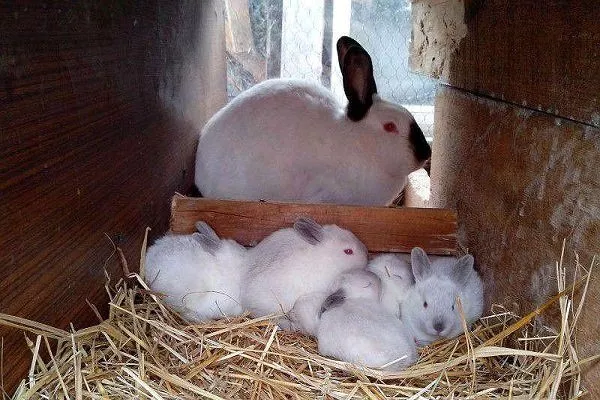
Rabbits divide their surroundings into several zones: their own, their common area, and others'. And they really dislike it when anyone encroaches on their personal territory. Cleaning should be done with extreme care, taking care not to disturb the animals.
How to care for the cage:
- disinfect surfaces to prevent the mother rabbit and her offspring from contracting any infections;
- once a month, a general wet cleaning is carried out in the cage;
- regularly wipe off dust and wash all elements, especially thoroughly washing the tray;
- trays, drinking bowls and feeders are cleaned and washed every day, and must be dried before being put back in place;
- The litter in the trays is changed periodically, and the urine stain is washed off once a month. A mixture of vinegar and citric acid helps clean the surface.
Baby rabbits are very clean and do not tolerate unsanitary conditions very well. They can be released into the wild periodically. A half-hour walk daily is recommended for the babies.
To maximize profits from rabbit breeding, owners must ensure crossbreeding and reproduction. By keeping a breeding colony, you can provide favorable conditions for the growth and development of your rabbits, raising them into healthy and fertile rabbits.