
Rabbit feeders are essential equipment for anyone who breeds these long-eared creatures. The animals grow quickly, reproduce rapidly, expend a lot of energy, and, as a result, eat a lot. Feed should be provided in high-quality feeders, which mini-farm owners often make themselves.
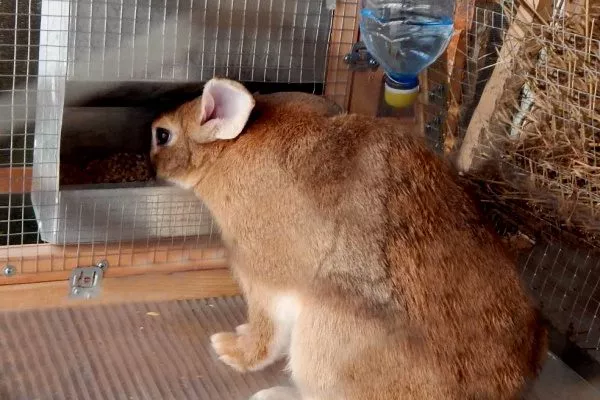
General requirements for rabbit feeders
You can buy feeders for compound feed at a specialty store or make your own. Whichever option you choose, the device must meet several requirements:
- Optimal capacity. The indicator is directly related to the daily volume of food, so that there is no need to constantly add feedDo not exceed the portions, so the animal will not scatter food, maintaining cleanliness.
- Ease of use. The container must not be permanently attached to the cage. Otherwise, disinfection and cleaning will be difficult. Food debris will accumulate in the corners, rot, and cause a number of serious illnesses.
- Safety. The structure's parts must be free of sharp corners, nicks, or delamination, and well-finished. This is the key to the animals' health.
- Large hole. All rabbits, regardless of body size, should be able to reach food.
It is permissible to use several types of feeders in one enclosure.
What tools and materials will be needed?
Making rabbit feeders is easy. It's especially easy for those with a variety of tools at their disposal. The required set of tools varies from case to case, depending on the type of container. Here's what you'll need:
- file;
- self-tapping screws, screws or nails;
- pliers;
- nippers;
- hammer;
- drill;
- tape measure or measuring tape;
- pencil;
- scissors;
- stationery knife.
You can use almost any material. The main thing is that it's durable. Animals tend to scratch their incisors. This fact dictates another requirement: a neutral composition. Toxic substances can kill the animal.
- ✓ The material must be resistant to chewing by rabbits, such as metal or thick plastic.
- ✓ Do not use materials that may release toxic substances when in contact with water or feed.
Types of feeders
Small farm owners often make their own rabbit feeders. Before starting, it's recommended to research the different types of feeding equipment. This will make it easier to decide what to purchase for the structure.
| Name | Type of feed | Capacity | Material |
|---|---|---|---|
| Bunker | Granulated feed, grains | Up to 20 kg | Plastic, metal |
| Nursery | Hay | Depends on the size | Wood, metal |
| Cup-shaped | Grains, vegetables | Limited by bowl size | Plastic, ceramics |
| Grooved | Grass, hay, compound feed, root crops | Depends on the length of the gutter | Metal, plastic |
Bunker
The most convenient device. This is a modern automatic feeder, as food is dispensed to the rabbits in portions, without human intervention. Suitable for pellets and grains.
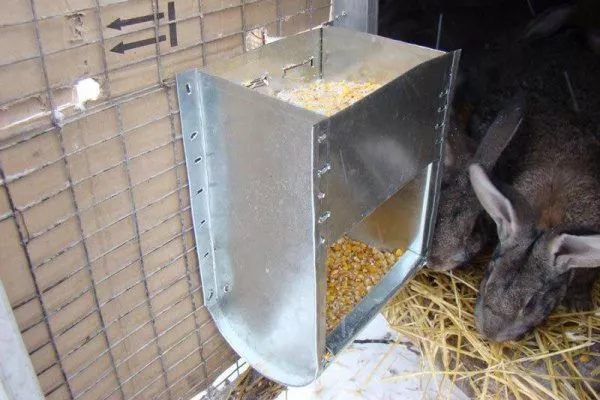
The bunker feeder consists of two parts: the upper section is a reservoir with a hole, the lower section is a tray.
Nursery
These are hay feeders. The device is most often made of wooden planks and slats. The design involves varying the position of the side walls: they widen at the top and taper smoothly at the bottom.
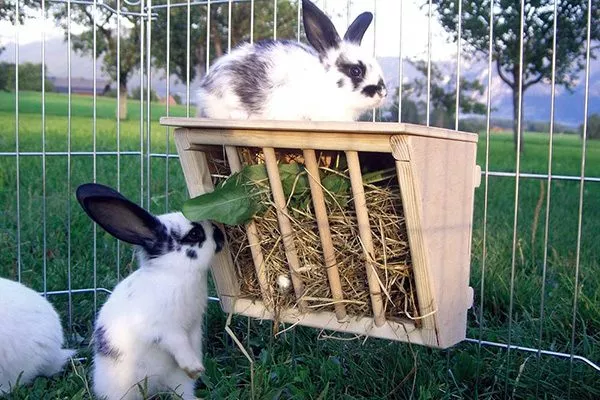
The equipment can be installed inside the hutch or attached to the mesh outside. A door is always undesirable, to prevent young animals from getting into the hutch and injuring their bodies.
Cup-shaped
The name speaks for itself: these are bowl-shaped grain feeders. They're also suitable for vegetables and can be used as a water bottle.
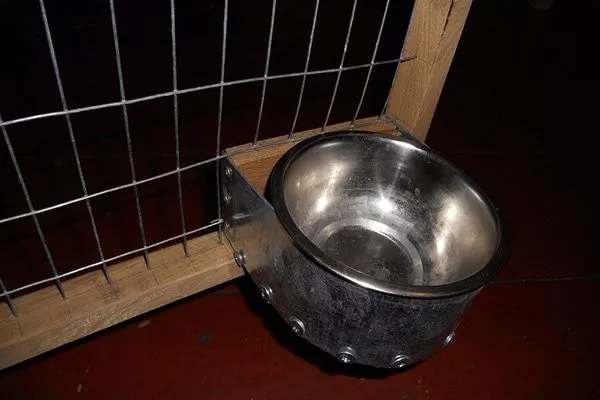
In specialized stores, such devices are made of plastic, but the animals often tip them over. Making containers from other materials is difficult.
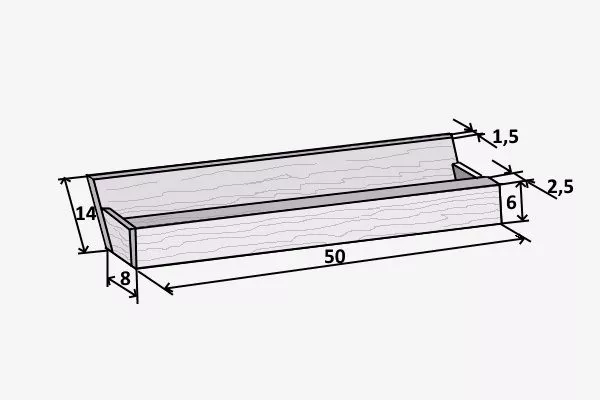
Grooved
Similar structures are used in enclosures housing several rabbits. They're versatile, as they can accommodate various types of food: grass, hay, mixed feed, and root vegetables. As for what you shouldn't feed rabbits, read on. here.
Options for homemade bird feeders
Before you begin creating your rabbit feeders, consider the design of the container. Consider several factors: the number of rabbits, their body size, their food intake, and the basic diet.
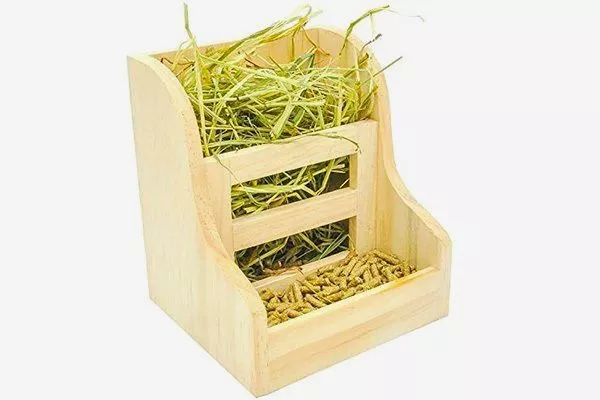
Double
This combination feeder combines grass and dry food. It's easy to build:
- Draw a rough diagram based on the photo below.
- Make a box. Nail a beam to the front to create a visual edge. This will be where the pellets will be placed.
- Install a lattice of slats in the center. This will serve as a partition through which the animals will eat the hay.
- Treat all corners, clearing the surfaces of burrs.
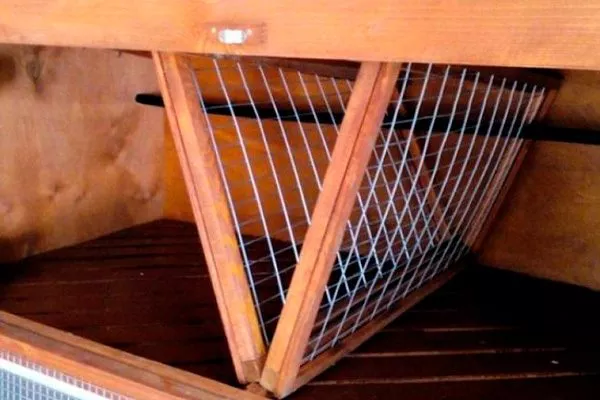
V-shaped (hayloft)
Crib-type feeder. Steps to create:
- Take the wooden blocks. Cut them into four pieces 40 cm long and four pieces 50 cm long (these dimensions are approximate, so use the measurements of your rabbit hutch as a guide).
- Make two identical frames from 2 long and 2 short bars.
- You will need two 40 x 50 cm mesh pieces. Attach the mesh to the walls of the structure using small nails.
- Attach the frames together in the cage to form a V-shape (see photo below).
Made of plywood
One of the most unreliable designs. Its service life is limited to a few months. Animals actively chew the plywood.
How to make a bird feeder:
- Cut the plywood sheet into several pieces based on the drawing below.
- Connect the components with wooden blocks using small nails.
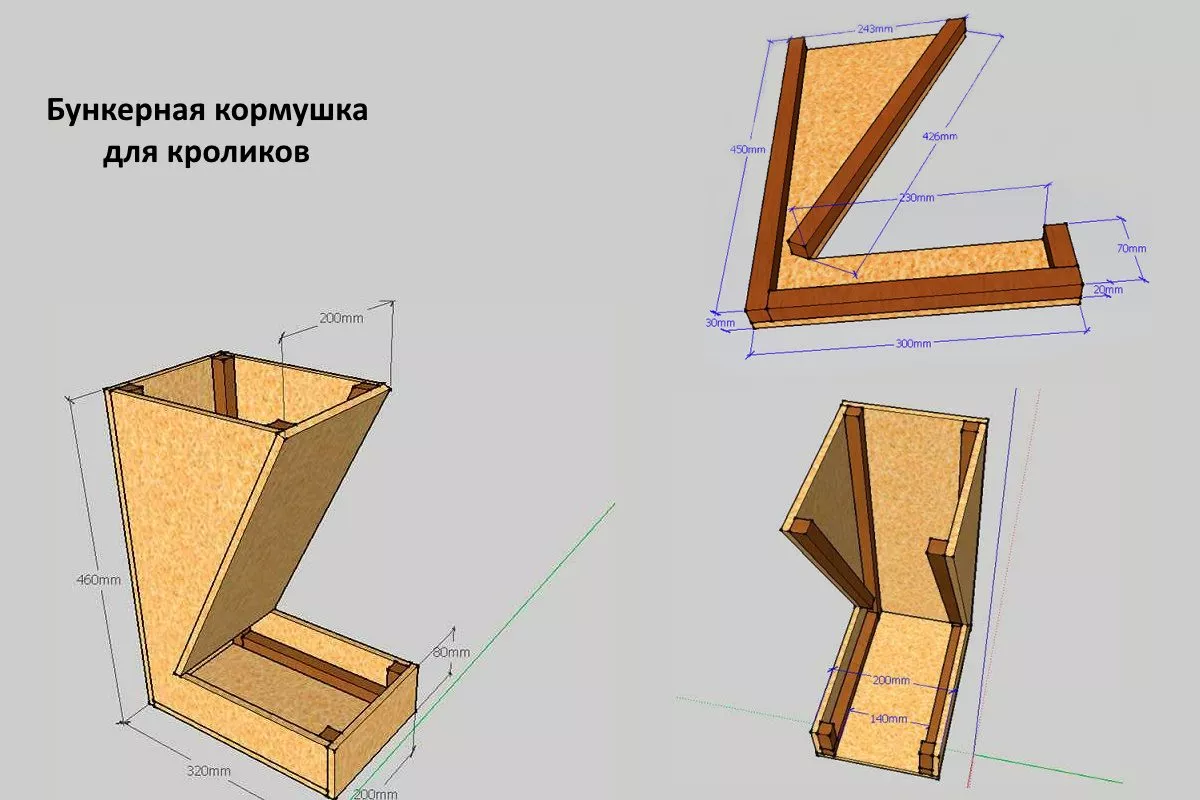
At your discretion, you can build a hinged door on top of the bunker and secure it with hinges.
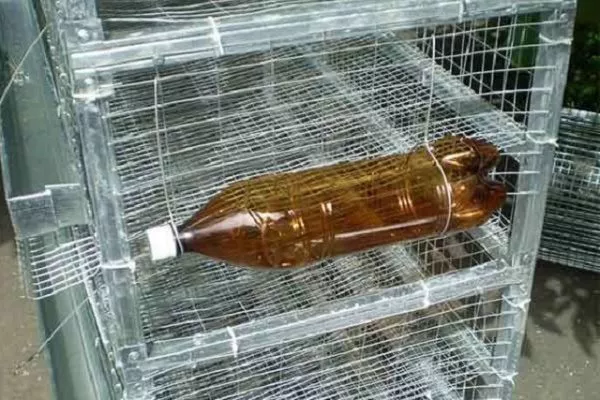
From plastic bottles
The most affordable rabbit feeder model. It takes just a few minutes to make. These devices are convenient and easy to use. You'll need a bottle with a minimum capacity of 1.5 liters. A lid is essential.
Algorithm of actions:
- Cut a 20 cm long hole along the vessel.
- Wrap the bottle with wire. It's best to do this around the neck and just above the bottom.
- Fix the inventory on the cage where the animals live.

From pipes
In this case, you'll need PVC sewer pipe. It takes about 30 minutes to create this hopper feeder, and the process itself is quite simple.
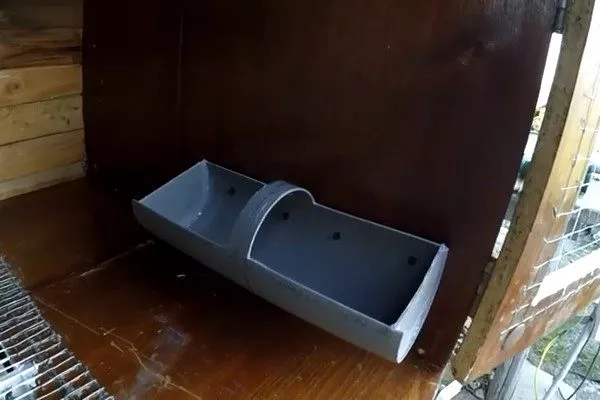 Course of action:
- Cut a 30 cm piece from a long pipe.
- Mark the center of the pipe with a pencil and draw a line around the circumference. Move 1 cm away from the centerline on either side and draw lines around the circumference of the pipe as well (you can do this by dipping a string in paint/nail polish/chalk and wrapping it around the pipe, creating an even imprint around the entire circumference).
- Cut the pipe lengthwise, reaching the drawn outer lines (without crossing them with the saw!).
- Measure 12 cm in both directions from the cut (moving down the arc of the pipe). Use a pencil to draw a line from the edge of the pipe to the central axis. Cut the pipe along this line, reaching the drawn outer lines. Cut off a piece of plastic along the outer line. The final structure should look like this.
- Heat the cut plastic pieces with a heat gun. Straighten them by pressing them down with something heavy. These plastic pieces will be used to cover the holes on the sides of the pipe.
- Place the end of the pipe on the flattened sheet of plastic and trace the outline with a pencil. Cut the pieces along the marked lines.
- Sand all exposed edges of the plastic with sandpaper.
- Place the formed plates on the ends of the pipe and glue the joints, thus connecting the parts.
- Make holes in the desired locations for the wire. This will be used to secure the feeder to the cage.
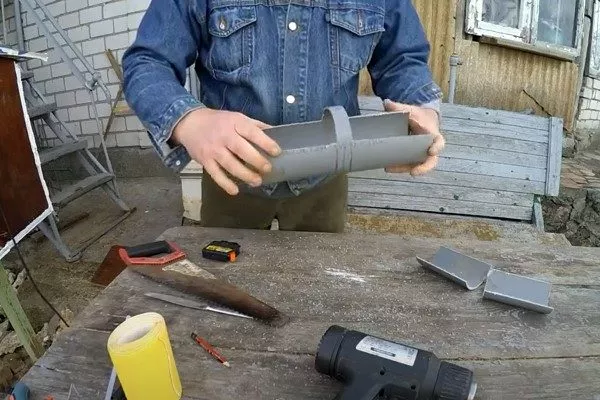
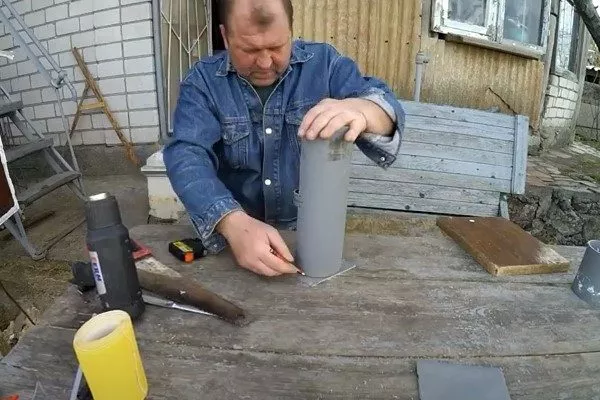
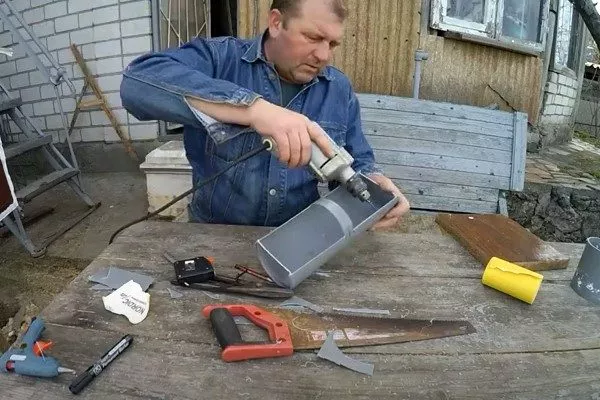
Another way to create a rabbit feeder from a pipe is shown in the video below:
From a building profile
A good solution if you have a piece of structural steel left over from renovations. The best base for a feeder is metal. The feeder will last a long time because the material is durable and rabbits won't be able to chew it.
Algorithm of actions:
- Apply the dimensions to the plate.
- Cut out the pieces.
- Remove unnecessary pieces.
- Sand the edges.
- Make a hole in the bottom. The animals will eat their food through this hole. To do this, make cuts using metal shears. The depth should be 50% of the profile sheet thickness.
- Use pliers to bend the workpiece at the designated places.
- Make holes in the connection area.
- Secure the sections with rivets.
- At the back, create two hooks from pieces of any metal. These will be the parts that will hold the structure to the cage.
Also watch a video about creating a bird feeder from a profile:
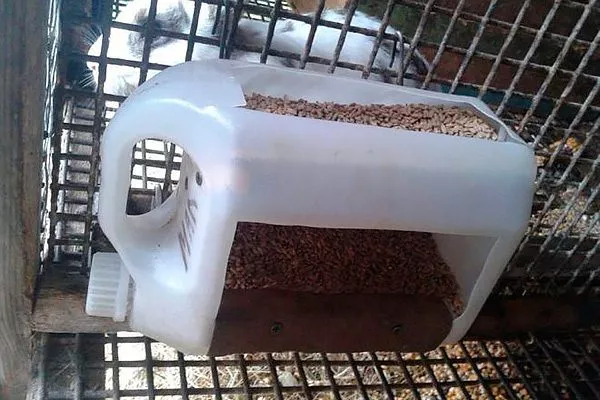
From a canister
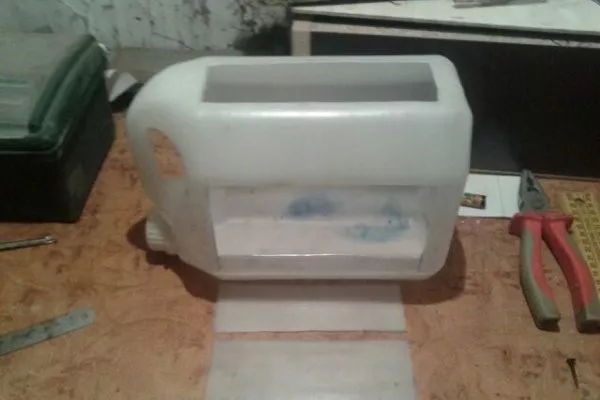
A canister makes a simple hopper feeder. This model is often used in households.
Creation algorithm:
- Use a marker to mark the sides (front and side) for future holes. Cut them out with a utility knife.
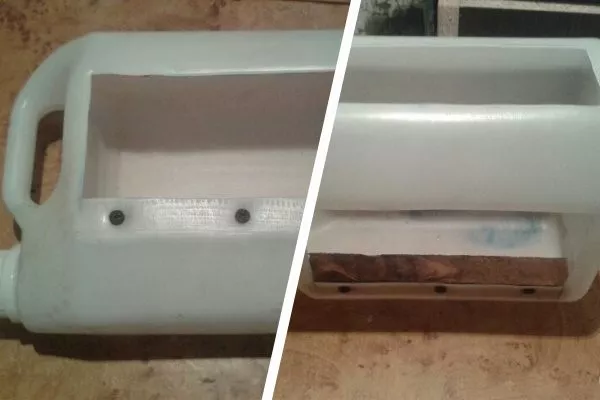
- Attach a wooden block to the bottom edge of one of the holes (see photo below). This will prevent food from spilling out.
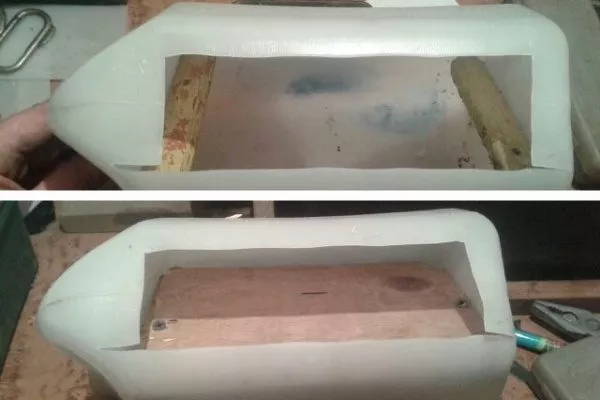
- Attach plywood at an angle inside the container so that the grains roll down to the rabbits as they're filled. To do this, attach two blocks at an angle and place a sheet of plywood on them.
- Attach the equipment to the cage wire. The easiest way to do this is with wire.
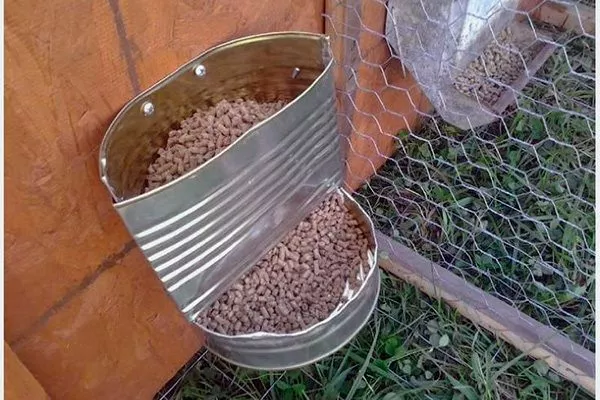
From a tin can
You can make a rabbit feeder out of a tin can. You'll need a 3-liter container. Here's the plan:
- Draw a horizontal line around the jar's circumference. The distance from the bottom should be at least 2.5 cm.
- Cut off half.
- Fold the edges.
- Remove sharp burrs.
- Attach the structure to the cage.
Feeder according to Maklyakov's method
Evgeny Maklyakov is a renowned Russian rabbit breeder. He invented his own feeder model, the MaklyaK hopper feeder. Its main feature is its capacity: it can hold up to 20 kg of feed.
Here's a video of the Maklyak feeder assembly, the penultimate 6.2 modification, from the inventor himself:
It's not possible to download the Maklyak bird feeder plans for free online. You can purchase the plans and even the parts themselves on Evgeny Maklyakov's website: https://makrol.ru/magazin/shop/
Feeder according to Zolotukhin's system
This container is mounted on the cage door and has a rotating mechanism. It's a trough model.
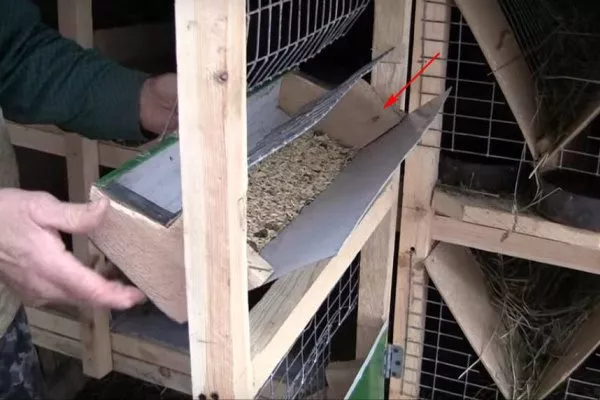
Instructions for creation:
- Cut two side pieces from the boards (the side piece is indicated by an arrow in the photo above). Make a notch for attaching the partition.
- Make marks on the sheet metal and cut out a piece. It should be the same size as the hutch door. The marks will remain on the sheet metal.
- Bend the iron blank into an “L” shape and attach the sides to it.
- Place the mesh into the grooves.
- Secure the structure to the bottom of the door. It is recommended to use two nails for this purpose.
The video below shows how the feeder looks in action (Nikolai Ivanovich Zolotukhin himself demonstrates his invention):
Helpful Tips
Rabbits are a profitable business on the farm. Therefore, farmers take a responsible approach to choosing their animals' diets. It's not enough to simply choose the right food; they also need to know how to supply it to their animals.
Making your own bird feeder can sometimes cause difficulties. These helpful tips from experienced farmers can help prevent or resolve them:
- Place equipment 7-9 cm above the cage floor. This will help keep things clean and prevent feces and bedding from contaminating the food.
- When keeping rabbits in a group, make a large hole so that several individuals can eat at the same time.
- Always plan your actions and draw a diagram, even if the design is very simple. It's important to consider how user-friendly the device will be.
- Rabbits are timid creatures. Use secure fastenings to prevent them from tipping over the feeder.
Features of making a feeder for decorative rabbits
Fancy rabbits are kept in conditions similar to those of regular animals. The only difference is that they require two feeders: one for hay and one for dry food, i.e., a bunker-type feeder and a crate-type feeder.
- ✓ The need for two types of feeders: for hay and dry food.
- ✓ Preference should be given to materials that rabbits cannot chew through, such as metal or ceramic.
Plastic is not recommended, as pets will quickly chew a hole the right size and leave their territory. The best material is iron. Wooden containers are acceptable, but in this case, it is recommended to line the wood with sheet steel.
Rabbit breeding won't be successful without a feeding trough in the cage. There are several types of feeding troughs, all of which can be made at home. You don't always need to buy materials; you can improvise as you go. The main thing is that the design is comfortable and won't harm the animal.