
Myxomatosis in rabbits is an acute infectious disease with an epidemiological nature. The mortality rate ranges from 85 to 100% in advanced cases. However, if treatment is started promptly, there is a chance of cure. Almost all parts of the body are susceptible to infection—the head, body, genitals, eyes, and mucous membranes—so the disease is difficult to miss.
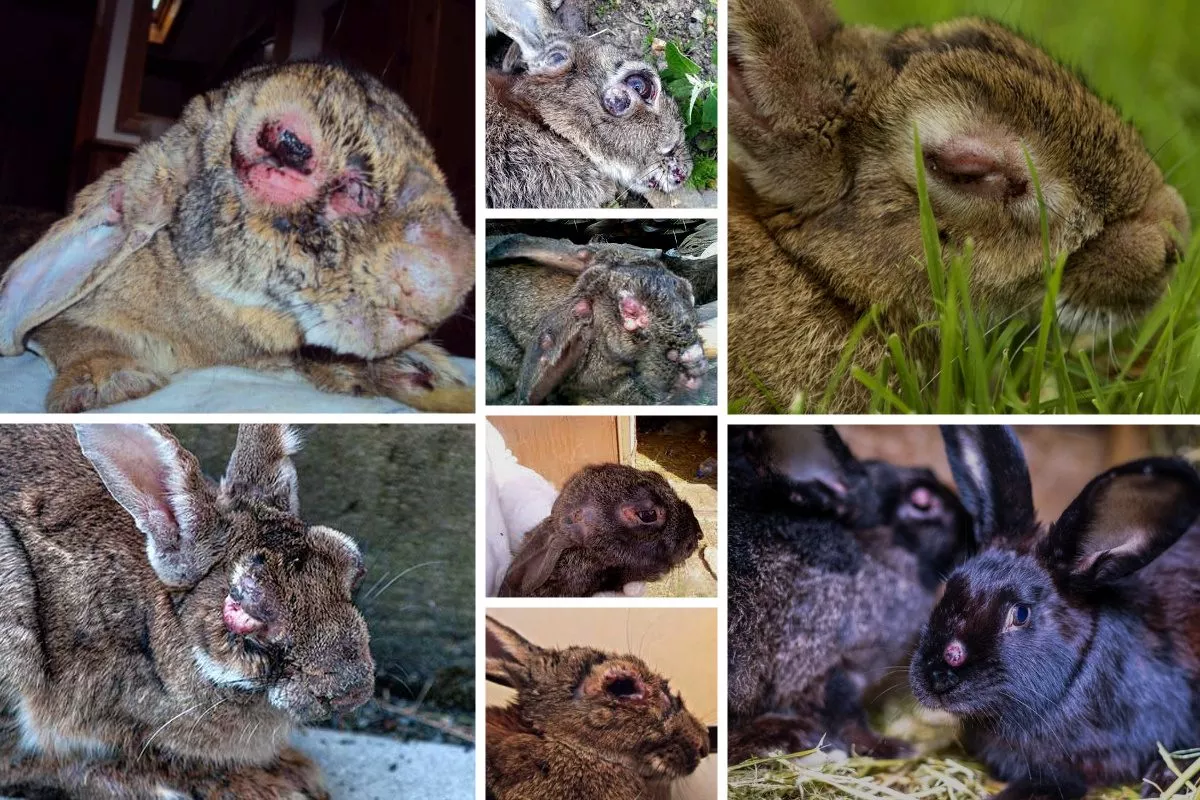
Description of the disease
Myxomatosis has existed for many decades, but the disease was only recorded in Russia in 2003. At that time, the first 60 rabbits were infected. However, just two years later, a mass epidemic was discovered.
Forms and stages of the disease
| Form | Duration | Mortality | Main symptoms |
|---|---|---|---|
| Classical | 4-10 days | 95-100% | Edema, conjunctivitis, high temperature |
| Nodular | 30-40 days | 50-70% | Nodules with a diameter of 3-30 mm, tissue necrosis |
When infected, the virus enters the bloodstream through the skin and subcutaneous tissues, then spreads throughout the parenchyma of organs. Based on this, four main stages of the disease are distinguished:
- the first is the localization of infection at the site of penetration - the upper epithelium, mucous membranes, subcutaneous tissue;
- the second - active reproduction occurs within 2 days, due to which the pathogen accumulates in the regional lymph nodes;
- third - after another 1-2 days, penetration into the blood and testicles occurs, resulting in a generalized form;
- fourth - after 2-3 days, pathogenic microorganisms are eliminated through the eye and nasal secretions.
Myxomatosis is also divided into the following forms:
- Classic. The second name is edematous, as blisters form on the head, ears, mouth, nose, genitals, and body. This form lasts from 4 to 10 days, rarely lasting 30 days. If the disease is acute, the rabbit will die within 8-10 days, but if the rabbit refuses food and water, it may die even sooner. The classic form is characterized by the following processes:
- First, the endothelial cells that line the inner walls of blood vessels degenerate;
- after this, the viruses enter the subcutaneous tissue through the blood, resulting in the formation of edema (at first it is focal, but then merges into one);
- against this background, the body temperature rises, which indicates the beginning of the body’s fight against a foreign pathogen;
- then the mucous membranes become damaged, causing fluid to leak from the eyes and nose;
- The virus continues its path, affecting the mitral valve of the heart, which leads to death.
- Nodular. A characteristic feature of this form is the formation of hard nodular lesions, hence its other name, the nodular form. It is considered less dangerous than the classic form. Tumorous masses are observed on the head, ears, paws, back, and mucous membranes.
Within 10 days of infection, the nodules become necrotic, causing open lesions to become visible. These lesions develop over 30 to 40 days, so there's a chance of quickly recovering from the disease. However, this requires a strong immune system.
Incubation period
Myxomatous symptoms do not always appear immediately, but only 12 days after infection. The incubation period ranges from 5 to 14 days, depending directly on the strain and factors such as the immune system's type. Immunity can be acquired or hereditary.
If only the second pathogen is present, infection occurs quickly, but when the farmer cares for the animals, the body begins to produce antibodies against the pathogen. To strengthen the immune system, proper feeding, hygiene, and vaccination are essential. Breed, housing conditions, age, time of year, and physiological stage all have indirect effects.
At-risk groups
Myxomatosis affects both wild hares and domestic rabbits equally, regardless of gender, breed, or age. Therefore, all rabbits are at risk, especially those living near infected animals.
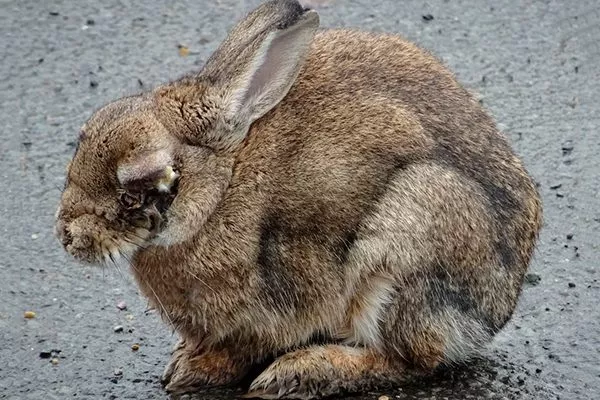
However, there are some peculiarities:
- the highest resistance is found in wild and unvaccinated rabbits;
- rabbits up to 3 months of age, since their immune system has not yet developed;
- the virus penetrates into the genitals of females faster;
- pregnant individuals;
- previously ill;
- all rabbits living together with those who have recovered from the disease.
- Vaccination of young animals at 6 weeks
- Quarantine for new animals (14 days)
- Separate housing of pregnant females
- Monthly treatment for ectoparasites
- Microclimate control (humidity no higher than 60%)
Risk Group Protection Plan
What happens when myxomatosis is detected?
The disease is considered highly contagious, easily spreading from sick to healthy bats. This can lead to an epidemic and the entire flock becoming infected. If even one infected colony is discovered, the entire community is considered uninfected and quarantined.
Peculiarities:
- infected livestock is slaughtered and burned;
- The waste products of sick rabbits, food, bedding, and equipment that cannot be fully processed must be destroyed;
- The farmer's work shoes and clothing, premises, etc. are disinfected with formalin or a steam-formalin chamber.
Why does infection occur?
Myxomatosis infection is only possible if the pathogen is spread. It is transmitted in a variety of ways, making it one of the most common diseases.
The causative agent of the disease
Myxomatosis Cuniculorum (poxvirus) is the causative agent of myxomatosis. The virus belongs to the pox group and the Poxviridae family. It is characterized by increased resistance to multiple adverse factors, such as temperatures up to 55 degrees Celsius, frost, and so on. The only things it shows sensitivity to are alkalis, formalin, and ethers.
The viability of the pathogen is astonishing because it easily survives under the following conditions:
- in the corpse of a dead rabbit - a week;
- in the skin, if it is dried at a temperature of 68-75 degrees - 2-5 hours, if at 20 degrees - up to 10 months;
- in frozen meat or other icy environments – more than 2-3 years;
- in the body of insects – about 6 months.
The Myxomatosis Cuniculorum virus was described in Uruguay in the late 19th century. The pathogen was discovered in rabbits imported from European countries. The virus spread to other continents approximately 50 years later.
Routes of infection transmission
| Route of transmission | Risk of infection | Preventive measures |
|---|---|---|
| Blood-sucking insects | High | Mosquito nets, repellents |
| Direct contact | Average | Quarantine, separate detention |
| Contaminated inventory | High | Disinfection with 3% formalin |
| Airborne | Short | Ventilation, distance between cages ≥1m |
The main route of transmission of the virus is through blood-sucking insects. These include mosquitoes, lice, fleas, bedbugs, ticks, and the like. The pathogen penetrates the salivary glands, where it lives happily for a long time. If an infected rabbit flea comes into contact with a rabbit's fur, the pathogen is localized on the animal through the bite.
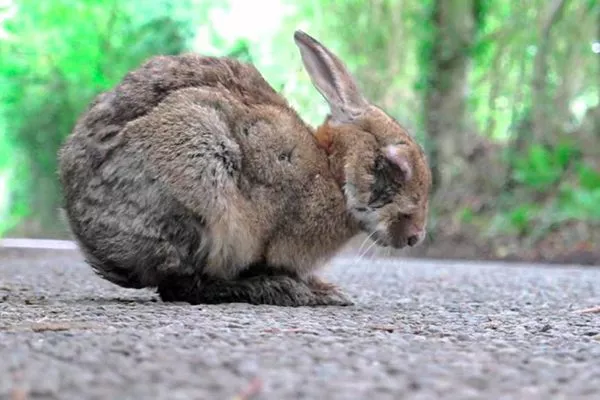
There are also other factors of infection:
- direct contact with an infected individual;
- household items, inventory;
- waterfowl;
- bedding, feeders, drinking bowls;
- food and water;
- farmer's clothing.
Transmission modes include airborne and sexual. Infections are most common in the summer and spring, as blood-sucking insects are the primary carriers of the pathogen.
Signs of defeat
There's a conditional form of myxomatosis called hyperacute, in which the disease doesn't have time to manifest itself. This occurs due to the rapid destruction of the rabbit's entire body. The entire flock dies within 2-3 days.
Symptoms depend largely on the form of the disease. In the classic form, the following is noted:
- refusal to eat food, even the most favorite one;
- development of catarrhal and later purulent conjunctivitis, which is accompanied by blepharitis of the eyes;
- serous and then purulent discharge from the nose and eyes;
- matted hair near the mucous membranes with subsequent hair loss;
- cyanosis in the mucous membranes;
- increase in body temperature, up to 42 degrees;
- swelling in different parts of the body;
- rapid weight loss;
- blindness.
In the nodular form, the following symptoms are observed:
- small reddish spots on the paws, ears, eyelids, neck, and in the nose area;
- formation of compacted nodules.
Diagnostics
A veterinary examination of your rabbits is essential for an accurate diagnosis, so if the first signs are detected, a home visit should be called. Myxomatosis Cuniculorum poxivirus can only be detected through laboratory testing, as myxomatosis resembles other diseases in its outward appearance.
For examination, the veterinarian collects a biopsy sample and sends it for histological and other testing. The specific form of the disease is determined, as each requires its own treatment plan.
Features of treatment of the disease
Myxomatosis can only be cured in its early stages; if the disease reaches a severe stage, rabbits die. Successful treatment involves medications and agents that are resistant to the pathogen. Some farmers also use traditional medicine, but they also consider using over-the-counter medications.
What is myxomatosis afraid of?
Myxomatosis Cuniculorum is killed by formalin, ether, trypsin, and alkali. Formaldehyde at a concentration of 3% is most commonly used. The virus is destroyed at high temperatures—from 55 to 60 degrees Celsius—so it is advisable to treat the room and equipment with hot steam.
Traditional treatment
The first thing a farmer should do is disinfect the cages, feeders, and waterers. All bedding is burned.
For rabbits with the classic and nodular forms, the following treatment is prescribed:
- Fosprenil (1 ml) or Gamavit (2 ml per 1 kg of rabbit body weight), which stimulate nonspecific resistance, suppress poxvirus, and act as an immunomodulator, are administered to rabbits by injection into the withers once daily.
- If dehydration is noted, Ringer's solution is used as an antibiotic. Injections are given into the muscle on the hind leg. Bicillin (a penicillin-based medication) may also be prescribed. This antibiotic is administered at a dose of 1 ml over 3 or 4 days.
- Sodium salt Benzylpenicillin is used for 5 days, 2 times a day.
- Instead of water, rabbits are given a Baytril-based solution: 1 ml per 1 kg of body weight or 5 ml per 10 liters of water (10% concentration). The drug has antibacterial and antimycoplasmal properties.
- If conjunctivitis is present, the eared bat's eyes are lubricated with Ofloxacin, which is an antibiotic.
- To relieve swelling, use Aqualor. Drops are placed into the nose.
- If open wounds, ulcers, nodules, and similar lesions are present, an alcohol-iodine solution or Fukortsin is prescribed. Treatment is performed three times daily.
Traditional methods of treatment
Many farmers additionally use folk remedies. These don't replace traditional therapy, but rather serve as a supportive measure. What can be done:
- Affected areas of skin are usually treated with fried sunflower oil (preferably homemade unrefined). The oil is fried in a container for about 20 minutes.
- Camel thorn infusion can be used to lubricate wounds. It's available at pharmacies. Adults use 5 ml, and young animals use 2 ml. You can also make your own: place the thorns in a jar, pour boiling water over them, and let steep for 3 hours. Then strain the infusion and administer intramuscularly.
- Wounds can be treated with urine from healthy rabbits. To do this, expose the urine to sunlight for 2 hours.
- Essential oils of eucalyptus, lemon balm and mint are very helpful.
Vaccination
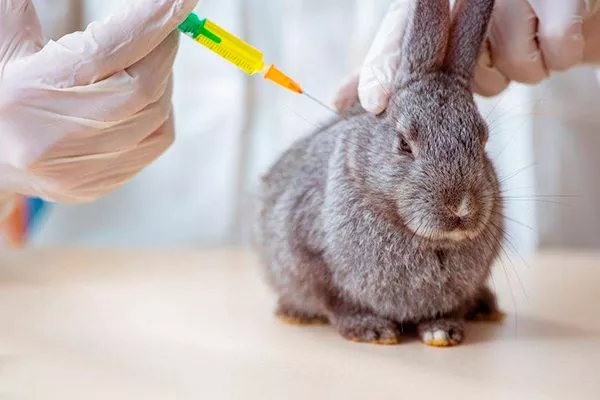
Vaccinations prevent rabbits from becoming infected with the poxvirus. Vaccination is administered at six weeks of age. The procedure is repeated exactly three weeks later. For prevention, rabbits are vaccinated twice a year—in spring and fall—as the vaccine's effectiveness lasts for six months.
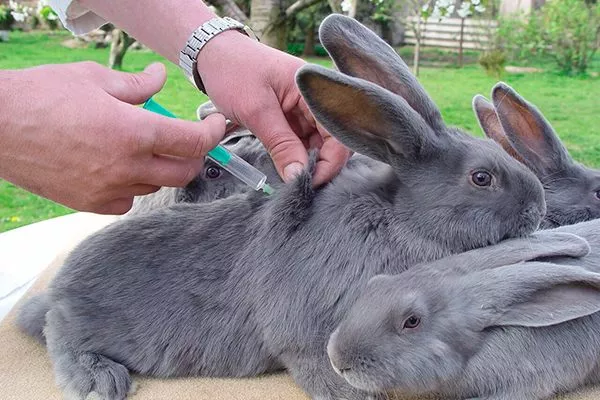
Peculiarities:
- polyvalent and monovalent vaccines are used;
- The most optimal drug is B-82, administered both subcutaneously and intramuscularly at 1 ml:
- For self-vaccination, disposable syringes or boiled syringes are used;
- You cannot use one needle for all individuals;
- The vaccination area is treated with alcohol.
- ✓ Check the vaccine's expiration date (no more than 12 months)
- ✓ Use separate needles for each animal
- • Dosage: 1 ml regardless of weight
- ✓ Inject into the femoral muscle at a 45° angle
- ✓ Monitor temperature after vaccination (normal up to 39.5°C)
Prevention
To prevent rabbits from becoming infected with the Myxomatosis Cuniculorum poxvirus, it's important to vaccinate them regularly. However, the following requirements must also be met:
- change bedding more often;
- keep feeders and waterers clean;
- do not allow dampness in the room;
- disinfect cages and other equipment periodically;
- create a proper diet to strengthen your immune system;
- remove any leftover food so that it does not attract blood-sucking insects;
- provide the room with mosquito nets to prevent insects from getting inside;
- treat the wool with antiparasitic agents;
- Keep new rabbits in quarantine.
Is it possible to eat the meat of a rabbit infected with myxomatosis?
It's best not to eat the meat of a sick rabbit, but if necessary, use long-term cooking methods. This is permitted if the rabbits are in the early stages of the disease.
Myxomatosis is a dangerous infectious disease that can be fatal. It affects all livestock, causing significant damage to all farms. Therefore, it is important to vaccinate animals promptly and adhere to all sanitary and hygienic standards.