
Coccidiosis in rabbits is quite common, as the primary cause is the protozoan parasite coccidia. Approximately 10 species of coccidia cause the disease. The primary sites of infection are the intestines and liver, leading to two distinct types of the disease, which are observed both individually and in combination.
Coccidiosis – what is it?
Coccidiosis is caused by protozoan parasites of the class Coccidia, which begin to spread once ingested. Infection is transmitted through consumption of contaminated food or water, milk from an infected mother, or by ingesting feces containing protozoan cysts (rabbits are coprophagic).
Coccidia are considered resilient and viable pathogens. Destroying the disease-causing agents in the external environment is quite difficult, as they only die at temperatures between 80 and 100 degrees Celsius. Therefore, the infected area is treated with fire or very boiling water. However, once coccidia are present in the animal's body, they are much easier to eliminate. Coccidiostats, sulfonamides, and nitroimidazoles are successfully used for this purpose.
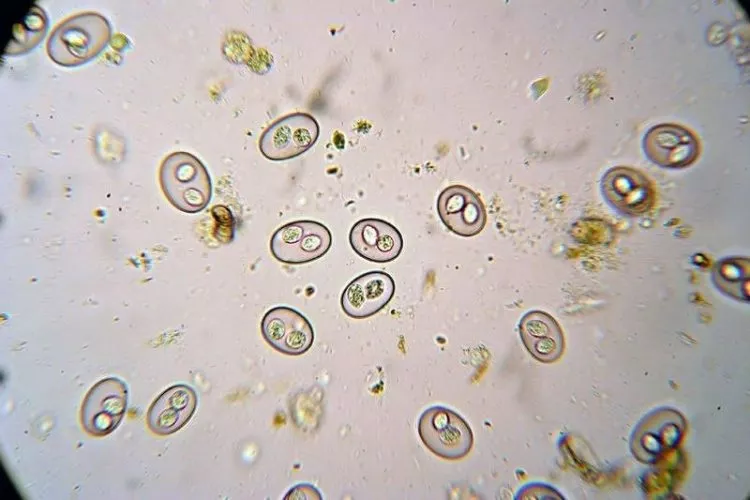
Features of parasite development:
- The first phase of pathogen development includes the following processes:
- Coccidia are intercellular organisms, so they initially penetrate the cells of the intestine or liver;
- the parasites are asexual, but when they come into contact with the epithelium, they divide into female and male organisms;
- After this, they merge, resulting in the formation of an oocyst.
- In the second phase the following happens:
- parasites are excreted through the intestines via feces;
- in the external environment, combining with oxygen, moisture, light and heat, spores are formed in the oocysts;
- Once the spores are fully mature (this takes about a week), the infected feces become dangerous to healthy individuals.
Unique characteristics of oocysts- ✓ Coccidia oocysts are resistant to most disinfectants, except for high temperatures and some specific preparations.
- ✓ Spores in oocysts mature within 7 days under optimal humidity and temperature conditions, which is critical for disinfection planning.
Causes of the spread of coccidiosis on the farm
Coccidia become active in spring and summer. Rabbits under 4 months of age are particularly susceptible, while adult rabbits are rarely affected but are direct carriers of the pathogen. Coccidiosis spreads due to unfavorable factors, which rabbit breeders should be aware of:
- Lack of disinfection. If the cage is dirty, bacteria are sure to be present, which are favorable neighbors for coccidia. The presence of feces in the room is especially dangerous, as they are the ones that excrete oocysts. Rabbits can also eat their own feces, so the spores that have already formed can quickly infect the animal.
- Contaminated water. If you don't change the water daily and don't thoroughly clean the drinking bowls, coccidia can easily spread in them, which then enter the body through drinking.
- Poor quality food. Not all manufacturers are responsible; some low-quality feeds contain coccidiosis pathogens. To prevent infection, treat the feed with lactic acid (0.5 ml of the solution per 1 kg of feed).
- Rabbit milk. Since all rabbits are carriers of parasites, they can also be localized in the milk of the female.
- Improper nutrition. It turns out that if the diet is unbalanced or there is a very abrupt change in diet, unfavorable processes occur in the gastrointestinal tract, which contribute to rapid infection.
- Insects. The pathogen is carried by mosquitoes, flies, etc. on their paws, which they use to touch food and other surfaces in the rabbitry.
- Man and tools. Parasites can be localized on hands, soles, and equipment. However, when a rabbit breeder enters or places their hands in the cage, the pathogen moves to the surface of the room.
- Rabbits. If one rabbit is infected, the coccidia will spread to other individuals, which most often happens when a new animal is purchased (to prevent this, it is quarantined).
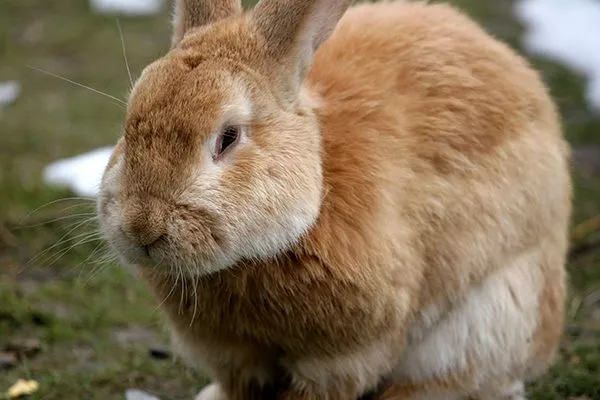
Symptoms of coccidiosis in rabbits
It's impossible not to notice that rabbits are suffering from coccidiosis. It's even possible to identify the type of disease based on the location of the pathogen. This allows for early diagnosis and treatment.
Signs by form of the disease
It should be noted that coccidiosis occurs in various forms: mild, subacute, acute, and chronic. In the former, symptoms are virtually absent, while in the latter, decreased appetite, lethargy, thirst, diarrhea, and abdominal tenderness are observed.
In the acute stage, symptoms become significantly more severe. Convulsions and head tilting are also present. This is the most dangerous stage. In the chronic stage, the disease progresses more slowly, but the risk of developing an acute stage increases.
Signs of intestinal coccidiosis
When the intestines are infected with coccidia, the rabbit becomes noticeably lethargic. It refuses food and even water, and seeks solitude. However, the intestinal form can also be recognized by the following symptoms:
- diarrhea alternating with constipation;
- bloating followed by sagging;
- colic;
- sudden weight loss;
- ruffled and dull fur;
- increase in body temperature.
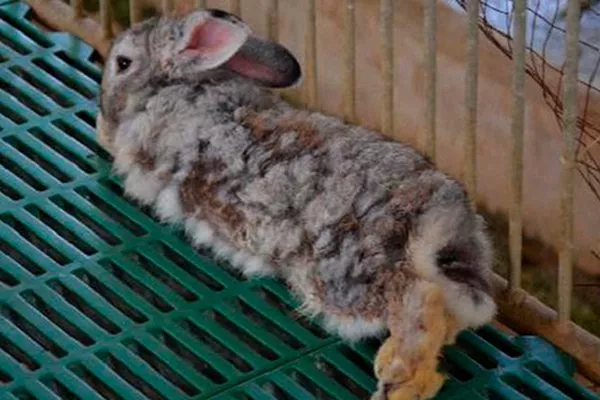
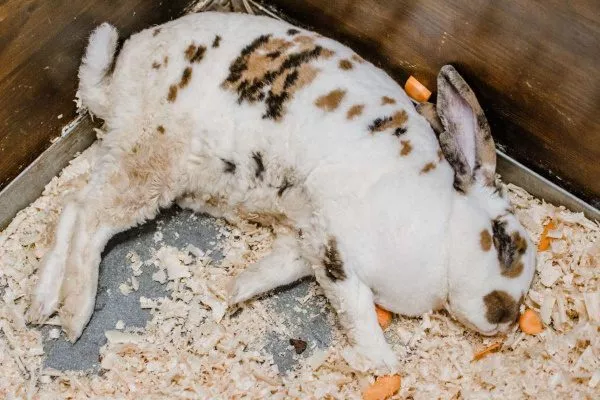
In the final stages of the disease, the rabbit's head begins to tilt back, its paws begin to move as if swimming, and it suddenly falls. These are death convulsions, after which the animal dies. The time from onset of infection to death is 10 to 15 days.
Signs of hepatic coccidiosis
The symptoms are largely similar to those of intestinal coccidiosis, but there is a distinct feature: the mucous membranes of the mouth and eyes become yellowish. Another distinctive feature is the duration of the disease, up to 50 days.
What diagnostic tests should be performed to detect coccidiosis?
Since coccidiosis is a dangerous and potentially fatal disease, it must be diagnosed promptly. This can be accomplished by observing rabbits and identifying symptoms. However, veterinarians and rabbit breeders also recommend other in-clinic measures.
This is a laboratory analysis of feces for the presence of coccidia; only fresh feces are collected. If coccidiosis is detected, treatment begins immediately. If this is not done promptly, the rabbits will die and infect other rabbits.
Treatment of coccidiosis in rabbits
Coccidiosis has long been known to humans, but it wasn't fully studied until the 17th century, resulting in the death of rabbits. Today, numerous highly effective treatment regimens have been developed.
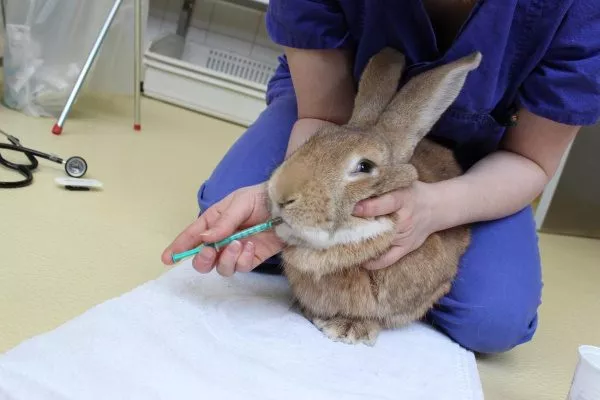
How to stop the development of the disease in the early stages?
If coccidiosis is detected in its earliest stages, it's not that difficult to treat. Furthermore, complications and unpleasant consequences for other rabbits in the hutch are avoided.
What you need to do:
- Isolate the infected rabbit in a completely separate room. Before moving, it's important to treat the cage with fire or boiling water.
- Remove all animals from the cage and disinfect the cage as well.
- Strengthen your pet's immunity by administering vitamins and mineral complexes.
- Feed properly.
- Give as much water as possible to avoid dehydration if diarrhea persists. The water should be clean and fresh (change it 3-5 times a day).
- Carry out treatment as prescribed by your veterinarian.
- Disinfect the cage daily and remove feces and dirty hay after each bowel movement.
Try to avoid stressful situations for your rabbit, as they can worsen the disease.
What kind of feeding diet does a rabbit need for coccidiosis?
It's important to provide a sick rabbit with the proper diet. Please note the following basic rules:
- give only high-quality and disinfected food;
- introduce tomatoes, cabbage, cucumbers, carrots, and familiar fruits;
- buy specialized food:
- exclude food that is contraindicated for rabbits;
- Give oats, millet, barley, but in the most minimal doses.
How to organize care for a sick animal?
Rabbits become restless when sick, and improper care can only worsen the situation. To prevent this, follow these steps:
- do not take your dog out for a walk until the illness is over;
- Perform hygienic procedures with the animal every day, but use only those shampoos that are intended for rabbits;
- diversify the menu to improve the animal’s appetite, and if it refuses food, give it more green food;
- Monitor the air temperature to ensure that the rabbit does not freeze or is not exposed to excessive heat;
- Ventilate the room to provide fresh air, but do not allow drafts under any circumstances.
Pharmacological drugs for the treatment of coccidiosis in rabbits
For the treatment of coccidiosis, a coccidiostatic drug is prescribed (one of your choice):
- Baycox. It is available as a 2.5% liquid and a 5% suspension. The 2.5% strength is diluted in water and administered as a drink throughout the day. The solution is diluted at a rate of 1 ml per 1 liter of water. A fresh solution is prepared daily. Treatment is continued for a minimum of 2 days and a maximum of until symptoms resolve.
The 5% solution is administered undiluted, directly into the mouth. The dosage is 0.2 ml per 1 kg of body weight. - Diacox. Adults are given a single dose with food at a rate of 1 mg per kg of body weight (for young animals, the proportions are different – 0.5 g per kg of body weight). A repeat dose is given after 3 weeks.
- Solikoks. Rabbits are given 0.4 ml of the preparation per 1 kg of live weight. It can be administered undiluted or mixed with a daily dose of water (100 ml per 1 liter of water) and administered to sick animals for two days.
- Trisulfone. This is a coccidiostatic and antibiotic agent. The suspension is added to drinking water (100 ml of the product per 100 liters of water). Sick animals should be given this suspension for 5 days.
- Furazolidone. This drug has antiprotozoal and antibacterial activity. The powder is mixed with feed at a dose of 3 mg per kg of body weight. Treatment lasts for 3-7 days.
In addition to coccidiostatics (if used as a single agent), antimicrobials containing various ingredients are also prescribed. Most often, these are sulfonamides. They block the production of folic acid, which in turn creates a favorable environment for bacteria. These medications also kill coccidia.
The sulfonamide-based anti-coccidiosis medications include only a few: Sulfadimethoxine, Sulfadoxine, Sulfadiazine, and Sulfamethoxazole. Some rabbit breeders use Metronidazole or Ampicillin.
The first option is not recommended for coccidiosis, as it is useless for eliminating the pathogen. Metronidazole helps stop the reproduction process, but does not kill the parasite. Ampicillin destroys the pathogen, but it must be used with caution, as it does not affect all types of coccidia.
Folk remedies for the treatment of coccidiosis in rabbits
Traditional medicine is not used as a primary treatment for coccidiosis. However, it is excellent as a supplementary treatment, as it strengthens the immune system and accelerates the body's recovery. What is acceptable:
- adding garlic to food, which is considered a natural antibiotic;
- Chamomile herb – reduces the level of inflammation, strengthens the immune system;
- oatmeal porridge – saturates the sick body with fiber, improves intestinal microflora (it is advisable to use it for the intestinal form of the disease);
- Blueberries, cranberries and raspberries - nourish the body with vitamin C and other substances that are necessary for recovery.
Ask your veterinarian about the daily dosages of certain medications that are acceptable for rabbits.
Uses of apple cider vinegar
Vinegar, being a powerful acid, can replace antibiotics, but only in the early stages of the disease. If you use a natural product (made at home), in addition to suppressing microorganisms, it eliminates bloating and diarrhea and improves appetite.

Unlike lactic acid, apple cider vinegar is more powerful and faster acting, so it's used for treatment rather than prevention. The following proportions are recommended for use:
- 2.5 liters of water;
- 1 tbsp. apple cider vinegar in a concentration of 4 to 6%.
A week's supply is sufficient. For prophylaxis, an identical mixture is prepared, but the regimen is one week per month.
Preventive measures to prevent the occurrence of coccidiosis in rabbits
To prevent such a common disease as coccidiosis, preventative measures are essential. These include a few low-impact steps for rabbit breeders.
Uses of lactic acid
Lactic acid is an effective antimicrobial agent against microbes of various origins, and therefore also combats coccidia. Its action is based on an acidic environment, which negatively impacts the viability of microorganisms.
Lactic acid promotes the synthesis of anaerobic bacteria, which further restore intestinal microflora when using antibiotics.
You can use soldering for both treatment and prevention, but strictly according to the following scheme:
- During pregnancy, starting exactly on the 25th day and continuing until the 5th day after lambing, the sow should be given lactic acid at a concentration of 0.01%. Starting on the 10th day after the birth of the kits, the concentration increases to 0.02%.
- From the first day of life, rabbits are given a 0.01% solution for 5 days. After the same period of time, the dosage is increased to 0.02%.
Use of iodine for prevention
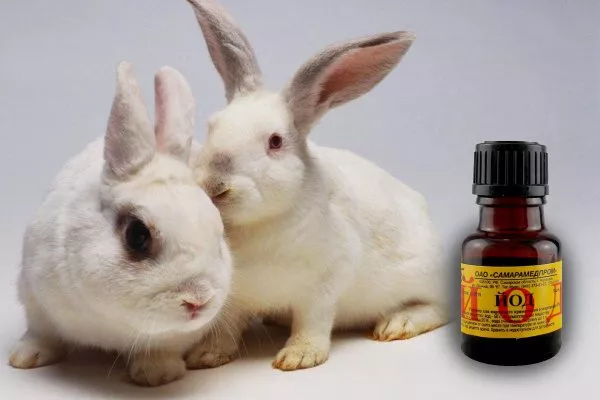
Iodine solution is an antiseptic that inhibits the growth of coccidiosis pathogens. It also destroys the toxic byproducts left by the coccidia. Feeding is done in the same way as with lactic acid.
- ✓ The iodine solution must be freshly prepared, as it loses its antiseptic properties during storage.
- ✓ The concentration of iodine in the solution for drinking should not exceed 0.01% to avoid burns to the mucous membrane.
Other events
Prevention of coccidiosis also involves other actions:
- Treatment of the room/cage. It's important to disinfect the cage and the area where healthy rabbits are kept weekly. For this purpose, use specialized products from a veterinary pharmacy.
But if you can't buy them, you can replace them with hydrogen peroxide, formaldehyde, chlorine, etc. Just keep in mind that the solutions should not have a toxic effect. - Cage hygiene. Be sure to remove feces and soiled bedding daily, as they contain oocysts. If your rabbit is kept indoors, change the litter as well.
- Rabbit breeder's hygiene. Before feeding or handling the animal, be sure to treat the skin with disinfectant or put on gloves. If the rabbits are indoors, keep your shoes clean.
- Dishes. The containers from which eared pets drink and eat must be clean, for which they are washed daily with soda and detergents.
- Strengthening the immune system. Don't forget to add vitamin and mineral supplements to your pet's diet to keep their immune system strong.
- Ventilation of the room. Even in winter, the room where rabbits are kept must have sufficient oxygen. To achieve this, ventilate the room for at least 30-40 minutes during cold weather. In summer, ensure a 24-hour supply of fresh air.
- Feed. Avoid buying overly cheap, low-quality foods that raise doubts. Even if you've already purchased them, be sure to treat them with lactic acid to kill bacteria.
- Negative external influence. Avoid high humidity, drafts, and sudden temperature changes. If a sudden cold snap is expected, turn on heating appliances. These factors significantly weaken the immune system.
Common mistakes when treating rabbits
Beginning rabbit breeders sometimes face the problem of failing to cure a rabbit with coccidiosis. This is largely due to mistakes they make. For example:
- the solution is prepared not before use, but in advance, but over a long period of time it loses its medicinal properties;
- the rabbit breeder ignores the rules of disinfection and hygiene, naively believing that these are not the most important measures - thus, new microorganisms again enter the rabbit's body;
- Incorrect dosage – be sure to strictly follow all instructions for use, otherwise it will be impossible to achieve the desired result;
- use of drugs that have expired;
- violation of the drug intake regimen.
How do rabbits die?
According to statistics, the survival rate of rabbits infected with coccidiosis is 50-60%, especially in chronic cases where symptoms are mild. Before death, these long-eared rodents undergo convulsions, causing excruciating pain.
Coccidiosis is common in rabbits, so prevention is crucial. Failure to seek veterinary attention and initiate treatment promptly can result in the loss of your entire flock.