
Rabbits' ears are susceptible to all sorts of infections and parasites, and if not properly cared for, they can become inflamed. Let's learn what diseases threaten rabbit ears, how to recognize them, and how to prevent and treat them.
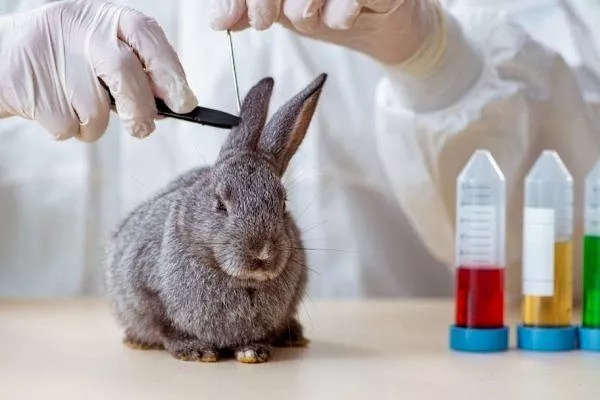
Earwax
Earwax buildup is not a disease. Earwax production is a normal, non-pathological process. A large amount of earwax accumulates in the ear canal, causing it to become clogged. A clogged ear canal can lead to other ear diseases. Cleaning the ear canal is the solution. This should be done with extreme care and gentleness to prevent panic. If the rabbit becomes frightened and struggles, it could injure itself.
How to clean a rabbit's ears:
- Carefully bend back the edge of the ear.
- Use a cotton swab to clean the inner surface of the ear, removing any wax buildup and other dirt.
- Do not push the tampon deep into the ear, as this may damage the eardrum.
A healthy ear has smooth, pale pink skin. When cleaning a rabbit's ears, inspect them carefully – if there's any redness, flaking, or abscesses, take the animal to the veterinarian.
If the wax accumulated in the ear emits a strong, unpleasant odor, it is likely that parasites have settled in it.
Preventing earwax buildup is easy: clean your pet's ears periodically, without waiting for wax plugs to form.
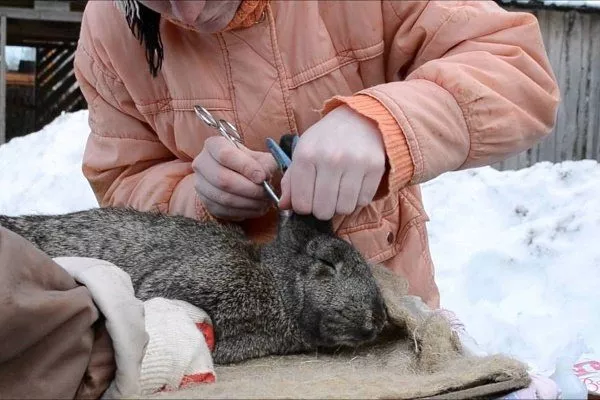
A piece of cotton wool soaked in a special lotion for cleaning the ears of animals is wound around a medical clamp.
Purulent otitis
In its early stages, this disease is difficult to differentiate from psoroptosis. Moreover, the disease is difficult to detect altogether—the infection is located behind the eardrum, making it impossible to visually detect the problem.
Causes of purulent otitis:
- hypothermia;
- head injuries;
- poor nutrition;
- fungal disease;
- sulfur accumulation;
- insects and parasites;
- injuries to the inner surface of the ears;
- somatic weakness.
Symptoms:
- lack of appetite;
- inappropriate response to touching the ears;
- when the disease worsens, purulent discharge appears in the auricle;
- with progressive otitis, the functioning of the vestibular apparatus is disrupted - the animal makes strange movements when moving, as if it does not see surrounding objects;
- the eyes are constantly moving - rotating or moving horizontally.
If you suspect or detect otitis, contact your veterinarian to find out what to do and what medications to use.
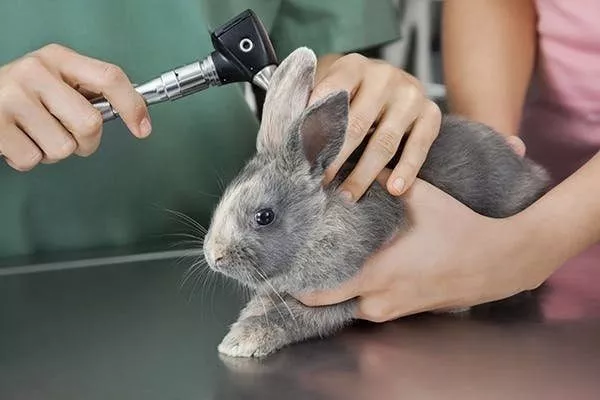
Self-medication is not recommended—choosing the wrong medication can worsen the rabbit's condition. Treatment typically involves ear drops—they're placed in the ears to relieve pain and reduce inflammation.
Myxomatosis
A dangerous disease that, along with inflammation, causes purulent conjunctivitis. The animal's body becomes covered in bumps and blisters.
Symptoms that can be used to diagnose myxomatosis appear 20 days after infection. However, if you carefully examine your pets daily, you can recognize the disease in its early stages by looking for red spots on the skin and hardening of the ears and eyelids.
Symptoms of progressive myxomatosis:
- The temperature spiked to 41 degrees Celsius. But after a while, it returned to normal.
- Watery eyes. The condition resembles conjunctivitis – the lower eyelids are filled with purulent clots.
- The body is covered with tumors comparable in size to a pigeon's egg.
- The head and genitals swell.
- The ears are lowered and the scalp is covered with folds.
- Inflammation in the oral cavity. Wheezing and purulent discharge appear.
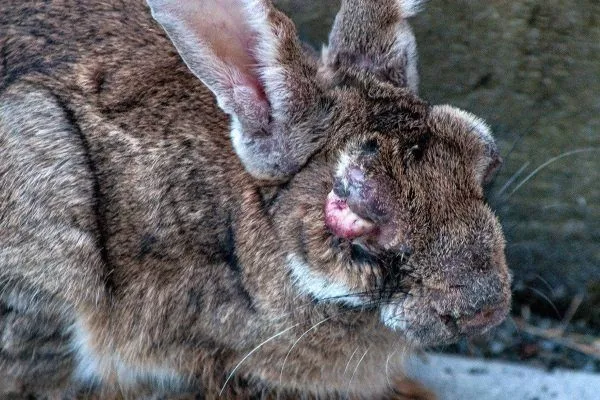
Myxomatosis in a rabbit
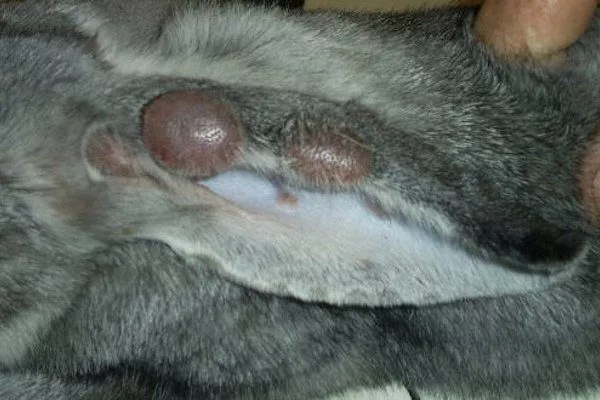
Tumors on a rabbit's ear
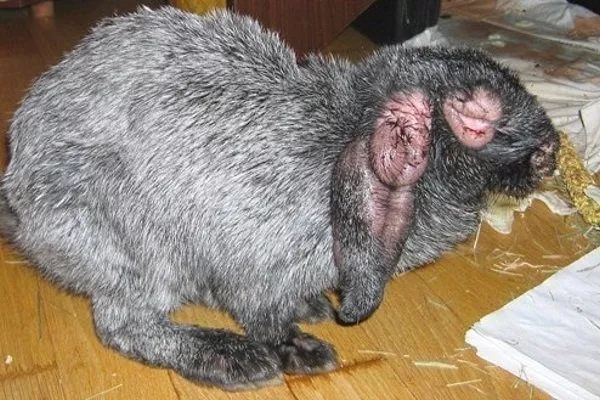
Severe myxomatosis in a rabbit
Timely and proper treatment yields positive results. The veterinarian prescribes strong antibiotics and immunomodulators. Gamavit, Baytril, or Ringer's injections are administered subcutaneously. Nasal drops prescribed for myxomatosis are placed in the nasal passages, and the wounds are treated with iodine.
If symptoms are not recognized in time and measures are not taken, one sick rabbit can cause the death of the entire herd.
Both recovered and sick rabbits are kept in a warm room, isolated from the rest of the herd. Post-treatment recovery takes three months.
Many rabbit breeders treat myxomatosis, quite successfully, with folk remedies. However, these are only effective in the early stages of the disease. Folk remedies for treating myxomatosis include:
- treatment of affected areas with overcooked sunflower oil;
- treating ear wounds with urine that has been previously kept in the sun for 3 hours;
- feeding with fresh horseradish leaves;
- adding pumpkin pulp and freshly squeezed pineapple juice to the feed;
- aromatherapy with eucalyptus oil;
- injection of camel thorn solution into the shin.
A breeder explains how he cured myxomatosis in his rabbits:
Ear drop
Inexperienced rabbit breeders often overlook a worrying symptom: drooping ears. This phenomenon is often unrelated to any underlying medical conditions. However, a rabbit breeder's job is to carefully examine the ears.
Finding the cause of ear droop:
- During the examination, they check to see if there are any sores or wounds in the ears, or foreign bodies in the ear canal.
- It is convenient to lift rabbits by the ears, but this can cause the ears to fall off – during lifting, the circulatory system, cartilage, and nerve endings can be damaged.
- If the ears are healthy and no problems are detected, the ear drooping may be due to high ambient temperatures. This is typical for young birds, whose ears often droop in hot weather.
- Ear drooping may be due to the rabbit being playful—perhaps it simply pinned them. Mechanical kinking may also occur.
- Ears may droop due to the presence of parasites in them.
If the ear is folded, a support structure is created for it—a kind of splint. Or the ear is taped to the other ear, which has retained its shape. If the ears are folded due to parasitic insects, appropriate treatment is used.
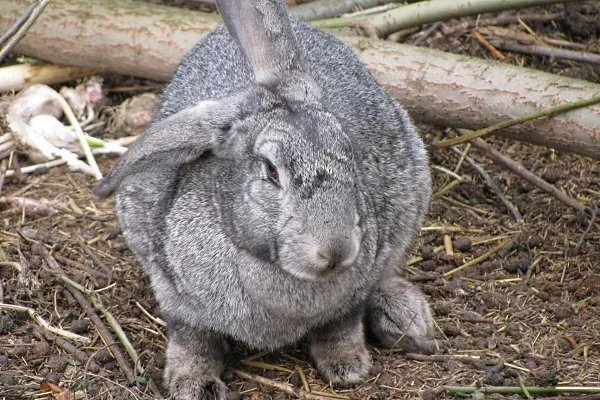
Psoroptosis (ear scabies)
The source of this infectious disease is the ear mite. This insect hides in the ear canals and is difficult to spot. The incubation period is 3-5 days. If rabbits are kept in cages, the disease becomes widespread. Epidemics typically occur in winter and spring.
Causes of ear mites:
- Infection occurs when wax falls out of the ears of a sick animal, or when it comes into contact with its dandruff.
- Equipment and other items that were used to care for a sick animal were not disinfected.
- Scabies can be transmitted from sick rabbits to healthy ones by people caring for them.
Symptoms:
- Anxiety, animals rub their ears with their paws, shake their heads.
- In mild forms, inflammation develops, resembling weeping eczema.
- On the inner surfaces of the ears are red swellings that eventually develop into blisters. These blisters burst, leaking a yellow fluid that dries and forms crusts. The ear canal becomes clogged with lumps of wax.
- In severe cases, the lesions merge, producing copious discharge of wax and pus. The resulting crusts completely block the ear canal.
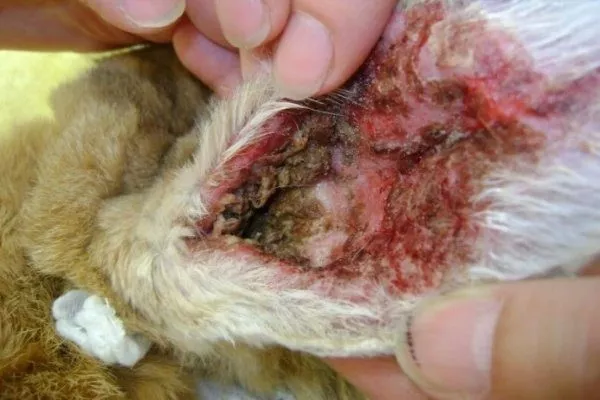
If ear mites are left untreated, the inflammation spreads deeper, to the brain. The meninges become affected, and the animal develops a central nervous system disorder.
A diagnosis of psoroptosis is made by examining scrapings. To identify the mite yourself, take a scraping from the ears and place it in Vaseline oil. Under a magnifying glass, you can examine the mites, if any are present.
Treatment of psoroptosis:
- Isolation of sick animals from the herd,
- Treat the ears with acaricidal sprays, foams, and ointments such as Psoroptol, Cyodrin, Acrodex, and Dikrezil. Repeat treatments once a week until the mites are completely gone.
- Subcutaneous injections are administered for general therapy - Baymek, Ivomek.
Preventive measures:
- Antiparasitic treatment of enclosures. Cleaning is performed at least every two weeks. Tools and equipment are disinfected.
- New animals are kept in quarantine for a month. During this time, newly acquired rabbits are examined several times for ear mites.
- Each animal is examined periodically for parasites. The minimum frequency of examinations is once a month.
- To prevent infection in young animals, pregnant sows are carefully examined a couple of weeks before parturition. Their ears are treated with preventative treatment.
The video below explains how to treat ear mites in rabbits:
Frostbite
Rabbits' ears are quite delicate, and they are the first to suffer when kept in cold conditions. Frostbite is caused by low temperatures.
Symptoms of frostbite are easy to identify:
- The ears become cold and swollen. Touching the ears causes pain—this is first-degree frostbite.
- In second-degree frostbite, blisters appear on the ears, which burst, forming purulent ulcers. The skin dries and peels off, becoming covered with open sores;
- Third degree frostbite is accompanied by severe pain and death of the affected tissue.
The injured animal is moved to a warm place. For first-degree frostbite, apply lard (pork or goose fat) to the affected areas. For second-degree frostbite, use camphor or iodine ointment. For third-degree frostbite, veterinary assistance is essential. Dead areas will need to be removed, and any resulting wounds are treated with the usual methods.
A breeder shows a rabbit with frostbitten ears:
To prevent frostbite on the ears, the cages are insulated with straw mats. On particularly cold days, they are used to cover the cages from the barred sides. Straw is also thrown into the cages to provide shelter for the rabbits during cold weather.
Cold ears
A rabbit's ears are a kind of health indicator. Fluctuations in atmospheric temperature greatly affect body temperature. To maintain its own body temperature, a rabbit often lacks the warmth it receives from its fur and subcutaneous fat. A significant amount of heat is lost through the ears. They become cold when venous blood flow in the capillaries is poor.
Cold ears can be caused by:
- Reflex constriction (spasm) of capillaries due to exposure to frost.
- Low blood pressure.
- Stress, fear.
If the animal is feeling well, cold ears can be ignored. However, if the air temperature drops below -15°C, measures should be taken, such as insulating the cage and eliminating drafts. Cold ears are not a significant diagnostic sign; they usually indicate frostbite.
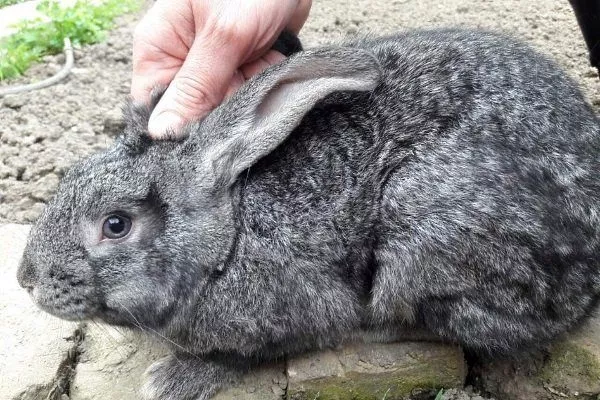
Hot ears symptom
Rabbits, like many animals, don't sweat. They exchange heat through the capillary network of their ears. If a rabbit's ears feel hot but they feel fine, they're probably just too hot.
What hot ears mean:
- Signs indicating a normal condition:
- The animals have a normal appetite and drink as usual.
- The inner surface of the ears is pink or red.
- An adequate reaction to any stimuli is observed – touch, sound, etc.
- When light enters the eyes, the pupils constrict; in the dark, they dilate.
- Urination and defecation are normal.
- Signs that indicate health problems:
- The animal is lethargic, mostly lies down, does not eat, has diarrhea, coughs, has a runny nose, etc.
- The inner surface of the ears is pale or bluish.
- No response to loud and sharp noise. If there is no response to pain, pain shock may have set in.
- The absence of pupillary response to light also indicates shock, collapse and coma.
Ear bleeding
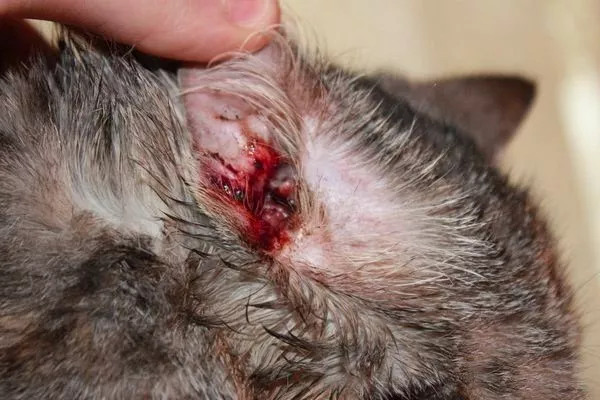
Rabbit ears have a complex vascular system. Scratching the ear can cause profuse bleeding. If blood begins to flow, wipe the ear with a cotton swab soaked in hydrogen peroxide. This removes blood from the skin and helps pinpoint the exact location of the injury—wound or scratch.
Ear damage and, consequently, bleeding, are often caused by simple scratching—rabbits tend to scratch their ears, which leads to damage. They scratch their ears due to an allergic reaction or the presence of parasites.
Rabbits' ears are one of their most vulnerable areas. Simple preventative measures, vigilant examination, and timely diagnosis can help prevent serious illnesses. If animals do become ill, proper treatment is essential to prevent complications caused by ear diseases and premature death.