
For goats to realize their milking potential, they need comfortable living conditions. A second prerequisite for high milk yield is a balanced diet. In the climate typical of most regions of the Russian Federation, the best option is a stable-pasture system.
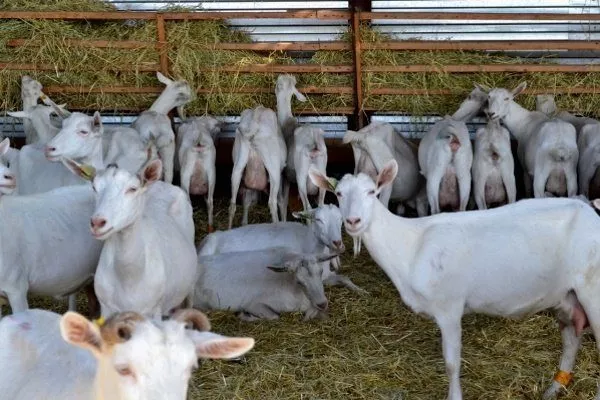
Where and how to keep goats: setting up a goat barn
Dairy goats are kept separate from the rest of the herd to prevent other animals from interfering with milking during lactation. Separating the herd into males, females, replacements, and cull animals also helps control pregnancy rates during the dry period.
- ✓ The minimum ceiling height in the goat house should be at least 2.5 meters to ensure sufficient ventilation and animal comfort.
- ✓ The noise level inside the building should not exceed 60 dB to avoid stressing the goats, which negatively impacts milk yield.
Special houses called goat houses are built for goats. Characteristics of a goat house:
- Location. A well-lit area on a hill - to prevent flooding during snow melting and rain.
- Area standard. For one adult animal – 1.5 sq. m.
- Stall. The stall width is 2 meters. Dairy goats should not be cramped, otherwise their milk yield will drop. Each animal should have its own living space. A 1-meter-high door is installed at the front of the stall. A manger can be hung on it, allowing the animal to feed without entering the stall.
- Floor. The concrete is covered with boards for warmth. If the floor isn't concrete, heated clay floors are installed, raised 20 cm above ground level. The floors are sloped to keep them dry and clean. Bedding is placed on the floor—sawdust, wood shavings, or leaves are all suitable. The recommended amount is 5 kg per square meter. The bedding is changed as it gets dirty, preventing it from rotting. Shelves can be built in the goat house for the goats to sleep on. They should be placed 50-70 cm above the floor.
- Walls. Brick, stone, or wood are all suitable building materials, as long as there are no gaps. Timber is the best option. If building walls from planks, double them, filling the space with some kind of material—peat or sawdust will do.
- Feeder. The manger is placed half a meter above the floor. A container is placed underneath to catch any food the goat doesn't like. A water bottle and a feeder with salt are hung near the manger.
- Walking pen. Goats are kept indoors during the colder months; when it's warm, the animals prefer to be outside. Therefore, a fenced enclosure is created for them. Each goat should have at least 3 square meters of space. The fence is made of boards, and to prevent the goats from chewing them, a wire fence is used. Chain-link fencing is not suitable, as the goats may injure themselves while trying to escape.
After winter, the goat's rue is thoroughly cleaned and disinfected - this will prevent the proliferation of parasites and infectious diseases.
Conditions of detention
A goat barn must be perfectly balanced. Cold, damp, drafty, lack of fresh air, stuffiness, and heat—any of these factors can negatively impact both the goats' well-being and their milk yield.
- Lighting. The pen and barn windows face south to allow more light. The windows are at least 1.5 meters above the floor to prevent animals from breaking the glass. A light bulb is hung high from the ceiling. Natural light is sufficient from mid-spring to mid-fall. After that, artificial lighting is used.
- Temperature. The optimal temperature for the goat's house is 13-21°C. Goats don't like heat, so it's best not to let the temperature rise above 27°C.
Hypothermia in dairy goats can lead to loss of milk production and reduced reproductive capacity. To prevent this, goats are kept in stalls with thick bedding during the winter. In the summer, they are moved to pasture, where shelters are erected to provide them with shelter from the scorching sun.
- Humidity. The optimal humidity level is 60-70%. If the humidity reaches 80%, goats will be comfortable at 4-6°C. If heating is provided, it is necessary to ensure that the humidity level does not drop below 75%.
- Ventilation. Natural air circulation is sufficient for ventilation. Two pipes are installed: one for supply and one for exhaust. The first is lowered almost to the floor, while the second is raised to the ceiling. On the roof, the pipe levels are distributed as follows: the supply pipe is placed flush with the roof surface, while the exhaust pipe rises higher.
What else is useful to know about keeping dairy goats:
- Goats do not necessarily need to be kept in a special “goat house”; any room that meets the conditions for keeping these animals will do.
- You can't keep a goat in the same room with goats - its smell will be transferred to the milk.
- Chickens should not be kept in the same room with goats, as they can become infected with chicken lice.
- At temperatures down to -12°C, goats are always allowed outside and fed immediately—this is beneficial for their health and productivity. Feeding is only allowed indoors during inclement weather.
- Goats are grazed beginning in the spring, avoiding damp and marshy pastures, as these can lead to helminth infections. To avoid digestive upset, goats are gradually acclimated to grazing—starting with 1 hour, then 2 hours, and so on.
How and what to feed dairy goats?
The common belief that goats are undemanding in terms of feed is a misconception that results in low milk yield. Feed composition and feeding system are particularly important when raising dairy goats. To achieve high milk yield, the animals are provided with high-quality feed—in the right quantity and composition—and clean water.
This video will tell you what to feed dairy goats:
Feeding rules
Rational feeding is the key to high milk production. Feeding guidelines for high-yielding dairy goats:
- Feed should provide young animals with energy for growth, and adults with energy for maintaining a constant body weight.
- To maintain the animal's health, it is given a sufficient amount of proteins, vitamins and minerals.
- During pregnancy and lactation, the animal receives additional nutrition.
- The diet of dairy goats should not contain a lot of grain.
- Minerals and trace elements of mineral salts are fed separately.
- There should always be hay in the feeder.
- The amount of feed depends on the size of the goat - large ones require more food than small ones.
Roughage
To avoid disrupting goats' digestion, they are fed 1 to 2.5-3 kg of roughage. Goats most readily eat hay—meadow and forest hay. Branches can be substituted for 50% of the daily requirement. In terms of nutritional value, 2 kg of dry branches and leaves are equivalent to 1 kg of hay.
Succulent feed
The best succulent feed for goats is grass. When kept indoors, green grass must be replaced with other succulent feeds, such as silage, root vegetables, and potatoes.
Succulent feeds are important for their vitamins, without which normal development is impossible. They not only improve digestion but also act as an effective lactation aid. Goats are fed 2-4 kg of succulent feed, raw and pre-ground:
- fodder beet;
- turnip;
- rutabaga;
- carrot.
Boiled or baked potatoes are fed at a rate of 1-2 kg per goat. Silage is given up to 3 kg. Goats are also given 3-4 kg of succulent feed per day:
- beet and carrot tops;
- cabbage leaves.
Food scraps and potato peelings are fed to goats, sprinkled with bran.
Concentrates
The nutritional value of concentrated feed is two to three times higher than that of hay. An adult animal receives up to 1 kg of barley, oats, corn grain, or bran. 800 g of cake per day.
Grain feed is crushed before feeding, and the cake is given in a finely ground form. Bran is soaked in water to prevent feed dispersion and coughing in goats. Any concentrated feed is given as a mixture.
Vitamins
Vitamins influence many aspects of physiology and health, including lactation. Vitamin supplements promote high milk yields. They are most easily purchased at veterinary clinics. Vitamins are sold as pills and injections. Injections are preferred, as vitamins given with food are less well absorbed.
Goats benefit from sunny walks to produce vitamin D, which normalizes metabolic functions. Dairy goats also need vitamin A, which supports the reproductive system, digestion, and urinary functions. A daily intake of 15-20 grams of each vitamin is required.
By purchasing a premix, you can provide your goat with all the necessary nutrients. For example, the "Zinka" premix increases milk production. It contains vitamins A, D, and E. The premix increases milk yield and improves the goats' overall health. The premix is fed with wheat flour in a 1:1 ratio. Dairy goats are given 20 grams of the mixture.
Mineral supplements
Milk production constantly requires minerals from goats. If an animal is deficient in certain micro- and macronutrients, this inevitably impacts its health. These deficiencies are addressed with specialized mineral supplements for goats.
Goats are given salt, the main mineral supplement, year-round. Barren goats receive 6-8 g, pregnant goats 10 g. They are also given bone meal and crushed chalk. Salt licks are very popular among goat breeders—in addition to salt, they contain all the micronutrients necessary for a dairy goat.
Benefits of salt licks:
- milk productivity increases;
- many are prevented goat diseases;
- live weight increases;
- a thick coat of wool grows.
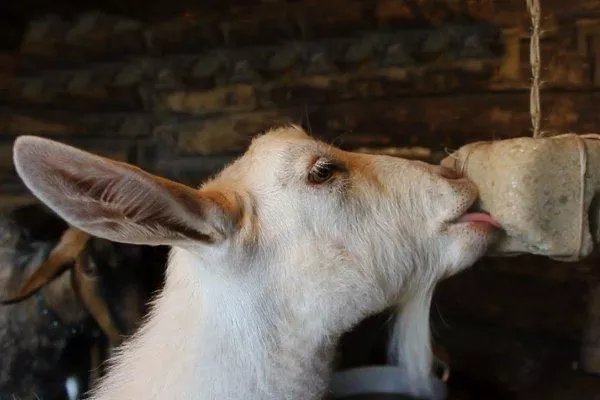
Table 1 shows the consequences of mineral deficiency.
Table 1
| Element | Consequences of deficiency |
| Magnesium | Unsteady gait, convulsions, death. |
| Potassium | Drowsiness, weakness, death. |
| Sulfur | Loss of hair, constant salivation. |
| Iron | Oxygen starvation and the development of many diseases. |
| Table salt | Decreased milk yield, anemia, lethargy. |
| Manganese | Deformation of limbs, cessation of lactation. |
| Iodine | Urogenital diseases, coat problems, eye diseases. |
Diet and feeding schedule
Recommended schedule:
- First feeding (morning) – 7 am
- Second feeding (at lunchtime) – 13-14 h.
- Third feeding (evening) – 7 p.m.
Equal intervals are maintained between feedings and milking. It's best to milk goats after feeding or during mealtime, when the animals are consuming roughage.
During the grazing season, in addition to water, goats are given supplementary feed in the morning and evening. A goat can eat up to 8 kg of grass per day while grazing.
Sequence of feeding:
- Drink with compound feed.
- Succulent feed.
- Roughage.
Silage is fed in the first half of the day—either in the morning or in the afternoon. In the evenings, animals are fed easily digestible food.
When feeding goats dry feed, they are given plenty of water twice a day—3-4 liters per serving. The water temperature should be 8-10°C. Goats should not be given cold water to avoid illness.
An example of a diet for high-yielding dairy goats is shown in Table 2.
Table 2
| Stern | Weight, kg |
| hay | 2.5 |
| compound feed | 0.4 |
| roots | 2 |
| oats, barley | 0.5 |
| brooms with leaves | 1 |
When producing milk, feed must be rich in protein, vitamins, and minerals. As the proportion of legumes increases, the protein content of the grain mixture decreases. A hay and grain diet for dairy goats with a mineral supplement is shown in Table 3.
Table 3
| Fodder | Protein level in grain, % | A mineral mixture given with forage |
| Legumes or mixed (more legumes) | 14-16 | high in phosphorus |
| Grass or mixture (more grass) | 16-18 | two parts calcium to one part phosphorus |
Milking goats, when in optimal condition—mid-lactation—should have as much hay as they can eat, as well as 450 g of grain for every 1.36 liters of milk they produce. Goats, including dairy goats, are not fed whole grain. Instead, they are fed crushed or flattened grain. Examples of diets using grain with different protein contents are in Table 4.
Table 4
| Ingredients in 11 kg of mixture, g | protein content 14% | protein content 16% | protein content 18% | protein content 20% |
| flattened or crushed corn | 380 | 330 | 270 | 220 |
| oatmeal | 200 | 200 | 200 | 200 |
| soybean meal (44%) | 190 | 240 | 300 | 350 |
| beets and citrus pulp | 100 | 100 | 100 | 100 |
| blackstrap molasses | 100 | 100 | 100 | 100 |
| mineral salts | 10 | 10 | 10 | 10 |
| dicalcium phosphate | 18 | 18 | 18 | 18 |
| magnesium oxide | 2 | 2 | 2 | 2 |
For goats to be healthy and produce high milk yields, constant access to clean water is essential. Warming the water will encourage goats to drink more during cold weather.
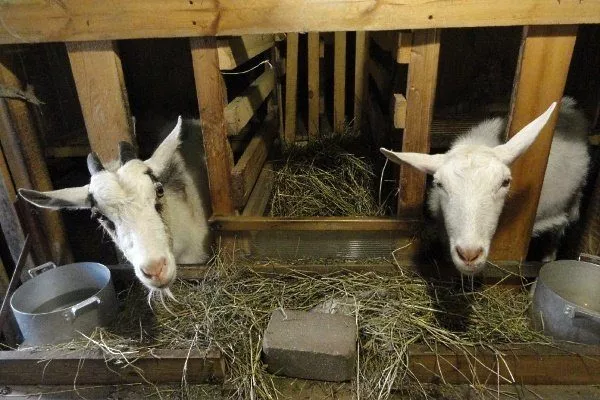
During the winter (which lasts about seven months), one goat eats approximately 530 kg of roughage. Of this, 260 kg is hay, and the rest is brooms.
You can find more information about feeding goats in winter. Here.
Feeding regime in winter:
- In the morning – swill with mixed feed and root vegetables. Then milking and feeding of roughage.
- At lunchtime – silage or root crops, swill with food waste. Then milking and distribution of hay or brooms.
- In the evening - moistened concentrated food and a pair of brooms.
Feeding during pregnancy
During the first half of pregnancy, goats' diets remain largely unchanged. Only feed intake decreases slightly. During this period, animals expend little energy, and normal levels can lead to obesity and postpartum complications.
- Two months before the expected lambing, begin to gradually increase the proportion of concentrated feed in the goat’s diet.
- One month before lambing, deworm and vaccinate as recommended by a veterinarian.
- Two weeks before lambing, prepare a separate, clean and dry place for the goat and the future kid.
Pregnant goats' diets reach their peak quality in the fourth month. They require a high amount of calcium, vitamins, and microelements. A calcium deficiency can lead to tooth loss. To prevent this, pregnant goats are fed chalk and bone meal, which are added directly to their feed.
The main diet for pregnant goats is high-quality hay. Pregnant goats are not fed straw. However, they can be fed dry brooms, but no more than 300 g per day. Two weeks before lambing, their intake of succulent feed is limited, and grain is not given at all.
Feeding after lambing
After giving birth, the goat is given a bran slurry or flaxseed infusion to drink. After 1.5-2 hours, the mother is milked to prevent udder distension. The first milk is discarded; it should not be fed to the kids.
Rules for feeding after lambing:
- For a week after lambing, goats are given mixed grass hay and root crops.
- Every 3-4 hours the goat is fed with a warm drink made from bran or flour.
- Concentrates and succulent feeds are gradually introduced into the feed.
- Chalk, salt and bone meal must be included in the diet.
Features of milking and milk during pregnancy and lambing
Milk production from dairy goats is closely linked to their physiological condition. To obtain high milk yields from dairy goats, it's essential to milk them at the right time.
It's recommended to wean goats 2.5 months before lambing. There's a myth that pregnant goats' milk becomes bitter. This is a misconception; goats are weaned not because of any particular milk quality, but to ensure high milk yields in the future. If you miss the weaning time, you can't expect good milk yields—the goat will become emaciated.
Before weaning, the goat is switched to hay, water, and brooms to reduce lactation. Understandably, this causes the milk to lose its nutritional value and fat content, and all the goat's internal resources are devoted to the development of the fetus and maintaining her health.
Goat Launch Scheme:
- During the first week of launching, the pregnant female is milked only once a day.
- In the second week of launch, milking is done every other day.
- If by the second week the female produces no more than 250 ml of milk, she is milked a couple more times - every other day, then a break is taken for three days and milked again.
- A few days after the last milking, the udder should droop and become soft. If there's even a little milk left, it's milked out to prevent mastitis. Now the goat is in a state of lethargy—she has no milk.
- For another week after the launch, the goat is kept on a diet to prevent lactation, and then transferred to a normal diet.
Dairy goats have been bred for milking for centuries, so it's not uncommon for them to continue producing milk while refusing to rest. Experts advise that if lambing is 1.5-2 months away and the goat produces 1.5-2 liters of milk per day, don't insist on resting her. Infrequent milking will cause her udders to sag. In this situation, it's best to milk the goat thoroughly and feed her well. If done correctly, neither the fetus nor lactation will suffer.
It's important not to miss the moment when the milk's composition changes. This happens after lambing. Humans shouldn't drink it for two days, but kids can. However, this milk is only considered colostrum if the goat has had at least 3-4 weeks of rest before lambing. Goats that are milked continuously don't produce colostrum; it must be taken from other goats or stored for future use.
Milking goats and udder care
A goat's milk production depends largely on proper milking and udder care. Experienced goat breeders and specialists advise:
- Milking a goat in a stall – here she stands quietly, without interfering with the milking process.
- If the goats graze, they are milked in stalls in the mornings and evenings, and in the pasture during the day.
- Milking is carried out at the same time.
- If the kids are weaned from the mother, in the first days after lambing the goat is milked 4 times a day, then 3 times, and as the milk yield decreases, 2 times.
- If milking is three times a day, the first milking is at 4-5 am, the second at 12 pm, and the third at 7-8 pm. If milking is two times a day, the goats are milked at 5 am and 7 pm.
Rules for milking and udder care:
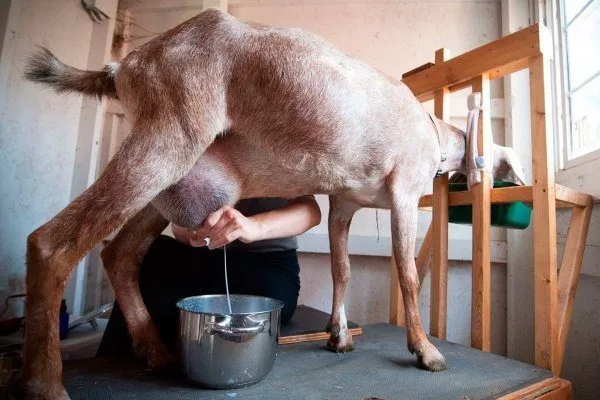
- Before milking, the udder is washed with warm water and wiped dry with a towel.
- Before milking, the udder is massaged to increase milk yield. Each half of the udder is massaged alternately.
- It is best to milk with your fist.
- The first streams are dirty and are not milked into the milk pail.
- The milk is milked thoroughly; the last portions are the fattiest.
- They milk the goats quickly, without taking breaks.
- After milking, the udder is wiped with a clean, dry towel, and the nipples are smeared with Vaseline.
What problems does a dairy goat farmer face?
A goat's milk yield depends on many factors, the most important of which are breed, feed, and the period of her life. It's possible for a goat to produce little milk during her peak milking period—the third or fourth month of lactation. There are many reasons for this decline in milk yield, and determining the true cause requires extensive investigation.
Reasons for a drop (or complete loss) in milk yield:
- Mastitis. This disease is often caused by a retained placenta and inflammation of the uterus. If the mastitis is purulent, milk production stops altogether. If your animal has a fever, discharge, diarrhea, or coughing, call your veterinarian.
- Pathology of internal organs. Lack of vaccination and deworming treatment is a common cause of these painful conditions. Regular veterinary checkups and treatments are essential.
- Poor nutrition. Feeding accounts for 50-60% of milk yield. Incorrect diets, underfeeding, and poor-quality feed can lead to a sharp decline in milk yield. Goats are sensitive to even the slightest changes in diet. Having become accustomed to one type of feed, they have difficulty adapting to another. Sudden changes can lead to diarrhea and enteritis. If the feed is not digested, there will be no milk. Reasons for decreased milk yield include:
- A sudden change in diet – replacement of food or switching from summer to winter, or vice versa.
- Underfeeding, poor nutrition.
- Low protein content. The higher the milk yield of a goat, the more protein it requires.
- Lack of minerals and vitamins.
- Poor quality food. Poisonous plants.
- Violation of conditions of maintenance and care. The kids can "milk" the milk out. If there is no milk left, it's best to separate the kids from their mothers. Dampness and cold in the goat barn reduce milk yield.
- Problems with milking. The pain caused to a goat during milking causes the animal to resist the procedure, and the milk is lost reflexively. To prevent this, it is necessary:
- Milk not by pinching or twisting, but with your fist.
- Check the serviceability of the milking machine.
- Treat any injuries to the udder or teats.
- Age.Milk yield increases until lambing 4-5, then productivity declines. If a goat is well fed and properly cared for, she will continue to milk for up to 12 years.
- Temperament. A calm temperament is the key to consistent milk yield. Active and aggressive animals produce less milk.
Do dairy goats need to be combed and sheared?
Dairy goats should be brushed with a stiff brush as often as possible. This procedure removes dirt and sweat from the fur, improves the animal's breathing and circulation, which positively impacts milk production. If dairy goats are not brushed and washed, their milk will have a foul odor.
Dairy goats are sheared in the spring. It's important to wait until warm weather arrives to prevent the shorn animals from catching a cold. All breeds are sheared, except for those with short guard hairs, such as Saanens. Dairy goats aren't sheared in the fall; this procedure is reserved for breeds bred for wool.
Goats are washed weekly with warm water and baking soda to prevent lice. If these parasites do appear, the following measures are taken:
- sprinkle the wool with pyrethrum powder - approximately 30 g per individual;
- wash with special soap against lice.
When goats are kept in a barn, their hooves often wear down more slowly than they grow. To prevent widespread foot disease in the herd, goats' hooves are regularly trimmed with a knife to a normal size.
How to preserve milk?
Milked milk is immediately cooled by placing it in a refrigerator or immersing it in cold water. The latter method is considered more effective. If a herd produces more than 20 liters of milk per day, a large cooling tank or a water cooler for immersing the milk containers is necessary.
Cooling helps preserve the quality and flavor of milk. All milk contains bacteria, many of which are introduced from the air or container. Warm milk immediately begins to multiply bacteria, which degrade its quality. Cooling milk to 4-5°C after milking preserves its high consumer qualities.
Criteria for selecting a healthy dairy goat
When purchasing a dairy goat, pay attention to key signs of milk yield and health:
- Breed. Not only does milk yield depend on this, but also the goat's well-being in a given climate. Some breeds cannot withstand severe frosts, while others do not thrive in hot climates.
- Behavior. Healthy goats are active, curious and energetic.
- Udder. Voluminous, not pendulous, pear-shaped. Hairless, firm, its skin thin and elastic. There should be no hardening. The veins on the udder should be visible. Teats are of medium length, slightly slanted forward, and protruding to the sides.
- Physique. The chest is broad and deep, the ribs are well sprung and long. The croup is not sharply sloping. The belly is capacious. The legs are straight and set wide apart, and the hooves are strong. The skeleton is well developed, the body is elongated, slightly barrel-shaped.
- Teeth. They determine the age of the animal. By age 5, all of the goats' incisors are worn down and become oval. By age 6, the incisors become rounded, with gaps appearing between them. By age 7, the teeth become loose and begin to fall out, and by age 8, only stumps remain. Goats aged 7-8 are unsuitable for milk production—they chew feed poorly, and milk production declines.
- Parasites. A healthy goat should be free of fleas and other insects. After petting the animal, part the fur—parasites are especially visible in white and light-colored fur.
- History of life. Milk yield and the duration of subsequent lactation depend on the goat's age, the number of lambings, and other factors in her life. A goat produces its highest milk yield after 2-3 lambings. After 6-7 years of age, milk yield gradually declines.
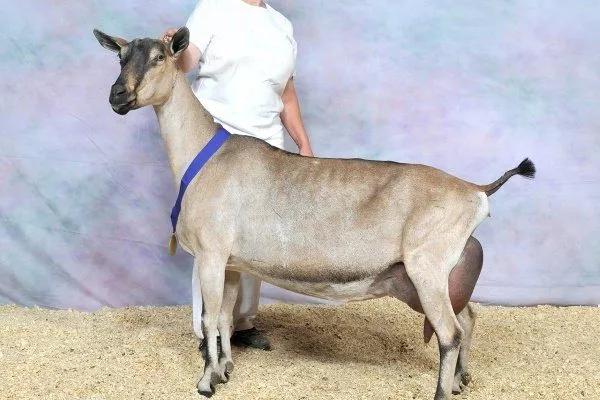
Recommended dairy breeds
| Name | Milk yield per day (l) | Milk fat content (%) | Lactation period (months) |
|---|---|---|---|
| Saanen | 4-8 | 4 | 11 |
| Nubian | 4-5 | 4.5 | 9 |
| Toggenburg | 3 | 4.5 | 8.5 |
| Russians | 2 | 4 | 8 |
| Alpine | 3 | 3.7 | 9 |
| Cameroonian | 0.5-1 | 4.5-5 | 5 |
| Czech brown | 4 | 3.5 | 9 |
The best breeds of dairy goats:
- Saanen. This polled breed originates from France. The goats are large, reaching up to 90 cm at the withers. Females weigh up to 80 kg, males up to 110 kg. They are milked 11 months a year. With proper care, annual milk yield can reach up to 1,200 liters. Daily milk yield is 4-8 liters. Fat content is 4%. They produce 1-3 kids per lambing. The milk lacks a distinctive "goaty" odor. This breed is considered highly adaptable, but some animals may have difficulty acclimating to the climate. They are bred in the southern to central regions of Russia.
- Nubian. A breed of English origin. Their ancestors come from Namibia. These goats reach up to 1 m in height and weigh 80 kg. Distinguishing features include a small head with a Roman profile and long, drooping ears. Their legs are long and slender. Their daily milk yield is 4-5 liters. Their fat content is 4.5% or higher. The milk is used to make cheese. In Russia, even crossbreeds with Nubians are prized – their relationship with this breed improves the quality of the milk produced by native goats. The milk is odorless. Females produce 1-3 kids per lambing.
- Toggenburg. This is a large breed, standing 70 cm tall. A goat can weigh up to 45 kg. Its legs are short. Milk yield is 1,000 liters per year, or about 3 liters per day. It is milked 260 days a year. Its fat content is up to 4.5%. Protein content is 3%. This breed has long, thick wool, which is why it is raised in northern regions, such as Siberia and the Far East.
- Russians. The breed consists of several groups, created by crossing local goats with imported ones from Europe. The group names derive from the areas where they were bred: Valdai, Yaroslavl, Gorky, and Ryazan goats. These are large animals, up to 70 cm tall and weighing up to 50 kg. Males are larger, reaching up to 70 kg. Their primary color is white. They have long, sickle-shaped horns. The average daily milk yield is 2 liters. Lactation lasts 8-9 months. Fat content is 4%. The breed is easy to maintain.
- Alpine. Goats grow up to 85 cm tall and weigh 60-80 kg. They are often polled. Their wool is coarse and short. Average milk production is 3 liters per day. Fat content is 3.7%. The milk tastes indistinguishable from cow's milk—there is no odor. They are prolific, producing 4 kids per year. They tolerate cold well and can be bred in northern regions.
- Cameroonian. This miniature breed produces odorless milk. It originates from Africa. It stands 50 cm tall, weighs up to 15 kg for a female and up to 23 kg for a male. A distinctive feature is its horns, which point backward. Daily milk yield is 0.5-1 liter. Fat content is 4.5-5%. It can reach up to 10%. One glass of milk contains 2 tablespoons of cream. Lactation lasts 5 months. Breeding occurs year-round, with two litters produced per year. Breeding is limited to the Moscow region in the north and the Novosibirsk region in the east.
- Czech browns. Goats are 75 cm tall and weigh 50-60 kg. They yield 4 liters of milk per day. Their fat content is 3.5%. Their milk has a delicate, creamy flavor. This breed is sold exclusively at breeding centers. They tolerate frost well and adapt to harsh climates.
To maintain a high-yielding herd, goat breeders select the best dairy goat breeds—these are characterized by high milk yields, robust health, and calm behavior. To ensure dairy goats delight their owners with abundant milk, proper husbandry and feeding of the dairy herd are essential.