
Every beginning farmer wants to know how long goats live and until what age is it profitable to keep them. This affects the profitability of cattle breeding. In the wild, lifespan depends on factors such as the availability of water, food, and even predators, but in captivity, longevity figures are different.
Goat species life statistics
The lifespan of goats kept on farms is determined by the owner—they decide when to slaughter the animal. Most often, the purpose of raising the animals—for meat, feathers, or milk—determines the lifespan.
There are universal varieties. This category includes dairy and beef breeds. Their average lifespan is 12–15 years. They are usually slaughtered at 8–10 years of age, as productivity declines significantly by this age and the meat becomes tough.
| Name | Life expectancy (years) | Productive age (years) | Peculiarities |
|---|---|---|---|
| Meat | 5-15 | 1.5-2 | Rapid weight gain |
| Dairy | 2-15 | 6-8 | High lactation |
| Downy | 9-15 | 1-5 | Long hair |
| Dwarf | 20-25 | — | Decorative |
Meat
These goats have a massive and strong build, often barrel-shaped. They are distinguished by strong legs and a strong skeleton. Their udders are small, as the milk meat ungulates used exclusively for feeding offspring.
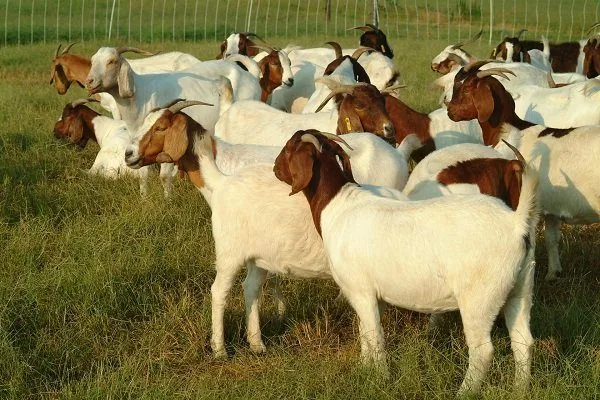
A characteristic feature is rapid weight gain. Lifespan:
- minimum - 5 years;
- average - 8 years;
- maximum - 12–15 years.
Since this breed of goat is raised primarily for meat, its lifespan is shortened before slaughter. The productive age is considered to be between 1.5 and 2 years. The exception is the stud buck, which is kept until age 6.
During this period, the farmer obtains the juiciest, highest-quality, and healthiest meat. However, if animals are kept for more than two years, metabolic disturbances occur, liver disease develops, and carcinogens accumulate in the meat.
The meat acquires an unpleasant odor and a fibrous, hard structure.
Rapid fattening requires a plentiful diet—the better the diet, the sooner the goat is slaughtered. Young goats are kept until they are 6–8 months old.
Dairy
Dairy goats are distinguished by their elongated bodies and broad rib cages. They have little subcutaneous fat, while their backs and legs are perfectly straight. The udder is firm, pear-shaped, and always warm. Unlike meat breeds, their teats are long, and fertility is increased.
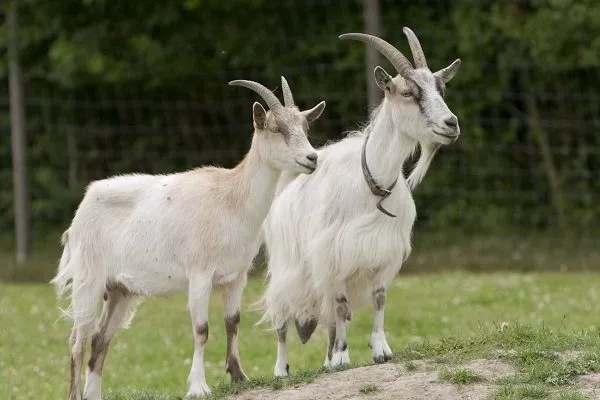
Due to the value of goat milk, dairy goats on farms live up to 16–17 years, provided they maintain normal lactation. Males from dairy mothers are kept for only 5–6 years. In the wild, they live a maximum of 10 years due to a lack of nutrients.
Life expectancy indicators of dairy goats:
- average - from 2 to 8;
- maximum - up to 15.
The most productive age is considered to be between 6 and 8 years, when the maximum amount of milk can be produced with excellent quality and value. A goat can milk for up to 15–16 years, but milk yield declines over time, and the animal is slaughtered.
Downy
Downy goats They are raised for their fur. Farmers most often buy the Angora breed, which is renowned for its long, highly insulating wool.
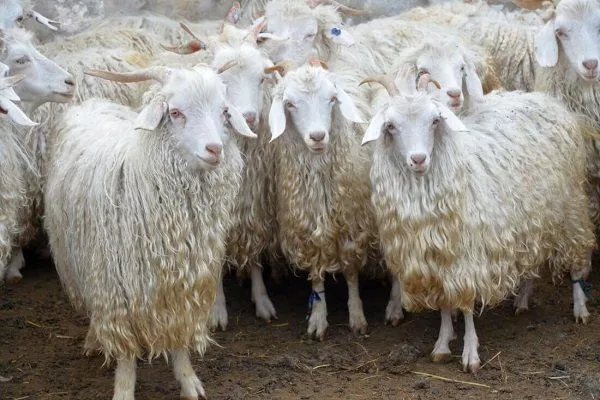
Life expectancy characteristics:
- average statistical data - 9-12 years;
- maximum duration is 10–15 years.
The most productive period is considered to be between 1 and 5 years of age. During the following 7 years, fur is also used for commercial purposes, but in smaller quantities.
Dwarf
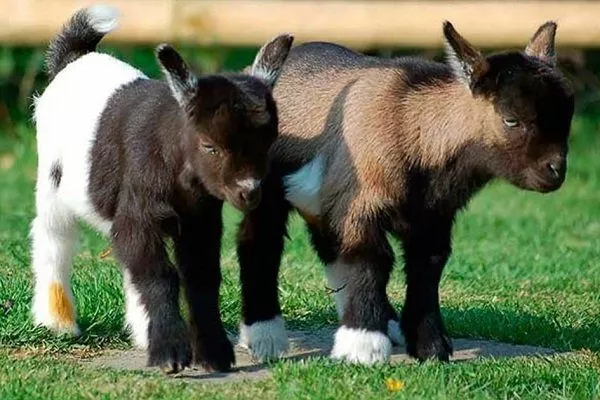
Miniature goats are an exotic breed. They weigh 28–30 kg and grow to 40–50 cm (body length up to 70 cm). Dwarf breeds are available for both meat and dairy production.
A characteristic feature is that they are rarely milked or slaughtered for meat, as they are not known for their high performance (their body weight is small, and their milk yield is low). They are most often bred for private pleasure.
Factors Affecting Life Expectancy
Goats' lifespans are significantly reduced if improperly managed, as they are susceptible to frequent illness, exhaustion, insect attacks, and more. Unsanitary conditions can even lead to the death of these ungulates. Diet plays a significant role, as it affects the animal's productivity.
- ✓ The optimal temperature in the room for goats should be maintained within the range of +13°C to +28°C, depending on the climate zone.
- ✓ A minimum of 4 square meters of free space per individual must be provided to prevent stress and diseases.
Climate
To ensure a long lifespan, a goat must be adapted to specific climate conditions. There are breeds suitable for the southern and northern regions of the country. Southern breeds are suitable for northerners, as these goats easily adapt to cooler weather.
Why else should you consider these features:
- under opposite climatic conditions, productivity is significantly reduced - goats develop slowly, do not gain the weight typical for the breed and produce little milk;
- The animal experiences stress, which reduces appetite and immunity, which is responsible for the body's resistance to disease.
Life expectancy characteristics:
- in the southern regions, the air temperature in the pen or stall should be from + 20 to + 28°C, thanks to which goats will live up to 9–10 years;
- In the North, the optimal temperature range is from + 13 to + 21°C; life expectancy in such conditions is 12–15 years.
Conditions of detention
Without following the rules for breeding ungulates, it's impossible to produce a long-lived goat. Raising animals, regardless of breed or purpose, requires mandatory grazing. In summer, this is all day long; in winter, it's a maximum of three hours.
What conditions must be created for the comfortable living of livestock:
- To prevent animals from freezing in winter, build a warm barn (made of brick, cinder block, logs, etc.), and, if necessary, insulate it, which is especially important in cold climates;
- Be sure to arrange beds with straw laid down near the walls;
- the floor should be wooden and always clean (clean frequently from food residues, feces and urine);
- ventilate the room if there is no ventilation system (fumes from excrement can cause intoxication);
- Comb goats, especially downy ones, otherwise parasites will appear in their fur.
What is strictly prohibited:
- leaving animals in a stall all day;
- place them in a room with a concrete floor and without bedding (sawdust, wood chips, straw);
- intentionally reduce daylight hours by locking them in a dark barn (they should receive light for at least 10 hours a day);
- Leave the light on all night - goats need to get plenty of rest.
Nutrition and drinking water requirements
Goats, unlike other cattle, have a highly accelerated digestive system. They have special requirements for the quality and quantity of feed.
If the nutrition does not meet the standards:
- productivity decreases;
- the functionality of the gastrointestinal tract deteriorates;
- teeth fall out prematurely;
- the functioning of the endocrine glands is disrupted.
Feeding is determined based on the animal's sex, age, physiological condition, and size. A complete diet should meet all needs—nutrients, energy reserves, etc.
Rules:
- Little kids. They are fed goat's milk for four months. Colostrum is first given 40-60 minutes after birth, and over the next 10 days, they are fed up to six times a day (initially 80 g, increasing by 20 g each day).
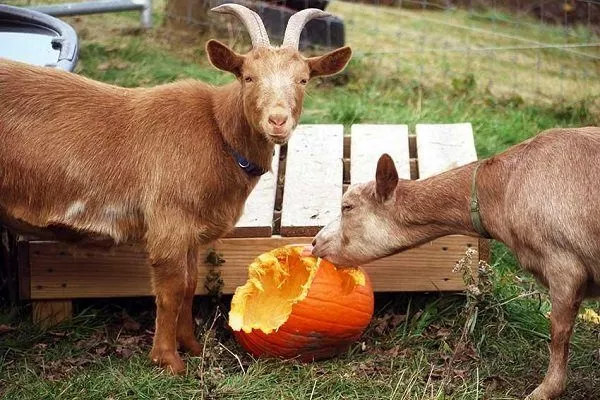
Next, four feedings are administered daily, with 300 g of milk per feeding. From day 15, 200 g of liquid porridge (semolina, oatmeal, or mashed potatoes) is introduced into the diet. At 30 days of age, bran and compound feed are introduced. - Adults. One individual requires about 1 kg of feed—hay, root vegetables, cereal stalks, bran, clover, mixed feed, barley, and oats. Cabbage leaves, pumpkin, and fresh grass are also a must.
- Pregnant goats. During pregnancy, nutrient requirements increase. In the morning, feed root vegetables (at least 500 g) and grain (about 200 g). At lunch, give 2 kg of hay, and for dinner, 100 g of grain and cake, hay, and succulent grass.
If greens are unavailable, pelleted feed can be used, but it should not be given 15 days before the due date. It's better to feed liquid bran-based porridges, steamed grains, and root vegetables. - Milking animals. Immediately after birth (for 8 days), they are given light and easily digestible foods (beans, liquid food, root vegetables, hay, and grass). Thereafter, the diet remains the same as usual. Daily feed intake is 3–4 kg.
Do not feed moldy or spoiled food. This can lead to illness.
Other factors
The main factors determining a goat's longevity are nutrition and living conditions. However, there are other factors as well:
- the hygienic condition of animals - they need to be washed (once a week with a soda solution) and combed to prevent fleas, ticks and other insects from appearing (it is important to vaccinate them on time, and if parasites are detected, treat them);
- free space - overcrowding should not be allowed, since without constant movement the goats become lethargic and sick (optimally 4 sq. m per head);
- sanitary condition of the goat's house - 2-4 times a year, disinfection of the premises and drinking bowls is required, feeders and other equipment (thus, all pathogenic microorganisms that contribute to the development of life-threatening diseases in goats are destroyed);
- Diseases—regardless of their etiology (infectious or non-infectious)—lead to disruptions in the functioning of all internal organs, which reduces productivity and increases the risk of death.
Are there any difficulties in breeding?
The main issues affecting the lifespan of ungulates are related to the goats' health. However, other challenges sometimes arise:
- Shearing animals - they do not like the procedure, but it is mandatory in the spring, especially in the southern regions (overheating of the body in the pasture contributes to the development of heat diseases, including death);
- Maintaining the mating period - the reproductive age occurs at 8 months, but they should not be mated earlier than 11-12 months, otherwise the offspring will be weak, and the goat may not give birth and die.
How to extend the life of a goat?
In addition to the above care and feeding guidelines, there are additional considerations that affect the animal's lifespan. Follow these steps:
- After lambing, do not increase the diet too much - this can lead to stomach blockage and subsequent death;
- do not crossbreed relatives;
- massage the udder (dairy goats sometimes develop mastitis);
- Make sure there are no drafts in your pet's home; do not walk them during rain or severe frost;
- avoid getting pregnant too early;
- Keep adult male goats separate from young animals (rivalry among male animals can lead to fights that can cause injury).
How to determine the age of a goat?
Dental condition is the main criterion for determining age. Teeth emerge one after another, with baby teeth wearing down and being replaced by permanent teeth.
How to determine age by teeth:
- newborns - no teeth, incisors appear on the 3-4 day;
- fifth day of life - there are central hooks;
- second week - middle incisors;
- beginning of the fourth week - edges appear;
- 3 months – premolars grow (first on the lower jaw, then on the upper jaw);
- 15 months - the teeth fall out and permanent incisors appear;
- 17 months – all grown baby teeth are replaced;
- 2–2.5 years – only indigenous teeth are present.
Abrasion grade:
- 4 years - incisors and edges are the same length;
- 5 years - the labial surface is heavily worn;
- 6 years - surfaces become quadrangular;
- 7 years - incisors acquire a rounded shape;
- 8 years - all teeth become sharp.
If your diet doesn't contain enough calcium, protein, phosphorus, and many vitamins, your teeth wear down quickly, become loose, and fall out prematurely. Excessive consumption of hard foods contributes to this wear.
There are other ways to determine a goat's age, but not all of them are effective and accurate:
| Method of determination | The level of truthfulness of the method | How to determine? |
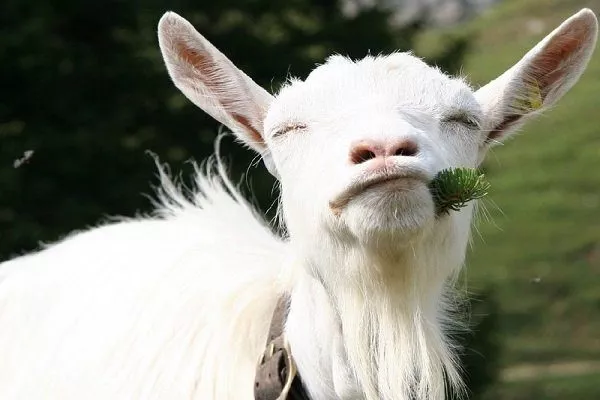
| By the horns | dubious criterion | It is possible to determine age by shade - up to 6 years old they are almost white (unless the breed specifies a different shade) and thin.
Sellers often cite the number of rings on horns and correlate them with age. This isn't true. The number of rings on horns is the same across all age groups. |
| By the beard | defines inaccurately | Conventionally, the method divides age into 2 halves - youth and old age, since kids have hanging “earrings” along the edge of the lower jaw, while goats / bucks have them under the entire jaw, while the length is significantly greater. |
| On the grain | average accuracy | In young animals, the fur is finer and softer than in adults. It's generally accepted that the latter should have clumps and tangles. In reality, this criterion depends on the goat's grooming—if the owner regularly bathes and brushes it, the fur will be soft at any age. |
| On the hooves | above average reliability | In winter, hooves are covered with hard, horny growths. In young animals, these are dense, while in older animals, they are worn down and somewhat loose. |
| By milk yield | average veracity | Milk yield depends on diet and management, number of births, etc. But in general, it is believed that after the 8-year mark, it decreases. |
| By the udder | indirect factor | In adult females, the mammary gland is larger and more distended. This is partially true. In reality, this is what the udder of a goat with multiple litters and high milk yields looks like. |
| Method | Accuracy | Applicability |
|---|---|---|
| In the teeth | High | For all ages |
| By the horns | Low | Limited |
| On the grain | Average | Depends on care |
Knowing the lifespan of goats for a specific purpose in advance allows you to calculate the profitability of acquiring and raising small ruminants. Keeping conditions, feeding principles, climate, and disease rates, all of which directly impact the animals' lifespan, must be taken into account.