
Under the same conditions, some goats produce 2 liters of milk per day, while others produce 5. Why does milk yield vary so much between goats, and can humans influence it? Read on for more information.
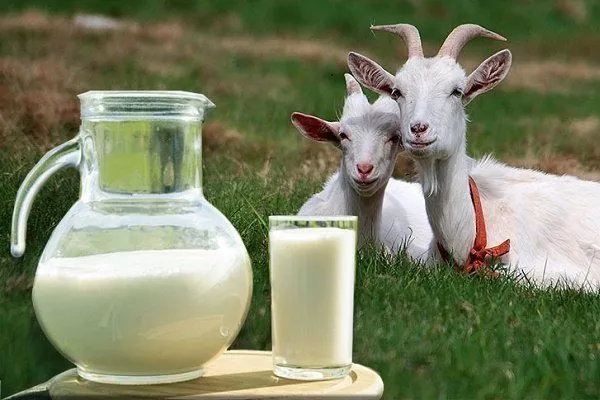
When do goats start producing milk?
Having an udder doesn't mean a goat will be a constant source of milk. To become a dairy goat, she must first become pregnant and give birth. A goat's first milk comes after her first lambing. A goat's body produces milk to feed her kids, but purebred, high-yielding goats produce enough milk for their own consumption.
There are two options for raising offspring:
- Separate from the mother goat. Some of the milk is given to the kids, and the rest is used for business – for sale, production of dairy products, etc.
- Together with the goat. Goats begin milking after 3-4 months, after the kids are transferred to regular feed. We also recommend reading the article about How to feed kids.
A few days before lambing, the udder becomes plump and firm. Goats are milked after lambing; before lambing, the udder is only washed and lightly massaged to improve circulation. After lambing, a goat milks for 6-7 months, or a maximum of 9. In the final months, milk production decreases, and it loses quality and fat content.
After 6-9 months, the goat finishes the milking season, and in order to become a source of milk again, she must produce more offspring.
Down and meat goats produce very little milk - it is barely enough for their offspring, so they are not milked after lambing.
How many liters of milk does a goat give per day?
Daily milk yield is determined by breed and individual characteristics. Goat milk production is also affected by diet and living conditions. To get a lot of milk from a goat, you need to choose a dairy breed. And for information on how to keep dairy goats to ensure they produce good milk, read on. read here.
Swiss goats are considered the most productive – the Alpine, Saanen and Toggenburg breeds produce 6-8 liters of milk per day.
Approximate milk yield of ordinary average goats:
- The average daily milk yield is 2 liters. During peak periods, when the kids are nursing, milk yield reaches 4 liters.
- Average weekly milk yield is 14 liters of milk.
- Monthly spring/summer milk yield – 55/80 l.
- Annual milk yield – 400 l.
- The amount of milk produced by a goat over its lifetime is 4-5 tons. Everything depends on how long the animal lives, the conditions in which it is kept, and many other factors.
These are very general, average figures. Some breeds produce up to 1,000 liters of milk per year. Each breed and each goat has its own specific figures.
A goat's milk yield is not constant. It changes with age and the number of lambings. Initially, productivity increases with each lambing, then gradually declines. On average, dairy goats live and milk for 15 years.
Amount of milk yield depending on breed
The number one factor influencing a goat's milk yield is its breed. The only drawback of high-yielding dairy goats is their cost. Prices for Swiss goats start at 20,000 rubles.
A goat sets a milk yield record Saanen breed – her annual milk yield was 3,000 liters.
If a Swiss goat is out of your budget, you can settle for a domestic breed—for example, Gorky or Russian goats. They produce about 3 liters of milk per day—less than Swiss goats, but more than ordinary goats.
Table 1 shows the average daily productivity for different breeds of goats.
Table 1
| Breed | Daily milk yield, l | Fat content, % | Lactation period, days | Milk productivity, l/year | Adaptability to the Russian climate |
| Saanen | 5 | 3.7-4.5 | 300 | 900-1200 | + |
| Czech brown | 4-6 | 3.5-4.5 | 300-330 | 900-1200 | + |
| Nubian | 4-5 | 4.5 | 300 | 1000 | + |
| Alpine | 4 | 3.5 | 300-350 | 750-900 | + |
| La Mancha | 3-5 | 4 | 300 | 900-1000 | + |
| Gorky | 3 | 4-5.5 | 250-300 | 500 | + |
| Russian | 2.5 | 4.5-5 | 240 | 400-600 | + |
| Toggenburg | 2.5 | 3.5 | 200-240 | 500-800 | — |
| Cameroonian | 1.5-2 | 5.3 | 150 | 200 | + |
| Megrelian | 1-2 | 4.5 | 160 | 100-250 | + |
Milk volumes depending on the age of the goat
Milk production depends on the goat's age. Maximum milk production begins after the third lambing. Goats that have reached six years of age are often referred to as "senior" goats; in fact, this is the age at which the animals reach their peak productivity.
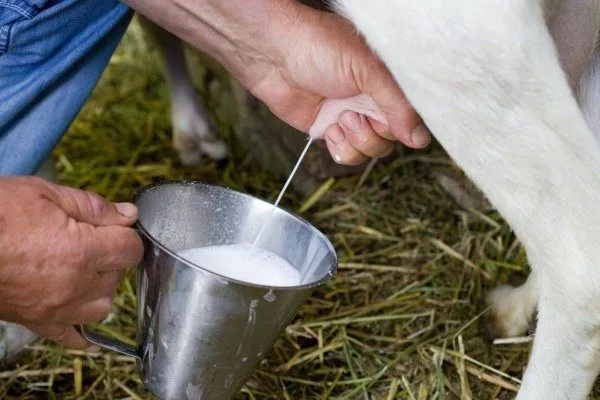
Milk yield depending on the age of the goat:
- A first-born dairy goat produces up to 5 liters of milk.
- After 2-3 lambings – up to 9 liters.
The difference between the first milk yield and the maximum is 40-50%.
Milk quantity and seasonality
Milk yield is influenced by seasonality through diet, living conditions, and feeding. The highest milk yields occur in the summer, when there are succulent feeds, and the lowest in the winter. To prevent a catastrophic drop in milk yield during the winter, goats' diets are enriched with:
- concentrates;
- vitamin and mineral complexes;
- root vegetables;
- branches.
You can learn more about feeding goats in winter from this articleProper feeding of a goat will help produce not only large quantities of milk but also strong offspring.
Lactation periods
A goat begins lactating immediately after giving birth. It lasts about seven months. If she lambs in the spring, she will continue to milk until winter. Then she's released.
Milking for 8 months or more exhausts the animal's body. Furthermore, milk yield after 7 months is very meager, and the milk is low in fat.
How many times a day do you milk a goat?
Goats are typically milked twice a day. After lambing, the milking frequency increases to 5-6 times, and then gradually decreases. When a goat's milk production is at its peak—the first 4-5 months of lactation—three milkings per day are practiced. When milk production declines, milking is reduced to one milking per day, with the milk being extracted in the morning.
Why is milk yield falling?
Common reasons for a drop in milk yield:
- Goat housing regulations have been violated. If the stall is damp, dirty, stuffy, or cold (the temperature has dropped below 6°C), there will be little milk.
- Unexpected menu change.
- Feeding unboiled potatoes.
- The milking regime (quantity and time) has been violated.
- Violation of hygiene rules.
- Traumatization of the udder.
- Stress.
How to increase milk yield?
Milk yield is influenced by many factors, including weather and human behavior. To maximize milk yield, it is recommended:
- Give animals more green food.
- Provide free access to water. A goat drinks approximately 5 liters of water per day.
- Invite your veterinarian for regular check-ups.
- Walk the goats even in winter.
- Adjust the timing of pregnancy. If the animal is milked in the summer, when there is plenty of succulent feed, milk yield will be higher.
- Avoid breeding a goat during its first year of life. The young organism is still developing, and additional stress will only harm the goat.
- Give pumpkin, apples, turnips.
- Gradually increase the amount of green food in the diet.
- Provide constant access to clean water.
- Include pumpkin, apples and turnips in your diet to increase the fat content of your milk.
Goat productivity depends 70% on maintenance, feeding and care, and 30% on breed.
To achieve high milk yields, goats need a complete and balanced diet. Feeding guidelines for goats:
- The goat is given 1-3 kg of roughage daily.
- The daily norm of hay from forest or meadow grass is 2.1-2.6 kg.
- Half of the daily hay intake can be replaced with branches. Branches are twice as nutritious as hay.
- Feed concentrates – 0.9-1 kg (oats, corn, bran, barley). Concentrates are 2.6 times more nutritious than hay.
- They produce finely crushed grain and cake, bran soaked in water, and concentrates as part of mixtures.
- During stall keeping, the diet is supplemented with root crops, silage, and potatoes.
A breeder shares his experience in increasing milk yield in goats in the following video:
The recommended composition and norms of juicy food are in Table 3.
Table 3
| Feed | Weight, kg |
| chopped turnips, beets, carrots | 3.2 |
| boiled potatoes | 1.3 |
| silage | 2.4 |
| cabbage, tops | 3.6 |
Goats also benefit from table scraps. Milk production is improved by feeding them food scraps and potato peelings mixed with bran or crushed grain. Goats should also receive 10 grams of salt daily, and 20 grams of chalk and bone meal during the second half of pregnancy.
How to choose a high-yielding goat?
When purchasing an adult goat, it's important to find out how old it is and how many lambs it has had. Its appearance should also be considered. Healthy, purebred animals:
- good posture – the front and back of the back are on the same level;
- pear-shaped udder with teats directed in different directions and forward;
- the udder is not clearly divided into 2 halves;
- the udder has thin skin, without hair and hardening;
- 32 teeth – they start to fall out after 4 years.
- ✓ Check the lambing history: number and intervals between them.
- ✓ Assess the condition of the udder: absence of hardening and uniform development.
- ✓ Make sure all teeth are present: missing teeth can indicate age.
Goats are animals whose productivity is extremely sensitive to their living conditions. To maximize the milk production potential of high-yielding goats, it's essential to provide them not only with comfortable living conditions and a nutritious diet, but also with a calm environment free from stress and drastic lifestyle changes.