
Before starting to breed goats, a farmer considers their nutrition. It's crucial to know what these animals eat and what they can and cannot be fed. Goat productivity depends on nutrition, as dairy production is what these animals are typically raised for.
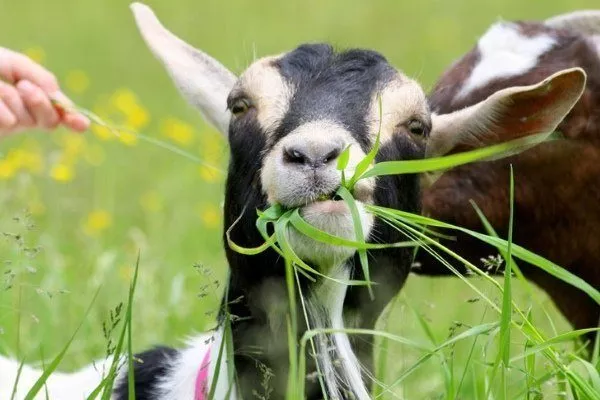
What food should I give?
All approved feeds for goats are divided into three groups. Feeding animals is permitted with succulent, dry, and concentrated feeds. Each type has a unique effect on the goats' digestive system.
Dry food
| Name | Type of feed | Recommended daily intake | Feeding period |
|---|---|---|---|
| Hay and straw | Dry | 2-3 kg | All year round |
| Brooms | Dry | 3-5 pieces | All year round |
| Grass | Juicy | Unlimited | Summer |
| Fruits | Juicy | Up to 4 kg | All year round |
| Vegetable tops | Juicy | 1 kg with 1 g of chalk | All year round |
| Vegetables | Juicy | Up to 4 kg | All year round |
| Silage | Juicy | Up to 4 kg | All year round |
| Compound feed | Concentrated | According to the instructions | All year round |
| Oilcake | Concentrated | 1 kg per 3 liters of water | All year round |
| Bran | Concentrated | According to the instructions | All year round |
It's not necessary to feed animals roughage only in winter. Its presence in the diet improves the goat's metabolism. Therefore, it's acceptable to feed dry feed during warmer seasons as well.
Dry food includes the following products:
- Hay and straw. For drying, it is recommended to use forest and meadow grass. 2-3 kg per animal is sufficient.
- Brooms. The best wood for feeding animals are maple, birch, aspen, or poplar. A goat can eat 3-5 of these per day.
Dry feed preparation begins in midsummer, typically storing freshly cut hay grass in bundles or sheaves. If the farmer prefers, it is allowed to crush it before serving – this is considered to be a much more economical way to use the feed. Brooms are also made from small bundles with twigs up to 60 cm long.
Succulent food
| Name | Type of feed | Recommended daily intake | Feeding period |
|---|---|---|---|
| Grass | Juicy | Unlimited | Summer |
| Fruits | Juicy | Up to 4 kg | All year round |
| Vegetable tops | Juicy | 1 kg with 1 g of chalk | All year round |
| Vegetables | Juicy | Up to 4 kg | All year round |
| Silage | Juicy | Up to 4 kg | All year round |
As the name suggests, this diet is based on the use of live plants of various types. What succulent feeds are fed to goats?
- Grass. This is the most readily available and inexpensive feed component. Simply let the goats graze in a forest, field, or lawn. They will feed on grass wherever it grows.
- Fruits. One of the animals' most beloved delicacies. They enjoy peaches, apples, pears, and apricots. But before eating them, the farmer has to peel the fruit and remove the pits.
- Vegetable tops. Any type of tops can be used for feeding, including potato and cabbage leaves, carrot and beet scraps. It is recommended to mix the product with crushed chalk – 1 g of chalk per 1 kg of tops. This will reduce the acid content of the feed.
- Vegetables. A waste-free product that animals especially enjoy—they eat it root and tops included. Animals can be fed carrots, potatoes (boiled only), cabbage, and Jerusalem artichokes, but only if they are chopped. It is recommended to feed no more than 4 kg of vegetables per day.
- Silage. This popular type of feed boasts excellent nutritional properties. This high-calorie product contains numerous vitamins. A goat can be fed up to 4 kg per day.
It is permissible to feed animals with succulent food both in summer and in winter.
Concentrated feed
| Name | Type of feed | Recommended daily intake | Feeding period |
|---|---|---|---|
| Compound feed | Concentrated | According to the instructions | All year round |
| Oilcake | Concentrated | 1 kg per 3 liters of water | All year round |
| Bran | Concentrated | According to the instructions | All year round |
Concentrated feeds are essential in goats' diets, as they contain many beneficial nutrients. However, they must be fed correctly to avoid stomach upset and digestive problems. For example, grains such as wheat and oats should only be fed in ground form. Corn must be fed in limited quantities, otherwise the animal may become obese.
- ✓ The temperature of the water for soaking the cake should be at least 70°C for better dissolution.
- ✓ The duration of soaking the compound feed should not exceed 12 hours to avoid souring.
Concentrated feeds include compound feed, oilcake, and bran—they are soaked in boiling water 12 hours before feeding. There is no specific amount of water required for compound feed and bran, but 3 liters of water are required for 1 kg of oilcake and meal.
The farmer must combine these types of feed to create a complete diet that provides all the necessary nutrients.
How to plan a proper diet?
Feeding norms should be calculated based on the animal's age, sex, general health, and weight. However, there are some general guidelines:
- a large goat should eat more than a small one;
- an adult animal eats less than a growing goat, but with the same weight;
- a pregnant goat consumes more feed than a barren one;
- A milking animal is fed in larger quantities than a dry animal;
- A goat that produces a lot of milk needs to be given more food than a goat that produces little milk.
Goats appreciate variety in their feed. This helps them feel full faster, gain weight faster and better, and produce more milk. They are fed only fresh feed.
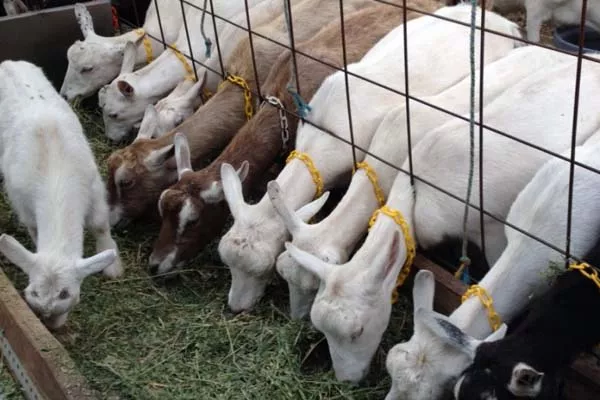
It's unacceptable for goats to be fed moldy or rotten hay or poor-quality root vegetables. This can lead to the development of various diseases, deterioration in milk quality, and a decrease in milk production.
Here's a sample diet for any type of goat during the warm season, taking all requirements into account. The following amounts of feed are required per animal:
| Name | Quantity |
| Steppe grasses on a pasture | 1.2 kg |
| Meadow grasses | 6-8 kg |
| Alfalfa hay | 1-1.2 kg |
| Haylage | 2.5 kg |
| Green oats | 4 kg |
| Oats | 4 kg |
| Hay from meadow grasses | 1 kg |
The diet in winter is slightly different from what is given to animals during the warm period:
| Name | Quantity |
| Alfalfa hay | 1 kg |
| Clover hay | 2 kg |
| Hay from meadow grasses | 0.5 kg |
| Crushed beets | 2 kg |
| A mixture of ground carrots and oats | 2.5 kg |
| Ground oats | 0.4 kg |
| Ground root vegetables and beets | 0.5 kg |
| Forage cabbage varieties | 3 kg |
On average, one goat consumes approximately 360-550 kg of dry feed, 400-600 kg of succulent feed, and 30-40 kg of concentrated feed per year. The minimum amount is allocated for young goats and kids, and the maximum is for adults.
Pay attention to the animal's appetite. If it isn't satisfied with the amount the farmer provides, the portions should be increased. However, overfeeding should be avoided, as obesity can negatively impact milk yield. Excess weight is also undesirable during pregnancy.
What to feed pregnant goats?
During pregnancy, a goat's diet isn't much different from what they're normally fed. A few simple rules can help her give birth to a healthy kid:
- During the second half of pregnancy, nutrient requirements increase several-fold. Therefore, it is recommended to increase the amount of nutrient-rich feed given to the goat, taking this into account. However, avoid overfeeding a pregnant goat to avoid a difficult birth and the risk of miscarriage.
- Pregnant goats are fed 500 g of chopped root vegetables and 200 g of grain for breakfast. At lunchtime, they are given one and a half to two kilograms of hay, and for dinner, they are fed a mixture of oilcake and grain (100 g of each) and hay made from tough meadow grasses.
- At the same time, the animals are taken out to pastures, where they can feed on succulent grass in unlimited quantities.
- During the winter, succulent feed is replaced with pelleted feed, which is eliminated from the diet two weeks before the expected due date. During this period, the goat is fed a lighter, more liquid diet with easily digestible ingredients. For example, feeding a liquid or mushy slurry of crushed bran and root vegetables, or steamed grain with a porridge-like consistency, is acceptable.
Feeding a goat after the birth of kids
During the birth process, animals' digestive systems are severely weakened. This requires sufficient time for full recovery. For the first week after the kid's birth, goats should be fed only light, easily digestible foods. Root vegetables, legume hay, and bran mash are more suitable during this period. It's best to feed the goats chopped food, which will ensure the goats have the most comfortable nutrition.
- First 24 hours: only warm water and a small amount of bran drink.
- From day 2 to day 7: gradual introduction of chopped root vegetables and legume hay.
- After day 7: return to the standard diet with an increase in the amount of root vegetables to 4 kg per day.
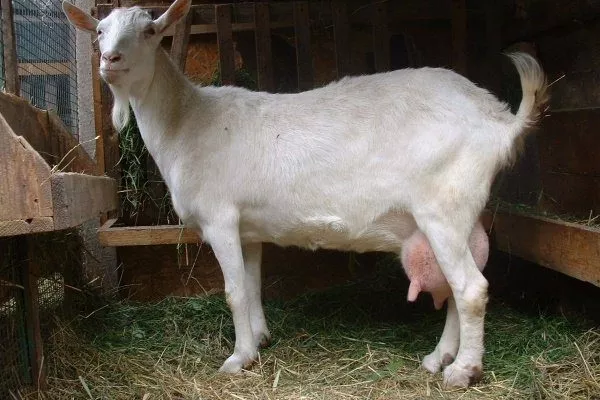
Seven to eight days after lambing, goats begin to recover. This period is beneficial because standard feed is allowed. Fresh hay and root vegetables are the staple diet during the lactation period. A goat should consume up to four kilograms of each per day. These components ensure active lactation in lactating females.
What to feed animals in winter?
In winter, the main feed is hay—a coarse forage that goats need. Straw is allowed, but it's not as nutritious as hay. Goats are relatively easy-to-care-for animals, but it's recommended to feed them high-quality hay, preferably leafy. A male goat receives 2.5-3 kg of hay per day, a female goat 1.8-2.2 kg, and a kid 0.8-1 kg.
If hay is limited, it's acceptable to partially replace it with brooms, but be sure to feed at least 1 kg of hay. Feed up to 5 brooms per day. Many farmers prefer to harvest leaves for their animals; they are used for bedding and feed during the winter. Spruce and pine leaves and young shoots are excellent vitamin-rich feed for goats.
In winter, animals are also fed any vegetables, boiled, dried, or raw. Before feeding goats raw vegetables, they are washed and cut to make them easier to eat. In addition to vegetables, fruits are also acceptable.
Equally important is including vitamins and salt in the diet. Salt is added as a salt lick or given at a rate of 6-8 g for a dairy goat and 10 g for a pregnant animal. Bone meal and chalk are also added to the diet.
A well-balanced diet should provide goats with all the necessary nutrients, but many goat breeders recommend adding vitamins to their food as a preventative measure. This is especially beneficial for pregnant and high-yielding goats. Vitamins can be added to the feed or a piece of bread.
How to increase productivity?
If a goat is poorly fed, don't expect it to produce much milk. A balanced, nutritious diet will help increase milk production. In summer, green pasture forage ensures good milk yields—it provides the animals with most of the necessary nutrients.
During the winter, such food is hard to come by, but you can compensate for the shortage with hay and pre-prepared tree branch brooms. It's important to remember, however, that goats require a varied diet.
Compound feed, forage turnips, grain, and vitamin and mineral supplements have a beneficial effect on milk production. Furthermore, for optimal productivity, animals must have constant access to clean, preferably warm, water.
What do you feed kids?
Many beginning farmers may be unsure what to feed young goats. Their health and future development depend on nutrition. There are only two ways to feed young goats: without a mother and with a mother. Each method has its own advantages.
Under the uterus
This method of raising kids is only used if the mother does not produce much milk. After birth, the kids are left with their mother until they are three to four months old. During this time, they feed independently. However, when they are three weeks old, chalk and salt are added to their diet—five grams each. At three months of age, the amount of chalk and salt is doubled.
If mother's milk alone isn't enough for the kids, and they appear thin and weak, they are given concentrates as early as one month old—approximately 20-30 grams per day. This amount should gradually increase, and by three months, young kids should be consuming approximately 300 grams of concentrated feed per day. At three and a half months, the animals are gradually weaned from their mother and transferred to a regular adult diet.
Without a uterus
Nowadays, hand-feeding goats is popular. This method is only suitable for high-yielding dairy goats. Newborn kids are weaned immediately after birth, placed in a separate pen, and fed warm milk using a bottle with a nipple. For the first seven days, they should be fed exclusively on colostrum. After this period, the kids are weaned from the bottle and transferred to milk poured into water troughs. A small amount of soft hay is added to the feeders.
Until one month of age, one kid receives at least 200 ml per feeding. Young goats are fed at least five times a day. Then, gradually, the milk is diluted with water, flaxseed meal, and bran are added. The number of feedings is reduced to four times a day. In addition to formula, it is acceptable to feed the kids oatmeal cooked in water with added sugar. During this period, it is beneficial to include chopped carrots and rutabaga, bran, and crushed oilcake in their diet. Clean, warm water should be readily available.
Watch the video about feeding kids below:
One month after birth, the babies are released into the pasture. At seven months, the animals are transferred to regular housing in a stall.
How to properly prepare hay for winter?
When harvesting forage hay, farmers must take into account the fact that the moisture content of the plants decreases, from 90% to 15% of the feed. Its nutritional properties are also lost. Therefore, careful attention to the drying, transportation, and storage processes is essential.
Freshly cut grass can be dried in several ways:
- Natural. Leave it in the fresh air for a while under the sun's rays and remove it when the grass is completely dry.
- Artificial. For this method, an oven, microwave oven or electric dryer is used.
- Active ventilation. The plants are mown and left in the swaths until their moisture content drops to 40-45%. To speed up the drying process, the grass is crushed during mowing. The grass is then raked into windrows and transported to a drying area. This can be done under sheds, in barns, or other buildings equipped with powerful fans.
- Natural with drying. Readiness for storage is determined by the presence of a small, twisted bundle of hay. If it rustles and crackles, and no moisture appears at the broken stems, its moisture content is high. If the stems don't break and moisture appears at the twisted point, the moisture level exceeds 23% and requires further drying. To achieve this, place the hay in the sun or install fans.
Farmers usually rely on weather conditions, taking into account temperature, humidity, and precipitation.
Hay should always be thoroughly dried if its moisture content is below 25%. Otherwise, the product may not only lose its nutritional value but also begin to rot and mold. This level of moisture promotes the growth of fungi and mold. It's equally important not to overdry hay, as harvesting and transporting it can damage the most nutritious parts of the plant—the flowers and leaves.
The optimal time to harvest legume hay (alfalfa, clover, peas, and sainfoin) is during the period of active budding. This type of feed is essential for animals during the winter because of its protein content. Dairy goats especially need this type of feeding. Cereal hay (oats, fescue, and wheatgrass) is best harvested after the ears have emerged.
Grass should be mown at dawn before 6 a.m., as this is when plants are most saturated with carotene. The mown grass should be collected throughout the week.
What should not be fed?
Feeding goats with low-quality products can lead to a decrease in milk production and also cause the development of diseases, which often lead to death.
It is strictly forbidden to feed animals the following products:
- potatoes turned green by exposure to the sun;
- grain in which insects have started;
- rotten or spoiled fruits, vegetables, hay;
- stale or spoiled silage.
Goat feeding should be varied, balanced, and nutritious. Proper feeding in adequate portions is essential for the continued milk production and health of the animals. If a farmer follows these basic guidelines, raising the animals will be a simple task.