
The climate in our country is constantly changing, which undoubtedly affects goat feeding requirements. Grazing is prohibited in winter, forcing farmers to stockpile large amounts of feed for this period. To properly feed goats during the winter, it's important to consider many nuances when preparing feed and follow certain guidelines.
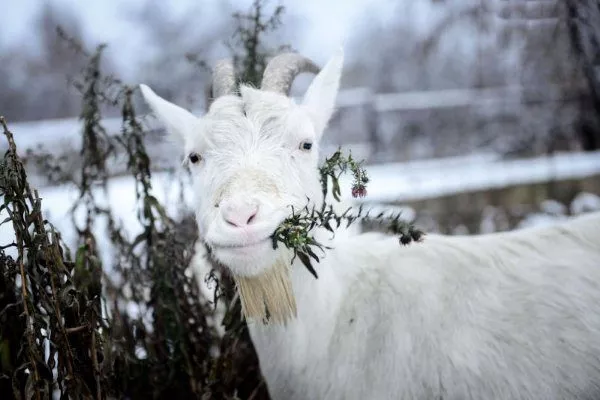
What kind of food do you give goats in winter?
A variety of products are used to feed goats, the purpose of which is to combine balanced nutritionHay is the foundation of a goat's winter diet, but it alone is not sufficient to meet all the animal's nutritional needs, so other components are added. Feeds are categorized as dry, succulent, concentrated, and vitamin supplements, each of which deserves separate consideration.
Dry food
| Name | Harvesting period | Humidity | Minimum daily volume per goat (kg) |
|---|---|---|---|
| Hay from various grasses, cereals and legumes | Formation of buds in legumes, panicle ejection in cereals | 15% | 0.5 |
| Straw | After threshing | Not specified | 2 |
| Herbal flour | Not specified | Not specified | Not specified |
| Chaff | Not specified | Not specified | Not specified |
| Some parts of trees and shrubs | Not specified | Not specified | Not specified |
Since hay is the main component of goats' winter diet, it's important to stockpile sufficient quantities for this time. Goats prefer hay made from various grasses, grains, and legumes.
In addition to hay, dry feeds include:
- straw – the ear and stem of legumes and cereals after threshing;
- grass meal – chopped hay;
- chaff – waste from the upper part of the stem;
- some parts of trees and shrubs.
The most nutritious grass for drying is harvested from legumes during the formation of buds, and from cereals – when the panicle is ejected.
When drying hay, its moisture content is particularly important—around 15%—as a change of more than a few percent will adversely affect the quality of the product. High moisture levels can lead to mold growth, while low moisture levels can cause the loss of most of its nutrients.
The minimum daily hay requirement per goat is 0.5 kg, but the animal's condition must be taken into account when distributing the feed. For example, lactating or pregnant goats require approximately 2-3 kg, and in the last month of pregnancy, the animal's diet is restricted due to physiological changes. Given these figures, farmers typically stockpile at least 400 kg of hay per goat for the winter.
Goats, unlike sheep and cows, also thrive and produce milk when fed straw. The daily straw requirement for goats is no more than 2 kg. This type of feed is not as nutritious as hay, so before feeding it to livestock, it requires preparation. This includes cutting the straw to 2-3 cm lengths, placing it in containers, soaking it in a salt solution, and allowing it to mature.
In winter, goats also need twigs. They prefer birch, aspen, maple, oak, rowan, and linden. Brooms made from twigs and young shoots are prepared in advance.
| Type of tree | Protein content (%) | Energy value (kcal/100g) |
|---|---|---|
| Birch | 12.5 | 310 |
| Aspen | 10.8 | 290 |
| Oak | 9.3 | 270 |
Succulent feed
| Name | Harvesting period | Humidity | Daily requirement for a goat (kg) |
|---|---|---|---|
| Corn | Not specified | 70% | 2-3 |
| Forage beans and soybeans | Not specified | 70% | 2-3 |
| Sweet clover, clover, alfalfa | Not specified | 70% | 2-3 |
| Wheat and winter rye | Not specified | 70% | 2-3 |
| Cereal and legume mixtures | Not specified | 70% | 2-3 |
| Cabbage leaves, beet and carrot tops | Not specified | 70% | 2-3 |
Silage is the most common succulent feed for goats. It is used to achieve the best milk yields. Silage smells like fermented vegetables and fruits, and goats eat it with pleasure. The daily ration of silage for a goat is 2-3 kg.
When preparing silage, various crops are used at certain stages of their development:
- corn;
- fodder beans and soybeans;
- sweet clover, clover, alfalfa;
- wheat and winter rye;
- cereal-legume mixtures;
- cabbage leaves, beet and carrot tops.
For silage, green foliage, tops, and chopped vegetables are placed in specialized containers. When making silage, the plant material is carefully compacted to remove air. The required air humidity is 70%; this can be reduced if necessary by wilting the feed or adding chopped straw.
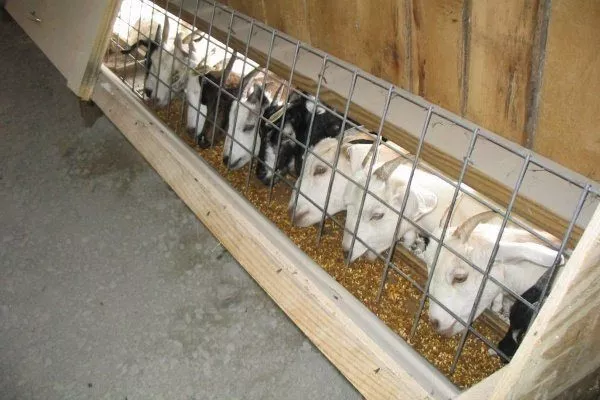
Goats thrive on carrot and beet tops and cabbage leaves in winter. This feed contains about 80% water, making it less nutritious, but essential for dairy goats.
Concentrated feed
| Name | Type of processing | Protein content | Daily requirement for a goat (kg) |
|---|---|---|---|
| Cereals | Crushing, grinding, yeasting, roasting, sprouting | High | Not specified |
| Legumes | Crushing, grinding, yeasting, roasting, sprouting | Very high | Not specified |
| Oilseeds | Crushing, grinding, yeasting, roasting, sprouting | High | Not specified |
| Waste from the food and grain processing industries | Crushing, grinding, yeasting, roasting, sprouting | Average | Not specified |
| Animal feed | Crushing, grinding, yeasting, roasting, sprouting | Very high | Not specified |
| Compound feed | Crushing, grinding, yeasting, roasting, sprouting | High | Not specified |
This type of feed contains more nutrients than the first two. Concentrated feeds contain a lot of protein, fat, carbohydrates, vitamins, and microelements. Using concentrates in feeding livestock is extremely important, especially in winter – without them, livestock will not receive adequate nutrition. Concentrated feeds for goats include:
- cereals;
- legumes;
- oilseeds;
- waste from the food and grain processing industries;
- animal feed;
- compound feed.
Before feeding to livestock, grain undergoes special processing due to the difficulty goats have in digesting whole grains. There are several types of processing: crushing, milling, yeasting, roasting, sprouting, and so on.
In households, goats are often fed food scraps in winter, which are pre-boiled or steamed.
Vitamins and supplements
Mineral and vitamin supplements are used in livestock feed year-round, but the need for them increases in winter. These supplements include:
- table salt – 6-10 g per goat per day;
- a mixture of bone meal and chalk – 10-12 g per goat per day;
- vitamin preparations and premixes – dosage is indicated on the packaging.
The most common vitamin supplements for goats are Trivit and Tetravit, which are easily found in any livestock store.
Vitamins are added to goats' feed in small quantities; they should not be mixed unless specifically recommended in the instructions. As long as they are not overused, no health problems will arise for the animals.
Winter feeding rules and regime
In winter, goats are fed three to four times a day. It's important to keep the feeder clean throughout the day—any leftover food from the previous feeding is removed before the next feeding. The animals should also have access to a pen for defecation.
- ✓ Decreased gum chewing activity.
- ✓ Increase the time spent lying down.
- ✓ Changing the usual routine of visiting the drinking bowl.
An important aspect of feeding goats in winter is ensuring they have access to drinking water at all times. Water is changed at each feeding. Each goat requires approximately 3 liters of water per day. Loose snow poured into a water trough is also suitable for drinking in winter. In addition to regular liquids, goats readily digest herbal infusions and whey; these require a separate container.
The winter diet of goats is structured according to the following scheme:
- in the morning, succulent and rough feed, half of the daily ration of compound feed;
- roughage during the day;
- In the evening, the main part of the hay, succulent and concentrated feed.
Goats eat brooms (made from branches stored during the warmer months). Brooms made from nettles, quinoa, and pine needles should be given no more than twice a week. Brooms made from other plants can be given 1-2 per goat daily.
As a result, the daily feed volume for a goat in winter consists of:
- 2 kg dry food;
- 2 kg of succulent feed;
- 0.5 kg of concentrate.
These values are presented as an average; they may change depending on the condition of the animal and some other factors.
A breeder shares his experience of feeding goats in winter in the following video:
Feeding pregnant goats
Goats' gestation period lasts approximately 150 days. Pregnant goats require special care, which is especially reflected in their diet. During pregnancy, the goat's hair and down growth accelerates, requiring additional nutrients.
During the second half of pregnancy, goats have a particular need for vitamins and minerals. Legumes are high in protein, and when combined with grains, they provide the optimal amount of essential nutrients. Oilcake, dry yeast, meal, meat meal, and fish meal are also rich in protein.
At the end of pregnancy, you should not give the goat a lot of root vegetables and liquids, otherwise there may be problems with the fetus.
Feeding a lactating goat
After giving birth, a goat's digestive system is significantly weakened and requires time to recover. During the first week of feeding, the goat's diet consists solely of easily digestible foods, including finely chopped root vegetables, bran slurry, legume hay, and other ingredients.
Root vegetables and fresh hay make up the majority of goats' feed during winter lactation. By the second week of feeding, the goat's condition stabilizes, allowing her to be transitioned to a standard diet.
Dairy goats' diet during the winter should be rich in vitamins, succulent, and concentrated feed. Succulent feed is essential, as it maximizes milk production.
Feeding the kids
Newborn kids receive all the necessary nutrients from their mother's milk. If this is not available, they are given pasteurized goat's milk or artificial milk formula. Their immature digestive systems cannot cope with roughage, so hay and certain cereals are introduced into their diet only after 11 days of age.
Goat kids are introduced to a standard diet only after three weeks of age. Grated root vegetables and apples are excellent supplements, with the proportion of milk gradually decreasing. Mineral and vitamin supplements should also be included in the feed. At three months of age, the kids are transitioned to a regular adult diet.
What shouldn't you feed a goat in winter?
There are no specific restrictions on certain foods for goats during the winter. Vegetables and greens are still cleaned and processed as needed, and rotten, spoiled, moldy, or pest-infested feed is removed.
The main mistake in feeding goats at this time of year is limiting the types of feed in the animal's diet or abruptly changing it. In the first case, it's necessary to ensure the goat's diet is balanced to ensure it receives all the necessary vitamins and minerals, which is more difficult to achieve in winter than in summer. In the second case, gradually acclimate the goat to a stall and a corresponding diet, which means starting with hay in the mornings before winter—this will encourage them to eat less green food and make the transition to the new diet easier once the pasture is over.
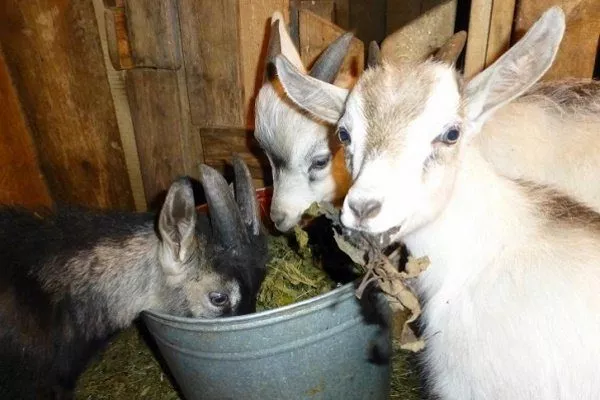
Preparing brooms for the winter
Brooms made from branches of various trees and shrubs are excellent for improving goats' winter diet. Fruit and berry plants are considered ideal for making brooms. Young shoots are used for brooms; they are tied into small bundles and dried in a well-ventilated area. Goats eat only the top part of the broom; the rest is discarded.
Brooms aren't just made from branches; coarse nettles or corn also work well. The best way to plan your goats' winter diet is to alternate different brooms each day.
A properly designed winter feeding system for goats significantly impacts the animal's health and performance. Well-fed, vigorous, and healthy goats live longer, produce good milk yields, and have more offspring—and every true farmer strives for these characteristics in their livestock.