
Goats are kept for their milk, meat, wool, and down. When choosing goats, it's important to consider their purpose, as well as the external and behavioral traits characteristic of healthy animals. Let's learn how to choose a goat suitable for your farm.
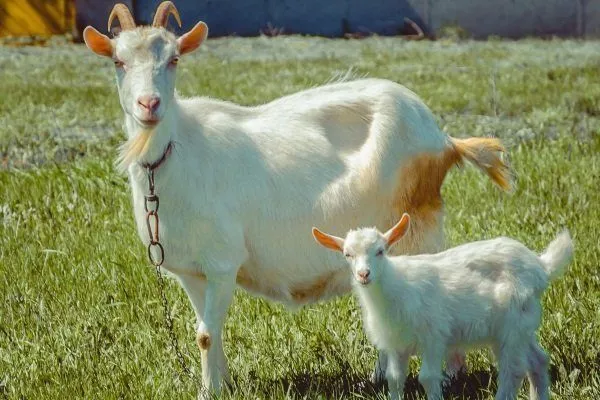
Features of purchasing dairy, wool and meat sheep
Buying a goat is a difficult task, especially for beginners. There are many small details that inexperienced goat breeders overlook when buying goats. This carelessness results in low milk yields, illness, and other problems.
Tips for choosing and buying goats:
- Dairy. Choosing dairy goats is the most difficult. The main things to pay attention to when buying dairy goat – age, body type, signs of milk production. What you need to know:
- Carefully examine every part of the animal's body.
- Don't buy just one goat - get at least two.
- Don't just buy goats from anyone. Go to a goat farm. But be sure to pay attention to the animals' living conditions and diet, and inquire about their pedigree.
- If you need highly productive goats, choose purebred ones – they are more expensive, but they produce much more milk than their “simple” relatives.
- Try feeding a goat a rusk. If the animal is young, it will quickly chew the rusk with its teeth. An older goat will have worn down teeth and will chew on hard food for a long time.
- Goat breeders have a proven method for determining whether milk will have a scent. Carefully stroke the animal between its horns, then sniff your hand. If your hand is odorless, the milk will be odorless—which is precisely what's prized in dairy breeds.
- The presence or absence of earrings on the neck, the shape of the ears and the color do not affect milk yield.
- Wool and down. Purebred wool goats have a large body, a large chest, a wide loin, a straight back and sacrum, strong and straight legs, a coat usually white, and coarse wool on the head.
- Meat. Meat breeds have small, high-set udders. These goats produce little milk, only enough to feed their young. Meat goats are distinguished by a large belly and a barrel-shaped body with rounded sides.
Goats are sociable animals, but they become lonely when alone. This loneliness can cause them to become hyperactive, leading to behavioral problems.
If the goat is sad, has dull fur, a poor appetite, and a sagging belly, immediately discard this option.
- ✓ Check the animal’s activity: a healthy goat should be alert and curious.
- ✓ Assess the condition of the coat: it should be shiny and without bald spots.
- ✓ Examine the eyes: they should be clear, without discharge.
- ✓ Check your nose: it should be clean and moist.
- ✓ Assess appetite: a healthy goat will readily eat the food offered.
What to look for when buying?
When choosing a dairy goat, look for one that is not only healthy but also productive. A healthy goat has thin, clear ears, breathes quietly, has bright eyes, and a clear nose. To avoid relying on honest sellers, learn to determine a goat's productivity yourself. This can be done by inspecting its general appearance, udder, hooves, teeth, and other body parts.
Physique
The average goat weighs 50-60 kg. Larger breeds produce more milk—their digestive system processes more feed, resulting in higher milk yields than goats of medium build.
Dairy goats, unlike meat and down goats, have a leaner, more angular appearance. Signs of a well-built dairy goat:
- chest - wide;
- neck – thin, medium length;
- ribs - long, convex;
- the back is wide, not sagging;
- the belly is voluminous;
- legs - wide apart;
- The body is long, barrel-shaped, with strong bones.
When choosing a goat, look at it from the side – the front and back of the body should be in a straight line. And if you look from behind, you'll clearly see the arched pelvis – high and wide.
Udder and teats
The udder of a productive goat is clearly visible when examined from any side - front, side and back.
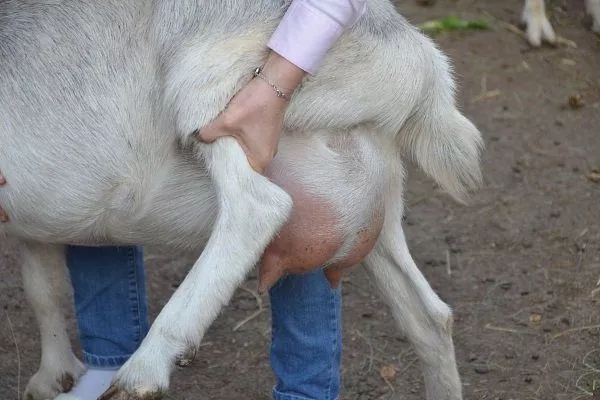
Signs of a good udder:
- shape – cup- or pear-shaped;
- no hair;
- elastic, not sagging - resistance is felt when squeezed;
- the skin is thin, elastic, no hardening;
- milk veins are clearly visible;
- After milking, the udder falls and its skin gathers into small folds.
If the udder doesn't match this description, the goat won't produce much milk. A large udder can hold and retain a lot of milk. Goats with large udders are milked only twice a day. An overly round udder indicates obesity, which is incompatible with high milk yield.
When examining the udder, pay attention to the teats, they should be:
- elastic;
- cylindrical;
- medium size;
- directed slightly forward and to the sides.
It is strongly recommended not to buy a goat that:
- small nipples;
- nipples turned inward;
- the udder dangles while walking;
- The udder is clearly divided into two parts.
Please note that there are serious nipple defects – there are extra nipples, blind nipples, double nipples, or nipples without holes.
Oral cavity
An animal's age is determined by its teeth. If you don't understand goat teeth, you might be sold an old animal that won't be of any use in the future. A goat has 32 teeth in total. Six on each side—24 in total. There are also eight incisors. An animal's age is determined by assessing the condition of its incisors.
How goat teeth develop:
- From birth to 10 days, the baby incisors grow. These are the two primary incisors. Then, six more incisors emerge. After a year, the first pair falls out, and the permanent teeth, which are wider than the primary teeth, emerge.
- Every year, until the child reaches three years of age, a pair of incisors is replaced. By the age of four, the last pair of outer incisors is replaced.
- Once goats reach 5 years of age, their teeth begin to wear down, taking on an oval shape.
- At 6 years of age, the incisors are almost round, and gaps appear between them.
- By the age of 7, teeth wear down, become loose and begin to fall out.
- After seven years, teeth become completely useless. Instead of teeth, only stumps remain. The animal cannot chew food properly.
Age of the animal
It's best to buy a goat that's 2-3 years old. Maximum milk production occurs after lambing 2-3 times. At 6-7 years, milk production declines. An animal's age is determined by its teeth. An older animal, losing teeth, is unable to chew feed effectively, making its maintenance unprofitable.
Wool
Coat is an indicator of the animal's health only; its type and length have no direct impact on milk yield. A healthy goat's coat is soft and shiny, not rough to the touch. When choosing between dairy goats with different coat lengths, short-haired goats are preferred—they are easier to care for. However, in northern regions, down-coated dairy goats are the best choice.
When choosing a wool or down goat, it's important to consider the productivity of their ancestors. Therefore, it's advisable to inquire about the pedigree of the candidates from the owners. Wool and down goats are purchased before combing and shearing.
Hooves
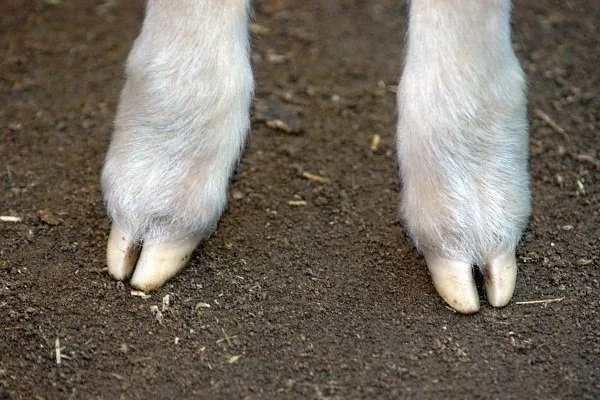
Goats' hooves should be in good condition. Healthy animals don't limp; their hooves are strong and undamaged. Caring owners trim and condition their hooves regularly. Otherwise, the goat will be uncomfortable walking, unable to eat or drink properly, and will spend most of its time lying down.
If hooves aren't trimmed, dirt accumulates in the folded horns, allowing bacteria to thrive. Animals can become infected with foot rot. Only buy goats with clean and well-groomed hooves—otherwise, problems are inevitable. If the owners haven't been caring for their hooves, they may well be underfeeding the animal, which will inevitably impact its productivity.
How to choose the right kid?
When purchasing a kid, look for active and healthy animals with the right conformation. The kid's weight should be appropriate for its age. Table 1 shows the relationship between weight and age.
Table 1
| Age, months | Weight, kg |
| 1 | 8 |
| 2 | 12 |
| 3 | 17 |
| 4 | 21 |
| 5 | 26 |
| 6 | 28 |
| 7 | 30 |
| 8 | 33 |
| 9 | 35 |
| 10 | 37 |
| 11 | 40 |
| 12 | 42 |
Tips for choosing kids:
- Don't take kids under three weeks old. Before this age, animals don't travel well.
- The back should be level, not hollow or roached. A slight sag is only acceptable in the Nubian breed.
- The kid's face should be free of any defects. Narrow jaws are especially problematic—this defect will prevent the animal from eating properly. Chewing with narrow jaws will tire quickly, leading to malnutrition and developmental delays.
- It is advisable to take dehorned kids, since horns are a risk factor; animals can injure each other.
- Tail - erect or relaxed, but not tucked.
- Stool - hard balls, diarrhea is not allowed.
- The hoof placement indicates the width of the ribcage. The arch between the thighs should be fairly wide—this is where the udder will be located in females.
- Check to see if the animal has any bumps or other defects on its skin.
- Male kids are always larger than female kids; if a kid is smaller than a female kid, or the same size as her, he lags behind in his development.
- When buying a male goat, pay attention to its scrotum—normally, the testicles are equally descended and not retracted. Otherwise, castration will be difficult.
The most popular goat breeds
Over the course of their breeding, selection has reached near perfection, producing breeds that are practically ideal. They are extremely resilient and rarely suffer from disease, can adapt to the harshest conditions, and produce abundant milk—tasty, without the distinctive odor associated with less valuable breeds.
| Name | Average daily milk yield, l | Average milk yield per lactation, l | Average annual milk yield, l | Fat content, % |
|---|---|---|---|---|
| Alpine | 4 | 300-350 | 800-1200 | 3.5 |
| Gorky | 1.2-1.3 | 145-300 | 500-1000 | 5 |
| Saanen | 5 | 300 | 600-1200 | 4.5 |
| Cameroonian | 1-2 | 150 | 400-600 | 4.5-6 |
| La Mancha | 8 | 300 | 900-1000 | 4 |
| Megrelian | 1-2 | 200-250 | 400-800 | 5 |
| German Pied | 4-5 | 700-1000 | 850-1100 | 3.2-3.5 |
| Nubian | 4-5 | 300 | 900-1000 | 4.5-8 |
| Russian white | 2.5-3 | 300-550 | 500-600 | 4-5 |
| Toggenburg | 2.5 | 700-800 | 1000-1500 | 3-4 |
| Czech brown | 4-6 | 300-330 | 800-1000 | 3.5-4.5 |
Saanen goat
This is a large breed, reaching 90 cm at the withers and weighing up to 100 kg. Saanens are the most popular dairy breed. They are renowned for their fertility and productivity. Read more about this goat breed. here.
Characteristics of the Saanen breed:
- white short hair (cream subspecies is extremely rare);
- short horns;
- strong legs;
- wide skeleton;
- broad muzzle;
- strong long neck.
A sow produces up to 700 liters of milk per year. With a balanced diet, milk yield can be increased by 500 liters. A significant advantage is that the wool has no unpleasant odor.
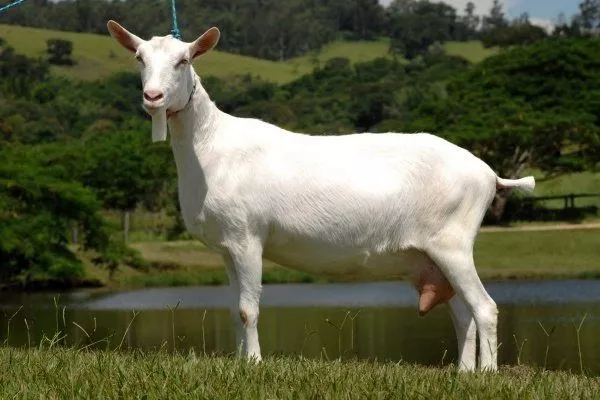
The record milk yield for the Saanen breed is 3,507 kg, set by a goat belonging to the German subspecies.
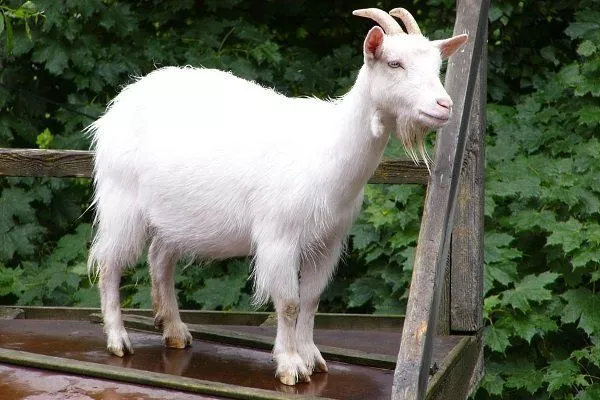
Russian white
An ancient breed popular in northern and central Russia. Dairy goats weigh up to 50 kg. Lactation lasts for seven months.
Characteristic features of the Russian breed:
- color - white, has a beard;
- The length of the coat varies depending on the living conditions;
- annual productivity – 600 l of milk;
- produce a lot of high-quality fluff;
- unpretentious to food and maintenance;
- The body is barrel-shaped, the ears are small, the nipples are directed straight.
Megrelian
The breed originated in Georgia and is raised in hot, highland conditions. There are two subspecies of Megrelian goats: mountain and foothill. The former are larger in size and weight. Mountain goats weigh up to 70 kg and stand up to 60 cm tall. Foothill goats weigh 45-60 kg, but are just as productive as the mountain subspecies.
Characteristics of the Megrelian breed:
- productivity – up to 900 liters per year;
- During the feeding period, the female produces up to 350 liters of milk;
- unpretentious and non-aggressive;
- the body is elongated;
- chest - wide;
- legs - straight;
- has a small beard;
- very high immunity;
- The coat is light, coarse and short.
The Megrelian breed is often used for crossbreeding as it has an extremely strong immune system.
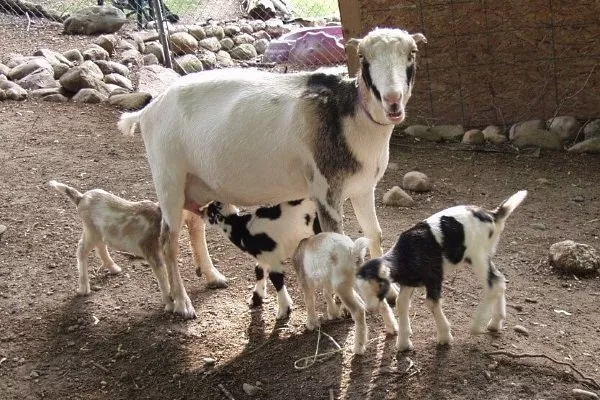
La Mancha
A European breed named after the Spanish province. Height: 75-95 cm. Male bucks weigh 60-70 kg, while females weigh 55-65 kg. For more information on the La Mancha breed, seeHere.
Characteristics of the La Mancha goat breed:
- the body is powerful and strong;
- distinctive feature - Roman profile;
- goats can be kept for meat and milk;
- meat productivity – 70%;
- the color varies - black, white, red, brown, spotted;
- milk fat content – 4%;
- Milk productivity: 5-6 liters per day, maximum: 9 liters.
Nubian
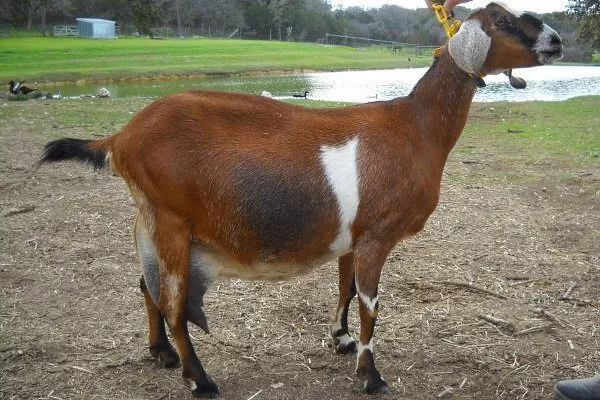
Nubian goat breed Bred in England, they are demanding in terms of living conditions. They are large animals, up to 74 cm at the withers, and weigh up to 80 kg. They are inferior to the Saanen goat in size and productivity. They are distinguished by their unusual appearance – this is a very beautiful breed.
Characteristics of the Nubian breed:
- color – a combination of black, white and brown;
- no unpleasant odor;
- protein content in milk – 3.7%;
- animals are aggressive and active - it is recommended to burn out the horns of young animals;
- Milk yield during lactation is 3 liters per day, annual milk yield is not less than 700 liters.
The main advantage of the Nubian breed is its tasty and rich milk, with fat content reaching 4.5%.
Gorky
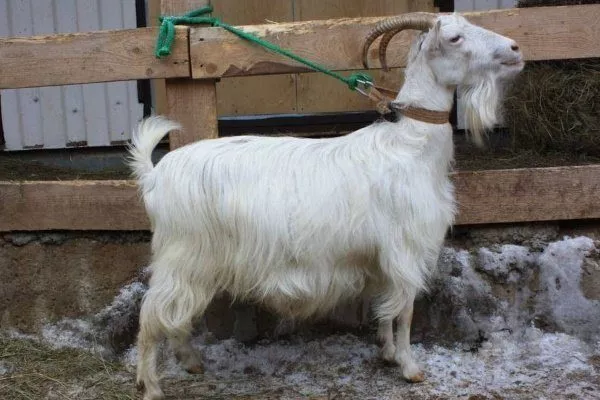
This breed was developed in the early 20th century. It boasts very high milk production. Males weigh 80 kg, while females weigh 45 kg.
Features of the Gorky breed:
- productivity – up to 1200 liters per year;
- milk fat content – 4-5.5%;
- color – white, gray;
- Both sexes have horns;
- distinguished by the high quality of meat and skin;
- unpretentious in terms of maintenance and feed;
- Normal milk yields begin only after the second lambing.
Toggenburg
The breed originates from Switzerland. Toggenburg goats weigh up to 80 kg and stand 65 cm tall. Their fur color is gray or brown.
Characteristics of the Toggenburg breed:
- the body is short, low-slung;
- legs are short, covered with long hair;
- productivity – from 600 to 900 liters per year;
- adapted to low temperatures.
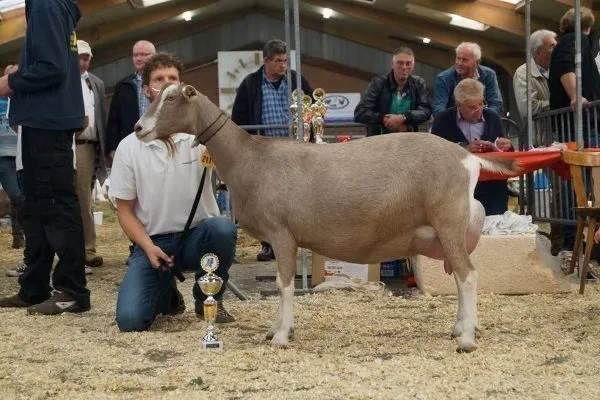
Alpine
Highland Alpine goats They were bred about a hundred years ago in the French Alps. Large specimens weigh up to 76 kg and reach a height of 77 cm at the withers. Lactation lasts approximately 7 months.
Features of the Alpine goat breed:
- the milk is not as fatty as that of other breeds, and is closer in composition to human milk;
- the milk has no smell;
- color – bay, dark, light;
- average productivity – 800 liters per year;
- show aggression towards representatives of other breeds;
- They are able to adapt to any conditions, but under unfavorable conditions they lose productivity.
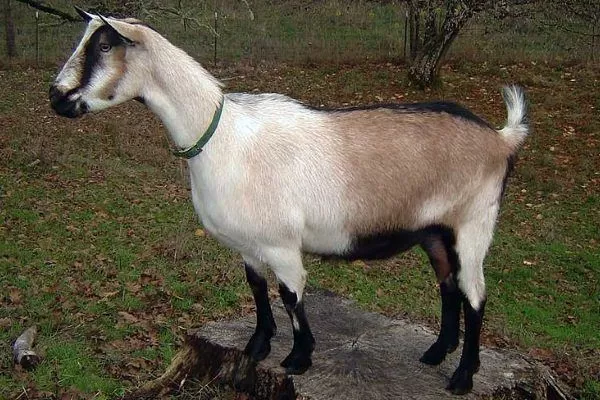
Czech brown
This breed's ancestors are Alpine, French, and Swiss goats. Males weigh up to 80 kg, females up to 55 kg.
Characteristics of the Czech brown breed:
- color – brown of varying intensity, from brown to milky chocolate;
- distinctive feature - black triangles behind the ears;
- They are distinguished by good intelligence – they know their nicknames and can follow some commands;
- lactation – about 10 months;
- milk fat content – 3.5%;
- They produce 2-4 liters of milk per day and can produce up to 1.5-2 tons of milk per year.
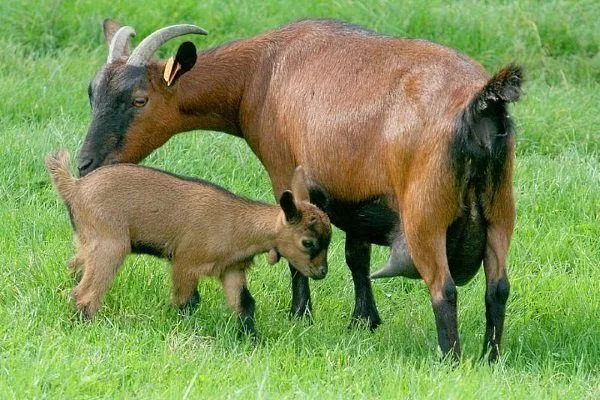
German Pied
This prolific breed is distinguished by its long lifespan and rapid acclimation. Females weigh 50-70 kg, while males can reach 100 kg.
Characteristics of the German variegated breed:
- they bring several kids;
- color from dark to light brown;
- there is a black stripe on the back;
- there are some with horns and some without horns;
- legs straight;
- the body is elongated, the chest is wide;
- very developed udder, convenient for manual and mechanical milking;
- productivity – 700-1000 liters of milk per year;
- fat content – 3.5%.
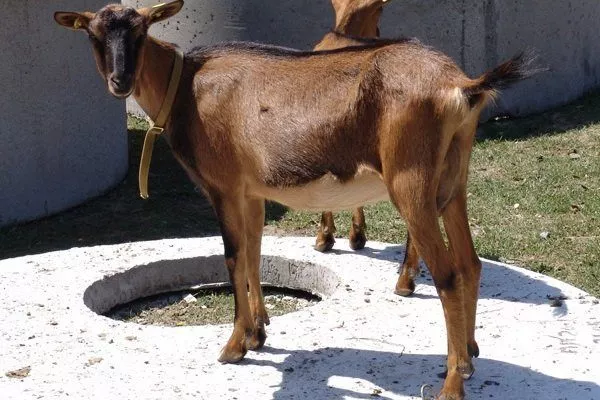
Cameroon breed
This breed originates from Africa. Its main distinguishing feature is its small size and exceptionally tasty milk. Its height does not exceed 0.5 m.
Characteristics of the Cameroon breed:
- productivity – about 2 liters of milk per day;
- milk is fatty and tasty;
- horns - curved;
- on the jaw there is a small beard;
- adapt well to different conditions;
- undemanding in nutrition;
- have strong immunity.
| Breed | Temperature requirements | Disease resistance |
|---|---|---|
| Saanen | Moderate | High |
| Nubian | Warm climate | Average |
| Russian white | Cold-resistant | High |
Comparative table of breed productivity
When choosing a goat breed, buyers most often focus on their productivity. This is especially important when choosing dairy and dairy/meat breeds. A comparison of milk productivity among the breeds described above is shown in Table 2.
You can get more information about how much milk a goat can produce from this article.
Table 2
| Breed | Average daily milk yield, l | Average milk yield per lactation, l | Average annual milk yield, l | Fat content, % |
| Alpine | 4 | 300-350 | 800-1200 | 3.5 |
| Gorky | 1.2-1.3 | 145-300 | 500-1000 | 5 |
| Saanen | 5 | 300 | 600-1200 | 4.5 |
| Cameroonian | 1-2 | 150 | 400-600 | 4.5-6 |
| La Mancha | 8 | 300 | 900-1000 | 4 |
| Megrelian | 1-2 | 200-250 | 400-800 | 5 |
| German Pied | 4-5 | 700-1000 | 850-1100 | 3.2-3.5 |
| Nubian | 4-5 | 300 | 900-1000 | 4.5-8 |
| Russian white | 2.5-3 | 300-550 | 500-600 | 4-5 |
| Toggenburg | 2.5 | 700-800 | 1000-1500 | 3-4 |
| Czech brown | 4-6 | 300-330 | 800-1000 | 3.5-4.5 |
Where can I buy a good goat?
You can buy goats anywhere they are sold, but only specialized farms can guarantee the quality of the animals sold and their conformity to the breed.
When choosing between private sellers, markets, farms, and breeding farms, give preference to the latter two. This is especially true if you're buying a valuable breed. For example, a three-month-old Saanen sow costs around 50,000 rubles. To avoid risking such sums, choose breeders who specialize in breeding pedigree cattle.
When choosing goats, don't rush. Carefully analyze your options, including your finances. Study the signs of healthy animals, choose a breed, find a reliable seller, and only then purchase live goats. The profitability of your entire business depends on the right choice.