
In most cases, a goat's lambing process proceeds without complications, but if complications arise, the owner must be able to promptly assist both the mother and the fetus. What to consider during labor and potential problems will be discussed in the article below.
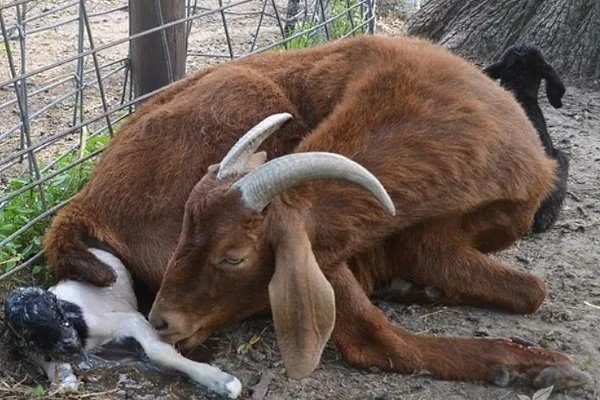
Launching a goat before giving birth
Weaning a goat is the process of reducing the number of milkings to stop lactation before calving. This is a necessary measure to allow the animal to recover and gain strength before lambing and the next lactation period. Beginning in the second month of pregnancy, the fetus grows rapidly, taking essential nutrients from the mother's body.
If lactation is not stopped, the udder will physically fail to accumulate colostrum, leaving it unprepared to feed the offspring. Post-partum milk production depends entirely on the timely initiation of lactation.
Carry out the launch taking into account the rules:
- start to let the fattened goat go no later than 1 month before the expected lambing date;
- start training a lean animal 2-3 months in advance;
- You can’t suddenly stop milking a goat, gradually reduce the number of milkings per day, and then per week;
- do not empty the udder completely - it is enough to milk 75% of the milk;
- If the one-time milk yield is less than 250 ml, milking is stopped completely.
If milk production does not decrease, review the animal's diet and reduce the amount of succulent feed and salt, which increase lactation.
Lambing dates
The gestation period for a goat ranges from 147 to 152 days. Lambing most often occurs between October and March.
Signs of labor in a goat
Before lambing, a goat's behavior changes, and changes in appearance are also noticeable. Signs of impending lambing include:
- Swelling of the udder and increased temperature of the teats.In females giving birth for the first time, the udder swells approximately a month before the birth of the offspring, and in females giving birth again, it swells before the birth.
- Swelling of the external genitalia. Minor swelling is noticeable.
- Divergence of the pelvic bones.The sacral ligaments soften and depressions form at the base of the tail.
- Heavy discharge.Their color should not be white or yellowish. Normally, the discharge is clear and may contain streaks of blood.
- Nervous behavior.The goat may bleat, be restless, frequently glance at its belly, and refuse to eat.
- ✓ Changes in the goat’s behavior 24-48 hours before giving birth: refusal of water or, conversely, increased thirst.
- ✓ The appearance of a specific odor from the goat, associated with hormonal changes.
Females giving birth for the first time are especially anxious. When around other females before lambing, a female goat may become aggressive toward them.
In this video, you can see the main signs of labor in a goat:
Preparing for lambing
As your due date approaches, preparatory measures are essential. These include:
- 12-15 weeks before lambing, carry out antiparasitic treatment;
- 4-8 weeks before, take measures to stop lactation and make changes to the animal’s diet;
- within 6 weeks, disinfect, whitewash and prepare the premises;
- 4-5 weeks before, move the goat to a prepared separate pen;
- A week before giving birth, watch the female especially closely, checking for signs of pre-birth.
Provide the barn with dry, clean bedding. The doe will rearrange the straw to ensure a comfortable lambing environment. Avoid disturbing the goat unnecessarily, avoid raising your voice, and especially avoid using force. She needs peace and quiet now, so leave her alone for a while.
It would be a good idea to prepare a veterinary first aid kit, which should contain the following components:
- syringes;
- gloves;
- oxytocin (to stimulate labor);
- rope;
- soap;
- iodine, etc.
A week after weaning, ease any dietary restrictions. Now the goat needs a complete diet to provide the fetus with the necessary nutrients and build strength before lambing. Don't forget to provide a vitamin and mineral supplement and ensure a constant supply of clean water in the pen.
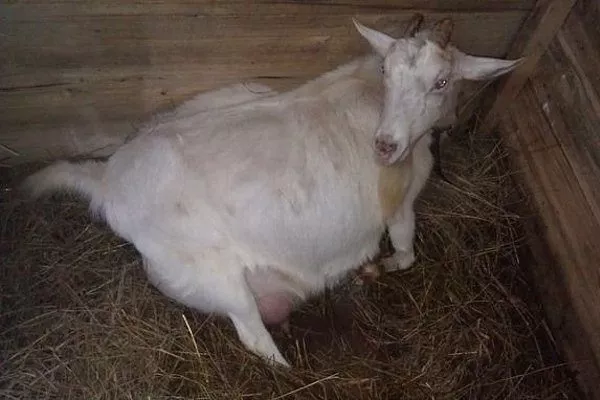
Duration of lambing
The duration of lambing depends on the number of previous births, the number of kids born and the duration of the pre-natal period:
- The first lambing of a young animal lasts up to 1.5 hours.
- Repeatedly giving birth goats go through this process in 40-45 minutes.
- In multiple pregnancies, the time between the births of the kids can be 10-30 minutes. Complications can prolong the time.
How does childbirth proceed?
Goat birth involves going through 3 periods:
- Preparatory. Characterized by the establishment of regular contractions. During this period, uterine contractions force amniotic fluid toward the cervix, which gradually dilates under pressure. When the cervix fully dilates at the peak of contractions, the amniotic sac ruptures, and the amniotic fluid is released.
The preparatory period is particularly painful, causing the animal to exhibit obvious anxiety. It lasts from 4 to 6 hours. - Removal of the fetus.When the cervix is dilated, the goat begins to push. This movement helps the fetus move through the birth canal. When the kid emerges at the genital opening—the fetus erupts—the pushing reaches its maximum intensity. With the next push, the baby is born. This process lasts from 10 to 40 minutes.
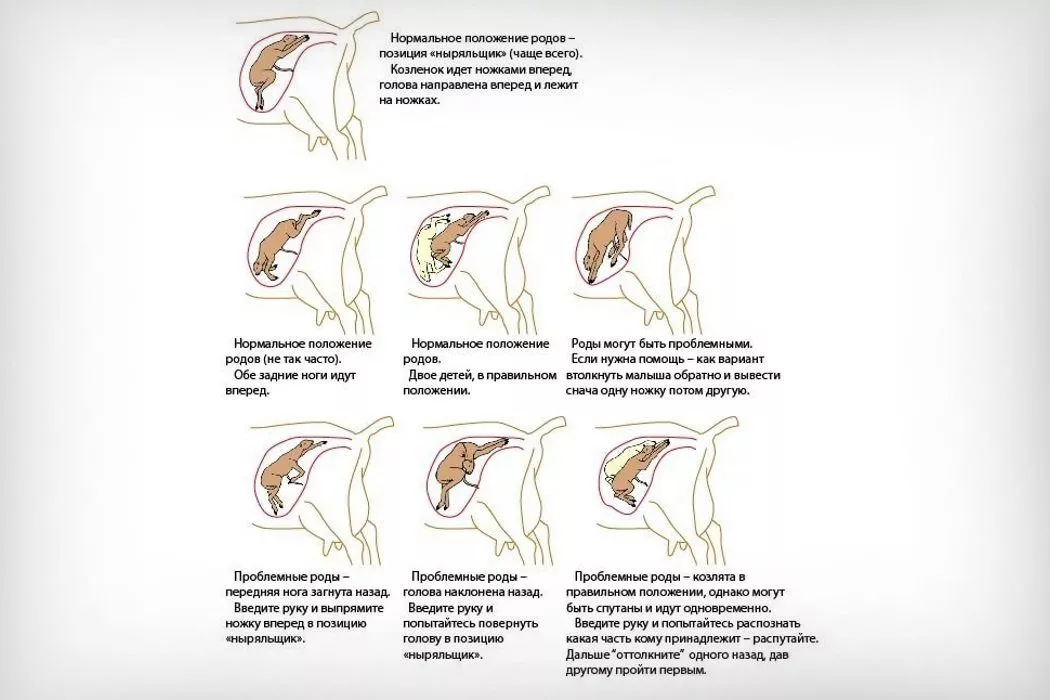
When twin kids are born, the first one is born in a head-first position, with its head pressed against the outstretched front legs, while the second one is in a breech position. The umbilical cord normally breaks naturally with movement of the newborn or the mother.
The goat typically spends this entire period lying on its right side. The straining process causes tension throughout the animal's entire body, and in this position, the sacrum is more mobile, facilitating the passage of the fetus. - Consecutive.Within 20 to 60 minutes after the kid's birth, contractions clear the uterine cavity. The placenta is separated from the uterine walls and expelled along with the placenta and any remaining amniotic fluid. In a multiple pregnancy, the placenta of each fetus is expelled separately.
If the placenta isn't removed, the goat will eat it. This isn't dangerous for her, but it can cause gastrointestinal upset.
You can see how a goat gives birth in the following video:
Checking the placenta
When the placenta passes, check it for integrity. Holes in its structure indicate that part of it has adhered to the uterine wall and can only be removed by a veterinarian. Failure to do so will cause decomposition in the uterus, leading to suppuration, bleeding, and other complications.
Complications during lambing
Goat births aren't always easy; sometimes they can be complicated by expected or unexpected factors. There are three main causes of complications during lambing:
- Weak labor activity.
- Narrow pelvis.
- Incorrect positioning of the fetus in the womb.
Knowing the reasons, a person in most cases is able to help the animal on his own.
The afterbirth did not come out
After lambing, a situation may arise where the placenta's removal by the uterus is delayed for more than six hours, preventing the placenta from being delivered. The placenta remains suspended behind the goat, and the goat's condition is concerning.
It is strictly forbidden to cut off a hanging bubble or pull on it in an attempt to pull it out.
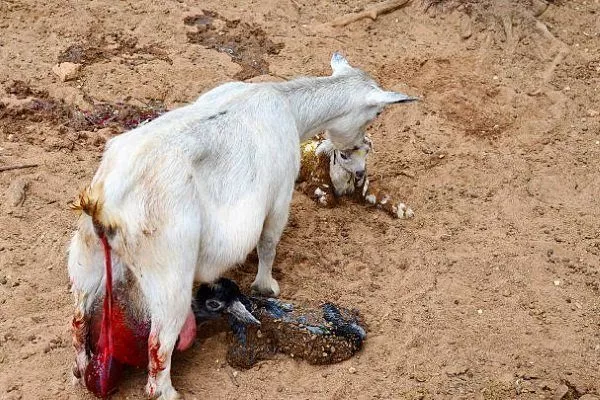
In this case, you need to help the animal like this:
- To stimulate uterine contractions and limit the growth of pathogenic microflora, oxytocin and an antibiotic (Gentamicin is suitable) are essential. Injections of 1.5 ml are administered intramuscularly twice daily for 5-7 days.
- After the injection, gently but firmly stroke the goat's belly from top to bottom.
- When the placenta appears, hold it with one hand, but do not pull. Continue massaging the abdomen. If successful, the placenta will be delivered. If this does not help, call a veterinarian for an examination.
During this period, you can give the animal a decoction of nettle and chamomile. They have a calming and hemostatic effect. Douching with this solution or chlorhexidine can also be used.
The fruit does not come out
Retained pregnancy indicates weak uterine muscles, which were unable to strengthen before birth due to the goat's low physical activity during pregnancy. The uterine muscles are unable to independently cope with the fetus's progression through the birth canal.
If labor continues for more than 12 hours, immediately administer an intramuscular injection of oxytocin. If the problem persists, veterinary assistance is the only option. A cesarean section may be necessary. This is an emergency measure used when the fetus is very large and labor is weak.
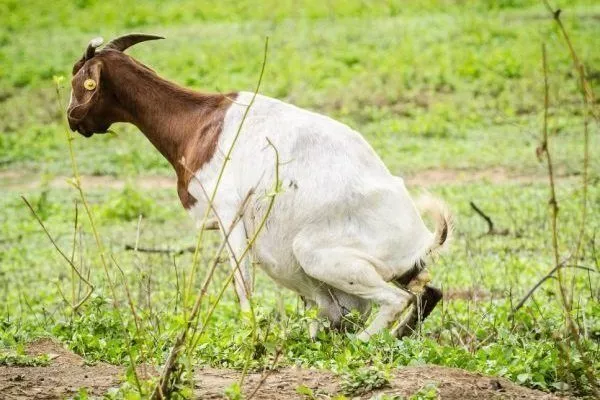
The fruit partially came out, but was stuck.
There are several possible cases where the fetus may become stuck in the birth canal:
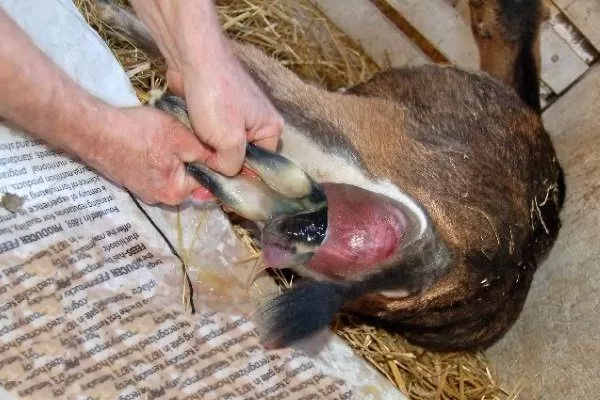
- The front legs are bent.Between contractions, gently push the kid inward and straighten the legs. During each contraction, you can gently tug on the fetus's legs.
Never pull a kid by the legs unless the baby is straining. This could lead to irreversible consequences.
- The fetus's head is turned to the side.During the rest period between pushing, gently use your hands to adjust the fetus's head.
- The kid ran into the vaginal wall.Wait until the contraction ends and gently move the muzzle away from the vaginal wall.
A kid may move through the birth canal with its hind legs first. This is not a cause for concern, as it is also normal and does not affect the well-being of the fetus or mother.
If the fetus is in a transverse lie, turn it into the correct position between contractions and, holding the legs, gently pull the fetus through the birth during the next contraction. This type of presentation often requires immediate veterinary attention.
A stillborn kid was born
It happens that a newborn goat is stillborn. There are many reasons for this:
- Fetal infection during pregnancy.
- Mechanical injury in utero from a contusion of the goat's abdomen. This can occur when the doe is kept in a herd during pregnancy, or from any fall, etc.
- Insufficient nutrition for the fetus and its fading.
- Early rupture of membranes.
- Weak labor activity resulting in asphyxia.
- Failure to provide assistance during lambing.
If this happens during labor, it's important to ensure there's no fetus left inside and the uterine cavity is clear. Call a veterinarian for this. After the examination, it will be clear whether the goat needs additional veterinary care or whether simply optimizing her care and diet is sufficient.
If no action is taken, the animal may die from infection and poisoning of the body by the decomposition products of the biomatter, or die from blood loss.
Premature lambing
A premature birth in a goat can have two consequences: miscarriage (stillborn fetus) or a weak but viable kid. Before birth, the animal will be restless, may appear weak, and its pulse will slow. Give the goat a stimulant: coffee, beer, or wine. This may stabilize its condition.
With subsequent miscarriage
Miscarriages are divided into:
- Infectious -The cause lies in a viral or bacterial infection.
- Non-infectious - They are provoked by mechanical damage, developmental abnormalities, poor nutrition, and poisoning.
If a goat gives birth prematurely, it's crucial to rule out infections dangerous to humans and other animals. This requires conducting specialized blood tests on the goat and fetus in a laboratory.
Clear tests indicate that the animal did not receive optimal care and nutrition during pregnancy. Care for a goat after a miscarriage should be no different from the measures taken after a successful birth. Milking is possible, as lactation is not suppressed after premature lambing.
Below is a video that talks about a goat giving birth prematurely:
The kid is alive, but weak.
When premature or weakened kids are born, immediate action is necessary. Newborns are at risk of low blood sugar and dehydration, so the first feeding of colostrum should be given no later than half an hour after birth.
The room must be warm enough to prevent the animals from becoming overheated. This should be taken care of in advance.
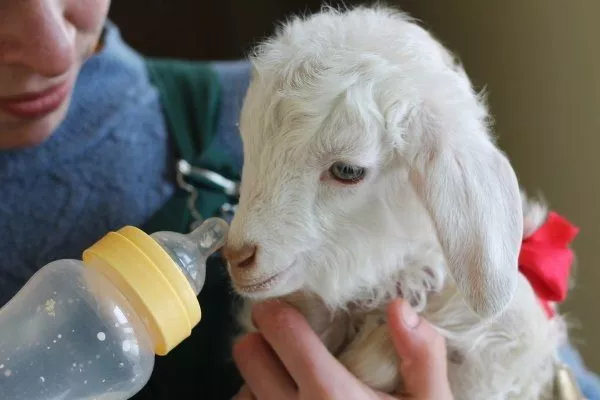
A weak kid will often require human assistance. Feed it colostrum using a regular baby bottle. To do this:
- Express the feed.
- Place your baby on your lap, covering him with a towel or clean cloth.
- Close the kid's eyes and bring the nipple to its mouth. Position the bottle so that the newborn's neck is slightly extended when sucking. This will allow the colostrum to flow directly into the second stomach chamber.
- If the baby is actively sucking on the pacifier, pat its tail. In nature, a goat does this to guide the baby and encourage it to suck more vigorously.
- If the kid is so weak that it cannot suckle colostrum on its own, take measures to ensure that the food drips into its mouth.
In emergency situations where the offspring is on the brink of life and death, carry out the following procedures to help it recover:
- Give an intramuscular injection of vitamin E and selenium. Inject 2 ml of the solution using an insulin syringe or a regular sterile disposable syringe and rub the injection site to speed up the absorption of the substances. This procedure will strengthen the kid's body.
- If the newborn's weakness is due to exposure to cold, warm it up immediately with a hair dryer, heating pad, or a bottle of warm water. If the baby is too cold, its tongue will also become cold. Massage its body, imitating the mother's movements. Once the kid warms up, feed it.
- Another emergency method for warming a newborn is to create a warm nest using water bottles or heating pads. Place the kid in it and cover him, keeping his head elevated. After half an hour, the baby should warm up.
All these measures and procedures also apply to premature kids. The only difference is that they will need to be bottle-fed for the first couple of weeks, as they can't even stand up on their own.
What should I do about lactation? What complications might arise?
Regardless of the outcome of lambing, the goat begins lactating. Whether to milk her or curtail milk production depends on the animal's condition after birth.
To prevent mastitis from developing, it's important to take preventative measures. Causes of mastitis include:
- unfavorable conditions of keeping, consisting of a cold, damp enclosure, drafts, contaminated bedding, etc.;
- violation of sanitary standards and milking techniques;
- early introduction of concentrated feed, imbalance in the diet;
- inflammation in the uterus and birth canal will inevitably spread to the udder;
- udder injuries.
There are 4 types of mastitis:
- Subclinical (latent). It's important to monitor the progression of this inflammation, as it can become chronic. Latent mastitis is characterized by:
- the presence of small seals in the udder;
- clots of milk with streaks of blood at the beginning of milking;
- pink milk;
- mucus and flakes remaining on gauze after straining milk.
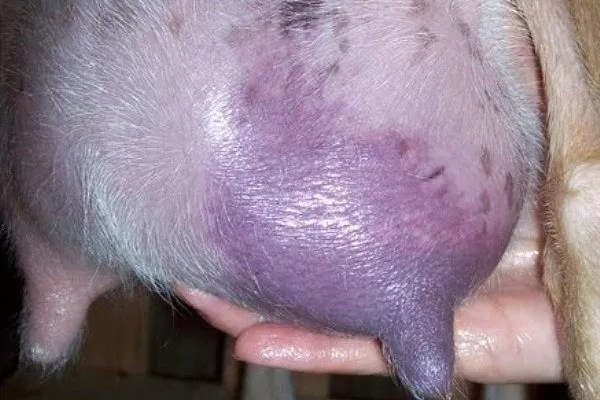
- Spicy. Without treatment, it leads to udder rot, gangrene, and death of the animal. Its symptoms include:
- very hard udder;
- the udder acquires a red-burgundy color, turning blue over time;
- udder temperature and general temperature increase;
- When pressing, a red liquid oozes from the nipple instead of milk.
- Chronic.It occurs due to inadequate treatment of acute mastitis, or due to complications of false inflammation of the udder.
- Imaginary.Swelling and hardening of the udder without blood or clots during milking is often mistaken for mastitis. Milk yields drop. Preventive measures include frequent milking and the use of diuretics. Rubbing and massaging the udder are unacceptable in this case.
Treatment for udder inflammation involves the use of antimicrobials, analgesics, antiphlogistic drugs, antibiotics, and oxytocin. Moreover, it is preferable to administer these medications intramuscularly rather than orally.
Possible antibiotics include Ceftriaxone, Nitox, and Dorin. When using these, Nystatin should be used concurrently. Solutions for intraudder administration through the teat opening, such as Mastiet-Forte or Tetra-Delta, can also be used. During treatment, exclude succulent feeds and concentrates from the goat's diet.
The goat became ill
It is not uncommon for the female's condition to deteriorate sharply during or after labor: weakness appears, the pulse quickens or slows, etc. If no action is taken, the animal's life will be in danger.
During childbirth
It's common for a goat to feel unwell during labor. She may become tired if the labor process drags on. Offer her some sweet water or coffee.
Signs of prenatal palsy may appear, requiring immediate action. This condition, caused by low calcium and glucose levels in the blood, can spread very rapidly, so call your veterinarian immediately if any signs are noticed.
Prenatal paresis is manifested by the following factors, which appear in increasing order:
- Change in gait, even to the point of dragging the legs.
- Decreased activity due to inability to lift the rear and stand on the hind legs.
- The goat begins to move on its knees, and problems with support on its front legs arise.
- Tremors appear, but appetite remains good.
- Decreased appetite, refusal to eat.
- A comatose state appears: the animal lies with its neck extended in an S-shape, its eyes are closed, and its extremities are cold.
First aid for an animal before the arrival of a veterinarian consists of the following measures:
- Don't milk the goat.
- Give an intramuscular injection of calcium gluconate, 10 ml in each leg.
- Intramuscular injection of 2 ml of Tetravit.
- Massage the goat's back and limbs using any warming compound.
- Cover the animal to keep it warm.
After childbirth
During this period, the immune system cannot fully protect the weak body, and inflammation of the udder, uterus, or vagina often occurs. These must be treated promptly to prevent them from becoming chronic. This affects the goat's milk production and her ability to bear offspring in the future.
The most dangerous disease, leading to gradual paralysis of the entire body, is postpartum paresis. If treatment is not taken, the same as for prepartum paresis, the goat will die.
The only difference in the treatment of postpartum paresis is the ability to inflate the udder.
Do you need human help?
It's important to monitor a pregnant goat's condition starting in the third month of pregnancy. If the doe is feeling well and is healthy for the upcoming birth, human assistance may not be necessary. However, even under these conditions, lambing can sometimes be difficult, and without assistance, both the doe and the fetus may die.
A goat breeder should be vigilant and ready to assist the animals with lambing if necessary. A female's recovery after lambing largely depends on the conditions created by humans. The survival of the kids is sometimes only possible thanks to the breeder's efforts.
What to do after lambing?
After lambing, both the goat and her offspring require careful care. How quickly the animals grow stronger depends directly on the conditions created by humans.
Handling and care of kids
When the kid is born, the mother goat stands up and licks the kid, removing any mucus. You can help her by wiping the kid with a clean cloth. Clean the inside of the kid's mouth by inserting your finger and wiping it with a cloth. Cut the umbilical cord 10 cm from the kid's belly and treat it with a solution of potassium permanganate or brilliant green.
To stimulate the baby's lungs, simply blow gently on its nose while moving its front legs.
Kids are left with their mother or placed in separate cages made of plastic or wood. It's best to have a fine-mesh bottom lined with straw. Clean the cage at least twice a day.
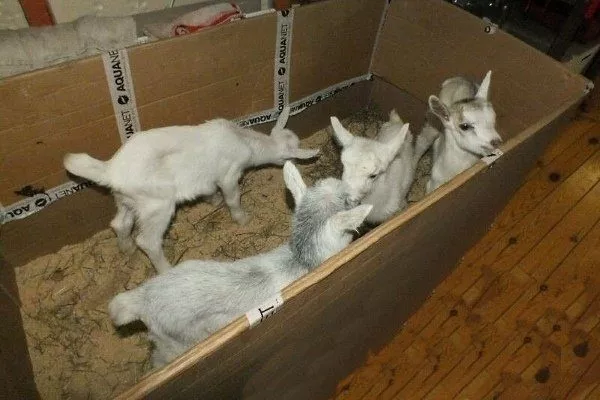
Procedures to be carried out with kids:
- When the babies are 3 days to a week old, carry out disinfection;
- 7 days - vaccination against enterococcus, repeat after 14 days;
- 1 month – start of taking anticoccidiosis drugs and antiparasitic prophylaxis;
- 6 weeks – vaccination against clostridiosis, repeated on the 25th day;
- 3 months – vaccination against foot-and-mouth disease, anthrax and smallpox.
Goat care
For now, the goat's diet should consist of hay and dried grass to avoid a surge in milk production and lactation problems. Gradually introduce concentrated feed and vitamin and mineral supplements.
Clean the barn where your goat is kept daily. This is the primary preventative measure against infection and udder inflammation.
Immediately after the birth of the last kid, milk the goat. This naturally stimulates uterine contractions and the delivery of the placenta. After the placenta is expelled, tablets that form foam when dissolved, such as Biometrosanit or its substitutes, are introduced into the uterine cavity. On the second day, flush the uterine cavity with antiseptic solutions. Antibiotics are administered if necessary.
Remember that goat's milk should not be consumed while being treated with antibiotics. Giving it to kids is also not recommended, as it can cause gastrointestinal problems.
A goat's first lambing: what do you need to know?
First-time lambing sows often struggle to lamb on their own. Due to their inexperience and lack of physical fitness, human assistance is needed. Furthermore, the owner is unsure how their lambing will go, so it's important to check the pen frequently to prepare for potential problems during the birth.
When does the milk come in?
Nature has designed a goat to begin producing increased milk immediately after giving birth. Over the first two months, hormones continually increase lactation. The more frequently the udder is massaged, the more productive the milk yield will be.
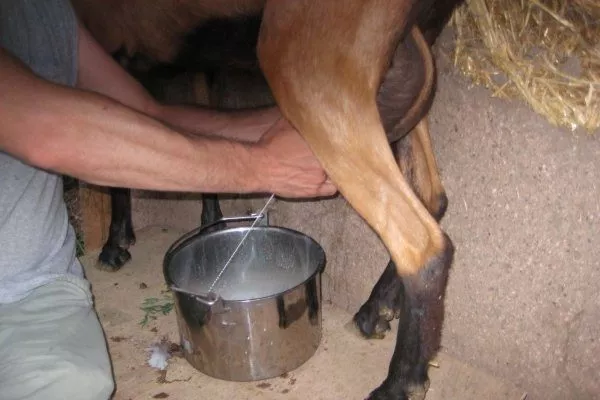
Milking should always begin with udder hygiene. Simply wash it with water and wipe it dry with a clean cloth. It's a good idea to lubricate the teats with ointment or the first drops of milk to prevent cracking. The goat can be milked by the kids or the breeder.
The goat is milked by kids
When a mother and her kids are kept together, the kids will disturb her up to 12-15 times a day to feed. By sucking some of her milk, they stimulate additional milk production.
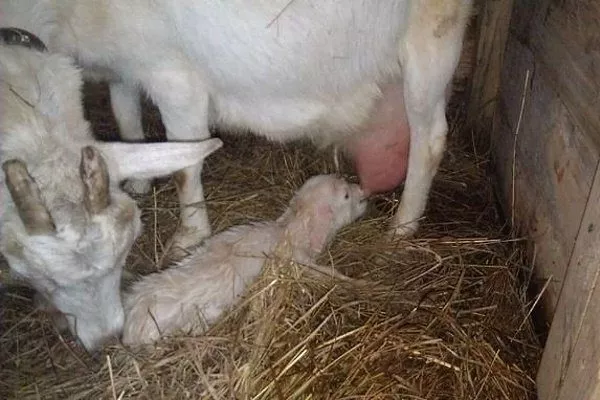
However, if there are several kids, they may not receive enough nutrition and will suckle almost constantly, competing for food. This situation can result in the kids becoming weak from lack of food. The mother, in turn, will become exhausted from lack of rest and the ability to feed properly. Furthermore, the kids can injure the udder (kicks, bites), leading to inflammation.
There is only one way out - to separate the kids and feed them from a container, milking the goat by hand.
Read the article about How to feed kids.
Manual milking
To hand-milk a goat, milk her 5-7 times a day during the first week after lambing. Ideally, milking should occur at the same time each day, with intervals between milkings not varying significantly. Pay attention to the condition of the animal's udder. If it is firm, you can add another milking, or continue milking six times a day for another week.
Once the udder hardness and swelling before milking subside, the frequency of milking can be gradually reduced. Optimally, milking four times a day, every six hours, is considered optimal.
With proper milking, the amount of milk obtained from one individual per day can reach 7 liters.
False pregnancy
Sometimes, under the influence of hormones after ovulation, a goat experiences a false pregnancy. It's only possible to 100% distinguish this from a true pregnancy early on if the goat hasn't had contact with a male. Otherwise, all the signs are the same. The animal becomes calmer, gains weight, and her belly grows, but at the end of this pregnancy, only water is released.
To monitor and eliminate false pregnancies, it is necessary to keep a diary of matings and lambings of goats.
How many kids does a goat give birth to?
A first-time lambing mother produces one kid, with subsequent lambings producing 2-3 kids. In some cases, up to 5 kids may be born.
Every goat farmer faces lambing. It's a natural and necessary step in breeding animals. By following proper care and providing the goats with the necessary diet, a breeder ensures a healthy herd. Knowing all the nuances and methods for preventing and managing potential complications allows you to confidently anticipate the arrival of a new addition to your herd.
A good article, but there's a lot of, how can I put it, unnecessary and controversial information. If you read it (without experience), you'll feel bad if a goat gives birth. The problem is, everything is described correctly, but it would be nice to restructure it a bit. First, the normal flow (which is what happens in most cases), and then the nuances and complexities of each section. Otherwise, you'll become truly intimidated and even afraid to keep goats after reading too much. Sorry for the minor criticism, the author is great.