
Toggenburg goats are a dairy breed distinguished by light stripes on their muzzle, belly, and legs. Their milk is rich and nutritious, containing a high amount of nutrients. They are easy to care for and productive breeders. Toggenburg goats are most common in Switzerland, the United States, Canada, Austria, and the Netherlands. In Russia, this breed is little known.
Origin of the breed
The Toggenburg goat's homeland is a picturesque valley in northeastern Switzerland, from which the breed takes its name. The history of these animals begins in the mid-18th century and continues to the present day. Initially, breeders had two goals: high milk yields and rapid acclimatization to any weather conditions. These goats were developed through extensive selective breeding of "non-pedigree aborigines," which only strengthened their immunity with each new generation.
Thanks to their milk production, Toggenburg goats immediately became popular in the 18th and 19th centuries. They were widely traded in Belarus, Poland, Holland, Switzerland, and other countries with well-established livestock farming. In Russia, these goats have not become established in all regions. They can be found in small numbers in the Altai Krai, Vologda, Leningrad, and Kostroma regions.
Appearance, size and character
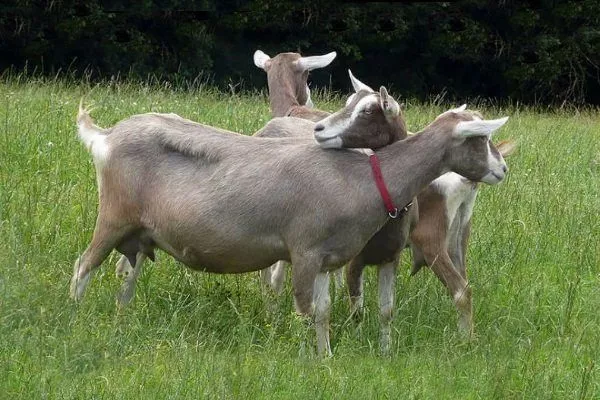
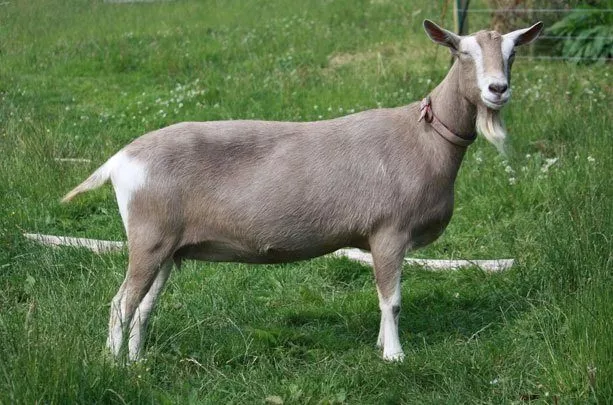
The Toggenburg goat is distinguished from its relatives by its small size and charming appearance. In appearance, this graceful animal has a shortened body and well-developed muscles, a small head, and slender legs. Its fur is a rich brown color, with two longitudinal stripes running down the sides of the muzzle and down to the belly and hooves. There is also a light spot near the small tail. The ears are small and erect. These goats are cromoled (hornless). Some varieties have small, sickle-shaped horns that curve backward.
Adult males stand 75-85 cm at the withers, while females are smaller, no more than 78 cm. The average weight of a yearling buck is 60-65 kg, but larger specimens of this breed are also common. Females weigh 48-60 kg, and newborn kids weigh up to 3.5 kg (a litter can contain up to 4 individuals). Adult females at 8 months weigh 40 kg.
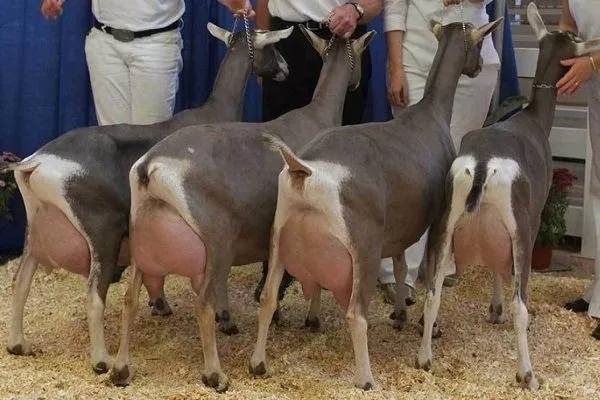
Toggenburg goats have a medium-length, dark brown coat. These four-legged breeds from northern regions have a thicker coat due to the undercoat, which feels soft and silky to the touch. Both males and females have a small beard. Young goats have wattles on their muzzles, and their udders are large and round with large, long teats. These animals are adapted not only to hand milking but also to machine milking.
This is a very peaceful breed, undemanding in terms of food and living conditions. Currently, it is second in popularity to Saanen goatsThe animals aren't very smart: they scatter in the pastures, can't find their way home on their own, and don't recognize their own names. Goat farmers have to go searching for them, wasting time.
Productive qualities
Due to their small size, Toggenburg goats are not suitable for large-scale meat production, although their meat has an unforgettable flavor. The animal's hide and wool also offer limited profit.
The main value for goat breeders is their milk, which is then used to produce premium cheeses, for sale, and for their own family needs. Milk yields are consistent year-round (milk volumes do not decrease in winter). During lactation, Toggenburg goats produce up to 1,000 kg (the record is 1,200 kg) with a fat content of 4.5-8%. The milk is nutritious and is widely used in the food industry. Daily milk yield ranges from 4 to 6 liters.
Toggenburg Goat Care and Breeding Guidelines
This breed is adapted to the harsh mountain climate. They tolerate low temperatures well, are frost-resistant, and can withstand strong winds. However, they feel uncomfortable in the heat, eat poorly, and become ill more often.
Toggenburg goats do not tolerate dampness and should be kept in dry conditions. The ideal humidity level is 60-75%. If they are provided with favorable conditions and proper feeding, they produce healthy offspring and high milk production.
How keep dairy goats, is briefly described in our other article.
How to equip a barn?
When setting up a barn, remember the basic rule: animals tolerate cold well and do not tolerate heat. The maximum air temperature in the barn should not exceed 20 degrees Celsius. In winter, Toggenburg goats feel comfortable at 5 degrees Celsius, so there is no need to insulate the barn with mineral wool.
- ✓ The optimal temperature in the goat's house should not exceed 20°C, the minimum should not be lower than 5°C.
- ✓ Humidity in the room should be maintained at 60-75%.
To learn more about the conditions in which goats should winter, read our article about How to keep goats in winter.
When installing a goat house, consider the following recommendations from experienced breeders:
- Choose a bright and dry room to prevent excess moisture and mold from penetrating.
- Place the shed in areas away from cesspools and large accumulations of manure.
- Provide a high-quality ventilation system, as dampness can kill animals and reduce their milk production.
- Make a concrete floor in the goat barn, preferably at a slope to allow for drainage. To keep the floor warm, insulate it with wooden planks and straw.
- Position the windows so that the room is well-lit. Make sure that ultraviolet rays do not enter the goat house or reach the goats.
- Divide the barn into individual stalls with wooden partitions so that each goat has its own space.
- Organize the space so that females and males are kept separate. This will minimize the risk of unplanned mating and weak offspring.
- Set up a walking yard next to the barn. Goats love a large space. If space is limited, exercise the animals in spacious, fertile pastures.
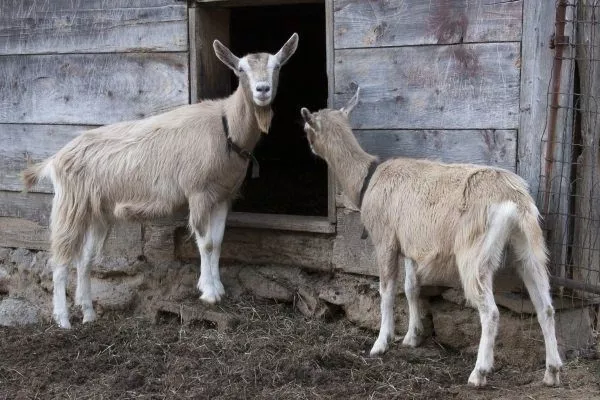
Proper construction and adherence to recommendations are crucial not only to the comfortable living conditions of Toggenburg goats, but also to their meat and dairy production. Regularly inspecting the barn for parasites can prevent the entire herd from becoming infected. To prevent parasites, treat the barn walls with a copper sulfate solution once or twice a month.
Read our article “How to properly arrange a habitat for goats”Instructions: DIY Goat Shed".
What and how to feed?
In summer, an adult goat eats up to 7-9 kg of greens; in winter, 3 kg of hay and supplements per day is sufficient. The portions and variety of food depend on the animal's age, pregnancy status, and activity phase.
In winter, in the daily diet Fresh hay, root vegetables, chopped vegetables, and mineral supplements are essential. This is a good way to strengthen the goat's immune system and prevent a number of diseases.
In summer, animals graze outdoors, obtaining essential vitamins and nutrients from green grass. It's best not to feed goats whole grain; grind it using any convenient method.
Succulent and other feeds
During periods of vitamin deficiency, Toggenburg goats need vitamin supplements. Include 500 g of concentrated feed in their daily diet. It's also important to include beet or carrot tops, cabbage leaves, boiled potatoes, and vegetable peels in their diet. Grind root vegetables and feed up to 4 kg of potatoes per day, and no more than 2 kg.
Brooms
For winter, it's recommended to dry brooms for goats from thin branches, 1 cm thick and 50 cm long. When live shrubs and fresh greenery are unavailable, animals love to chew on them. For brooms, use branches of maple, linden, birch, alder, oak, hazel, willow, and pussy willow. How to make such a broom:
- collect thin branches;
- Tie them together to form 12cm thick bundles;
- immediately hang them under a canopy and let them dry;
- hang in a draft, but avoid moisture and direct sunlight;
- After 2-3 weeks, store in a dry, warm place as a winter preserve.
Prepare more of these brooms, as each goat needs 2-3 during the day and 1 at night. Calculate the number of goats in the house. If you don't have any brooms, replace them with clean, dry leaves.
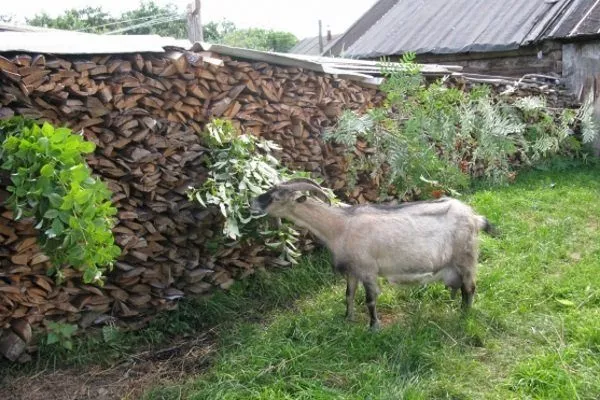
During the cold season, a goat needs 500 kg of roughage, which includes not only hay and straw, but also brooms and dry leaves.
Mineral supplements
Include 15 mg of salt and 10 g of pre-crushed chalk in an adult goat's daily diet, adding them to their feed or water. Without these ingredients, the goat's appetite decreases, and weight and milk production decline. A mineral supplement of 10 g of bone meal is essential.
Feeding order
Develop a stable feeding schedule, feeding your goats at the same time each day—morning and evening. This is essential, as goats quickly adapt to a daily routine, and disrupting it can cause significant stress and reduce milk production.
Approximate diet:
- Breakfast. Drink with compound feed and vegetables, after milking – roughage.
- Dinner. Vegetables, swill, after receiving milk – dry leaves and brooms.
- Dinner. Concentrate softened with swill, after milking - brooms, leaves, hay.
For more information on feeding domestic goats, read this article.
Drink
Be sure to include slop from automatic waterers in your ruminant's daily ration. These devices make life much easier for goat farmers in the barn; otherwise, the animals would have to be watered several times a day. Securely secure the waterers, otherwise they can shift and prevent the goat from drinking enough.
Monitor the amount of water in the water bowls. Add and refresh the water regularly. Clean the water bowls daily. If mold or algae appears on the walls, the animal can become seriously ill. In summer, a goat should drink 3-4 liters of water twice a day; in winter, this amount decreases. The optimal water temperature is 15 degrees Celsius.

How to feed breeding bucks?
The buck should be active and healthy. The daily diet for breeding bucks includes up to 2.5 kg of hay, 300 g of concentrate, and 1 kg of fresh vegetables. Around two months before mating, move the buck to rich, green pastures and double the amount of concentrate. When mating, feed him more carrots and other vegetables high in carotene.
Mating – breed characteristics
Breeding Toggenburg goats is very profitable and promising. As with other breeds, one pregnancy per year is encouraged. While breeding is possible every 7-8 months, the resulting offspring are weak, prone to illness, and struggle to gain weight.
A distinctive feature of these domestic animals is their large litter size—up to four kids. The kids grow quickly, gaining weight rapidly, and reach 40 kg by eight months. By comparison, an adult female goat weighs 60-65 kg.
Mating options
Toggenburg goats enter heat from September to March. This is the best time for mating. The goats mate for 5-7 days every 20 days. This period can be determined by the doe's behavior. She becomes nervous, irritable, hostile, and aggressive. Other cases have been known where the doe, on the contrary, becomes lazy and passive, which also indicates heat.
There are several options for insemination of this breed. Among them:
- ManualThe owner handles the goats, after which the females are born. This is a convenient option for small farms where there are several females per male.
- ArtificialMore suitable for breeding selection, it is carried out with the participation of an experienced veterinarian.
- FreeThe animals are kept in the same pen and independently search for a mate for mating. It's best not to conduct such experiments with the Toggenburg breed, otherwise you risk ending up without offspring.
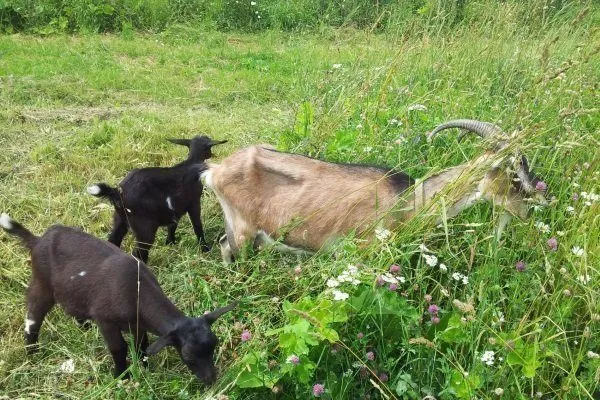
If the mating took place in the fall, lambing (the birth of kids) It falls in the spring. This is a favorable period for raising them. The offspring are strong and active, do not get sick, and gain weight quickly. From almost the first months of life, the kids graze with their mother, receiving nutrients from the pastures necessary for health and rapid growth.
The period of goat pregnancy and the characteristics of lambing
By 4-5 months, females reach sexual maturity, but it's too early to mate them. Wait until the animal is 8-12 months old. The optimal age for mating Toggenburg goats is no younger than 1 year and no older than 6-7 years. Young first-time mothers produce weak, non-viable offspring.
The optimal gestation period is 150 days. When the goat gives birth, wash her udder, or she will do it herself. Otherwise, the newborn may become infected. Immediately transfer the kids to the barn, where they are fed expressed colostrum from their mother. This is necessary to boost the young animals' immune systems. Otherwise, the goats are born weak and die within the first few months of life.
To avoid reducing the goat's milk production, keep the kids separate from their mother for 3 weeks after birth. Feed the kids expressed milk, gradually introduce complementary foods.
Health and life expectancy
The animal lives up to 13 years, and longer if properly fed and cared for. Toggenburg goats can produce for 7-8 years. Diseases in goats Symptoms worsen with age, when the immune system weakens significantly. A healthy animal is alert and playful, with a pulse of 70-80 beats per minute and a body temperature of 39-40 degrees Celsius. If these parameters are abnormal, a disease is suspected and a veterinarian consultation is necessary.
Advantages and disadvantages of the breed
Today, Toggenburg goats have lost their popularity, having been supplanted by the Saan breed. However, these noble animals have a number of advantages and are attractive to farmers.
List of positive qualities:
- Attractive appearance. The white stripes on their faces make these goats unique and original. Their medium-length coat allows them to resemble dogs.
- Rapid acclimatization. Goats tolerate cold well, so there's no need to insulate the goat barn. This is a good option for mountainous and northern regions of Russia.
- Personality traits: Goats are calm and non-confrontational, quickly adapt to people, and can be used as pets.
- High milk production rates. During lactation, goats produce up to 1,000 kg of milk. Milk yield does not decrease during the winter.
- Health benefits. Milk contains vitamins and nutrients and is used to make butter and high-quality cheeses.
- Hornless. These breeds cause less panic among breeders.
- High fertility. A single litter can contain up to 4 viable kids.
Despite the positive aspects, don't forget about the Toggenburg breed's disadvantages:
- Goats don't tolerate heat well. At elevated temperatures, the animals produce less milk, don't eat, and become sick more often.
- A goat's diet is tied to the taste of its milk. It's important to maintain not only a daily feeding schedule but also a varied diet.
- Shortage. Since Toggenburg goats are not particularly popular in Russia, there are difficulties in purchasing them.
Sabers
A distinctive feature of Toggenburg goats is their unique coloring. It's rare to find an animal with symmetrical white stripes on its face. If other breeds have this coloring, unscrupulous breeders pass it off as Toggenburgs and try to sell it for a higher price. The result is mixed-breed offspring.
Saanen goats are close relatives of the Toggenburg breed. They carry a recessive gene, resulting in a variety of colors other than white. These variegated offspring are called Sables. They can have the same coloring as Toggenburgs. This is a distinct breed, also popular among goat breeders for its high milk yields and fertility.
Frequent illnesses
A long period of selective breeding has made Toggenburg goats hardy and resistant to infections. The risk of pseudotuberculosis or brucellosis is minimal. The animal tolerates cold well, and a strong immune system protects against unwanted diseases. However, cases vary, and Toggenburg goats are not immune to illnesses.
The most common diseases are:
- Inflammation of the udderThis condition often develops due to poor goat hygiene or improper milking. The udder becomes painful and a course of antibiotics is required.
- Respiratory diseasesThe animal's temperature rises, it stops chewing cud, and its appetite decreases. This is due to dampness and frequent exposure to drafts. The treatment plan is determined based on the sick goat's condition; a veterinarian consultation is necessary.
- Colic, bloatingThis problem is observed when the goat's watering and feeding regimen is not properly maintained, the diet is unbalanced, or there is a lack of nutrients.
- MastitisThis is an infectious and inflammatory process in the mammary glands. Milk may contain pus, and its taste may change. If these symptoms occur, discontinue breastfeeding and begin a course of antibiotic therapy.
- Parasitic diseasesIf hygiene rules in the goat barn are not followed, the animal may become infested with fleas. Treat with special antiparasitic agents and also treat the walls and partitions of the barn with a copper sulfate solution.
- RheumatismThis is a consequence of living in damp sheds with high humidity and drafts.
- Hoof inflammationThis disease develops as a result of mechanical trauma. Poor hoof hygiene is one of the contributing factors.
To reduce the risk of disease, administer your goat's scheduled vaccinations and boosters. Also, keep the goat's shed clean and tidy, and regularly inspect the animal's fur and hooves. Clean the latter after each grazing, otherwise the pathogenic infection can affect the sensitive skin.
- Treat the walls of the barn with a solution of copper sulfate 1-2 times a month.
- Regularly inspect your animals' fur and hooves for parasites.
- Carry out scheduled vaccinations and revaccinations.
Who is the breed suitable for?
Toggenburg goats are more suitable for large and medium-sized farms, but less suitable for small-scale farming. This is due to feeding requirements. Producing high-quality milk requires a varied diet, which small-scale goat farmers cannot provide. Furthermore, the meat yield (due to the animal's size) is unsuitable for large-scale sale. The hide, although valuable, is only a small amount per animal.
We invite you to watch a video in which you will learn about the breed's characteristics and how to properly care for Taggenburg goats:
Reviews of the Toggenburg breed
Toggenburg goats are ideal for raising and breeding in Russia. They are easy-to-care-for and frost-resistant, rarely get sick, and can produce 3-4 kids per lambing.