
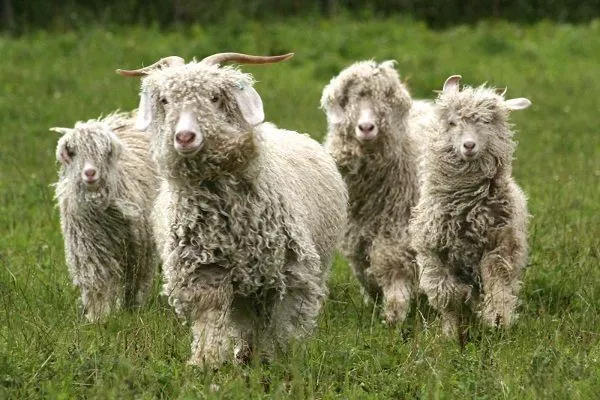
Down goats differ from their relatives in their distinctive long, silky wool and ultra-soft down. These breeds are bred for their wool, with meat and milk being secondary. Let's learn about the different down goat breeds and compare their productivity.
Characteristics and features of down goats
The main difference between the downy goat and its other relatives is its dense, abundant down. It's the downy hair, not the coarse hairs, that's most valuable.
- ✓ Consider the climatic conditions of your region to select the most adapted breed.
- ✓ Assess your ability to provide food, as some breeds require specific nutrition.
What is the difference between down goats and regular goats?
- The wool has a low fat content. When combed, the down fibers do not tangle, and the product's quality can be checked directly on the animal.
- There are no special maintenance requirements. The only caveat is annual clipping and brushing. Brushing begins during the shedding season.
- The shedding period occurs at the end of winter, and then brushing and trimming are repeated after 14 days. Delaying the procedure is essential, as it can lead to loss of a useful and important product (the down becomes clogged very quickly).
- The value of down is also determined by the quality of the product and its color. Down is of the highest quality during the first combing. White down commands a higher price, while other colors are less popular.
The best breeds of down goats
Let's look at the best breeds of this type of goat. All are distinguished by thick, long wool, but the quality and quantity of wool varies from breed to breed.
| Name | Down productivity (kg) | Average weight of a goat (kg) | Average weight of a goat (kg) | Habitat |
|---|---|---|---|---|
| Angora | 4-5 | 40 | 50-60 | Central Asia, Russia |
| Kashmiri | 0.15-0.2 | 30 | 40 | Tibet, Mongolia, Iran and Central Asia |
| Pridonskaya | 1.5-1.8 | 45 | 75 | Russia |
| Orenburg | 0.5-0.6 | 55 | 90 | Russia |
| Gorno-Altai | 0.5-0.7 | 40 | 65 | Mongolia and Altai |
| Dagestan | 0.3-0.5 | 28-34 | 48-57 | Dagestan |
| Black | 0.3-0.4 | 45 | 60 | Uzbekistan |
| Volgograd | 1.2-1.5 | 35-40 | 60 | Russia |
| Kyrgyz | 0.4-0.5 | 35-40 | 48-58 | Kyrgyzstan |
| Breed | Adaptation to cold | Adaptation to heat |
|---|---|---|
| Angora | High | Average |
| Kashmiri | Very high | Low |
| Pridonskaya | High | High |
Angora breed
Representatives Angora goat breed They are small in size, but this fact does not prevent them from remaining the best down animals.
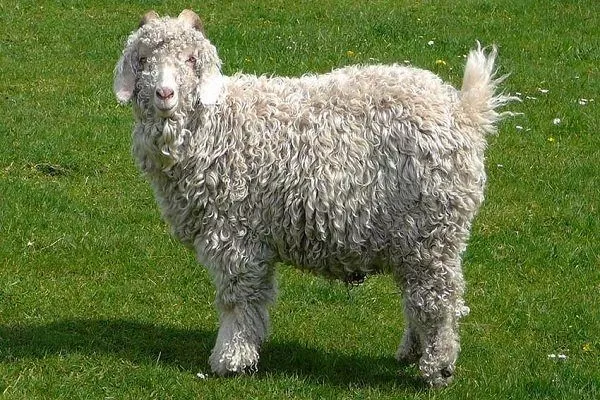
Description.The goats are white, but gray and silver ones can also be found. Male Angora goats reach 50-55 kg, while females don't exceed 40 kg. Their bodies are low, their heads are small, their chests are small, and their legs are strong despite their short stature. Their bodies are covered with thick, curly hair, forming twisted braids. A single strand can grow up to 0.3 m long.
Productivity.Goats should be sheared twice a year. Each goat produces approximately 4-5 kg of wool. Milk production during lactation reaches 60-100 liters, with a fat content of 4.5%.
Features of the content. The Angora breed is easy to care for, and the animals are never capricious or unsatisfied. They can graze in any area, but prefer hilly terrain. The taste of their milk is significantly reduced when males and females are kept together.
Animals shouldn't be kept indoors all the time; they must be exposed to fresh air, otherwise they can become ill. A lack of fresh air also leads to deterioration of their coats. If pasture is not available, they should be released into an outdoor enclosure in the summer. The area should be enclosed with a mesh fence or a fence at least 2 meters high.
Advantages of the Angora breed:
- they digest food of various compositions very well;
- adapt to various climatic conditions without any problems;
- have strong immunity;
- high wool productivity;
- The meat is delicious.
Disadvantages of the breed:
- poor maternal instinct;
- difficulty of maintenance in a room with high humidity;
- the quality and structure of the wool depends on the weather;
- During shedding, the amount of fur decreases;
- low birth rate.
Kashmiri down goat
The animals live in mountainous areas at an altitude of 2-3 thousand meters above sea level.
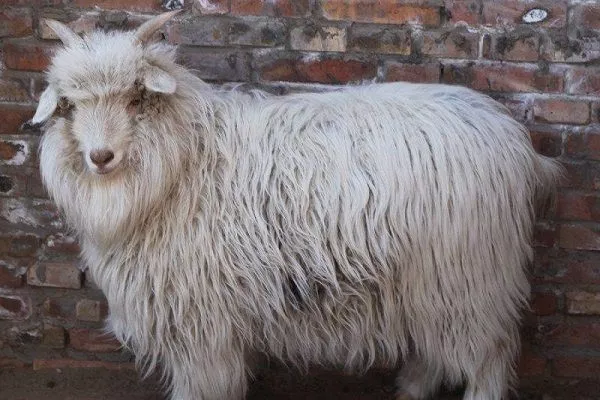
Description.This breed is slightly smaller in size than Angora goats. Their ears are large and drooping, and their horns are slightly curved. Their muzzle is covered in short hair, while their entire body is covered in long down. Their fur comes in a variety of colors: gray, white, tan, and gray-tan.
Productivity.The guard hairs are approximately 12 cm long, and the down hairs are approximately 8 cm. They are fluffy and elastic, making products made from the down hair warm and lightweight. Shearing is necessary annually; sometimes during molting, down hair is found in bushes or on the ground. An individual produces approximately 200 grams of wool and about 150 grams of down hair.
Features of the content.There are no special requirements for keeping these goats. Due to their ability to survive in mountainous areas, the breed is kept in Tibet, Mongolia, Iran, and Central Asia.
Advantages of the Angora breed:
- average down productivity;
- very hardy and undemanding in care.
Disadvantages of the breed:
- Possibility of breeding only in mountainous areas;
- Without regular brushing of goats, the down often falls out and loses its presentable appearance.
Don breed
It belongs to the ancient breeds, homeland – Russia, the Don River region.
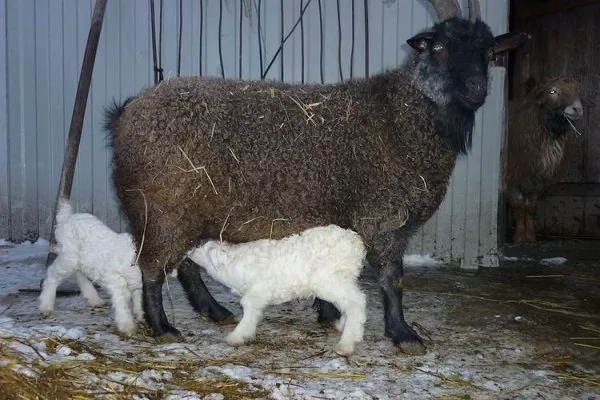
Description.The Pridonskaya goat was created by crossing local goats with the Angora breed. Their fur comes in a variety of shades, but the most common colors are white, gray, and black. They have a strong build and sturdy legs. A kid weighs approximately 3 kg at birth, while an adult male can reach 75 kg, and a female can weigh 45 kg. The breed is considered prolific.
White goats weigh slightly less than grey ones, but the amount of down does not change.
Productivity.The breed's primary product is wool, which consists of approximately 70% down and 30% coarse hair. The wool is uniform in thickness and size, with down growing to approximately 0.1 m and guard hair growing to 0.08 m. A single goat can yield 1.5 kg of down. The meat is of excellent quality, yielding up to 9 kg of this product per individual.
Features of the content.Individuals can live either individually or in a herd. There are no specific living conditions requirements; the animals can coexist with other goat breeds, poultry, and other animals.
The main rule is to avoid overcrowding, otherwise the wool will lose its quality. Goats need to be grazed in summer and winter; in summer, grazing should be no less than 12 hours a day.
They require increased protein and sulfur. Watering is necessary twice a day. In winter, the water is slightly warmed.
Advantages of the Don breed:
- high wool productivity;
- excellent quality animal meat;
- the milkiness is tasty and low-fat;
- do not require special maintenance conditions;
- not picky about food.
Livestock breeders were able to identify only one drawback of the breed: deterioration in the quality of wool due to sudden changes in climate and weather.
Orenburg
Goats are distinguished by their impressive size and strong build.
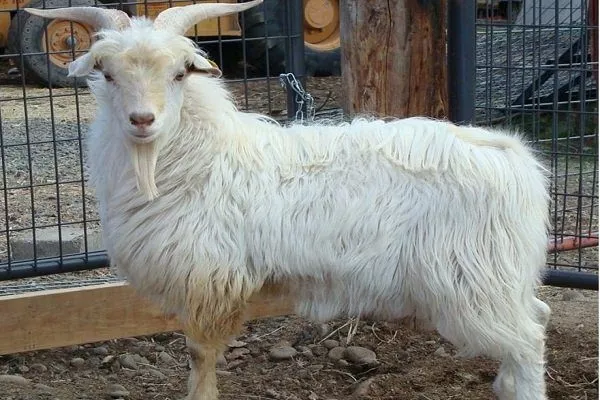
Description. Male bucks can weigh up to 90 kg, while females can exceed 55 kg. Orenburg goats are often black without any markings. Their wool is braided, thick, and soft to the touch. These goats are prolific breeders.
Orenburg goats are renowned for their resilience to various weather conditions. Climate change has a beneficial effect on the quality of their wool, particularly wind, drought, and frost.
Productivity. The main purpose of breeding Orenburg goats is to obtain down. Approximately 0.5% of the product can be harvested from one animal. The wool is soft and delicate, yet strong and elastic. It fluffs up in finished products, giving them a more refined appearance.
During lactation (over six months), 160-180 liters of medium-fat milk can be collected. After weaning, the young cow can be milked for another three months. With good nutrition, she will produce approximately 50 liters of milk.
Features of the content.These goats are very clean and sensitive. They have one spot for toileting and another, clean and dry, for resting. Goats live on pastures; if winters are not particularly cold, the animals prefer to stay outdoors as much as possible.
Breeding of these breeds is only permitted in the Southern Urals, Orenburg and adjacent areas.
Advantages of the Orenburg breed:
- above average early maturity;
- milk productivity is high;
- the quality of the down is excellent;
- solid color;
- high wool yield.
Disadvantages of the breed:
- truncation of the down fiber, this property worsens the condition of finished products;
- difficulty adapting to a new climate.
Mountain Altai goats
The goats were named after the place where the breed originated—Altai. One of the "parents" was an individual of the Don breed.
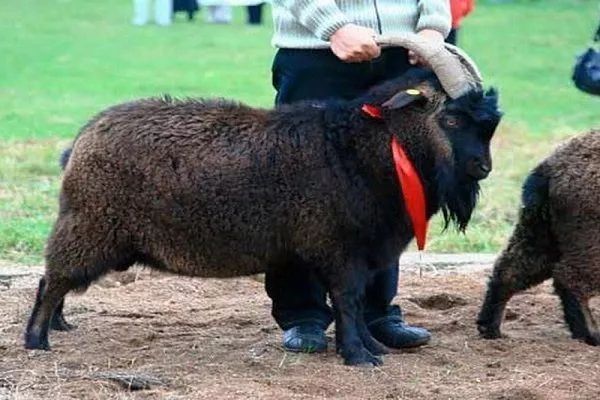
Description.Goats are hardy and can survive on pasture all year round. They gain weight rapidly and produce top-quality meat. Male goats can weigh up to 65 kg, while females can weigh up to 40 kg. They are very meat-loving animals, often exceeding 70% of their body weight. Fertility depends on the pastures and living conditions.
Productivity.The wool of the Altai Mountain goat is 8 cm long and consists of 75% down. A goat can yield 0.5-0.7 kg of product. The down is high-quality and very soft. It is used for making scarves and other items.
Features of the content.Goats can be kept anywhere in the country, as they adapt easily to a variety of climates. They require shelter, but a simple shed will suffice.
There's no need to insulate the barn, but be sure to line the floor with straw. The barn shouldn't be damp, as moisture can negatively affect the animals' coats.
Advantages of the breed:
- high quality wool and down;
- a large amount of downy fleece;
- undemanding in maintenance and care;
- unfussy eating habits;
- the ability to get along in the dry climate of mountainous areas;
- good endurance;
- strong immune system;
- high meat productivity.
The only drawback that can be noted is a small defect in the horns, which even gives the Altai goats a special touch.
Dagestan goats of the down direction
The Dagestan breed is a small-sized individual with a strong build.
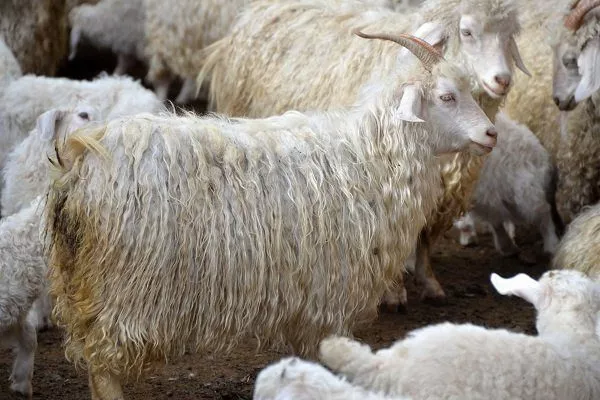
Description.The female's weight ranges from 28-34 kg, while the male's weight ranges from 48-57 kg. The head is small, the ears droop, and the horns are straight. The limbs are strong and muscular, covered in a coat consisting of 80% down down down to the knees. The goat's coat is often white. Fertility is low, around 20-40%.
Today, this breed is in danger of extinction. The majority of the goats were kept on a state farm in the Buinaksk district of Dagestan, but after its collapse, their numbers dropped significantly. The purebred goats were dispersed to various farms throughout the republic.
Productivity.Dagestani goats do not produce particularly high yields; an individual can produce about 0.3-0.5 kg of down, which is prized for its white color, which is ideal for making scarves or shawls.
Features of the content.When animals are kept on pasture, their hooves wear down and take on a proper shape. When kept in stalls, they soften and begin to rot. Therefore, it's important to monitor this and clean them regularly.
Another difficulty in keeping goats is the flies that lay eggs on the skin of cattle. These eggs reproduce, producing larvae and worms that destroy the goats' hooves. The animals eat poorly, and their productivity decreases.
Advantages of the breed:
- quick adaptation to conditions of detention;
- the amount of fluff has increased slightly compared to previous years;
- The meat is tasty and juicy.
Disadvantages of the breed:
- the quality of the fluff is not high;
- low fertility and birth rate;
- milk production is low.
Black down goat
The breed appeared as a result of crossing local goats of Uzbekistan with the Angora breed.
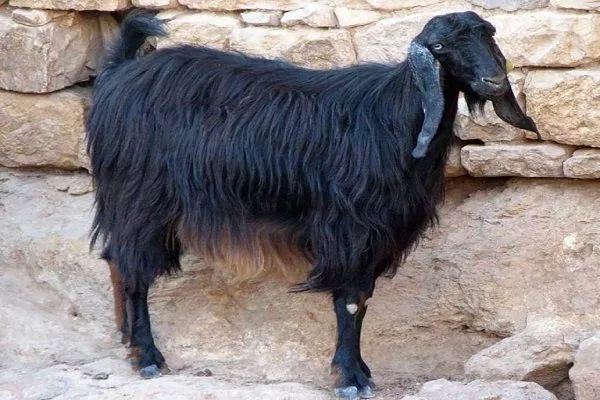
Description.The female weighs 45 kg, the male 60 kg. Despite the uniform coat color, the fur is not uniform, containing traces of other colors. The guard hairs are stiff and short.
Productivity.The fleece yield per individual varies from 300 to 400 grams. The average length is 9 cm.
Features of the content.The most important thing is to pay attention to the molting period. This period lasts about a week, and during this time, the livestock breeder must collect as much down as possible; delays lead to losses of up to 35%.
Advantages of the Angora breed:
- goats are large in size, so in addition to fluff, you can get a sufficient amount of meat;
- high quality down.
Disadvantages of the breed:
- During molting, a lot of fluff is lost;
- are distributed only in the territory of Uzbekistan.
Volgograd down goats
The homeland of the breed is the Chernyshkovsky district, the “parents” are Angora and Pridon goats.
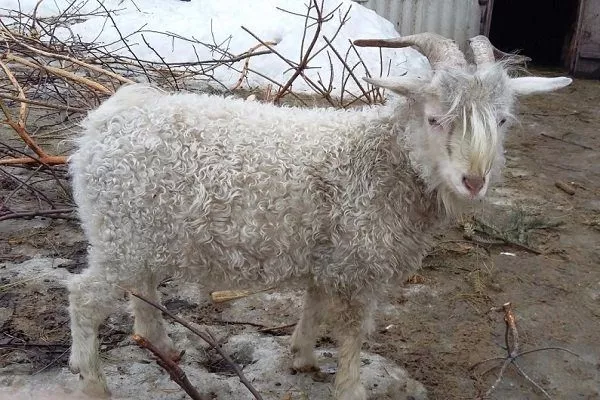
Description.The wool is high-quality, clean, and soft to the touch. A female weighs approximately 35-40 kg, and a male 60 kg. The wool is white and sells well.
Productivity.Wool is 90% down. A female produces about 1 kg of down, while a male produces 1.2-1.5 kg. The down is 11 cm long, and milk yield is above average. During the nursing period, a female goat can produce approximately 100 liters of milk, and fertility is high—130 kids per 100 females.
Features of the content. They don't require any special conditions. They can live in any area except mountainous areas.
Advantages of the Angora breed:
- high quality down and wool;
- good milk yield;
- high fertility.
Farmers were unable to identify any shortcomings of the breed; it fully meets the requirements for down goats.
Kyrgyz down goats
In terms of size, goats of this breed are classified as medium-large breeds.
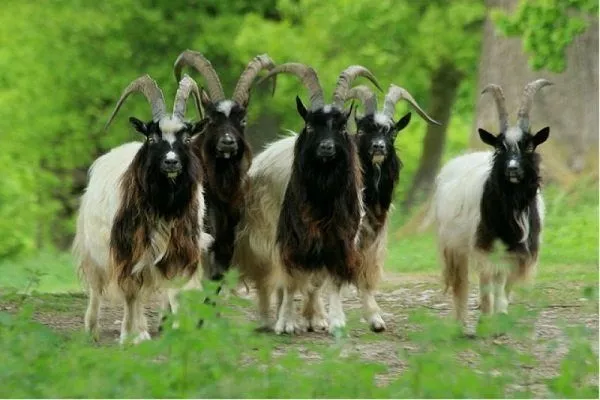
Description. A female goat weighs approximately 35-40 kg, while a male weighs 58-68 kg. Goats reach their peak weight at age 5. This breed's meat is excellent in taste, and their hides are suitable for making fur coats and sheepskin coats.
Productivity. The main product of Kyrgyz goats is down, a source of income for many livestock breeders. Down production directly depends on a variety of factors, such as the animal's sex, age, and size. A goat yields approximately 0.4-0.5 kg of down.
Features of the content. Goats are kept on pastures. Their primary food sources include wormwood, saltwort, and shrubs. If winter proves significantly colder than usual, it's advisable to build special sheltered buildings for the animals. Furthermore, pastures in winter don't provide the amount of food animals need.
Advantages of the breed:
- large amount of fluff obtained;
- high milk production and fertility;
- adaptability to any climate.
There is one drawback: the quality of the down is the lowest compared to other down goats.
Comparison of down goats
| Name of the breed | Amount of down per individual | Average weight of a goat | Average weight of a goat | Habitat |
| Angora | 4-5 kg | 40 kg | 50-60 kg | Central Asia, Russia |
| Kashmiri | 0.15-0.2 kg | 30 kg | 40 kg | Tibet, Mongolia, Iran and Central Asia. |
| Pridonskaya | 1.5-1.8 kg | 45 kg | 75 kg | Russia |
| Orenburg | 0.5-0.6 kg | 55 kg | 90 kg | Russia |
| Gorno-Altai | 0.5-0.7 kg | 40 kg | 65 kg | Mongolia and Altai |
| Dagestan | 0.3-0.5 kg | 28-34 kg | 48-57 kg | Dagestan |
| Black | 0.3-0.4 kg | 45 kg | 60 kg | Uzbekistan |
| Volgograd | 1.2-1.5 kg | 35-40 kg | 60 kg | Russia |
| Kyrgyz | 0.4-0.5 kg | 35-40 kg | 48-58 kg | Kyrgyzstan |
Breeding and keeping down goats is not difficult. The key is to choose the right breed of down goat and, by providing them with proper care and attention, to obtain as much high-quality down as possible.