
Nubian goats are popular, but somewhat demanding animals to keep. They are raised both commercially and in private gardens, with a small barn and grass for grazing. They are kept for meat, down, and milk. The breed is renowned for its productivity and distinctive appearance.
History of the breed
It is believed that Nubian goats coexisted with ancient humans as early as 9,500 years ago. The animals' name derives from their habitat—the Nubian Desert of Sudan. In the Middle Ages, researchers from France compiled the first data on the breed. However, modern specimens were developed somewhat later (in the late 19th century) in Great Britain. This particular variety is today known as the Nubian or Anglo-Nubian.
Breeders based their breeding on indigenous Nubian varieties from Africa, Asia (two lop-eared varieties from India, Middle Eastern breeds), and Europe (Swiss goats). The breed was registered in 1896, and since the early 20th century, they have been bred in America, improving their appearance and productivity. Nubian goats' popularity grew, but it wasn't until 1999 that Russian breeders began to notice them.
Domestic farms imported animals from America, as the best representatives of the breed were found there.
Description of the breed
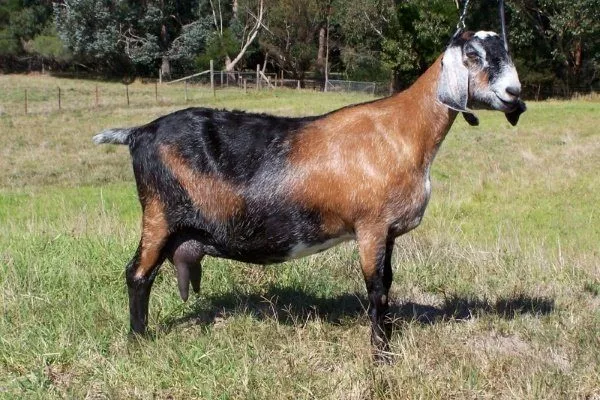
Nubian goats have a distinctive appearance compared to the breeds common in our country. The first thing that stands out is their long ears, which hang down below their muzzle, and their vibrant coloring. This coloring can come in several variations.
The most common suits are:
- coffee brown;
- black;
- white;
- creamy.
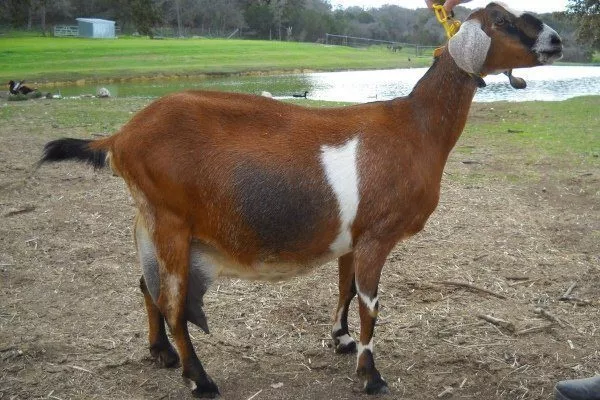
Goats are often variegated, giving them a particularly elegant appearance. The breed standard recognizes piebald, bay, white, white-brown, and other colors. The pattern of spots can take on unusual configurations, resulting in the most unexpected combinations (brown with black and white patches, even leopard-like). Most Nubians are bicolor, but three colors are sometimes present. Chocolate-colored specimens with a dark stripe down their backs are common. The breed standard also requires dark skin—black or gray.
Appearance
The Nubian is a meat and dairy breed (primarily dairy). These goats are distinguished by their large size: up to 80 cm at the withers for females, and 85-90 cm for males. They can weigh up to 80-100 kg, although the average is 60-80 kg. Nubians have slender, strong, proportional legs, a narrow and long body, and a thin neck. They inherit their appearance from their mountain goat ancestors.
In addition to their long, drooping ears, these animals are also distinguished by their distinctive arched profile ("Roman"): a hump on the muzzle with heavy brow ridges and a massive forehead. Males have long, thin horns, while females are often horned.
Nubians have beautiful eyes, usually brown, less commonly gray or green. If they have a beard, it's small. Their coat is smooth, and their tail is short and fluffy. Their udders are two-lobed, large, and the teats are elongated.
Animal character
Nubian goats are characterized by a fickle temperament: they can be hyperactive or quiet and affectionate, depending on their living conditions and personality. They do not tolerate the presence of other animals, even goats of other breeds. Unwanted company provokes aggression. Upon seeing a stranger, Nubians react with loud bleating. They often lunge at an enemy with their horns, and only a clear superiority of strength can stop the fight. Aggressors immediately become submissive.
Nubian goats are curious and stubborn, constantly searching for something. It's best to avoid them with children, as animal games can be dangerous for young children. However, they enjoy spending time with adults and become attached to their owners like dogs, recognizing them as the pack leader. Nubian goats are willing to follow their owners closely. It's recommended to take advantage of this when training them from a young age. If left unchecked, Nubian goats can grow up willful.
Productive indicators
The Nubian breed is considered a versatile one, producing good milk and meat. The latter is less popular in our country, so the emphasis is on dairy production. Goats produce milk approximately 300 days a year. Lactation begins after the first lambing, and milk production increases with each subsequent lambing.
On average, female Nubian goats produce 3-3.5 liters of milk per day. Over the course of a year, they produce about a ton of this valuable product.
The average fat content of milk is 4.5%, but some breeds produce as much as 8%. It has a fairly high protein content of 3.7%, lacks the goatish odor that many consumers dislike, and has a nutty, creamy flavor. The product is suitable for making delicious cheeses, yogurts, and cottage cheese. According to breeders, children enjoy drinking Nubian goat milk.
When animals don't produce enough milk, they are fattened for meat. Nubians gain weight quickly, and their meat is odorless; it's juicy and tasty, regardless of the slaughter method, and has high nutritional value. It's an excellent dietary product, also suitable for shashlik and barbecue.
Goats produce a fairly high meat yield: one goat can yield 50-70 kg of meat (males and females, respectively). Young animals are typically slaughtered, as the flesh of mature goats becomes tough.
Experts will explain more about the appearance and behavior of Nubian goats. Watch the video:
Advantages and disadvantages of the breed
Productivity is the primary reason Nubian goats are bred. High milk yield (almost year-round), rich milk, and abundant, juicy meat are the breed's undisputed strengths. This is precisely the goal pursued by breeders when developing Nubians.
Other advantages include:
- good fattening qualities;
- increase in milk yield after each lambing;
- offspring twice a year (each time up to three kids);
- viability of young individuals;
- loyalty to the owner (subject to proper upbringing).
High productivity can be achieved with proper animal care, which is not always easy.
Despite all the advantages, Nubian goats also have some disadvantages:
- They require warmth and have a hard time with harsh Russian winters. They must be kept clean and dry, maintaining a comfortable temperature.
- These animals are known for their nasty temperaments: stubbornness, willfulness, and aggression toward other ungulates. Keeping Nubian goats in the same herd with other breeds is problematic.
- A minor drawback is the loud voice of the Nubia, which they make at every opportunity.
- The price of elite goats can be a deterrent to potential breeders. Adult goats cost between 150,000 and 250,000 rubles, while kids start at 100,000 rubles.
Keeping goats
Since Nubian goats' historical homeland is Africa, these animals are heat-loving. Although they adapt well to new weather conditions, they have difficulty with extreme cold. They are hardly easygoing.
To ensure comfortable housing, you'll need to provide the goats with a cozy environment and create all the conditions necessary for successful growth and reproduction. This is the only way to achieve high productivity.
- ✓ The temperature regime must be strictly observed: minimum temperature +6°C in winter, maximum +20°C in summer.
- ✓ It is mandatory to have a bedding of straw or sawdust up to 50 cm thick for additional warmth and comfort.
Necessary conditions
The optimal conditions for keeping Nubian goats are a warm, dry barn with maximum light and fresh air. Preferably, the barn should be heated. Cracks are unacceptable, as these goats do not tolerate drafts.
Optimum temperature for Nubian breed:
- not lower than +6 degrees during the cold season;
- no higher than +18-20 degrees in summer.
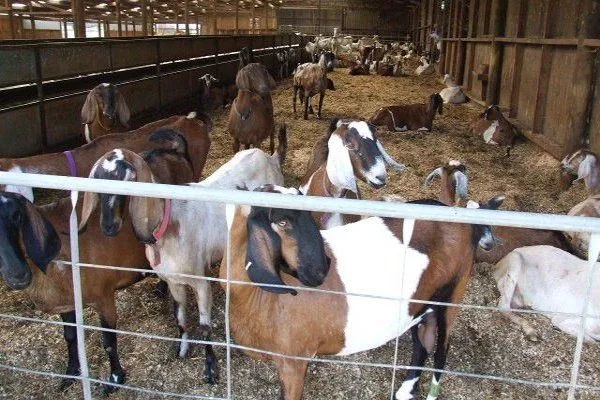
Nubians are housed together—both sexes in the same room. However, it is recommended to retain the strongest males for breeding to avoid adversely affecting future productivity. Separate pens are required only for mothers with newborn kids. Inside the barn, but slightly away from the main living area, there should be a low bench for milking the goats.
A unique characteristic of the Nubian breed is that it cannot be kept with other livestock. Nubians can become stressed, and their milk yield will decrease.
Farmers who breed Nubian goats note that after several generations in one location, the animals acclimate to the surrounding environment and climate. However, maintaining a comfortable temperature during the cold season requires more careful attention than with other breeds. Proper feeding, health care, and other considerations are also crucial.
Arrangement of premises
New goat breeders may need to invest considerable time and effort in setting up suitable housing for Nubians. It must meet numerous requirements and be kept clean at all times, as this breed strongly dislikes dirt and dampness.
The barn must meet the following requirements:
- illumination;
- good ventilation;
- suitable temperature.
This can be achieved not only with insulated walls but also with durable wooden floors. It's advisable to construct them at a slight slope to allow excess moisture to drain. An additional source of heat can be provided by bedding up to 50 cm thick. This can be made from dry straw, hay, or sawdust. The farm should have a sufficient supply of this material to provide additional bedding throughout the long winter.
Each goat in the barn should have its own place. Animals are accustomed to sleeping alone or in small groups. It is recommended to construct wooden platforms 40-50 cm high on the floor, nailing wide boards around the perimeter. Straw should be placed only on these platforms. In addition to the sleeping areas, other raised platforms made of boards are also recommended in the barn, as Nubian goats love to climb.
Corral and walking area
In addition to living quarters, animals on a farm require a paddock for exercise. This is an essential component of proper animal management. They can go for walks even in freezing temperatures, but it's important to ensure the temperature doesn't drop too low. Nubians are easily susceptible to colds and frostbite, particularly affecting their ears, nose, udder, and genitals. In winter, it's advisable to set up a paddock near the barn. It should be covered with a roof.
Provided the animals are supervised, free-range grazing can be arranged in a meadow (during the warmer months), in a herd, or on a rope (the rope should be 5-7 meters long) if there are only a few goats. Grazing saves a significant amount of feed. The area should be rich in grass and have some shade where the goats can hide. Before grazing, they should be given water to prevent them from drinking from dirty puddles.
It's recommended to let goats out to pasture late in the morning, after the dew has dried on the grass. Dew can cause colds in animals.
Feeding Nubian goats
When raising goats, it's important to create a special diet for them at different times of the year. In the summer, supplement their diet with grasses and other vegetation, or feed them primarily on forage. Stock up on hay for the winter. Although this breed was bred artificially, Nubians don't require a special diet and consume the same foods as other breeds. These include:
- hay;
- fresh grass;
- branches (willow, linden, hazel, spruce, acacia, etc.);
- cake;
- concentrated feed (barley, oats, corn);
- bran;
- fresh fruits (apples, pears);
- vegetables (beets, carrots, potatoes);
- vegetable waste.
Animals should have constant access to water; salt is added in winter. It is also recommended to enrich the goats' diet with nutrients such as chalk, vitamins, and so on.
To replenish chlorine and sodium deficiencies, goats are given salt licks. Natural salt should be readily available to all animals. Adults require 10-15 grams of salt per day, while young animals require up to 8 grams.
To ensure that goats produce enough milk even in winter, the animals' diet should look like this:
- three meals a day;
- about 5 kg of hay per day;
- about 1 kg of fresh vegetables, finely chopped branches and silage;
- 2 kg of cereals;
- Each animal requires 300 g of feed and an additional 250-300 g for each kilogram of milk yield.
The diet for bucks also changes slightly during the breeding season. They are given cereal grasses, legumes, mineral and vitamin supplements. Females also require special nutrition before and after lambing. Five to 10 days before lambing, the diet should be changed, eliminating grains, compound feed, and crushed feed. The menu should consist of water, hay, and root vegetables. Fresh vegetables should not cause bloating, so it's best to limit beets and cabbage to small amounts, focusing on carrots, potatoes, zucchini, and pumpkin. Three days before lambing, vegetables should also be removed, leaving the goat on water and hay.
Breeding Nubian goats
When purchasing Nubian goats for milk and meat, it's advisable to look at the young. Breeding them is profitable but challenging. Sometimes Nubians are crossed with other breeds to improve their productivity. African goats are considered "percentage-bearing." Crossbreeding them increases milk yield and makes the milk richer.
Mating
Individuals reach sexual maturity at 7 months, but the first mating is best done at one to one and a half years. It's advisable to select animals from different lines, as close inbreeding will negatively impact the health of the offspring.
For mating choose:
- large active males;
- females during hunting.
Goats' first heat occurs in autumn, in November-October, and lasts for several days. Heat season is characterized by behavioral changes: loss of appetite, restlessness, and possibly aggression. The mammary glands swell, and the tail constantly moves—a phenomenon that is hard to miss. Females become more susceptible to various diseases and require proper care. But the owner's primary concern during heat is to ensure that the Nubian goat meets the buck.
Goats' pregnancy lasts about 150 days, so it is advisable to arrange mating at the end of summer so that the offspring will be born at the end of winter.
There are several types of mating: free-range, hand-held, and harem-based. In the former, all the goats roam in a single herd, and the males are active toward any female in heat whenever she wishes to be inseminated. In harem-based mating, there are several females of the opposite sex per male—up to 30. The male is unable to rest, which can lead to a decrease in sperm count. Hand-held mating is performed under human supervision. The female is positioned and secured in a special stand, and the male is brought in for mating.
Pregnancy and lambing
If mating is successful, the goat's owner will soon notice the first signs of pregnancy. The udder will increase in size, become smooth, and the external genitalia will become engorged. It's important for the farmer to ensure the goat is covered to avoid losing income from future offspring and to ensure the doe receives proper care.
This can also be done using laboratory methods:
- Ultrasound;
- cervical mucus analysis;
- balloting (palpation of the abdomen).
A veterinarian conducts all examinations. However, late in pregnancy, a goat's pregnancy becomes obvious. The abdomen swells, the goat becomes less active, and rests more frequently. About a month before the expected lambing date, the goat should stop milking to allow her to gain strength for lactation and nurse her kids. If the doe is thin and not gaining weight well, it is recommended to stop milking her 50-60 days before lambing.
- 5-10 days before giving birth, exclude grains and compound feed from the diet, leaving only water, hay and root vegetables.
- Three days before the expected lambing, remove all vegetables from the diet, leaving only water and hay.
- Prepare a clean, dry birthing area with a thick layer of straw.
Nubian goats are fertile, giving birth to 2-3 kids twice a year, sometimes more (up to five at a time). They can be ready to accept a buck as early as two weeks after lambing. However, farmers don't always breed so frequently, as the doe needs to gain strength before each new lambing. The lambing process takes place in a dry, clean room, preferably alone, away from other females. Before lambing, the doe becomes restless. A layer of dry straw should be placed on the floor in the lambing area. The birthing process is quick: 90 to 40 minutes.
Care and maintenance of young animals
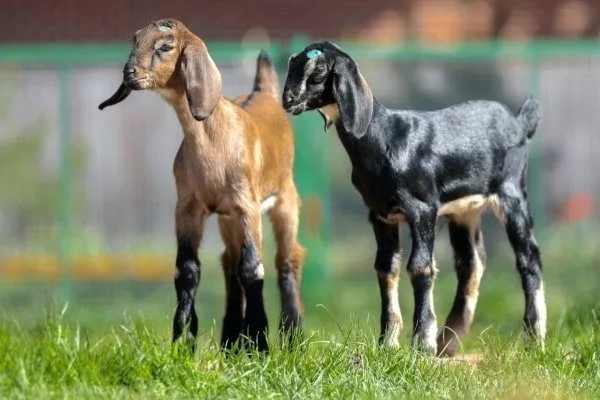
Newborn kids are weaned from their mothers almost immediately, but since they lack their own immune system, they are fed colostrum from their mother's milk in a bottle, then from a special feeder. Initially (for the first month), the kids are fed up to five times a day, then they are transitioned to three meals a day. Kids born in late winter are considered the most viable. By the time the first green leaves appear, the kids will be ready for roughage and can be released into the meadow.
From birth, kids should be kept in a separate stall, where the temperature should be maintained at no less than 17 degrees Celsius and where it should be light and dry. Keeping them close to adult goats can be harmful to the kids. As they grow older, they become very active. Young goats should be provided with a safe and spacious pen where they can frolic.
Kids aren't always weaned from their mothers. In this case, the mother feeds them milk, but their milk production is lost. However, at a young age (1-1.5 months), the kids are ready to go out to pasture.
Benefits of Breeding Nubian Goats
Nubian goats are a profitable, albeit labor-intensive, business. Breeders charge a premium for a top-quality specimen, but the goats produce excellent results. Owners are required to provide the animals with regular care and proper nutrition. Expenses are minimal, except for the purchase of pedigree goats. Both young and mature animals are available.
Breeding requires four individuals from different litters (to prevent unwanted mixing). Purebred Nubians are expensive, costing an average of 1 million rubles (from 100,000 rubles for young goats and up, depending on the source of purchase). However, the investment can pay for itself in 2-3 years.
Due to the high cost and difficulty finding purebred animals, breeding Nubian goats is not as popular in Russia as in Europe and America. They are raised in the Moscow and Tver regions and in the southern part of the country, in the Samara region. However, the breed's popularity remains strong, despite its high price. Thanks to their productivity, the animals quickly recoup their initial investment.
Nubian goats are amazing animals that combine the best qualities of domesticated animals. They are prized for their low dietary requirements, high milk yields, and the excellent flavor of their milk and meat. These animals are hardy (though not cold-tolerant) and resilient. Nubian goats are more productive and gain weight faster than other breeds.