
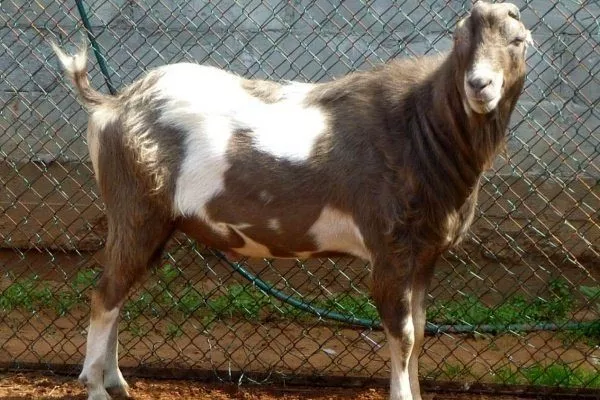
La Manchas are easily recognized by their small ears, which is why the breed is often called "earless." These high-yielding goats are considered versatile, producing both meat and milk. They are considered one of the most productive and trouble-free breeds.
History of the breed
The origins of the earless breed are lost in the mists of time. There are conjectures and facts. The first mention of short-eared goats appears in ancient Persian manuscripts. How the breed came to Spain remains a mystery. The breed owes its name to the Spanish province of La Mancha. From here, Spanish conquerors brought earless goats to California. These short-eared dairy and meat goats began their "conquest" of America.
In the early 20th century, short-eared goats were brought to an exhibition in Paris. It was there that they received their current name, named after the province from which they began their journey to America. Following selective breeding, the breed's characteristics evolved. The breed only received official status in 1958. At that time, there was an officially registered breeding herd of two hundred head of the earless La Mancha breed.
La Mancha's exterior
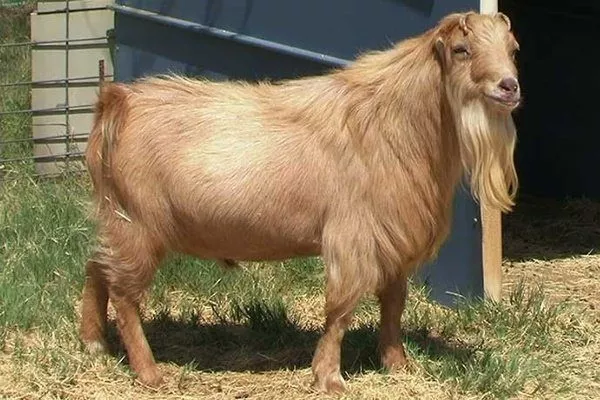
La Manchas have a strong build and large udders, a sign of high milk yield. The breed comes in a variety of colors, including shades of black, red, brown, tan, white, and others. Spotted specimens are also available.
To keep goats looking well-groomed and attractive, their fur is trimmed. Appearance characteristics of the breeds:
- the body is wedge-shaped, massive;
- the height at the withers of male goats is 75-95 cm, of female goats – 75 cm;
- weight of male goats: 64-66 kg, female goats: 52-54 kg.
- the hook-nosed profile, which gives the La Manchas a resemblance to Nubian goats;
- strong, well-developed legs;
- There are individuals with and without horns.
When working on creating the breed, breeders used the most attractive traits Saanen, Alpine, Nubian and Toggenburg goats.
Distribution of the breed
Thanks to their highly adaptable nature, La Manchas thrive and reproduce in all regions of Russia—in the south, central, and northern regions. The breed is unpretentious and productive, requiring no special conditions, such as extreme heat or cold. La Manchas are energetic, healthy, and productive milk producers everywhere. These goats are actively bred by farmers in Russia, the CIS, the USA, Turkey, Poland, and other countries.
Breed characteristics
La Manchas have two unique characteristics—external and internal—that distinguish them from all other breeds. The main distinguishing features of La Manchas are their short ears and gentle nature. These are not typical of goats.
There are two types of ears:
- Corrugated. These ears have no cartilage at all. The ears are 2.5 cm long.
- MiniatureThese ears contain cartilages up to 5 cm long.
The length of the ears is used to assess the breed's originality. If the length is more than 5 cm, the individual is not considered purebred.
La Manchas have a unique character, behaving almost like dogs—they follow their owners around and love affection and attention. In a herd, they are calm, quiet, and non-aggressive. Females are caring mothers, diligently caring for their young.
- ✓ Decreased activity and lack of interest in communicating with the owner.
- ✓ Reduced water consumption while maintaining appetite for food.
Productive qualities
La Manchas are bred for their delicious, rich milk. Meat production is secondary. Productivity characteristics:
- Fertility. Females give birth to 4-5 kids per lambing.
- Milk productivity. Average daily milk yield is 5 liters. Record-breaking cows produce 9 liters. Average annual milk yield – during the lactation period – is 700-900 liters.
- Fat content. The milk has excellent taste characteristics and a high fat content – about 4%. There is no specific odor.
- Meat productivity. The live weight of adult animals is 60-70 kg. Maximum – 100 kg. Carcass yield is 70% of live weight.
Advantages and disadvantages
Breeders, goat breeders and ordinary goat breeders find many advantages in La Manchas:
- able to adapt to various conditions of detention;
- unpretentious, do not require special conditions of maintenance;
- high milk yield;
- there is no repulsive odor, which is present in many breeds of goats;
- friendly disposition and sociability.
The disadvantages of La Manchas are not critical:
- The ears are so small that it's impossible to even attach a tag to them—the animals have to be branded. The brand is placed on the hairless part of the tail.
- The "Roman" profile of La Manchas is considered a fault. However, this appearance characteristic can hardly be considered a flaw – many breeders are not at all bothered by the humpbacked nose.
Care and maintenance
La Manchas are active and energetic. They require ample pastures to thrive and produce high milk yields. Despite their thick coats and good cold tolerance, these goats require warm housing and a balanced diet during the winter.
- ✓ The optimal room temperature for La Manchas should be maintained at 12-15°C to ensure comfort and high milk yield.
- ✓ The humidity level in the goat's house should not exceed 70% to prevent respiratory diseases.
Requirements and conditions for care
The La Mancha's low maintenance nature doesn't mean they don't require care.
Care instructions:
- Housing. A barn is built for the goats—a spacious, dry, bright, and ventilated space. The concrete floor is sloped to allow liquids to drain. Goats are kept not only in a traditional barn, but also in an insulated pen or a regular goat house. In a traditional barn, the goat area is divided into stalls, giving the animals their own space while still allowing them to interact with one another.
- Bedding. Straw is laid on the floor. The thickness of the layer is an important strategic consideration. Goats love warmth and comfort, and prefer thick straw bedding. If you skimp on bedding, the cunning animals will make up for the shortfall with hay from the feeder. By skimping on bedding, owners will lose money through "misuse" of feed.
- Attitude. To prevent goats from becoming stubborn and capricious, they require attentive care from their owners. If they don't receive enough attention, they will deliberately attract attention through bad behavior. Affectionate handling is just as essential for goats as adequate nutrition.
- Hygiene. La Manchas are clean animals and don't like dirt. That's why they don't smell like other goat breeds. If the goats' surroundings are dirty, their milk yield drops.
- Walking. From early spring until mid-autumn, goats are kept outdoors.
- Nutrition. High milk yields require adequate nutrition, adjusted according to the changing seasons.
- Water. Animals should have access to water 24 hours a day, especially in hot weather.
Some owners keep goats and the stud buck in the same enclosure - neither the goats nor the milk acquire its smell.
Goat nutrition
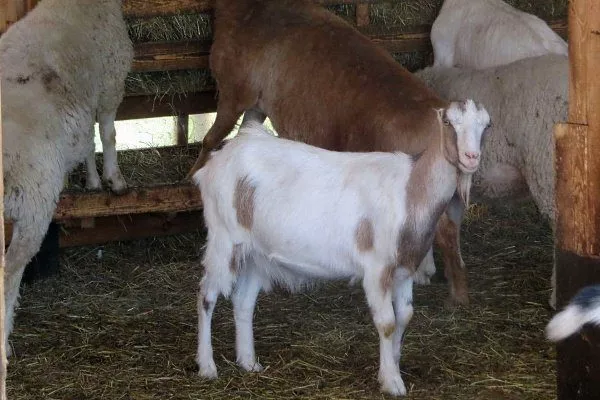
In the summer, La Manchas are kept in pastures where, along with lush grass, they eat the branches of bushes and low-growing trees.
Alfalfa and clover are goats' favorite foods and increase the protein content of their milk. These legumes are fed to goats in limited quantities.
Goats eat almost any vegetation, but their diet should avoid buttercups, milkweed, and aconite, as these plants are harmful to the animals. By observing goats while grazing, they can determine which herbs they prefer and then harvest them for the winter.
To prevent milk yields from dropping in winter, goats are provided with nutrients they lack due to the lack of green fodder. For winter feeding, birch, oak, and hazel (hazel) branches are harvested in the summer. Dairy goats are fed bran, oats, chopped straw, and chopped carrots—all ingredients are mixed together. Weeds and food scraps are also added.
Approximate daily diet for adult goats:
| Period | Feed composition, g |
| Dry standing. First half of pregnancy. | Diet No. 1
Diet No. 2
|
| Dry standing. Second half of pregnancy. | Diet No. 1
Diet No. 2
|
| Milking. Daily milk yield – 2 liters. | Diet No. 1
Diet No. 2
|
| Milking. Daily milk yield – 4 liters. | Diet No. 1
Diet No. 2
|
Read more about feeding domestic goats and kids here.
Breeding
La Mancha kids are not cheap. To grow your business and expand your herd, you need to raise your own goats. Thanks to the breed's prolific production, a sizable herd can be built quickly.
Puberty
La Manchas, like other breeds, reach sexual maturity at 8 months, but their first mating does not occur until 1.5 years of age. Pregnancy before this age is not recommended, as the first lambing can be painful. Mature females enter heat every 15-20 days and last 24-48 hours. During these periods, females become restless and lose their appetite.
If a female avoids mating, she may be overeating—obesity can delay sexual development. In early autumn, when most females are breeding, avoid overfeeding potential breeding females. It's recommended to eliminate concentrated feed from the female's diet during this period.
Bearing offspring
Goats mate in August-September, and the offspring are born in February-March. The gestation period for La Manchas lasts 150 days. Milking is stopped 1.5 months before lambing to ensure the fetus receives more nutrients and the offspring are born healthy. Milking is gradually phased out to avoid harming the goat's health.
During pregnancy, the female should receive double attention:
- Nutrition - regular and balanced, in accordance with norms and current physiology.
- Content – pregnant females should be kept in a warm, light, dry and ventilated room.
- Walks – Regularly in the fresh air. Goats are walked outside both before and after lambing.
- Weight – Maintain normal levels. Obesity interferes with normal labor. Enhanced feeding is permitted only after lambing – for two months – to increase milk yield.
Lambing and care of young animals
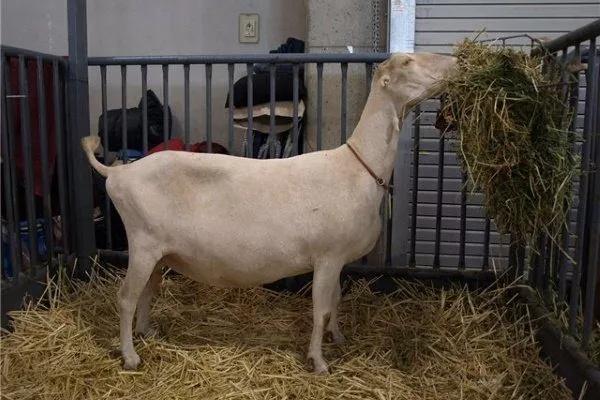
The first lambing produces 1-2 kids, with subsequent lambings producing up to 5 kids. Lambing is usually easy, and mothers can do it without human assistance. The process is quick—no more than an hour or an hour and a half. The success and speed of lambing depend on the health of the individual mother and the position of the fetus.
Young animals are kept in a room with a temperature of at least 12°C. Newborn kids are given a separate stall. For the first 10 days, the kids feed exclusively on their mother's milk. Gradually, they are weaned, introducing regular feed into their diet. If there is no mother's milk, the kids are fed artificial milk formula or pasteurized goat's milk. Many farms raising high-yielding goats wean the kids immediately to ensure high milk yields.
Roughage is given with caution, as newborn kids' forestomachs are not yet functioning. Starting at 11 days old, kids are given porridge and hay. At four weeks old, they are taken out to pasture and gradually introduced to it. They are given root vegetables, grated apples, and oatmeal. At one month of age, milk is given less and less, replacing it with bran, grass, root vegetables, and concentrated feed. From this age, the young animals receive mineral supplements such as chalk, salt, and bone meal.
From two months of age, kids no longer need porridge. They are fed hay, mixed feed, and oilcake. Kids must have access to clean water—they are given water at least three times a day. From six months of age, their main diet consists of grass, hay, and tree branches.
Diseases and prevention
La Manchas, like all dairy goats, are known for their hardiness and robust health. Diseases arise from poor, unbalanced nutrition and improper husbandry. Sick goats are easily recognizable:
- poor appetite;
- milk yields are falling;
- rapid pulse.
Due to poor care, goats may develop:
- mastitis;
- gastrointestinal diseases;
- respiratory diseases;
- hoof diseases;
- parasitic diseases – animals become infected with helminths or blood-sucking insects (piroplasmosis, echinococcosis, fascioliasis).
To prevent non-communicable diseases, it's enough to provide animals with proper care and maintenance. Timely vaccinations, regular veterinary checkups, and careful attention to the livestock will protect goats from contagious diseases.
For more information on goat diseases, please read here.
Prospects and benefits
Breeding high-yielding La Manchas, given the lack of competition in the domestic market, is an extremely profitable business that can be organized in any climate zone.
The difficulty of goat breeding stems from the unpopularity of goat milk—the market for goat milk in Russia is underdeveloped. The reasons for the underdevelopment of goat farming include:
- Most consumers have never tried goat's milk and are prejudiced against it.
- Russia doesn't produce high-tech equipment for goat farms. This forces farmers to rely on manual labor, which reduces profitability. Alternatively, they have to purchase expensive imported equipment.
Farmers who have bred La Manchas report that the breed yields a good profit, but the start-up costs take a long time to recoup. Most importantly, for a business to be profitable, in addition to the farm, it's important to establish its own processing facility. Selling cheeses, feta cheese, and other dairy products is much easier than selling goat milk itself.
If you have decided to start a business in this area, then our next articlemay be useful to you.
Price
La Mancha kids aged 4-5 months cost 10,000-25,000 rubles at market. Adult goats sell for 10,000-40,000 rubles. This breed can be found at regular "collective farm" markets, but if you're going to buy such an expensive breed, it's best to do so from breeding farms or specialized farms.
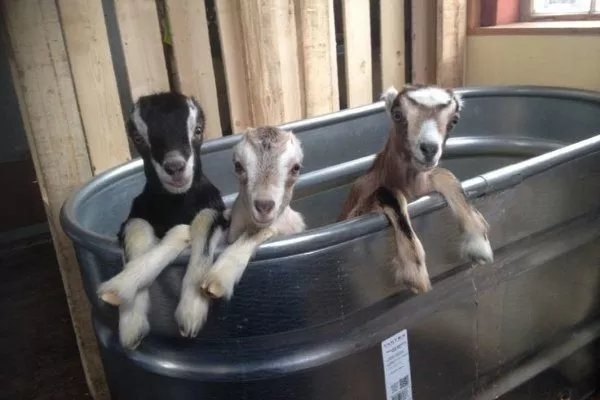
Farmers' reviews
Farmers' attitudes toward La Manchas are mixed: some rave about the earless goats, while others don't even recognize them as a distinct breed. La Mancha owners note the excellent taste of their milk. Many farmers claim it tastes like Nubian goat milk—slightly sweet, thick, and rich.
The La Mancha goat breed is one of the most attractive, both for small farms and large-scale breeding. Highly productive dairy goats, consuming minimal feed, can adequately replace dairy cows.