
Cameroon goats are known throughout the world, enjoying the same popularity as miniature ponies, pigs, and other miniature animals. They are raised for milk and meat; caring for the Cameroon breed is not difficult, but it does require a significant amount of time.
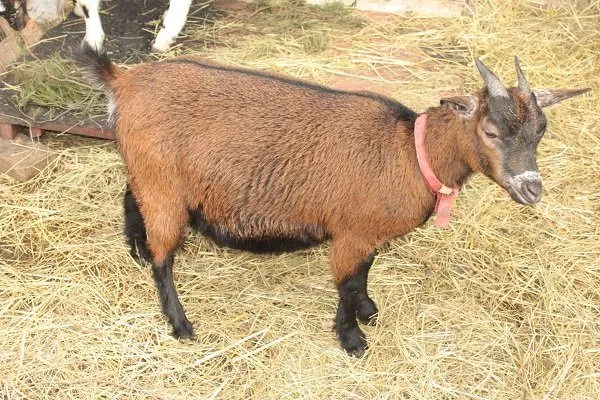
Cameroon goat
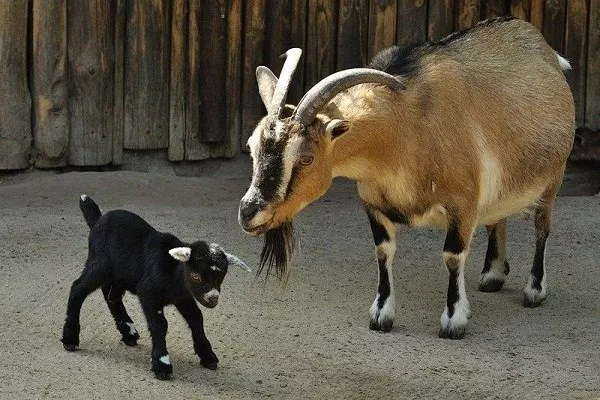
Cameroon goats do not require a lot of feed.
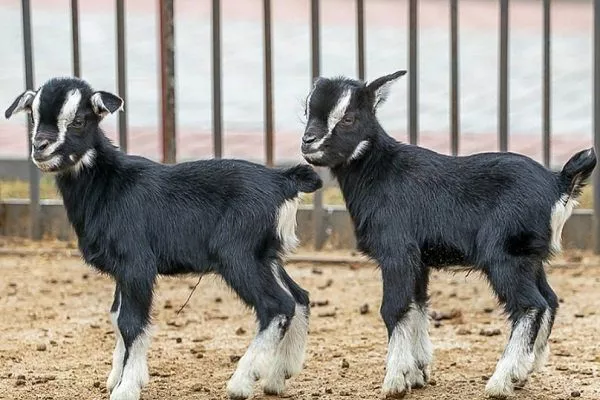
Cameroon goats have strong immunity
The Origin of Cameroon Goats
The Cameroon goat is considered one of the first domesticated breeds. As early as 10,000 years ago, people in the Middle East were able to domesticate these animals. Interest in these miniature goats arose during the massacre of whales.
Cameroon goats tolerate long periods on ships well and don't require much food. Whalers often used them to obtain milk from goats, and later, meat.
Goats arrived in Europe in the 19th century and in North America in the mid-20th century. These animals are bred in tropical conditions. The miniature goat is considered one of the most popular pets among tropical farmers.
Today, these goats are widespread from Sudan to Zaire. In the southern continent, farmers are establishing small goat ranches, as the profitability of small animals is much higher than that of other larger animals.
In the Middle East, they are also popular with tigers. Surprisingly, the predators don't eat the goats; they drink their milk and then let them go.
As for the territory of the Russian Federation, miniature goats appeared only at the end of the 20th century and spread to the Novosibirsk, Moscow and Kaliningrad regions.
Description of the breed
The main characteristic of Cameroon goats is their miniature appearance, hence their nicknames: dwarf, pygmy, or mini-goats. The animal reaches 0.5 m in height and 0.7 m in length. Males weigh between 16 and 24 kg, while females weigh between 9 and 16 kg.
Appearance and color
The main characteristics of Cameroon goats:
- the body is barrel-shaped, low-slung and small;
- miniature head, compact;
- not long, but strong legs;
- small beard;
- small horns curved backwards;
- upturned tail.
Cameroon goats come in a wide variety of colors, ranging from black to light. Markings and stripes are permitted. Their fur has a dense undercoat. This structure allows Cameroon goats to withstand the cold climate of our country.
Character
In terms of behavior, pygmy goats are not much different from their counterparts. They are very active and stubborn. If a Cameroon goat decides it wants to get "there," it will get there by any means necessary, and even impossible. It will wait for the right moment to sneak into the desired location.
Some reviews of Cameroon Shepherds note a vicious nature. However, this is not the case; anger is not inherent in these animals. Fighting with their owners is not due to malice, but rather because the animal is striving to establish its niche in the herd hierarchy.
His superb appearance and small size prevent his owner from noticing when the male begins to overstep his bounds. As a result, the male thinks he's in charge and tries to put his owner in his place.
To remove an animal from its position as leader, the owner of Cameroon goats will have to struggle long and hard with it, which is why they seem so vicious. It's better to recognize this zeal for "power" in animals early on; then conflicts with Cameroon goats can be reduced.
Females are very attached to their owners, loving kindness and affection. They quickly and easily become attached to their owners and dislike being left alone. The only important thing is that their owners don't harm them.
If the goats are behaving badly, you can calm them down by spraying them with a spray bottle.
Productive characteristics
Despite their diminutive size, Cameroon goats are highly productive. Even one or two individuals can provide an entire family with dairy products. In terms of cost, Cameroon goats are much more cost-effective than their standard counterparts.
The average milk production is 2-2.5 liters per day. The product is rich and tasty, sometimes reaching up to 6% fat. With proper animal care, it has no distinctive odor.
The milk contains several times more iron, potassium, and phosphorus than regular goats. Anyone who decides to keep Cameroon goats for their meat will also be pleased, as this product is considered a dietary product and tastes similar to rabbit.
The life expectancy of Cameroon goats is about 20 years.
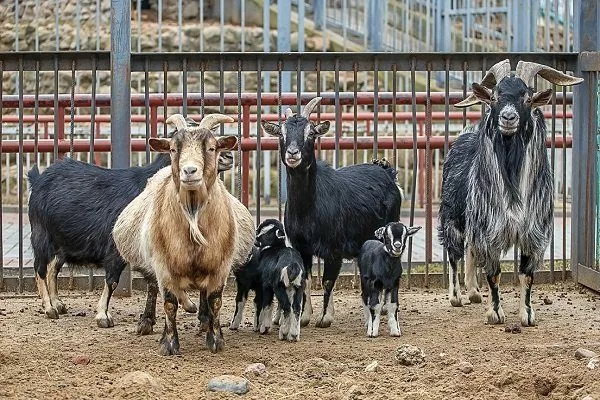
Advantages and disadvantages
Despite their amazing appearance and excellent productive qualities, Cameroon sheep have both advantages and disadvantages, and these should be taken into account when breeding these animals.
Advantages of the Cameroon breed:
- small size;
- undemanding in nutrition and care;
- resistance to climate change and different temperatures;
- low cost of keeping goats;
- good fertility;
- strong immunity;
- can be trained and educated;
- good nature, with proper upbringing;
- Thanks to their curved horns and friendly nature, goats do not harm children.
Disadvantages of the breed:
- get sick in damp and humid climates;
- are too stubborn and butt when stressed or frightened;
- They don't like being alone; if they are left alone for a long time, the animal starts to get angry at the owner and their behavior changes.
Content Features
Miniature goats of this breed adapt well to a variety of conditions, easily tolerating both heat and subzero temperatures. They can spend extended periods outdoors; the only negative effects are drafts and dampness.
- ✓ The minimum walking area per individual must be at least 6 square meters, despite their miniature size.
- ✓ It is mandatory to use mineral wool to insulate the walls of the barn to avoid drafts and dampness.
Requirements for the premises
Goat shed should be bright, clean and spacious. It is better to cover the walls with mineral wool, so that in winter It was warm inside. Heating devices are not installed in such sheds; the animals often manage to keep themselves warm.
Provide separate stalls with bedding for each goat, each at least 0.8-1.3 square meters in area. Despite their small size, they still require a large walking area—approximately 6 square meters per goat.
Caring for young animals: housing and feeding
After the birth of a new offspring, it is immediately removed from its mother and fed colostrum. At one month of age, kids are fed as follows:
- Meals are 4-5 times a day, from 6:00 to 21:00.
- At the age of 10 days, the babies are given hay in small quantities, it must be of high quality.
- Add 5g of table salt to your baby's food daily to prevent white muscle disease.
- At 3 weeks of age, introduce grain mixtures into the diet. The best options are oilcake, bran, and oats. Mix them with 10 g of chalk.
- At 3 weeks of age, offer babies fresh cooked oatmeal and finely chopped root vegetables.
Kids and adults of this breed are not known for their appetite, so the farmer must constantly monitor their food intake. Obese males will be reluctant to mate, and females will produce weak offspring.
Feeding
All reviews from farmers claim that this breed is not picky about food. While ordinary goats might snort disapprovingly at the sight of food, these small animals make do even with foraged food. They are excellent climbers of trees and other elevated areas, so they can find food even in the tops of small trees.
Cameroon goats require 5-7 times less feed than their regular counterparts. They eat cabbage, hay, and greens.
Feeding standards
Cameroon goat milk is high in fat, so careful feeding is essential to ensure the product is nutritious. Protein is a key component of the animals' diet.
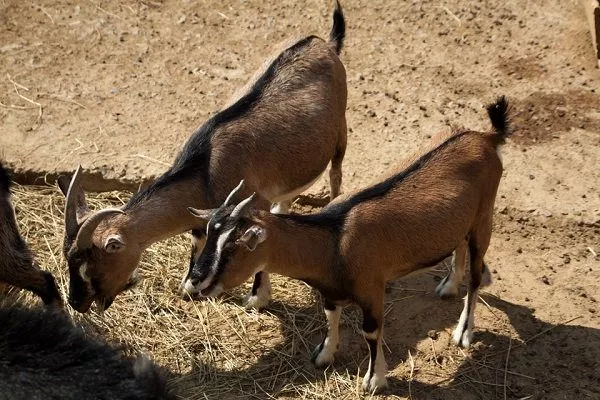
To improve digestive health, follow a specific diet plan: 20-40% roughage, 40-50% concentrated feed, and the remainder greens. Protein is best provided in pelleted mixes.
Let's consider the feeding norm for a 25 kg male: fresh grass (3 kg), dried grass (0.5 kg), and concentrates (0.25 kg). Cameroon hawks can get by on the grass growing under their feet.
Launching the goat
Weaning a goat is the doe's preparatory stage for giving birth. She is fed special foods to ensure she carries and delivers healthy offspring. This process begins approximately 1.5 months before the goating event.
First, add protein to the diet. The feeding plan is as follows: any amount of ground food, sainfoin (0.5 kg), oatmeal mix (0.5 kg), and concentrates (0.2 kg).
The second option of the feeding scheme: ground feed in any quantity, alfalfa hay (0.5 kg), oats + peas (0.5 kg), concentrates (0.1 kg).
It's important to combine feeding with water: feed succulent foods before watering, and concentrated foods after. Cameroon goats have an active metabolism, so they require supplemental feed much more than other goats.
Walking in the pasture
In pastures, animals consume enormous amounts of grass: goats consume 2.3-2.6 kg, male goats 2.6-3 kg, and kids 0.6-1 kg. If the diet is inadequate, the animals become active and unruly, eating inappropriate "foods" such as bags or film. Cameroon goats are excellent fiber digesters.
What diseases do goats get and how often?
Among all goat breeds, Cameroon goats have the strongest immunity. They quickly adapt to various climates, but one thing they cannot tolerate is high humidity and subzero temperatures. Drafts are not a goat's best friend, so close all cracks in the room and prevent even the slightest breeze. It's best to install ventilation.
Cameroon goats are immune to infectious diseases. They are not susceptible to brucellosis, hoof infections, or pseudotuberculosis, and are also resistant to various blood-sucking insects. Furthermore, Cameroon goats coexisted well with tsetse flies in their native habitat.
The only drawback regarding health is regular allergies to some plants, so when changing herbal-based feeds, monitor the animals' reactions.
Breeding of the Cameroon breed
Goats reach sexual maturity at 7 months of age, so they can be bred to produce offspring at this age. Goats carry their offspring for approximately 5 months, with 1 lambing produces 1-2 kids. But what's surprising is that they can produce offspring twice in one season.
Features and types of insemination in Cameroonians
Experienced farmers advise against mating animals too early; it's better to wait until the animals are one year old. Early births negatively impact the female's development, so avoid unforeseen situations.
Mating options:
- Artificial insemination. All questions and procedures regarding insemination of the female are referred to a veterinarian. They will perform the insemination procedure correctly, preserving all breed characteristics. This procedure can be repeated multiple times.
- Hand mating. The Cameroonian buck owner selects the individuals to be mated. A small pen is prepared for this purpose, where the male buck won't have to spend a long time "courting" and "catching up" with the female.
- Free insemination. Animals themselves decide who to mate with. In this case, it's important that all individuals are of the same breed, otherwise there will be unnecessary mixing of different bloodlines.
The best option for Cameroon goats is hand-mating. In this case, the owner can control the timing of the births, their number, and so on.
It's best for kids to be born in the spring. It's important to carefully select the "parents" and monitor their nutritional status and health.
Gestation period and lambing characteristics
Officially, the gestation period for Cameroon goats is five months, but in reality, this isn't true. Often, they give birth on the 140th or 150th day. It's important to prepare for this process in advance: heat some water, grab some scissors, and a rag. However, goats often manage to do it without their owner's help. Dwarf goats give birth without any particular difficulties: the first kid is born feet first, followed by the others in reverse order.
- 1.5 months before lambing, start feeding the female protein.
- Provide access to clean water and maintain the room temperature at least +10°C.
- Have scissors and rags ready to assist with lambing.
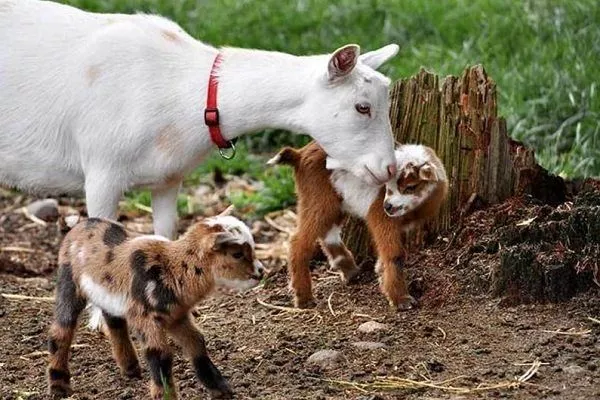
The offspring stand on their feet as soon as they are completely dry, and within 4 hours they are running confidently around the pen. Two hours after birth, the kids should be given their mother's colostrum to protect them from infections.
Feeding schedule: every 4 hours. Adding salt to the diet will help prevent white muscle disease. Starting at 3 weeks, add root vegetables and fruits to the diet, but remember to chop all food thoroughly.
The value of the breed
Cheesemaking is one of the leading areas of food preparation today. Despite its high fat content, milk has no distinctive odor, making it suitable for cheesemaking. In the refrigerator, milk stays fresh for a couple of weeks.
In addition to good fat content, the product contains a huge amount of useful microelements, such as calcium, potassium and phosphorus.
The meat from these animals is distinguished by its excellent taste and quality, has no aftertaste, and is low in fat, making it considered dietary. However, Cameroon sheep are rarely bred solely for their meat.
Cameroon goats are expensive; for example, a four-month-old goat costs around 9,500 rubles, while a pregnant goat costs 12,000 rubles. And these are just the minimum prices. Considering the high profitability of breeding goats and the minimal costs of maintaining them, it can be concluded that these animals are profitable not only for personal use but also for commercial purposes.
Reviews
Interesting facts about Cameroon goats can be found in the following video:
Cameroon goats are popular with farmers due to their charming appearance, friendly nature, strong immune system, and excellent productivity. Breeding and keeping these goats is not only very profitable but also provides a daily boost of positive energy for the owner and the entire family.