
Boer goats are a meat breed that plays an important role in modern livestock farming. They are considered one of the most popular goat breeds for this purpose. Although not widely used in agriculture, these animals have demonstrated excellent productivity.
Origin of the breed
The animals were bred in South Africa. The result was achieved by crossing local goat breeds with animals imported from Europe and India. The breeders sought to create a breed with excellent meat production.
The Boer goat gets its name from the Dutch word "boer," meaning "farmer." Another common name for this animal is boster.
Distribution in Russia
Few farmers in Russia today breed Boer goats. Therefore, it's profitable to start a business breeding this breed due to the low competition. A single breeding animal can be purchased within the country for around 60,000 rubles or more.
Goats of this breed are raised not only for meat and wool but also for ornamental purposes. Their attractive appearance makes them distinctive, which is why they are often found in many private zoos.
Exterior features
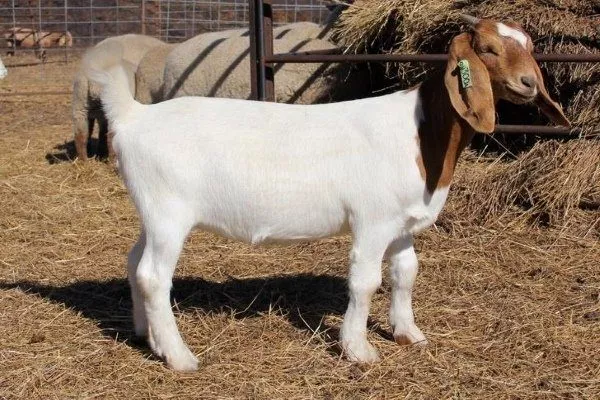
A distinctive feature of Boer goats is their massive body. Females weigh up to 90-100 kilograms, while males weigh considerably more – from 110 to 135 kilograms. Their long, smooth coat is very pleasant to the touch. The animals have long horns, slightly curved toward the spine. The breed is characterized by a large, convex head, drooping ears, and a Roman nose.
Boer goats are characterized by short, strong, and well-fed legs with heavy, dense hooves. The animals have well-developed chests, backs, and hips. They have short, non-drooping tails that are carried erect. A characteristic feature is the presence of an udder with a variable number of teats in females. Some goats have one, two, or four teats. This defect does not affect the animal's health or productivity. Typically, extra teats are poorly developed.
The head is almost always brown and the body is white. However, some individuals have brown spots covering almost the entire coat. When Boer goats are crossed with other breeds, the coat color can be fawn, black, or sometimes spotted.
Productivity indicators
Boer goats have good productivity indicators. Distinguishing characteristics of females and males are presented in the table below:
| Indicators | Goat | Goat |
| Weight | 110-150 kg | 90-100 kg |
| Daily increase | 500 g | 200-350 g |
| Amount of milk | — | 120-150 kg |
| Slaughter yield of meat | 55-70% | 55-60% |
The Boer goat's gestation period lasts five months. The goats nurse their kids for 90-100 days. At three months of age, farmers often slaughter the kids, at which point they weigh around 35 kilograms.
Content Features
There are several important conditions for keeping Boer goats that a farmer must adhere to:
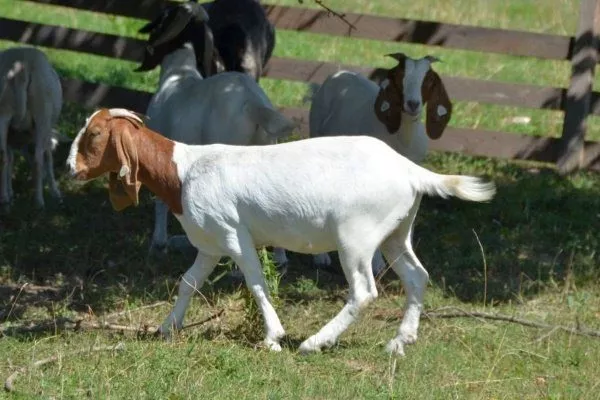
- During the summer, Boer goats require a grazing area. Nearby plants, shrubs, and low trees are used as barriers to keep them out.
- In the room where goats are kept, it is necessary to maintain a temperature of more than +5 degrees.
- Daylight hours in winter should be at least 8 hours.
- It is mandatory to conduct preventive examinations and vaccinations of animals.
- Trim goats' hooves twice a year. Being confined to a stall all winter prevents animals from walking on the ground, causing growths that interfere with their gait.
- Farmers must control indoor humidity levels—no more than 80%, ideally 60-70%. High humidity in enclosed spaces with animals encourages the growth of pathogenic bacteria, increasing the risk of disease.
- Provide animals with sufficient water.
- Provide the goats with insulating bedding. Their feet are considered their weak point.
- ✓ The optimal temperature in the room for Boer goats should be maintained at +12°C in winter and no higher than +25°C in summer.
- ✓ The humidity level in the room should not exceed 70% to prevent the development of pathogenic microorganisms.
Diet of Boer goats
Boer goats eat a variety of foods. Their diet is recommended to be based on the following ingredients:
- potatoes, carrots, beets and other vegetables;
- hay;
- sunflower cake;
- straw;
- food waste;
- concentrate.
Boer goats are considered to be very forgiving when it comes to food. They will happily eat even a small amount—it's quite enough for them. In the summer, they are let out to pasture, where they feast on the available food. They will consume almost anything they find edible. They can also find food in areas where other animals have recently grazed. Boer goats are often bred to clear vegetation growing near homes.
One adult goat requires about 9 kilograms of greens per day. During the winter, this will be sufficient:
- hay – 1.5-2 kg;
- concentrated feed – 300 g;
- fresh root vegetables – 2-4 kg;
- other feeds – 200-300 g.
It's important to include mineral supplements in Boer goats' diets. Regular table salt is used—no more than 7 grams are added to the stall. Pregnant does are given chalk or bone meal. The same supplement is given to seven-day-old kids.
If food supplies are insufficient, goats may begin to become emaciated, and meat quality may deteriorate. However, most often, the animals do not react to the meager diet and consume everything the farmer provides. The key to proper feeding is free access to clean drinking water.
Breeding Features
Breeding this breed of goat is profitable. The economic benefits of Boer goats are greatly enhanced by their increased disease resistance. They adapt easily to any conditions, reproduce well, are easy to feed, and produce high-quality meat at slaughter.
Breeding Boer goats requires adherence to certain rules:
- Breeding males vary somewhat in the quality of their fertility. Even the weakest females produce strong and healthy offspring after mating, which gain 30-35 kg in weight within 9 days. Within 5 months of birth, the kids reach sexual maturity and are ready to mate. It takes approximately 2 years and 9 months for the kids to recover and nurse. Then, the doe is weaned and bred.
- When kids are born, all the milk goes to feeding them. During this period, it is rich, tasty, and nutritious. If the farmer plans to harvest the milk, the kid is weaned 14 days after birth. In this situation, the farmer must decide what to do with the milk. There are two options: hand-milk the milk to the young and save the rest for consumption, or allow the mother to care for the offspring herself, allowing the kids to suckle from her udder.
During the first month, kids are fed 4 times a day, then the number of meals is reduced to 3 times a day. - Experienced farmers know that the most viable and healthy kids are born in early spring. Boer goats' gestation period lasts 5 months (150 days). The best time for a female to become pregnant is autumn (October-November). Furthermore, during the period of birth and early development, greenery appears, ensuring the animals receive all the necessary micronutrients.
- Females are bred throughout the year. High-quality and consistent offspring can be achieved with several males per pen of females. One male can breed up to 50 females.
Determining the right time for mating is very simple. First, calculate the goat's estrus period, which ranges from 1-2 days. During this time, the animals become restless, stop feeding, bleat constantly, and the outer parts of their vaginas swell. If the doe isn't impregnated the first time, the process will have to be repeated during her next estrus, which occurs every 2-3 weeks.
Crossbreeding
Crossbreeding Boer goats with other breeds is possible, but the process can present several challenges. First of all, choosing the breeding pair carefully is crucial, as the quality of the resulting meat depends on it.
To create a hybrid, it's recommended to choose Nubian-type breeds. It's best to have a Nubian doe and a Boer buck. The quality of the buck is crucial in this case, as only high-quality semen and genetics will ensure healthy offspring.
Even an average sow is capable of producing a high-quality kid. These young develop quickly. If the sire is of poor quality, the kid's weight at three months will vary around 15 kilograms.
It is recommended to crossbreed goats not only with Nubians, but also with the following breeds:
- Jamnapari;
- Kiko;
- Spanish;
- Angora.
If a farmer hopes to achieve excellent breeding results, it is recommended to crossbreed Boer goats with the breeds described above, as purebred crossbreeding will be exorbitantly expensive. However, when crossing Boer goats with other breeds, the meat cost will be slightly lower.
A breeding buck must be mated with a female of one of the breeds. The resulting offspring are then crossed again with a purebred Boer buck, but a different one. The animals should not be from the same litter, as crossing closely related animals can result in weak and unproductive offspring.
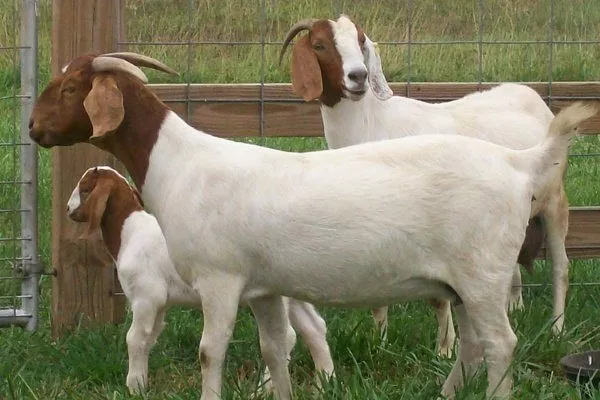
Purebred cattle are those with more than 75% Boer blood. This means that the second generation of animals are purebred males. They are considered valuable and sought after by true gourmets.
offspring
Females reach sexual maturity at 5 months. However, experts recommend extending the period of infertility for one to two months. The first litter is a single kid. Subsequently, the female will give birth to two or more kids. The kids are born weighing approximately 4 kg. Excellent development and rapid growth ensure a good daily weight gain of 250-500 g.
Boer females are not known for their high milk yields. During lactation, a female produces about 2 liters of milk per day, which is not always enough for her suckling kids. Because of this, farmers may need to supplement their milk supply with a bottle.
Care and rearing of young animals
Newborn goats stand on their feet almost immediately after birth—on the third or fourth day. At this point, they begin grazing, eating dry food, and drinking water. Around this time, the kids are allowed to be released into the general herd. The farmer need not worry about the kids' safety, as the goats will never harm the young.
From birth to 14 days, it's recommended to keep kids close to their mother to ensure they receive sufficient milk. After two weeks, they are separated from their mother and bottle-fed three times a day. It's recommended to add oatmeal and carrot juice to the milk.
At one month of age, experienced farmers recommend adding hay broth and crushed wheat bran. During this period, kids are fed twice a day. Young goats usually refuse the bottle on their own, preferring hay and mixed feed.
Because Boer goats are a meat breed, it's best to allow the kid to drink as much milk as it wants. If the kid is already grown but continues to suckle, a cloth bag is placed on the goat's udder.
Why trim hooves?
Hoof care for Boer goats is a crucial step. Trimming is essential to prevent the development of foot diseases. Many farmers know that animals of this breed often suffer from foot problems. For this reason, they undergo this procedure several times a year. The first trimming is performed in winter, the second before the first pasture.
In summer, hooves trim themselves naturally, eliminating the need for the farmer to intervene. Straight-bladed pruning shears are used for trimming hooves.
They operate according to the following scheme:
- Clean all dirt from under the hooves. Check where the dry part of the hooves ends and the soft tissue begins.
- Cut the horn from the outside of the hoof.
- Continue this action until you reach the soft part of the hoof.
- Begin trimming the heel. Do this very carefully to avoid damaging the goat's feet.
- Trim the second half of the hoof using the same system.
- Trim the hoof.
What is the price?
The price of a single goat ranges from $1,500 to $8,000. For these reasons, farmers breeding this breed prefer to purchase goat semen rather than the animals themselves. This saves significant investment. Artificial insemination facilitates the birth of several kids at once, and once a kid is born, there's no need to purchase semen. The downside of this method is the long wait and the risk of producing a kid whose appearance doesn't meet standards.
Acquiring young goats for future crossbreeding and breeding requires the right approach. The farmer must inspect the animal's coat and appearance, and pay attention to the kid's behavior. A healthy kid will be constantly active.
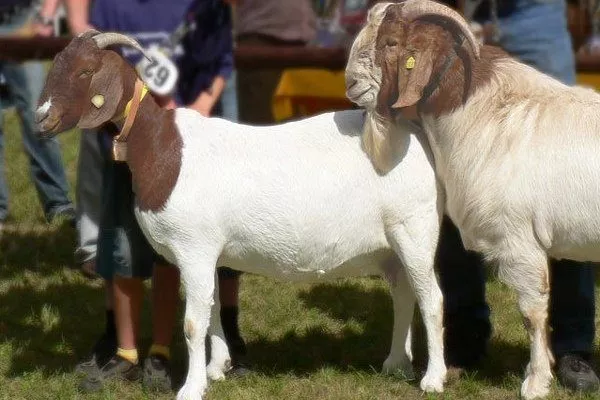
It's equally important to measure the pet's length, height, and ear width when choosing a pet. Sellers must have all necessary documents, health certificates, and a pet passport with vaccination records. An animal that doesn't match the breed is unlikely to be returned to the seller, so a responsible inspection is essential.
What are the pros and cons of the breed?
The Boer goat breed has both advantages and disadvantages. Before breeding them, a farmer should be aware of these. The following are some of the positive aspects:
- have a calm and friendly character;
- goat meat is considered a high-quality product;
- animals have increased resistance to diseases;
- are distinguished by a high level of offspring productivity in males;
- goats are unpretentious in food;
- females reproduce well and are able to take excellent care of the kids;
- Breeding allows you to get a good profit, which will cover all the costs of maintenance;
- animals are resistant to high temperatures;
- are characterized by a high level of endurance to any conditions of detention.
Negative traits:
- Boer goats are prone to destroying all vegetation within their reach;
- only purebred animals produce high-quality meat products;
- Animals are not particularly resistant to cold climates and frosts.
Where animals are kept, it is impossible to grow flowers or shrubs – the goats will simply gnaw them off.
Reviews
There aren't many reviews of Boer goats online, as only a few farmers breed the breed in Russia due to the animals' high cost. However, those who do have a business speak highly of the animals.
Boer goats are animals with attractive appearance and high productivity. This meat breed is considered one of the best due to its rapid growth and weight gain.