
Angora goats are distinguished by their small stature and high wool production. These fluffy Angoras are easy to care for and hardy, making them popular with breeders worldwide. Let's learn how to breed these woolly goats and the specifics of their care.
History of the breed's origin
Angora goats originate from Turkey. The breed's name is believed to derive from the ancient name of Ankara, and it is believed to be approximately 500 years old. Angoras arrived in Europe in the 16th century, brought here by a nobleman as a gift to the Roman emperor. While the goats were striking in appearance—small and shaggy—they didn't particularly impress European herders.
The popularity of Angoras began in the 19th century, when goats began to be raised en masse in South Africa for wool. Angora goats were the primary source of raw material for wool production. At the same time, the breed was brought to the United States. Over time, Kemel goats, another name for the breed, also began to be bred en masse there. Most Angora farms are located in Texas.
Angora goats have been bred in Russia since the early 20th century. The breed was first brought to the Transcaucasus. However, the goats were not widely adopted in the USSR. They did not thrive in the humid climate, were prone to illness, and reproduced poorly. Breeders decided that breeding them in the USSR was impractical. Male Angora goats were crossed with native white goats, producing offspring that were adapted to the local climate.
Main characteristics of Angora goats
Angora goats, a small breed of goat, are record-holders in mohair production. These animals also produce pelts, milk, leather, wool, and down.
Appearance
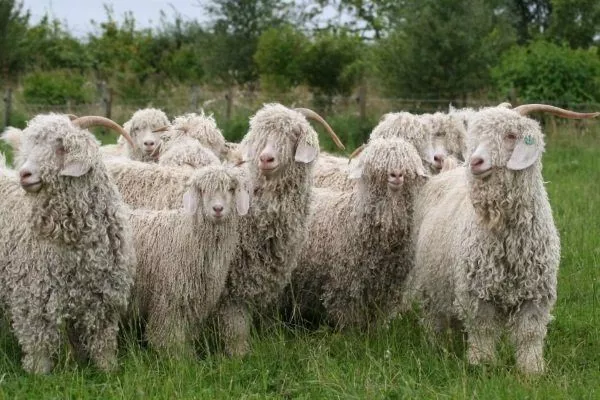
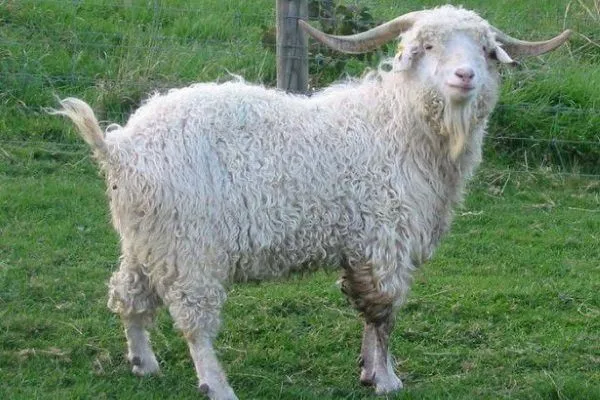
Small goats are covered from head to toe with shiny, wavy, and curly hair. The hair covers the animal's entire body except for the ears, muzzle, and lower legs.
Features of the appearance of Angora:
- color - usually white, but black, gray and silver colored individuals can be found;
- head - small, elongated, humped nose;
- Both males and females have beards;
- body of medium size, sits firmly on strong legs;
- tail - small;
- ears - long, oblong, hanging down;
- the neck is of medium length, smoothly flows into the body;
- the horns of females are small and thin, bent back;
- The horns of goats are large, curved, and spiral-shaped;
- the chest is poorly developed;
- The legs are well developed, the hooves are amber.
Wool characteristics
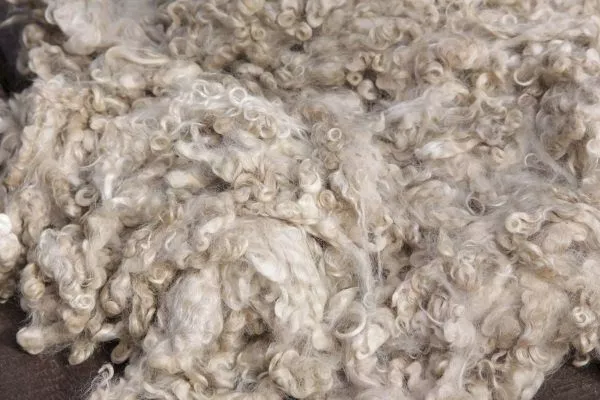
Goats are typically sheared once a year, while Angoras are sheared twice a year, in the fall and spring. Characteristics of Angora wool:
- can be painted well without losing its original characteristics;
- It spins well, so it is used to make velvet, knitwear, plush, and drapery fabrics;
- The wool of males has thicker hairs and is used to make blankets and carpets.
It is believed that the quality of Angora fleece is influenced by specific environmental conditions and diet. This is supported by the fact that animals living in similar conditions—in Turkey—produce fleece of approximately the same quality as Angora sheep.
Productivity
The main product obtained from Angora goats is wool. Wool yield depends on the animal's sex. The larger the animal, the more wool it produces. Male bucks are more productive than females in terms of wool and meat.
Productivity of Angora goats:
| Productivity characteristics | Description |
| Goat wool yield, kg | 2.1-4.1 |
| Goat wool yield, kg | 4.5-7.2 |
| Height at withers of a goat/billy goat, cm | 64-65/74-75 |
| Length of strands, cm | 22-36 |
| Mohair input, % | 64-79 |
| Number of haircuts per season in warm/cold countries, times | 2/1 |
| Milk yield per lactation, l per year | 62-100 |
| Milk fat content, % | 3.8-4 |
| Number of kids in a litter | 1 or 2 |
Angoras are sensitive to cold; after shearing, they are not taken out of the barn for 1.5 months.
Keeping Angoras for milk and meat is impractical—they are merely a byproduct of raising this breed. The milk produced is often insufficient even to feed the offspring. A female produces no more than 15 liters of milk per month. Meat yield is also low—no more than 20 kg per animal, accounting for 40-45% of the total weight. The meat tastes good, is tender, and lacks a distinctive "goaty" odor.
Advantages and disadvantages
Advantages of Angora goats:
- They digest a variety of foods well.
- They quickly adapt to different climates.
- Undemanding in terms of care and maintenance.
- They have high immunity to brucellosis and tuberculosis.
- High wool productivity.
- High quality wool.
- Tasty and high quality meat.
Disadvantages of the breed:
- The maternal instinct is weakly expressed.
- Sensitivity to high humidity.
- The quality and structure of the wool depends on the weather and natural conditions.
- When shedding, the amount of fur decreases.
- Low fertility.
Watch the video below for an overview of the Angora goat breed:
Content Features
The Angora breed isn't known for being fussy or demanding when it comes to living conditions. They're willing to graze on even the most meager pastures, but if given the choice, they'd prefer hilly terrain.
Conditions
The quality of Angora sheep's care affects not only their wool production but also its quality. In poor conditions, their coats lose their luster, become matted and dull, and their color deteriorates. Meat and milk production also decline under unfavorable conditions.
- ✓ The optimal temperature in the barn should be maintained at +8 °C, avoiding sudden changes.
- ✓ Humidity in the room should not exceed 70% to prevent the development of respiratory diseases.
Optimal conditions for keeping Angoras:
- Temperature and humidity. The animals, having thick fur, tolerate cold well. The average barn temperature is at least +8°C. They do not tolerate heat, high humidity, and temperature fluctuations well.
- Neighborhood. Angoras are peaceful and get along well with other species. They can be kept in the same pasture with other livestock.
- Herd size. The maximum number of individuals in one herd is 30 goats. It is advisable to keep females separately from males.
- Area standard. One animal is allowed 4 square meters.
- Walking. Animals should be allowed outside daily, except on the coldest days. During winter, walks are scheduled for two hours several times a week. In summer, goats are kept free-range.
When females and males are kept together, the taste of milk deteriorates.
Construction of a barn and a corral
In the summer, goats are kept in a free-range pen, and in the winter they are moved to a specially equipped, permanently built barn. Barn requirements:
- The room should be dry, light, well ventilated, and sufficiently warm in winter.
- The layout of the barn depends on the climate in the region. If winters are very cold, it is recommended to create a corridor between the entrance doors and the barn.
- The floors in the goat house are made of wood, and the top is lined with straw, sawdust and pine needles.
- The interior of the room is periodically whitewashed with lime for disinfection.
- Animals must be provided with a sufficient number of feeders and waterers.
Goats must be given access to fresh air; keeping them confined indoors leads to disease and poor wool quality. If pasture is not available, they are released into an open pen in the summer. The area is enclosed with a fence or chain-link fencing. Angoras jump very high, so the fence should be at least 2 meters high.
We recommend reading a separate article about this, How to keep goats in winter.
How and what to feed an Angora goat?
Kemel goats thrive on hillsides covered with grasses and shrubs. They happily munch on branches within reach. Angoras especially enjoy oak branches and acorns. These goats can be used to clear brush from pastures.
Angoras are picky eaters. They often refuse, for example, damp feed. In winter, they are supplemented with kitchen scraps. They especially enjoy potato peelings mixed with feed and a little salt. Unsprouted tubers can be fed raw. Potato peelings are also added to mash—they are steamed with crackers, oats, and leftover beets and carrots.
In summer, goats feed primarily on pasture. In winter, their diet must be adjusted. Grain provides the animals with essential nutrients, but it also makes their wool coarser.
Read the article about feeding goats in winter.
Optimal diet for the Angora breed:
- corn silage – 2 kg;
- legume hay – 0.5 kg;
- root vegetables – 0.5 kg;
- mixed grass hay – 0.4 kg;
- compound feed – 0.4 kg.
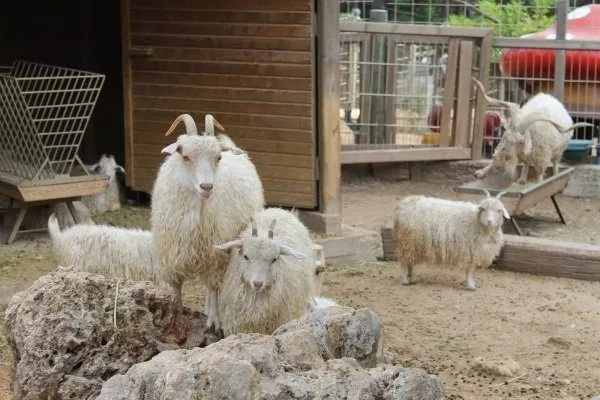
When feeding Angoras, standard goat nutritional standards are followed, taking into account the impact of nutrition on wool quality. When free-range goats eat fresh greens and other plant foods, their wool becomes denser and heavier. When hay is substituted for greens, the wool becomes lighter due to reduced oil production by the sweat glands.
The longer Angora goats graze in the pasture, the better the quality of their wool. If grazing year-round is not possible, to ensure the beauty of their wool, they need to be given:
- corn grain;
- alfalfa;
- special compound feed for goats.
Daily micronutrient requirements for goats:
| Microelements | Minimum quantity, ppm (propromile) | Maximum quantity, ppm | The goat's body's reaction to deficiency |
| Magnesium | 1800 | — | Occurs when animals are fed succulent feed. It is fatal. Symptoms include convulsions and gait disturbances. Treatment is with magnesium supplementation. Prevention involves feeding hay before grazing. |
| Potassium | 8000 | — | Occurs when switching to concentrated feeds. The problem disappears when the proportion of roughage increases. |
| Sulfur | 2000 | 3200 | Tearing, increased salivation, and untimely shedding are observed. The cause is increased consumption of feed containing non-protein nitrogen. |
| Iron | 50 | 1000 | Dairy goat kids are usually the ones affected. The animals are lethargic and anemic. |
| Cobalt | 0.1 | 10 | Contained in table salt. A deficiency can lead to decreased productivity and anemia. |
| Copper | 10 | 80 | Occurs with excess molybdenum. Hair becomes discolored. Other symptoms include diarrhea, deformed bones, and anemia. |
| Manganese | 40 | 1000 | The reproductive performance of females declines. Animals become less active, and limb deformities are observed. |
| Zinc | 40 | 500 | Growth slows, animals become lethargic, develop skin lesions, and sometimes even baldness. Male goats are particularly affected, with decreased sexual activity. |
| Iodine | 0.5 | 50 | Causes the birth of weak offspring. Excess iodine causes lacrimation and a range of symptoms typical of poisoning. |
| Selenium | 0.1 | 3 | Poor appetite and stunted growth. Excessive intake can cause lameness and decreased vision. |
ppm (parts per million) is a unit of concentration measurement. 1 ppm = 0.0001% = 0.000001 = 10−6, and 1% = 10,000 ppm.
Prospects and features of breeding
The largest mohair producers are South America and Turkey. Angoras are also bred in countries with suitable climates and terrain, including South Africa, Australia, New Zealand, France, Italy, and Greece. In Russia, this breed is raised in the Caucasus, Transcaucasia, and several other regions.
Breeding Angora sheep appears to be a profitable venture, but it poses several challenges for Russian farmers. The main problem is marketing. Small farms struggle to find buyers for small quantities. A solution is seen in uniting small-scale producers into communities to organize the sale of larger quantities.
The main purpose of Angora breeding is wool, but meat and milk also represent a significant source of income. Because the meat lacks the odor that many dislike about goat meat, it is in demand. Angora farms are organized so that the animals produce all three components of productivity.
To officially establish a farm, you must go through standard procedures:
- Register your business. It's best to become a sole proprietor (SP) – this is the preferred option for businesses with small production volumes.
- With the registration number in hand, an application to purchase or lease a plot of land is submitted to the relevant government agencies. Technical documentation is prepared, the plot is surveyed, and a cadastral number is assigned.
- Rospotrebnadzor issues a sanitary certificate permitting economic activity.
- They receive certificates from the environmental and fire services.
Mating, gestation period and lambing
The period from one heat to the next is the estrous cycle. The average duration of the estrous cycle in Angora goats is 21 days, rarely ranging from 17 to 23. The estrous cycle lasts 36 hours. Mating should occur within a day and a half. When the doe begins to experience nervous reflex arousal, the buck will be able to approach her. This period is determined by the doe's restless behavior, decreased appetite, and decreased sleep.
Ovulation occurs 30-34 hours after the onset of heat. If the goat is not fertilized within this time, mating will have to be postponed until the next heat, which begins in approximately 10-12 days. Goats typically enter their first heat at four months of age. However, it's not recommended to mate immediately; wait until the animal has gained approximately 30-40 kg. This weight is typically reached between seven and nine months.
Obesity in females should not be allowed - it will be difficult to mate them and then to obtain offspring.
Types of mating
The following types of mating are used to fertilize the Angora breed:
- Freestyle. The simplest option is to simply keep the individuals together in one herd.
- Harem. One breeding buck is kept together with specially selected females. There are at least 20 females per buck.
- Manual. A person chooses a mate—a male goat and a female goat. Their mating is supervised by the owner.
| Mating method | Efficiency, % | Risk of disease |
|---|---|---|
| Freestyle | 60-70 | High |
| Harem | 75-85 | Average |
| Manual | 85-95 | Short |
| Artificial insemination | 95-99 | Minimum |
Artificial insemination is also used to fertilize goats. It is considered the most progressive, effective, and safe method. Artificial insemination eliminates the risk of spreading infections, parasites, and other similar diseases.
Pregnancy and lambing
Angora gestation lasts 151 days, rarely 143 to 154 days. One to two months before lambing, milking is stopped—the goat is "let go." By counting the required number of days, the goat's lambing time can be determined with an accuracy of several days.
Prepare for lambing in advance. You will need:
- Rags, clean rags. Everything must be clean, washed without chemicals.
- Iodine, potassium permanganate or furatsilin.
- Laundry soap 72%.
Immediately before the birth, the goat's udder and the area around it are trimmed and washed with a warm solution of potassium permanganate (1 g per 1 liter of water). The doe usually manages the birth independently, without any additional assistance.
Problems can arise in young females—sometimes the fetus is larger than the birth canal, requiring veterinary attention. A cesarean section may even be necessary, but this is rare. After birth, a caregiver should ensure the placenta is expelled within 1.5–2 hours.
Angora females are not very productive when it comes to reproduction. They produce no more than two kids. If pregnancy could harm her health, the doe will miscarry—a miscarriage she induces herself.
Causes of miscarriage in goats:
- lack of vitamins in feed;
- insufficient amount of feed;
- a sharp drop in the animal's weight.
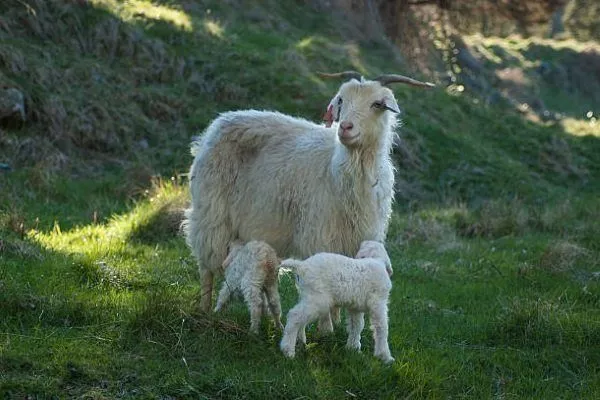
One in seven cubs dies. Twins are rare in the Angora breed. Females show little interest in their offspring, but nurse them regularly until they are 6-7 months old.
Caring for kids
There are two ways to feed kids:
- Under the uterus. This is the most convenient option for both the animals and the farmer. The kid receives the mother goat's udder and nurses on her mother's milk for up to three months. To prevent mastitis, the remaining milk should be expressed from the goat's udder after the kid has finished feeding. As the kid matures, salt and chalk (10 g) are introduced into its diet starting from the third week. At three months, the supplement is increased by 50%.
- Artificial feeding. If it is not possible to nurse a kid under the mother, it is taught to drink from a bowl. If there is no mother's milk, the kids are being fed Artificial formulas. These consist of powdered milk, fats, vitamins, and minerals. This feeding method often results in slow development of kids.
Kids are weaned from their mother if the goat needs to be returned to working condition. In this case, newborns are immediately removed from the mother. They are rubbed with a dry cloth and fed for the first 40 minutes of life. However, this is a last resort; it's better to let the kids nurse naturally.
Features of keeping kids:
- The room should be spacious, clean, dry, and well-ventilated. Excessive humidity is not permitted.
- The room is cleaned regularly. The floor must be covered with bedding, preferably made from grain straw. Fresh straw should not be used, as the kids may chew it, and ingesting rotten straw can cause digestive problems or even death.
- From 5 months of age, kids are transferred to stall feeding. They are given 1.5 kg of hay, up to 300 g of concentrates, and 1 kg of root vegetables.
- The kids' drinking bowl should always contain fresh and clean water.
Common diseases in the breed
Angora goats are susceptible to all types of diseases—infectious, invasive, non-infectious, and parasitic. Most commonly, Angoras experience:
- Tympanitation of the rumen and poisoning. Diagnosis and treatment should be carried out by a veterinarian.
- Respiratory diseases. The breed does not tolerate dampness very well. During the cold season, the risk of acute respiratory infections increases. Ultimately, the entire herd can become infected, and fatalities are inevitable.
- Hoof diseases. The problem begins with lameness, and then the animal may become completely unable to move. Veterinary assistance is usually needed.
Angoras are also prone to parasitic diseases, which require systematic treatment under the guidance of a veterinarian. A veterinarian should be called in regularly for preventative checkups of the flock.
You can learn more about goat diseases from this article.
What to look for when buying?
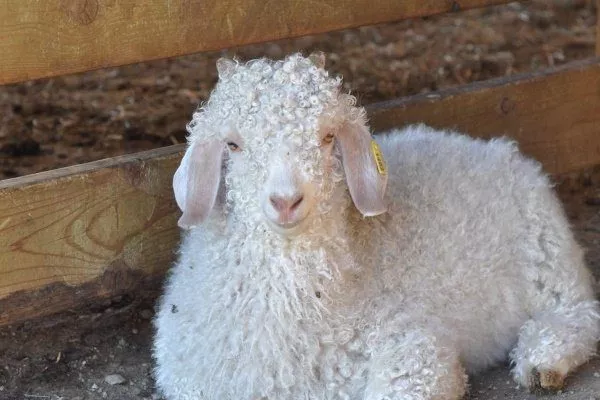
It's recommended to acquire new goats for the herd in the spring, before shearing, or in the fall, when the young are already grown. The growing kids are an indicator of the productive qualities of their mother goats. Healthy kids should be moderately well-fed, with thick, long hair.
Rules for selecting goats when purchasing:
- Individuals must be of standard size. Avoid not only obviously small goats, but also those that are too large. Large individuals have larger coats, but they are likely to have reproductive problems.
- Females should have a wide body. The chest circumference behind the shoulder blades should be large. The head should be small, and the loin should be wide.
- Males should have horns. Legs should be straight and thin, yet strong and stable. Hooves should be small and amber-colored.
- A healthy dog is evenly covered with fur. It should hang in wavy or curled strands. If the fur sticks out, it's too harsh—a fault.
- The beard should be lush. If the animal has a sparse beard, it's likely that the fur on the belly is also thin.
Angoras are typically snow-white. Their fur is silky and shiny. Contrasting spots indicate crossbreeding. This will inevitably affect the quality of the fur.
Where to buy purebred Angora goats?
In Russia, there are many private farms and specialized breeders selling Angora goats. It is recommended to purchase Angora goats from reputable farms that professionally raise purebred goats.
Farms offering Angora cats:
- Nursery "Silver River" (Kolomna, Moscow region).
- Angora goat nursery "My Village" (Medvedkovo station, Moscow).
The price of goats depends on the quality of the herd. On average, a kid costs 2,000-3,000 rubles, while adults cost 5,000-8,000 rubles. It's recommended to buy goats in the spring or fall.
Helpful Tips
Helpful tips from experienced goat breeders:
- Starting from the age of one month, if the weather is warm, take the young goats out for a walk periodically - the kids will happily graze on young grass.
- For prevention, give kids 5 g of fish oil per day.
- Twice a year – in spring and autumn – give your goats deworming treatment.
- Avoid drinking from standing water bodies.
- Return the herd to the pasture again after two months, not earlier.
- Regularly inspect the animals' limbs and hooves. If any are limping, isolate them from the herd. As a preventative measure, use copper sulfate baths. Simply place the bath at the entrance to the pen; the goats will "go through" the procedure on their own.
Reviews of the Angora goat breed
When breeding Angora goats, the main challenge is increasing the herd size. This highly productive breed prefers dry, warm climates. If you provide favorable conditions for Angoras, the investment will pay for itself after the first shearing.