
Anglo-Nubian goats are an interesting breed. They are highly prized abroad, but the same can't be said for Russia. However, their distinctive appearance and behavior easily distinguish them from our ordinary goats. What about their care and breeding? Read reviews for a definitive opinion.
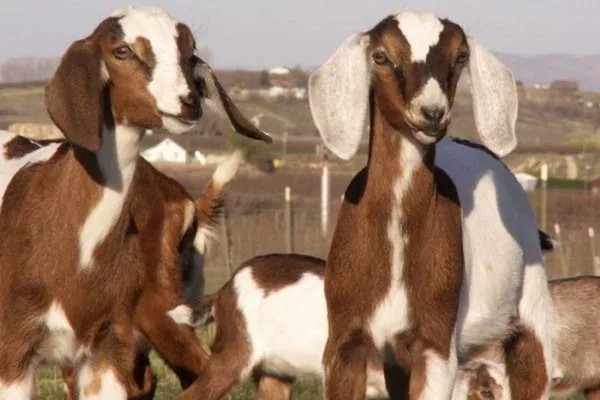
History of the origin of Anglo-Nubian goats
This breed of goat is considered one of the oldest breeds in the world, or at least one of the top three. It has been proven that they first appeared in northeastern Africa, where avid animal lovers developed the Anglo-Nubian breed—or rather, its early version. This occurred over 10,000 years ago.
Goats were sold and exported to various countries. Among the most prolific traders were the French, who were fascinated by Anglo-Nubian goats.
But at that time, it wasn't the breed we know today. English breeders developed the current breed based on the ancient one. We are grateful to them for this work, as the breed retained all the same qualities inherent to African cattle. The skills for which they were prized remain, and are still valued today, in the new breed. A wide variety of breeds participated in the breeders' experiments, which, incidentally, took place in the 19th century. These include:
- Some Indian breeds.
- Part of the Swiss ones.
- Middle Eastern breeds.
- Russian goats.
But it's not entirely clear when they actually appeared. Opinions are divided: some believe it happened at the end of the 19th century, when the experiments ended. Others maintain that they continued until the 1930s.
In any case, it no longer matters. The experiments ultimately revealed that the majority of the genetic material at the time was composed of local English goats and Nubian goats, which had just been imported from the Middle East. This explains where they got their name. But even today, these goats are often confused with Nubian goats, calling them that. And it's important to remember that today's Anglo-Nubian goats and Eastern goats are two different things.
After their creation, goats began to demonstrate their relevance and value in those days. Many foreign farmers and landowners became interested in them, and they began to be exported extensively to neighboring countries. They then spread to other countries, which were also eager to increase their numbers. In Russia, Anglo-Nubian goats were among the last to appear – after the collapse of the USSR, and then only in small numbers. Large numbers of goats only appeared in the 21st century, in the last 10-15 years.
Description of the breed
Anglo-Nubian goats have a truly distinctive appearance, one that will surely linger in your memory after a trip to England. They are large goats, renowned for the quantity and flavor of their milk. It's odorless, and the taste is astounding. Let's take a closer look at all the characteristics of the breed's appearance and productivity.
Appearance
The first thing that catches the eye is the color, which comes in several varieties. Among them:
- Regular black ones.
- Standard white.
- Unusual color - cream.
- Coffee shades with the addition of soft milky color.
Often, they don't use a single color per goat, but combine shades, even grouping three or four on a single goat. The colors chosen in this way add a distinctive appearance to the animal, making it even more beautiful. If the combined colors include black, white, and cream, it will look very beautiful, and sometimes the arrangement of the colors on the body can resemble a leopard pattern. This is a highly prized feature.
Weight classes are fairly standard, except that females weigh 80 kg—very heavy for them. Males weigh about the same, though most still reach 100 kg. Anglo-Nubian goats were bred with dairy production in mind, but these figures also indicate that they are also quite successful in meat production. A very successful breed.
Based on other external characteristics, the goats have a Roman appearance. Let's examine the smallest body details:
- A dense, fleshy body. Distinguished by its length. The udder is quite massive in proportion to the body.
- Long legs are a noticeable difference.
- Male goats are exclusively horned. Their large, twisted horns face in opposite directions. Female goats are usually polled, although the opposite is also true.
- The head is flat and long, with a slight hump on the nose, characteristic of the Roman profile. The cheekbones are prominent. The eyes are quite large, and the lips are of varying shapes. The upper lip is much shorter than the lower lip, making the teeth often clearly visible and exposed.
- The body is covered with a thin layer of wool.
- The ears are long, worn, and hang quite low from the head.
- No earrings – purebred Anglo-Nubians. There are exceptions in other countries.
- Male goats have a small beard, while female goats lack one.
- Males can reach 90 cm in height, while females can reach 80 cm.
Anglo-Nubian goats are generally calm and readily obey their owner's commands. In this respect, they are often compared to dogs. However, some are not so calm. They will make quite loud noises and may even alert you and your neighbors.
A Ukrainian breeder talks about the Anglo-Nubian goat breed and its breeding in the video below:
Productivity
Uniqueness is evident in this case as well. Goats are highly productive in both meat and dairy production. For now, let's focus exclusively on meat production.
In many regions of Russia, raising Anglo-Nubian goats for meat, or slaughtering them for their valuable product, is not common. However, their meat is tasty, juicy, and tender. The meat is completely free of the offensive odor common to many breeds. This is why the meat is prized, although it is supplied in small quantities, as not everyone breeds these goats for meat production.
Adults, however, aren't as good as the young. Their meat becomes rubbery and stretchy. This doesn't improve the taste, but rather creates a certain disgust. With age, that same unpleasant odor develops, which is impossible to get rid of.
The meat yield is quite substantial, considering their weight. Adults can weigh up to 100 kg, but excluding this, the average weight of young animals is 50-60 kg, which isn't bad at all.
How much milk do they give?
The milk yield is also impressive. After one milking, it's possible to obtain up to 3 liters of milk. Estimates suggest up to 1,000 liters can be obtained per year, although the average is slightly less – 850 liters. However, the quantity and quality of milk will increase with each subsequent year, age, and milk yield.
Now, let's look at the quality of this milk according to standard standards:
- Fat content is standard, about 4.5%.
- The protein content is also average, 3.5%.
- Lactose content: 4.5%.
- Milk contains vitamins A and C, as well as amino acids.
As we can see, milk is simply irreplaceable, containing everything necessary to support the body's functioning and vital functions—milk is extremely healthy, something you wouldn't expect from an ordinary goat. In terms of quality, and especially taste, the milk surpasses most famous breeds. Some say and confirm that its taste is reminiscent of nuts and cream.
Anglo-Nubian goats
Kids are highly susceptible to various diseases, and the breed's survival rate is not particularly high. Under improper conditions, they die almost immediately. Such conditions include:
- Diseases are the most common irritants and causes of death.
- Cold and drafts.
- Enormous demands on water.
Features of maintenance and care
Anglo-Nubian goats are very demanding, if you want to keep them in your yard, then strictly adhere to the rules, and certainly prepare all the details of the premises before the goats arrive.
- ✓ The room temperature should not fall below +10°C for adults and +15°C for kids.
- ✓ Air humidity should be maintained within 60-70%.
Requirements for the premises
They should never be kept in drafty or damp conditions. Anglo-Nubian goats are very susceptible to these conditions, and young kids die almost immediately. Therefore, be sure to take proper care of them and their housing, thoroughly strengthening it and protecting it from all frosts. In such conditions, they can easily contract pneumonia.
Also, ensure the cleanliness of the room, which you will check and improve daily. Ventilation is also important, as is warm, soft lighting, which is essential for Anglo-Nubian goats. Don't ignore these characteristics of the room.
You'll need straw bedding for the goats to rest on. While lying down, they'll select the tastiest and healthiest straws, thereby strengthening their bodies. This bedding needs to be changed daily, otherwise the goat will produce less milk, which is not very pleasant.
Don't keep them near other breeds of goats; they won't like it and will even show strong signs of aggression. Fights may even occur. And if they're females, this will again lead to a decrease in milk yield. They seem very demanding, and they are.
Feeding nuances
Diet and feeding are another strict area where rules must be adhered to. A daily feeding schedule, three times a day, must always be followed. The menu should include only specific and carefully selected foods. The diet generally consists of:
- Hay is used in winter and grass in summer. 5 kg per day.
- Grain concentrate feed (only proven and recommended ones; Anglo-Nubian goats are very sensitive). 2 kg per day.
- Vegetables or silage, not much. No more than 1 kg.
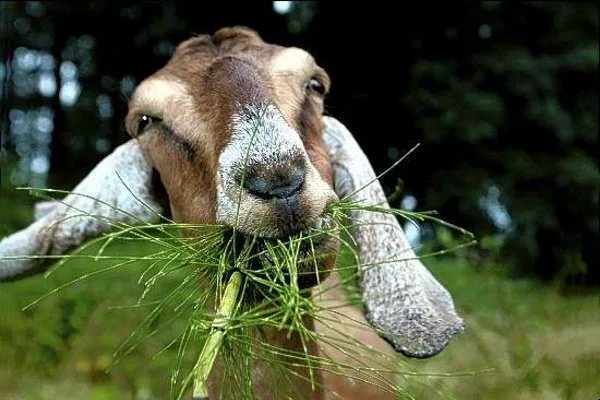
There's even a formula for this. 300 grams of grain per day, no less. However, following this formula, supplements are added—250 grams for every liter of milk per day. Ground oats and barley are also recommended to boost productivity—an important part of the diet.
Read on to find out what to feed goats in winter. Here.
Besides herbs, you can also use shrub and tree branches as fertilizer. Willow, pine, and linden trees are excellent choices. Hazelnuts are also suitable. Don't forget about vitamin-rich fertilizers. Suitable options include chalk and salt licks, which should be placed near waterers. Don't worry about buying expensive supplements; they won't outperform the materials you already have.
How and what to feed kids is described in next article.
Breeding Anglo-Nubian goats
The breed is characterized by high fertility, in one goat's lambing Up to 3 kids can be born.
Types and features of insemination
Before the first insemination, ensure the goat is sufficiently mature, both in age and weight. A common mistake is insemination at six months of age. The offspring are then weak, lethargic, and generally not very valuable for production. The goat herself will also suffer the consequences, including health problems.
It's important to remember that the procedure should be performed when the goat reaches at least 50 kg (110 lbs) – this is very important. Feed them frequently and wait until they are 1 to 1.5 years old. Regarding insemination methods, you can find a list below:
- The most advanced method, as well as the highest quality and most productive, is artificial insemination. A veterinarian will conduct the entire process, be responsible for monitoring it, and generally believe this method is the safest.
- The second option is manual. In this method, the herd owner selects the individuals that will participate in the mating. The selected individuals are taken to a separate room where the mating will take place.
- Free-range. A rare method, and only practiced on farms with a single breed.
| Method | Efficiency | Price |
|---|---|---|
| Artificial | High | Expensive |
| Manual | Average | Moderate |
| Freestyle | Low | Cheap |
When using the free mating method, all animals in the farm, regardless of gender or age, are kept together. This method is inconvenient because the owner cannot supervise the mating and the birth of the offspring. The first two methods are the most effective.
Gestation period and lambing characteristics
According to reference books, the gestation period is 151 days after mating—after mating, birth occurs. But trusting books isn't always a good idea, so just in case, prepare to deliver the goat on the 140th day. This is possible. Although goats can handle the birth on their own without assistance, forewarned is forearmed. Have a knife, towels, and warm water on hand in case complications arise. Although these are rare, remember that the first kid is born head first and hooves back. The rest are the opposite.
After birth, remove the kids from the mother goats, allowing them to dry off and place them in a specially prepared area. Feed them colostrum there and keep them there for a month. The colostrum will open all the mechanisms that will occur in the kid's body.
Buying a purebred goat
Before buying a goat, be sure to ask for documentation, unless you want a crossbreed instead of a purebred. It's especially important to verify the breed's integrity if you're buying from a major breeder. Alternatively, buy from reputable breeding farms or simply from abroad. Below is a description of how to distinguish a purebred goat from an ordinary one:
- The drooping, bell-shaped ears are a distinctive feature of the breed.
- The muzzle has a hump, giving it a Roman style.
- The skin beneath the fur is brown or black. Even if the fur is white, the skin of a purebred will always be dark.
- Anglo-Nubian goats are large, fleshy, and tall, standing on long, slender legs.
- If the horns are not trimmed, then in males they are sickle-shaped, tilted backwards or forwards.
- The udder is quite large, the teats are large, and it is ideal for machine milking.
You can't tell a goat's purebred status by its color, no matter what it is.
Pros and cons of the breed
The main advantages of the breed can be considered:
- Appearance. It's hard to find a goat whose appearance will impress everyone. Their variegated coat and powerful, graceful body are captivating.
- During hot climates, under the scorching sun, Anglo-Nubian goats do not experience any complications - everything is fine with them.
- Milk yield. 800 kg of milk per year is no small feat, and goats hold the world record for both sales and milk production.
- The young animals gain weight quite quickly, even though the breed isn't designed for it. The meat's flavor is also preserved.
It would seem like a miracle goat. But things aren't as simple as they seem. This isn't hard to understand by looking at the list of downsides below:
- Russia isn't particularly warm, especially in the northern regions. Anglo-Nubian goats don't tolerate cold and damp, so to have even the slightest chance of successfully keeping and breeding them on your property, you need to create the best possible greenhouse conditions.
- They are extremely demanding when it comes to food and general maintenance. Even a small mistake in choosing the right feed can lead to problems with milking and sometimes even health issues. It will take a great deal of effort to manage them properly and avoid mistakes.
- They absolutely cannot be kept alongside other breeds, especially females. This creates certain problems on large farms, where it's impossible to house them separately. And from this, other problems arise, creating a branch.
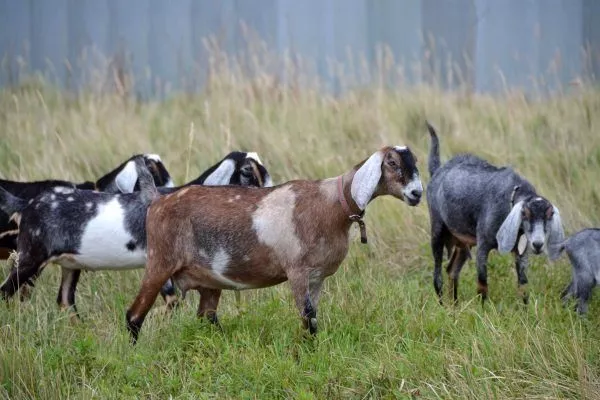
Diseases and vaccinations
With the help of breeders, the Anglo-Nubian breed has become more disease-resistant. However, some can still occur, and vaccinations by a specialist are required. Let's highlight the most common diseases:
- Pseudotuberculosis develops completely unnoticed and can persist for quite a long time without causing any symptoms. Even during this time, the body will still experience some negative effects. But if symptoms appear, such as miscarriages in the female or pneumonia, consult a specialist.
- Respiratory diseases due to drafts.
- Diseases due to poor quality feed.
- Tetanus and botulism are caused by untreated wounds and food or chemical poisoning. For example, by poor-quality food, as mentioned above.
- Hoof rot is a rare disease. It can take a long time to manifest itself, but if an Anglo-Nubian goat's gait becomes wobbly or has trouble moving at all, it's a clear sign of illness. In such cases, the animal requires immediate medical attention.
To avoid this, keep your pets up to date with vaccinations and veterinary checkups. Incidentally, vaccinations are given to young animals, and some even after birth.
Profitability and prospects of breeding
Goat farming is very underdeveloped. And when it comes to the Anglo-Nubian breed, which is extremely demanding and demanding, things are even more complicated. Only a few people manage to keep them, creating the right conditions for them. Only a few such farms are known throughout Russia. Providing proper care is a costly undertaking. Few are willing to provide goats with the proper care and nutrition.
From the above, we can conclude that the population will not grow in Russia. Why would anyone need a demanding breed when they can keep ordinary goats in a cold barn and feed them cheap feed? Currently, the Anglo-Nubian goat breed is bred primarily for commercial sale and for milk production, which is then processed.
Reviews
As it now becomes clear, Anglo-Nubian goats aren't a good choice. Their demanding nature breaks all barriers, and Russia is a difficult place to house them. But if you're experienced and confident, no one's stopping you from trying; it won't hurt. The main thing is to remember the common problems that can arise with their care and how to solve them. Then, everything will work out.