
With the decision to raise goats comes the question of where to keep them. It should be a space that meets the needs of the animals and is convenient for the owner to care for. You can build a goat barn yourself. Even a novice can do it with proper planning and selection of materials. We'll discuss what you need to consider during construction and what materials to stock up on in the article below.
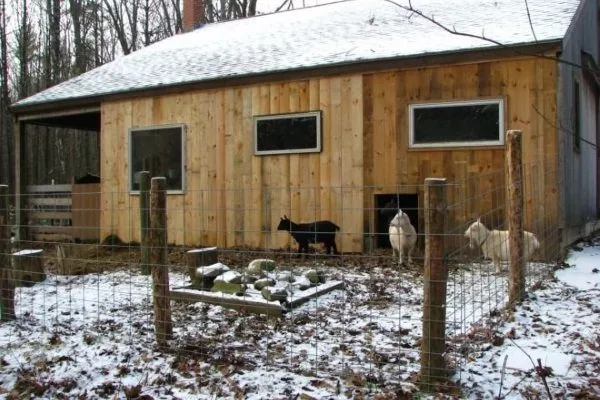
Basic requirements for the premises
Keeping goats is easy because they are relatively easy-to-care-for animals. They can live alongside other livestock and get along well with poultry.
In warm climates, goats don't need a barn at all during the spring and fall; a draft-free shelter is sufficient. For the winter, they should be moved to a more permanent structure where the minimum temperature doesn't drop below 8°C.
Whether to build a separate shed for goats or to allocate them a corner within the main building is a matter of personal preference. It's more cost-effective to house all the animals in a single building, separated by sturdy partitions. However, if possible, it's still advisable to build a separate goat barn.
Its size is determined based on the planned number of individuals. Ideally, each adult animal should have its own space. This could be a cage or a pen.
Adult goats may be housed together. Separate barns should be provided for females, male bucks, and young goats. This will prevent competition and conflict, allow for planning for breeding, and protect the young from the negative influence of older goats.
Goats adapt to both hot and cold weather, but they do not tolerate dampness, so the barn must be dry and sufficiently warm. If built correctly, a goat barn does not require a heating system, as the animals themselves heat the air to 8-10°C. Additionally, ensure adequate sunlight, install electricity, and consider a ventilation system.
It's recommended to add a paddock to the barn for animal exercise, provided the outside temperature is 12 degrees Celsius or higher. Goats can also be fed in the paddock.
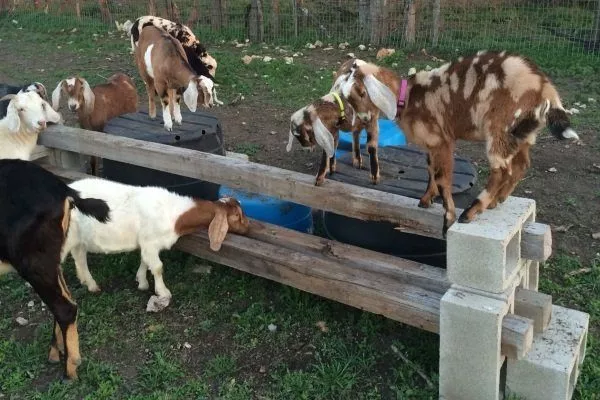
Choosing a location for construction
When choosing a location for a goat barn, choose a slightly elevated area or a flat area. In low-lying areas, the barn will be damp, meaning the animals will constantly get sick and waste away.
- ✓ The groundwater level must be at least 1 meter from the surface to avoid dampness.
- ✓ The site must be protected from prevailing winds by natural or artificial barriers.
Before construction, the area under construction must be cleared of vegetation: remove trees and shrubs, uprooting as much of their root system as possible. After the preparatory work, level the area.
Keep in mind that each adult goat requires approximately 1 square meter of space, while young goats require 0.6-0.8 square meters. Position the structure so that the façade and the walking pen face south.
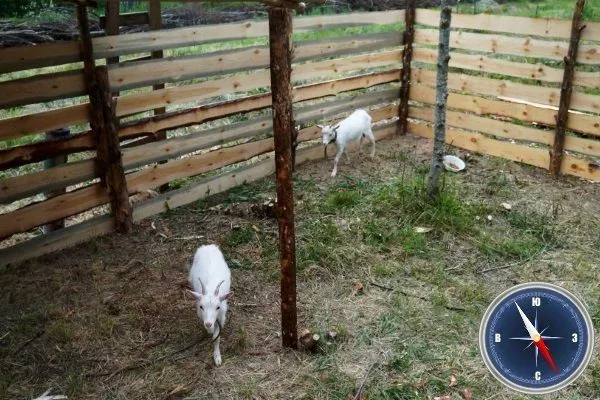
Construction and materials
Construction materials are selected based on the building's reliability, durability, and service life. A permanent structure requires significantly more material investment, effort, and expertise than a wooden structure.
Foundation
The foundation for a permanent structure is constructed using a strip foundation. This requires digging trenches around the perimeter of the goat's shed, approximately 45-50 cm deep. Formwork made from available materials is installed above these trenches, ensuring the concrete is poured at least 25 cm above ground level. The concrete mixture is then poured into the resulting foundation pits. The foundation requires three weeks to a month to dry during warm, rainless weather.
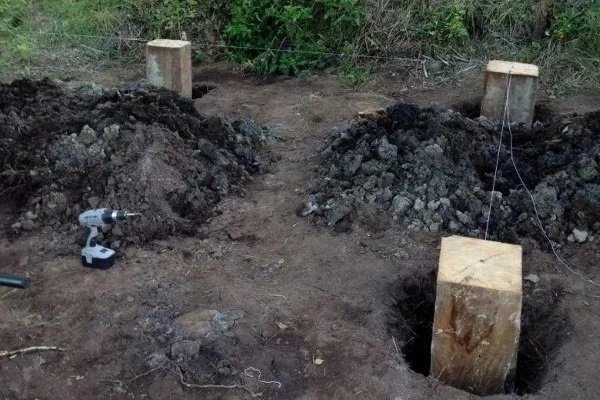
For a wooden structure, a foundation of posts or piles dug into the area where the shed will be located is suitable. Leave no more than a meter between them. Remove the sod layer from the area. Dig holes, fill with a 20 cm thick layer of screenings and gravel, and compact it. Install the posts in the holes, filling them with concrete.
Pouring and laying the floor
To create a floor for a substantial goat barn, you first need to create a well-compacted earthen or clay base. Then lay the flooring on top using:
- boards;
- flat slate;
- roofing felt and metal sheets.
Another option is to pour a concrete floor on a bed of slag or gravel. In this case, a slope of 2 cm per meter is required to ensure urine flows into a sump. For a concrete floor, it's important to have plenty of underlayment, as using it without it is unacceptable because the floor is very cold even in summer.
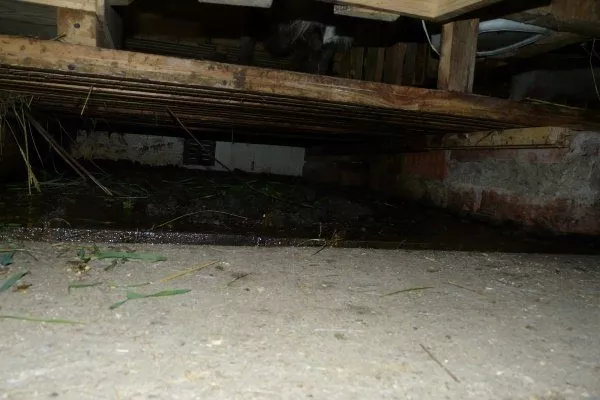
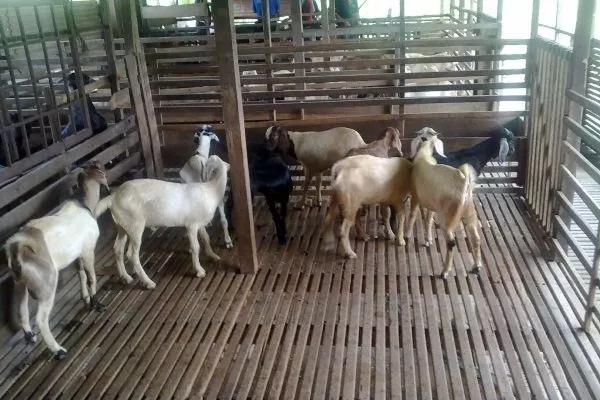
The optimal method is to install floor channels leading to the urine and feces collection container, with a removable wooden slatted flooring installed above. This will keep the floor dry and warm, and virtually eliminate the need for bedding.
Construction of walls and windows
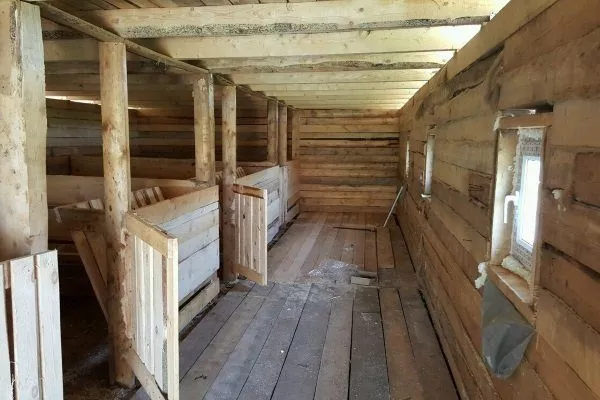
Walls are constructed from wood, brick, foam and aerated concrete blocks, and adobe. Stone materials are not recommended, as the shed will be cold and damp.
For a wooden structure, use timber sheathed with boards with an internal space of 10-15 cm. To retain heat in the goat house, these voids are filled with expanded clay, sand, slag, or any insulation material. A brick goat house is plastered for insulation.
Build walls 2-2.5 meters high. Any higher is not recommended, as the large volume of air in the shed will be difficult to heat during the winter. Smooth walls are easy to clean and disinfect.
Place windows and doors on the south side of the building. For safety reasons, the door should be double-leaf and open outward. Opening the top leaf, located at least 1.5 m above the floor, allows for ventilation.
For a small goat barn, one window opening near the door is sufficient. Larger barns require several windows at a height of at least 1.5 m. Their number is determined by a ratio of 1:12 to the total area of the building.
Ceiling and roof arrangement
For a pitched roof, it's recommended to lining the ceiling with boards and use mineral wool, foam, or other insulation for thermal insulation. Lay a layer of thin plywood on top of this.
The roof must be reliable. Slate or tiles are excellent materials. A pitched roof is installed at a slight angle to prevent snow and rainwater from accumulating on its surface.
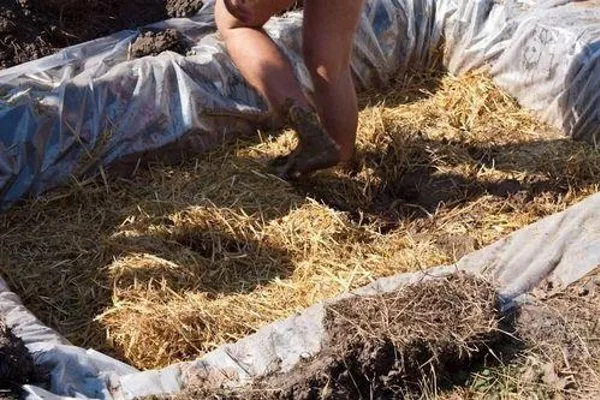
A gable roof will be more expensive, but it allows for the creation of an attic space for storing hay, equipment, or other needs. With this roofing option, the ceiling is insulated with a mixture of straw and clay.
Treat all wooden building materials with primers, and impregnate floorboards with drying oil. This will improve the wood's performance properties, extending its lifespan several times over.
Necessary communications
If the utilities are installed poorly, all your efforts to build a goat barn may be in vain. Animals can't live in uncomfortable conditions. Therefore, approach this stage of construction responsibly.
Ventilation
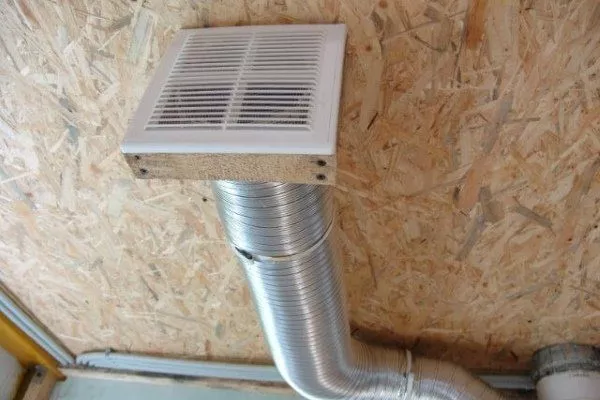
Ventilation will provide ventilation, oxygen, and humidity levels inside the room. The simplest form of supply and exhaust ventilation consists of:
- pipes with a diameter of 100 cm, installed in the center of the roof or under the ceiling in the far corner of the barn;
- pipes above the floor near the front door.
- ✓ The diameter of the ventilation pipes must be at least 100 mm for effective air exchange in a barn with an area of up to 20 sq.m.
- ✓ The distance between the supply and exhaust pipes must be at least 3 meters to create effective draft.
To prevent drafts, debris and rodents from entering the barn through the ventilation, the pipes are covered with protective shutters.
The optimal level of air humidity in a barn for goats is 70-75%.
For large goat sheds, it is recommended to install an automatic ventilation system.
Lighting
Lighting levels are very important for goats, especially young ones. In addition to natural light, install electric lamps inside the shed. They should be located at a height inaccessible to the animals and protected by a grill or shade.
Heating
Heating is only necessary in cold climates where maintaining an indoor temperature of 8-10°C without additional heat sources is impossible. Using a stove in the barn is prohibited. It is recommended to install steam heating with a boiler in a separate brick barn.
Manure removal
Cleaning and removing manure should be done twice daily. This will prevent livestock infections, maintain hygiene, and maintain proper humidity levels.
If there are pallets, they are removed and washed. A system is often used where a trench is dug under one wall to collect the manure and then clean it.
Arrangement of premises
A properly designed goat house will provide comfort for the animals and convenience for the owner when caring for their charges.
Stall
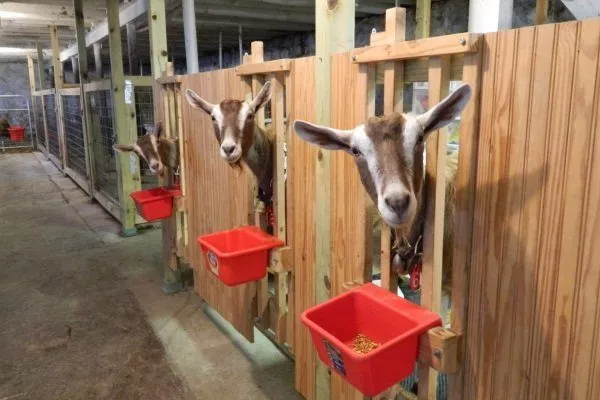
The common area allocated for stalls can be divided using wooden partitions no more than 1.5 m high. If individual stalls are planned for each goat, the optimal size is considered to be at least 2 x 1.5 m. In such pens, animals are kept untethered.
Overcrowding when keeping a goat affects its general condition and reduces milk production.
Make the front wall a door with secure hinges and latches. Place a manger on the inside of the door to optimize space and facilitate feeding. This way, you won't have to go inside the table every time you feed the goats.
Floor mat
Use straw or sawdust as bedding. It will insulate the animals from the cold floor (if it's not covered with wood) and will also absorb moisture. Don't skimp on bedding. This will protect the goats from various infections and udder inflammation.
Nursery and feeding trough
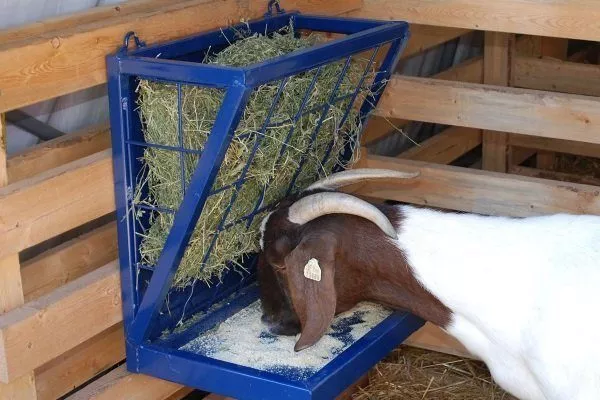
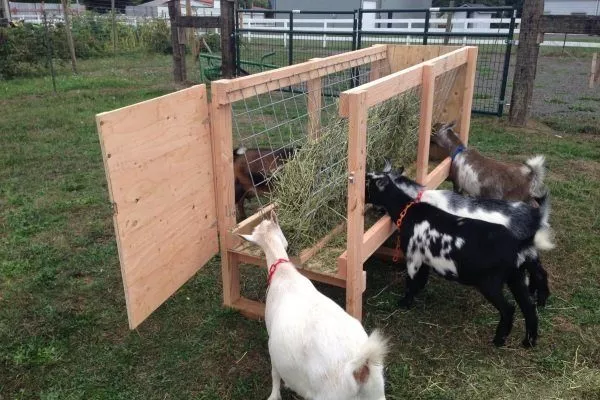
The manger is designed to hold hay and grass, while the feeders are filled with concentrated feed, vegetables and fruits, mixed porridge, etc.
Goats often spoil hay and other feed by sorting, scattering, and trampling it. To prevent such waste, provide convenient mangers and feeders in the barn, suspended 0.5 m from the floor, and place a tray underneath them so the feed falls into them rather than onto the floor. Later, the feed can be poured back into the feeder for the animals to eat. Small sides on the feeders are also helpful.
The manger needs space for the salt rock and mineral supplements. Consider this when planning the size to prevent goats from throwing out the hay in an attempt to get to the salt.
Stall
A milking stand makes milking a goat easier by keeping it still during the process. You can buy one ready-made or make one yourself out of wood. A milking stand is a box made of thin timber with a feeding trough at the head and a way to secure the animal's head. This part is often more confined, preventing the goat from moving its head during milking.
The structure must be sturdy and have a ramp so the animals can safely climb up to the elevated stall. The milking pen should be installed in the quietest and most peaceful area of the goat barn.
If automatic milking is planned, there must be space next to the machine for the machine and containers, as well as an electrical outlet and sufficient lighting.
Water supply
Make goat waterers out of regular buckets and hang them above the floor. This will prevent the animals from spilling or tipping over the water. If possible, install automatic waterers. They require a water supply to function.
Summer shed for goats
A summer structure for keeping goats can be a shed with a fence. The main thing is that the animals have somewhere to hide from the scorching sun and precipitation. It's also a good idea to provide a resting area for the goats, protected from drafts.
Another option is a simple wooden structure. In southern latitudes, a summerhouse can be used in the winter as well. Simply insulate it and seal any cracks.
The equipment of a summer barn is no different from that of a permanent goat house: watering bowls, feeders, mangers, and demarcation of territories for goats, young animals, and a buck are required.
Insulating a barn for winter
Insulating a goat house isn't necessary in temperate climates. If the goat house is made of wood, the materials may have dried out over the summer, causing gaps to appear at the joints. Therefore, the only winterization measure is to seal these gaps and other openings that allow cold air to enter.
Before the cold weather sets in in cold regions, it's important to prepare the shed. To do this:
- Seal all cracks and holes throughout the entire area of the goat's house.
- Insulate the ventilation pipes.
- Check the roof for integrity.
- Stock up on bedding.
- Check the heating system, if any, for proper operation.
Providing year-round access
Goats need exercise, so if the outside temperature is above 12°C, they should be let out into the pen. The area for the animals to roam is determined during the site selection and barn planning stage.
Requirements for the pen:
- Area of at least 5 sq.m. per animal in the absence of grazing.
- Fencing of the site. The fence height is at least 1.3 m.
- Provide shelter from the sun. This could be a canopy or trees. Goats love to snack on bark, so protect each tree trunk with fine-mesh wire mesh.
Budget construction options
To ensure your goat shed is durable, comfortable for your animals, and inexpensive to build, use these tips:
- If you're just starting out with goat farming, don't build large, permanent barns. Build a goat shed from scrap materials or allocate space in a shared barn with other animals. If your desire to raise goats deepens next season, feel free to consider building a separate barn for the goats.
- Keep in mind that brick buildings, while more durable than wooden ones, still require additional costs and have their drawbacks. For example, brick can become damp in the winter, so the walls should be lined with moisture-resistant plywood or plaster on the inside and covered with sheet metal on the outside.
- Wooden structures retain heat well indoors and remain cool in the summer. However, to extend their lifespan, they require treatment with special antifungal and moisture-repellent compounds. Wooden flooring is replaced as it rots or wears thin.
- When insulating a shed, keep in mind that while foam plastic is inexpensive, it's prone to rodent infestations, which can ruin your work. Therefore, it's more cost-effective to use mineral wool or fiberglass.
- Don't skimp on the foundation and roof. The higher the goat house is above ground level, the more protected it will be from dampness and moisture.
Building a goat barn is an important preparatory step in goat farming. A responsible approach to construction from the planning stage will help avoid problems and unexpected expenses during construction and subsequent operation. The animals will thank you for the comfortable living conditions, responding with high milk yields and healthy fertility.
I'm currently gathering information on building a goat house using various materials. I was thinking about converting an old barn into a goat house, but now I'm increasingly leaning toward building from scratch so I can design it exactly how I want. Even though my farm is small, I need to approach it wisely. Thank you for your article!