
A goat milking machine is quite simple. There are several types of this equipment, but its use must be done according to certain rules. When choosing a milking machine, several important criteria must be considered. You can also build such equipment yourself.
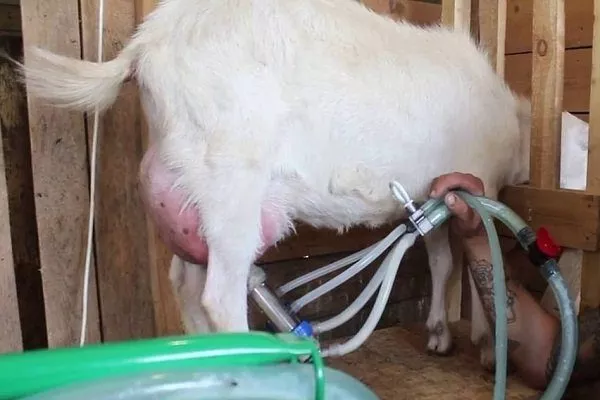
The operating principle of the device
Any milking machine simulates the natural process of suckling on the udder. This simulation is achieved by creating a vacuum.
The operating mechanism of the equipment is provided by the following components:
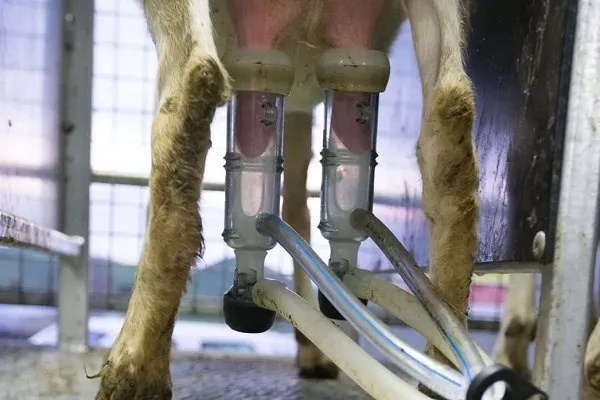
- Special cups are placed on the animal's teats. A goat milking system has two cups. The cups are equipped with clamps. Silicone inserts or suction cups can be used instead. A vacuum is provided in the cups by a special hose. The cups can be made of metal or durable plastic.
- The device must be equipped with a rubber liner, and in three-stroke milking, a ring with a milk tube. During operation, the milking machine alternates between sucking and squeezing. Three-stroke milking also includes a rest period.
- The milking machine is powered by a motor connected to a pump. Milk flows through a milk hose into a tank. This can be a standard milk can or a bucket with a closing lid. The interior is hygienic.
- Both the milk hose and the vacuum hose are located inside the milking cup, separated by a sealed chamber between the walls.
- A milking machine can be equipped with a pulsator or a piston pump. A pulsator creates pulsations in the chamber between the walls, which is what causes the teats to contract. A valve pump performs similar functions.
Varieties
Milking equipment can be two-stroke or three-strokeThe first device is simpler: the teat is compressed, then milk is extracted. With a three-stroke device, there is a break between each compression. This break is necessary to allow the animal's teats to return to their natural state. This ensures the restoration of blood flow and reduces the risk of various health problems.
Milking machines for goats also differ by engine type:
- Dry engine It is noisy and requires specific maintenance. Its advantage over an oil-lubricated engine is that regular oil top-ups are not required. Its operation is ensured by moving graphite or textolite plates inside the pump rotor. These plates need to be replaced periodically.
- Job oil engine This is achieved by constantly moving the oil within the structure. It produces much less noise. This option creates the risk of oil contaminating the milk, which negatively impacts the quality and taste of the product.
Milking machines for goats are available household and industrialDomestic equipment is smaller in size and designed for milking one animal, while industrial units can handle several heads at once.
It should be considered separately manual milking equipmentIt makes animal handling slightly easier, as it involves mechanical work. Pressure is applied manually or with a foot pedal. The advantage of using manual milking machines is that the process is sterile.
They also distinguish stationary and mobile (mobile) milking equipment.
Terms of Use
A goat milking machine is quite simple and easy to use. It should be done in accordance with a few rules:
- Set up a dedicated milking area. Goats are restless animals, so this measure will significantly facilitate the work and reduce the time spent on it. It's recommended to set up a special stall where the animal can be secured in a specific position. If possible, equip the milking area with a feeder—this will calm the animal.
- Before each use of the milking machine, disinfect it.
- Be sure to check the equipment before milking. Each milking cup must provide a vacuum.

- Before using a milking machine, it's essential to wash the animal's udder. This should be done with a disinfectant solution. You can buy a ready-made solution or make your own (most often, it's iodine-based).
- Before using the milking machine, it is recommended to milk a small amount of milk into a separate container using cheesecloth for filtering. This filter should be carefully inspected. If any curd-like lumps or thread-like particles are found, consult a veterinarian. The goat should be milked, the machine disinfected afterwards, and the milk should not be used.
- Milking cups should be kept warm before use, especially if they are made of metal. Using cold devices can cause stress in the animal.
- Milking cups should be installed when the pressure is low. It should be increased gradually during milking.
- The pressure should also be reduced gradually as milking progresses. The milk flow into the tank indicates the end of the process. It gradually begins to decrease as the udder empties.
- When milk stops flowing through the milk hose, it is necessary to disconnect the suspension unit completely.
- At the end of machine milking, it's important to ensure the equipment is shut off promptly. Failure to do so can result in the goat being milked dry, which can lead to injury.
- Upon completion of the process, it is essential to palpate the animal's udder for any remaining milk. If any is detected, hand milking should be performed, and then the milking machine should be checked for proper operation.
- After each use, the milking machine must be thoroughly washed.
- After milking, the animal's teats should be wiped or treated with a disinfectant. When returning the animal to the herd, be sure to provide it with fresh hay and water.
Read on to find out how many liters of milk a goat can produce. in the next article.
Which milking machine should I choose?
It's best to choose a three-stroke milking machine. It's more expensive, but its operating principle closely mimics natural sucking.
When choosing between dry-running and oil-running equipment, it's important to keep in mind that the latter requires a constant supply of oil. This engine produces significantly less noise, which is especially important for skittish and nervous goats. Oil-running equipment may not start in extremely cold weather.
If you're installing a milking stall, you can use stationary equipment. If you need to organize the process on a pasture, you should get a mobile device.
When choosing domestic or industrial equipment, consider the number of animals. An industrial unit is appropriate when more than a dozen animals require maintenance.
When purchasing a milking machine of any type or brand, it's important to check its functionality and the presence of all necessary components. All components should be securely fastened, and the equipment must be accompanied by an instruction manual. The manufacturer should provide a warranty for its products.
Review of popular models
There are various milking machines on the market, manufactured in Russia and neighboring countries. The following models are popular:
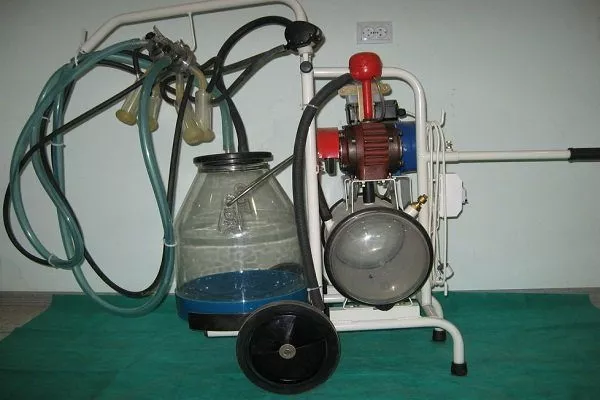
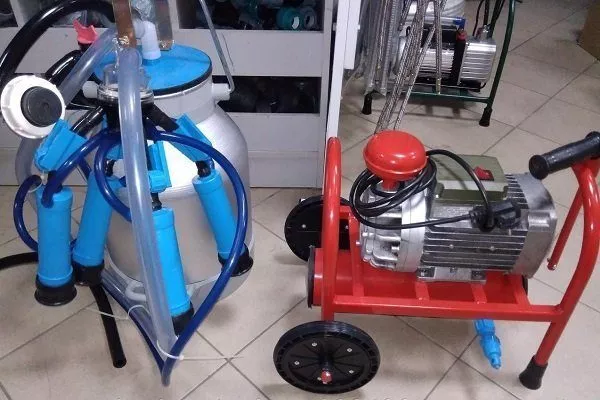
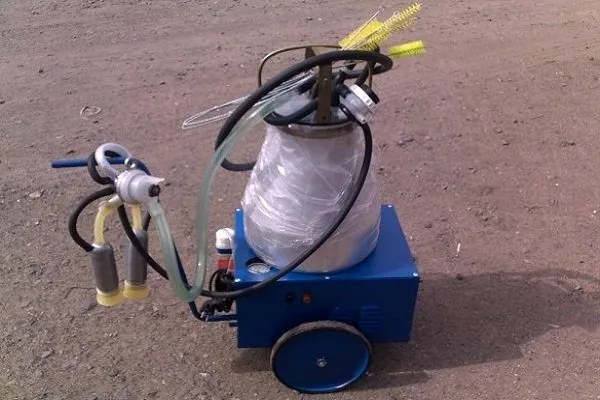
- MaigaThis two-stroke milking machine is stationary. A pump is not included; one can be purchased separately or connected to existing equipment. When changing milking cups, the machine can be used for cows. The milking can holds 18 liters. The machine pulses 60 times per minute. This model costs approximately 7,300 rubles and weighs 7.5 kg.
- DoyushkaThis mobile milking machine can handle up to 10 animals per hour. Several configurations are available. The milking churn capacity is 22.6 liters, and the machine pulsates 64 times per minute. This model costs approximately 22,000 rubles and weighs 45 kg.
- Hades-2This milking unit is mobile and can be made of aluminum or stainless steel. It serves up to 10 heads of milk per hour. The milking can holds 19 liters. The unit performs 61 pulsations per minute. The average cost of the equipment is 25,500 rubles. It weighs 60 kg.
- BurenkaThe device is mobile and can handle up to 15 animals per hour. The canister holds 22.6 liters. This equipment costs approximately 19,000 rubles and weighs 45 kg.
- ADE-02This two-stroke equipment is portable. The milking bucket holds 20 liters. It can milk three goats continuously, with a minimum interval of five animals. The machine costs 23,500 rubles and weighs 34 kg.
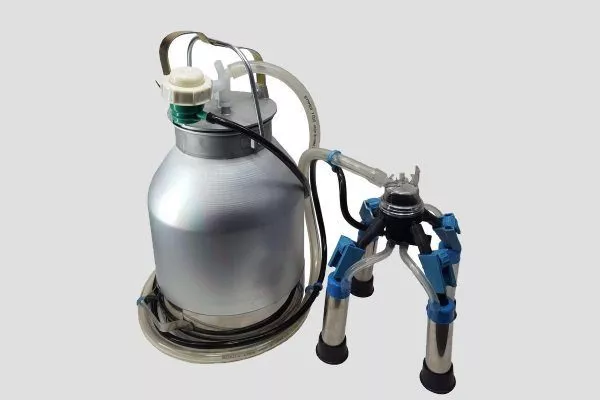
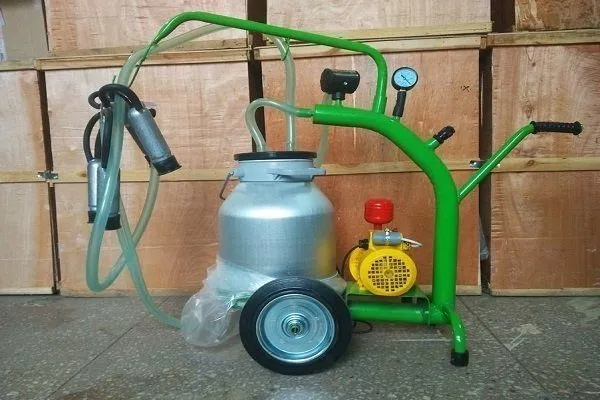
All models listed come with a 12-month warranty. The equipment is certified.
DIY goat milking machine
You can make your own milking equipment. To do this, you'll need to stock up on certain materials:
- Pump. To make your own milking machine, you can use either a vacuum or an oil pump.
- Engine. It can be manual, mechanical, or electric. The choice is usually based on one's financial capabilities.
- Pulsator. The optimal frequency is 60 pulsations per minute.
- Hoses. It's best to choose transparent polypropylene hoses. They withstand high temperatures well, so hot water can be used for cleaning. Another advantage is that the milk is clearly visible in a transparent hose, making it easier to monitor the milking process and determine when it's complete.
- Milking cups. The best option is clear plastic. It's a fairly durable material, and its transparency allows for clear visualization of the process. The size of the cups is also important—they should fit snugly around the animal's nipples, but not press too hard.
- Silicone tips. This device ensures better contact between the milking cups and the animal’s udder.
- Milk container. Certain hygienic requirements apply to it. Typically, an enameled container or stainless steel utensils are used.
- ✓ The inner surface should be smooth, without cracks or scratches, to prevent the accumulation of bacteria.
- ✓ The container material must be resistant to detergents and disinfectants.
Building your own milking machine requires minimal technical knowledge. When selecting components and assembling them, consider existing equipment models—all parameters are carefully selected.
You can also make your own manual milking machine. You'll need:
- medical syringes - you need 2 pieces, the volume should be based on the size of the animal's nipples (on average 60 ml);
- Hoses – it is better to use silicone devices;
- tee for pipes;
- hose clamps;
- nuts;
- plastic nipple;
- jar with metal screw cap;
- hand vacuum pump.
Assembling such a milking machine is quite simple:
- Remove the plungers from the syringes.
- Instead of needles, attach short silicone tubes.
- Using a tee, connect the short silicone tubes to the longer hose.
- Fasten the nuts to the metal roof.
- Attach silicone hoses to the lid: one goes to the branch to the syringes, the other is connected to the pump.
This design is extremely easy to assemble and operate. It disassembles easily, allowing for quick cleaning of all necessary parts. If any component breaks, it's very easy to replace. The most expensive component is the hand pump.
For information on how to make a goat milking machine yourself, including measurements and tips, watch the following video:
A goat milking machine is a useful piece of equipment on the farm. It significantly simplifies a farmer's work. You can purchase a ready-made model or build your own. In any case, a milking machine requires a specific design and operating principle.