
Before litter training your ferret, be sure to be patient, as the process takes time and effort. Keep in mind that each ferret has its own abilities and personality, but the most important thing is to use a system of positive reinforcement to help your rodent learn habits.
When should you potty train a ferret?
Toilet training for ferrets begins the moment they arrive in your home. If you don't do this right away, the process becomes significantly more difficult as your pet learns that it's okay to defecate anywhere.
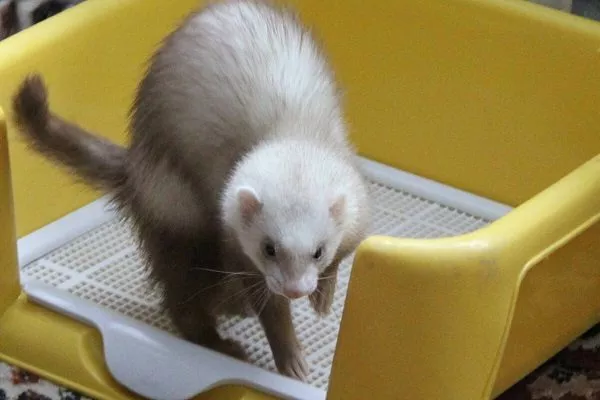
Ferrets behave much more like cats than dogs, so raising your voice, using physical punishment, and other dog training methods is prohibited. Also, remember that ferrets are very shy, so training should be done quietly and calmly, and, crucially, without the presence of strangers.
Peculiarities of training
There are some nuances that you need to pay special attention to when training your dog to use a litter box:
- It is unlikely that a ferret will go to the right place in a completely new litter box - it is best to lightly coat it with the feces of the same animal;
- You shouldn't train a rodent to use a cat's litter box, as the cat will react aggressively (while ferrets don't show any squeamishness);
- If the animal lives in a house (without a cage), then you will need several litter boxes (at least at first);
- never place the toilet in the area where the animal sleeps or feeds;
- females are the easiest to train to use a litter box;
- Do not take radical measures if the animal uses the litter box 80-90% of the time it goes to the toilet, and the remaining percentage is spent defecating in the wrong place;
- Make sure the toilet is clean, as ferrets are very clean creatures;
- Try to place the litter box in the room where the animal is most often, since ferrets have very rapid digestion and will not waste time moving to the toilet in a distant room.
Requirements for trays and filler
Inexperienced ferret breeders believe that the most important thing for ferrets is the choice of litter, but in reality, the litter box itself plays a significant role. Consider the following requirements for ferret litter:
- The size of the tray should correspond to the age and parameters of the rodent - the older it is, the larger the container is needed;
- the best option is trays with mesh so that the animal’s paws do not come into contact with the filler;
- The height of the toilet depends on the length of the ferret's legs, so the animal should be able to easily jump over the sides (if it has difficulty climbing over, it will relieve itself nearby or in other places);
- If the ferret both sits in a cage and runs around the apartment, then buy identical litter boxes.
- ✓ Make sure the litter tray is deep enough to prevent litter from spilling, but has low sides for your ferret's comfort.
- ✓ Make sure the tray material is non-toxic and easy to clean.
The filler also has special requirements. It must be:
- from natural ingredients;
- hypoallergenic, as ferrets often have allergic reactions;
- with excellent absorbent properties;
- quickly absorbs urine and eliminates unpleasant “odors”;
- high-quality, from trusted manufacturers and designed specifically for ferrets, not cats;
- free of insects and pests, which is possible when purchasing loose goods.
Types of trays
Ferrets aren't suitable for all types of litter boxes, as they are selective, and some models don't meet ferret-sized requirements. Therefore, carefully research all types of litter boxes, their pros and cons, and features.
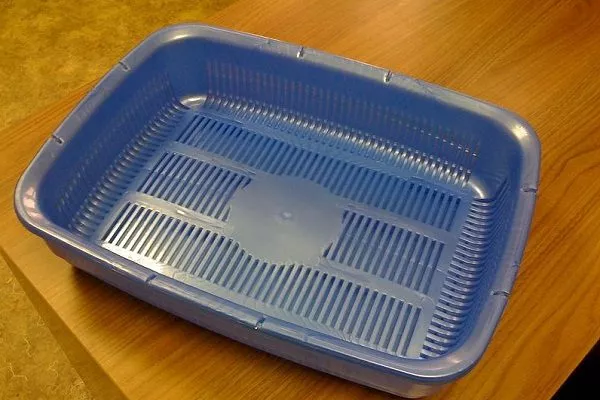
Rectangular with mesh
These designs are most often used for cats. They can have sides of varying heights. Experts recommend these models because the mesh prevents swollen litter from being dragged around the house or cage.
Advantages of rectangular mesh litter boxes for ferrets:
- the urine flows to the bottom, and the mesh always remains dry, which meets animal hygiene standards;
- one net can be used for both a puppy and an adult animal, the main thing is to choose the size of the net and trays with different side heights;
- easy to clean as the trays are made of plastic;
- relatively inexpensive cost - average from 200 to 400 rubles;
- saving filler - it does not need to be changed often, since it does not come into contact with the rodent’s paws;
- safety of use - ferrets will not be able to get the filler from inside, which they often eat.
There are also disadvantages:
- the need to frequently wash the mesh if the tray contains filler, but if there is nothing inside, then you will have to wash the entire tray 1-2 times a day;
- sometimes ferrets stubbornly refuse to stand on the mesh surface;
- The most budget models are of poor quality and therefore crack easily.
Trays with fillers and removable frames
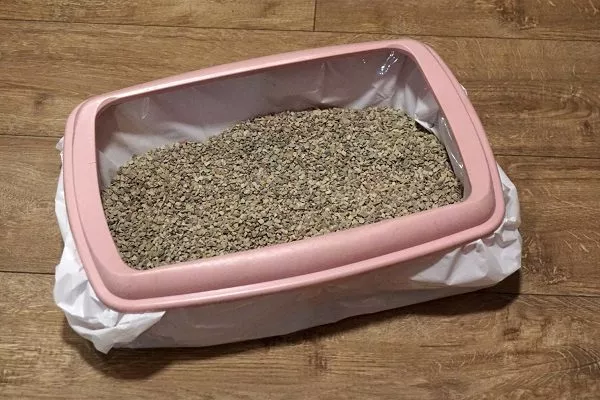
These are structures consisting of a tray and removable top sides, into which filler is poured. They are also made of plastic, which can be of either high or low quality.
Pros:
- when using filler, the top frame does not allow it to spill out, even if the ferret tries to turn the tray over;
- You can use a regular diaper as filler, which is removed after defecation;
- it is possible to purchase a model with a mesh;
- average cost – from 200 to 600 rubles.
There are also disadvantages:
- the filler remains on the rodent's paws;
- the need for frequent change of materials;
- cannot be used for puppies, as these models have very high sides.
Corner models
It is also considered an excellent option, since the design is a triangular-shaped body (and ferrets like to defecate in the corners) with sides of different heights (lower in the front, higher in the back), thanks to which it can be used for any age category of rodent.
Advantages of corner models:
- You can buy a version with or without a mesh, with removable sides;
- easily placed in the corner area of the cage and room;
- saves space;
- It is possible to add filler, put in diapers and paper.
Among the disadvantages the following are noted:
- high cost – from 500 rubles;
- If you don't use a net, you'll need to change the filler frequently, and the litter will spread all over the apartment on its paws.
Types of filler
Ferret bedding should only be of high quality and meet basic requirements, so there are not many types available for these rodents.
Clumping material
This type of litter forms clumps due to its high hygroscopicity. Clumping occurs after the granules become wet, swell, and stick together. It often absorbs odors well. The cost per kilogram ranges from 5 to 20 rubles, depending on the manufacturer.
Peculiarities:
- Material of manufacture. Can be:
- mineral (betonite) – clumps well, but does not absorb odors;
- soy - copes well with the task;
- Silica gel (synthetic polysilicic acid) is the most expensive option with high clumping properties and long-lasting odor absorption.
- Granule parameters: Minimum size: 1 mm, maximum: 10 mm.
- Flavorings. Some options contain additional components to enhance the pellets' scent, but unscented litter is also available.
- Hypoallergenic. It's important to choose a formula that doesn't cause allergies. These are usually made from natural ingredients.
General benefits:
- hygroscopicity easily copes with humid environments;
- economy – just remove the lumps and leave the rest of the filler for further use;
- ease and speed of cleaning;
- Animals like these granules.
Flaws:
- Not every clumping litter absorbs unpleasant odors;
- can be carried home (mineral type on paws, woody on fur, and light type flies out of the tray on its own).
There are rules for using fillers of this type:
- the minimum layer of granules is 5-6 cm (if it is less, the clumping properties will deteriorate);
- the tray must have high sides;
- Do not pour into a wet tray;
- For cleaning, a special shovel is used, which has holes to suit the size of the granules;
- a complete replacement is carried out once every 25-30 days, and granules need to be added frequently;
- It is optimal to use large granules, since those that are too small easily penetrate the ferret’s respiratory tract.
Dispose of clumping litter exclusively in the trash – even wood.
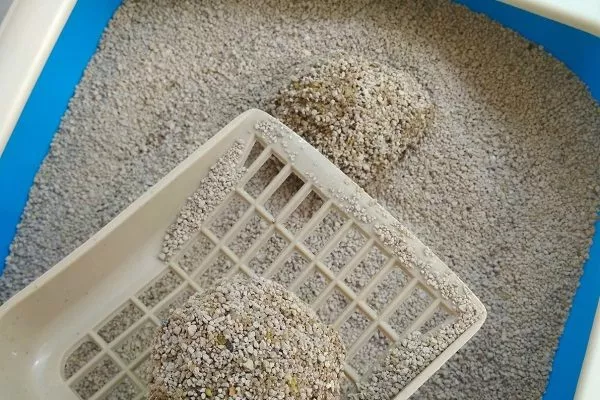
Wooden version
It's a natural material, but when choosing one specifically for ferrets, the wood used is important to consider. For example, pine needles can cause allergies in rodents because they contain a lot of essential oils.
There are two types: clumping (as described above) and absorbent. The latter starts at 140 rubles for a 5-liter container.
Brief description of absorbent wood filler:
- granules of different sizes, suitable for different ages;
- During production, wood chips and shavings are used, which are pressed into granules;
- There are options with and without flavorings.
Pros:
- rapid absorption of urine and odor neutralization;
- hypoallergenic materials (if you do not use pine needles);
- environmental friendliness;
- no synthetic additives;
- antiseptic properties;
- easy to dispose of – in the trash can, toilet.
Cons:
- swollen granules are easily carried around the apartment by animals (if you do not use a net);
- Frequent updating of material (every 2-4 days).
How to use – rules:
- granules should be poured 2-3 cm deep;
- with a mesh tray - 1 cm;
- After each bowel movement, hardened feces must be removed;
- the composition is replaced completely if an unpleasant “aroma” is formed;
- A mandatory requirement is to wash the tray with soap.
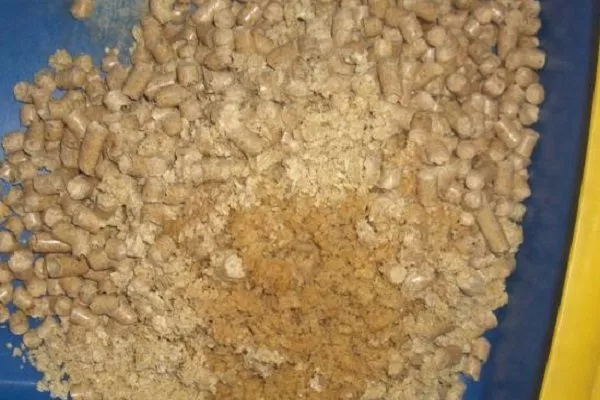
Plant-based raw materials
This category of fillers includes:
- hay;
- sawdust;
- crushed corn.
On the one hand, plant fillers have the following advantages:
- naturalness;
- low cost (depending on the manufacturer, seller, type of filler, etc.);
- pleasant aroma;
- hypoallergenic (if the ferret is not allergic to meadow grasses in hay);
- cost-effectiveness of consumption;
- absence of fragrances.
On the other hand, there are also many disadvantages, some of which are the main ones for the failure of plant filler:
- do not absorb urine;
- spread throughout the apartment;
- spread of bacteria and infections;
- Ferrets can eat, which can cause harm if the ferret defecates in the litter;
- Sometimes you come across rotten materials.
The usage comes down to 2 points:
- it needs to be replaced every day and more often;
- It should be poured in a thin layer.
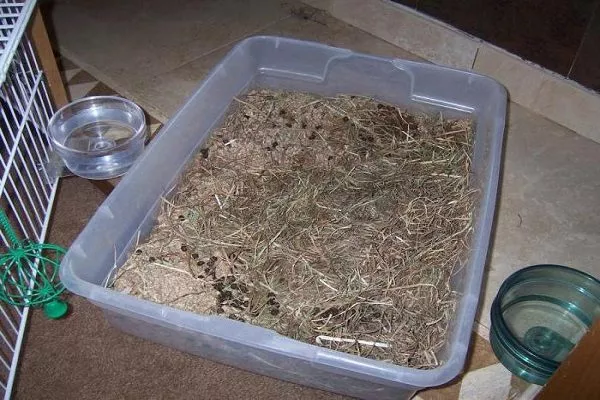
Where to put the tray?
The ideal location for a toilet is a corner of the room or cage near the ferret's sleeping area, as this is when ferrets go to the litter box. Ferrets don't always agree to the owner's chosen spot, so they'll start eliminating in a different corner. In this case, move the litter box there.
Training methods
The method for potty training a ferret depends on the animal's age. Be sure to take all these factors into account.
Young ferret
They are the easiest to train, especially when they're just starting to emerge from their nest. Being blind, they have an excellent sense of smell, so they'll navigate to the toilet (by scent) and to the food bowl themselves.
The mother's training plays a major role, as the babies will mimic their mother's actions as they grow. If the babies are without their mother, proceed as follows:
- fill each corner of the cage with different objects - 1 feeder, 2 drinker, 3 toilet, 4 toy;
- Bring the ferret to the litter box immediately after sleep, within 5-10 minutes at most, but preferably right away.
Adult
If an adult ferret isn't accustomed to using a litter box, training it to do so will be challenging. If you've just brought a ferret into a new home, simply place the litter box containing its former waste in a designated area and show it to the ferret.
In any case, there are special rules that must be followed:
- sit next to your pet until it goes to the toilet;
- Be sure to praise him in his usual way;
- Never shout or hit him - he will get scared or angry, even to the point of biting.
Step-by-step training stages
The time it takes to potty train a ferret depends on various factors. Some animals may learn the habit in 1-3 sessions, while others may take up to a month. If you're unsure of the proper sequence, follow these instructions:
- Place the litter box inside the cage as space is limited.
- Cover it with your pet's feces.
- Show the rodent the corner for defecation.
- If he doesn't go there, then wait until he wakes up from sleep or gently wake him up.
- Pick him up and place him in the litter box.
- Stroke him with your hand to make him feel calm.
- In 15 minutes at most he will relieve himself.
- Praise the rodent and give it a treat.
For information on how to properly potty train ferrets, watch the video:
How to teach a dog to go to the toilet in a cage?
The main rule for potty training a ferret in a cage is to clearly define the corner. To ensure the animal defecates in the litter box, experts recommend placing food and water bowls in the other corners. This is because ferrets will never defecate in the same places where they eat or drink.
Toilet training in an apartment
The main rule is to place a litter box in each room in the corners to prevent the animal from running around looking for a toilet. The principle for training a very unruly animal is similar to that used in a cage—simply place food in other corners.
Toilet nuances
There are subtleties to raising ferrets that experienced breeders know about, but beginners cannot give a clear answer to a specific question.
How to stop a dog from pooping in the wrong place?
Such minor annoyances occur not only during the initial litter training process but also in other situations. For example, a ferret may act out of spite if its owner has offended it. What should you do in such a situation?
- Be sure to treat the areas where he defecated with antiseptics or chlorine-containing agents;
- buy a special product in the store to attract them to the toilet or, on the contrary, to repel them;
- put food there.
How to stop marking?
Ferrets' mating season begins in February or March, so they begin marking their territory, which produces a persistent, unpleasant odor. This is typical not only for males but also for females, who leave traces of urine and feces.
Why does my ferret ignore the litter box?
Ferrets may begin to ignore their litter boxes even with good training and consistent elimination. There are several reasons for this:
- I don't like the smell of the filler;
- the container is rarely washed or poorly, so its walls have absorbed a lot of substances from the urine;
- other pets (cats or the same ferrets) use the litter box.
Fixing the situation is simple: simply replace the litter with the same one you used before, thoroughly clean the litter box, or buy a new one. If this doesn't produce positive results, you'll have to retrain your rodent.
What to do if the ferret walked past?
Ferrets' wandering past the litter box can be spontaneous, for example, when the animal is startled by a loud noise or simply fails to jump over the edge. However, there are situations when the rodent begins to consistently miss the litter box. In this case, it's important to monitor it closely and determine the cause of this sudden change.
But regardless of the reason, do the following:
- Note when your ferret becomes restless. Owners usually recognize the signs that their pet needs to go to the bathroom.
- Pick him up and place him in the litter box. If he starts to jump out, gently hold him.
- Continue doing this until he is litter trained again.
Reasons why he might walk past:
- the tray has become small – buy a new one;
- the animal has health problems, so it is difficult for it to jump over the side - replace it with a container with low sides;
- If there is a lot of feces or urine accumulated inside, clean the trays.
Experienced breeders advise that if you see your rodent begin to squat outside the litter box, gently tap your finger on the floor or wall – this will let it know that it is doing something wrong.
The ferret is scattering litter – what should I do?
This only happens when the animal doesn't like the litter (because it gets caught in its paws) or when the sides are too low. Corrective action should be taken based on the underlying cause, such as replacing the litter or purchasing a new litter box.
To ensure your ferret quickly learns to go potty in the designated area, follow the guidelines for choosing a litter box and litter, be loving and affectionate, and never resort to the carrot and stick method. But most importantly, be patient and believe in the success of your endeavor.