
Ferrets are considered very active and playful rodents, so ferret tubes are a key part of their habitat, allowing them not only to develop their muscles but also to have fun. They can be purchased at a pet store, but to save money, you can also make your own.
Why do ferrets need tubes and mazes?
Ferrets love to hide in burrows, so they're always looking for secluded spots, especially when running around the apartment. In this case, owners risk chewing up furniture—the ferrets will try to dig a hole and hide food scraps there. To prevent this, it's common to provide the animals with devices such as a maze or tunnel.
Without the tubes, the animal will become bored and become apathetic, or, conversely, aggressively pace the cage. Ultimately, it will slowly decline and become ill, or will never be handled again.
It's interesting to watch ferrets – how quickly and cleverly they move through a maze, but to do this you need to make tubes out of transparent material.
Selection criteria
Regardless of whether you buy a tunnel or build one yourself, there are specific parameters that are important to consider:
- the exception is any sharp objects or edges, so they need to be carefully sanded down so that not a single burr remains;
- Select the diameter of the pipe based on the size of the ferret - it needs to not only move in a straight direction, but also be able to turn in the other direction (especially important for long labyrinths);
- If possible, make the structure as long as possible (two- or three-story options are also possible) – this will be more interesting for the animal;
- Keep in mind that during transitions the ferret will breathe, and when running it needs a lot of fresh oxygen, so don’t be lazy, but make small holes along the pipe;
- choose materials that do not contain toxic additives, do not paint or varnish under any circumstances;
- the walls of the labyrinth must be strong - so that the animal cannot chew through them (for example, latex, rubber and similar materials are absolutely not suitable);
- For puppies and pregnant females, it is better to use soft tunnels, for example, made of fabric.
- ✓ Make sure the diameter of the pipe allows the ferret to turn around freely inside, the minimum diameter should be at least 10 cm for an adult.
- ✓ Check that materials do not contain phthalates and other plasticizers that may be toxic to ferrets.
Types of toys
Pet stores offer a wide selection of ferret toys, each with a variety of transitions. But if you decide to make your own, pay attention to the different varieties.
Pipes
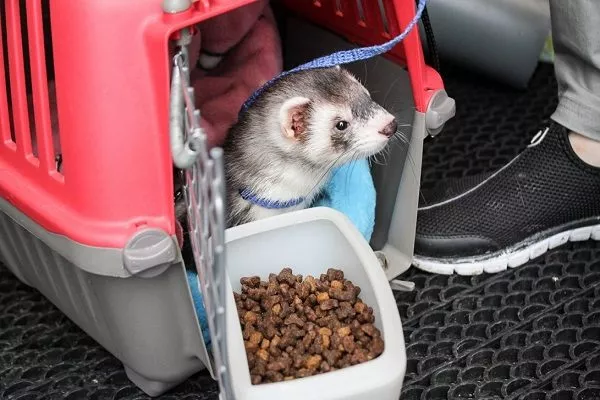
Pipe structures are straight passages. They are made of rigid materials, so the animals can only move in a straight line. These are the simplest devices, and therefore the least expensive.
At home, you can use ordinary plumbing pipes of the required diameter.
Tunnels
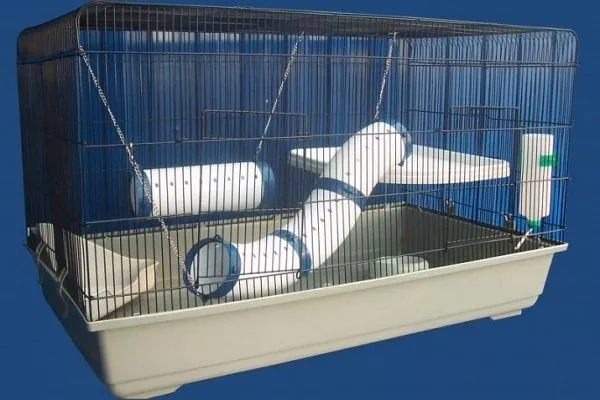
Flexible materials are used in production. These tunnels allow pets to turn left and right, which further intrigues ferrets. You can make your own from ventilation pipes.
Labyrinths
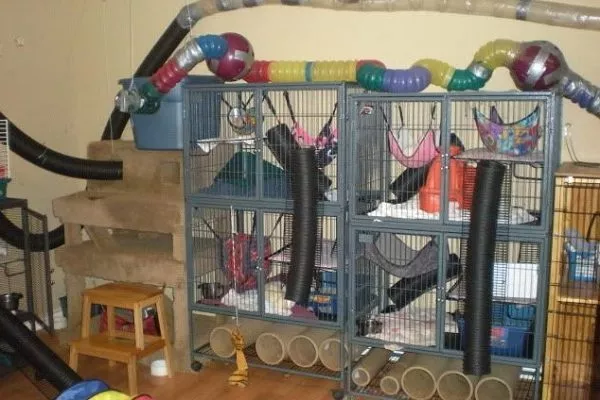
This is the most fascinating device, as it offers a variety of possible turns for the animal. Many novice breeders think it's very difficult to construct. In fact, all it takes is a little imagination and the use of readily available materials—pipes, plastic bottles, cardboard, etc.
Houses
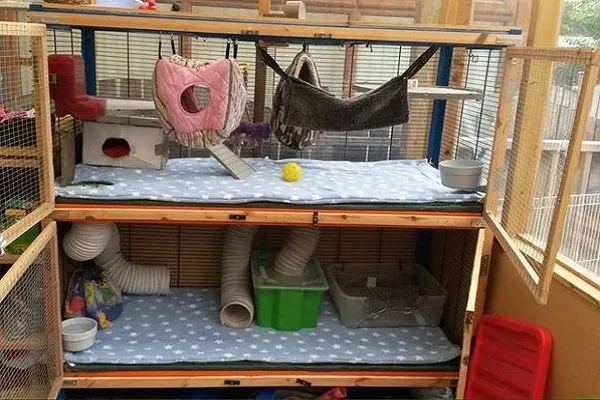
If you have the opportunity to purchase or build an entire house, this will be the most optimal solution for ferrets. Such structures feature multiple passages made from different materials.
The device looks quite aesthetically pleasing, takes up little space, and brings the animal a lot of joy. Store-bought versions most often come in the form of a box equipped with round openings.
Where to buy, how much do they cost?
Ready-made ferret accessories are sold at pet stores or secondhand markets. The price depends on the model, size, and complexity of the design. The average price is as follows:
- 2 pipes measuring 29 cm – 1700-2100 rub.;

- one tunnel for ferrets with a length from 19 to 75 cm (increases when stretched) - within 400-500 rubles.
- a house with passages, made from wooden materials in the shape of a box - about 750-950 rubles, more complex designs start from 7000 rubles;
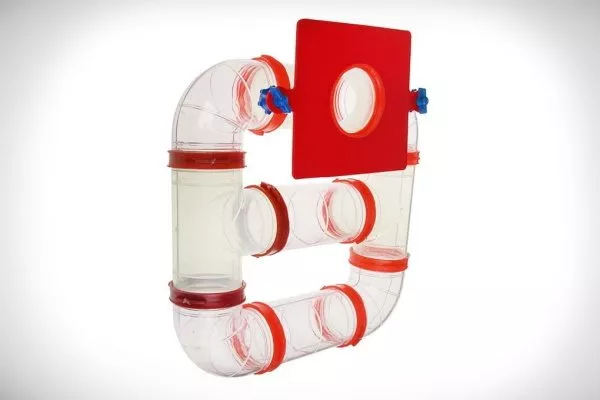
- transparent simple labyrinth – 1000-1500 rub.


How to make it yourself?
There are countless ways to build tunnels, labyrinths, and houses. At home, people typically use materials they have on hand or that are inexpensive. While each crafter can come up with their own design, there are also universal options for beginners.
Sew
The simplest and most affordable option is made from thick fabric, similar to a hammock but shaped like a tube. What you'll need:
- dense fabric – 2 pieces (length and width are selected individually);
- foam rubber;
- threads, needles, scissors.
How to cut and sew correctly:
- Lay the fabric out on the table and measure out the required width and length.
- Cut 2 equal pieces.
- Place 1 piece of fabric face down, with the foam rubber on top (it should be 1-2 cm smaller in width and length), and the other piece of fabric face up, that is, on the foam rubber.
- Fold the material over on all sides and sew together.
- Roll the resulting rectangle into a tube and sew again.
- Sew ropes to the 4 edges to hang the structure later.
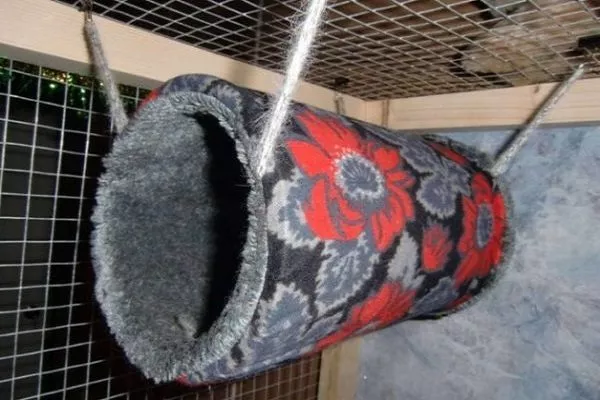
Experts recommend inserting cardboard inside along with the foam to prevent the tunnel from sagging. The end result will look like this:
From bottles
This is a great option for those who don't know how to sew and who can't afford plastic pipes, for example. It's quick and easy to make. To make it, gather the following materials:
- plastic bottles with a capacity of at least 2 liters, but if the ferrets are adult and large, then take plastic ones for 5 or 6 liters;
- stationery knife or scissors;
- sandpaper for finishing the edges or electrical tape.
Manufacturing procedure:
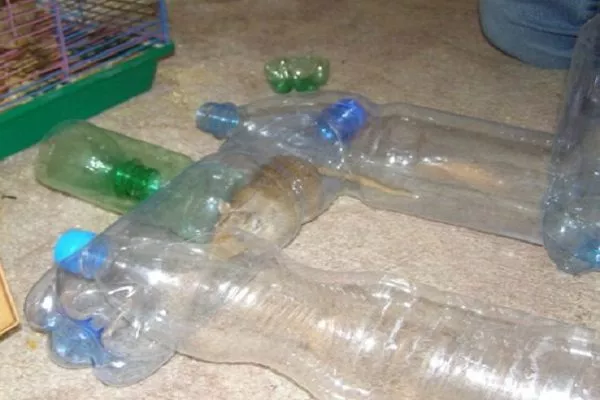
- Remove the labels from the bottles and wash them thoroughly. Trim off the bottom and the neck of the container. Some designs don't require trimming the caps, as the bottle is inserted into the opening of another bottle with the neck slightly protruding.
- Depending on the design, make round holes in the sides of some bottles. Their diameter should match the diameter of the bottle being inserted. Immediately clean up any cut edges or apply duct tape.
- Make holes for air flow and connect all the parts together.
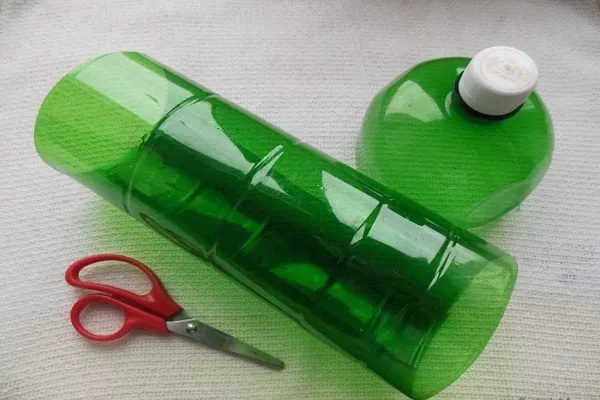
If necessary, reinforce the structure with tape, resulting in the following:
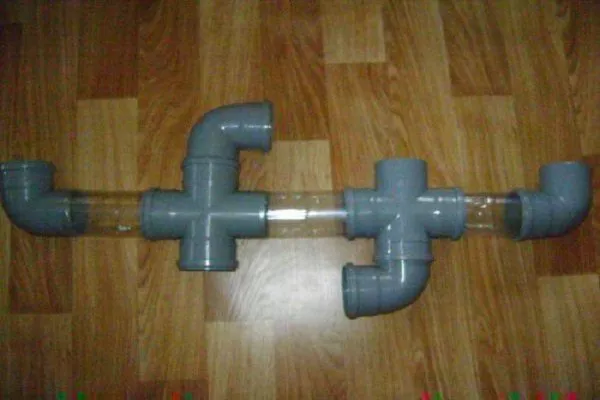
If you have plumbing adapters, use them as well. This will make the tunnel look more aesthetically pleasing:
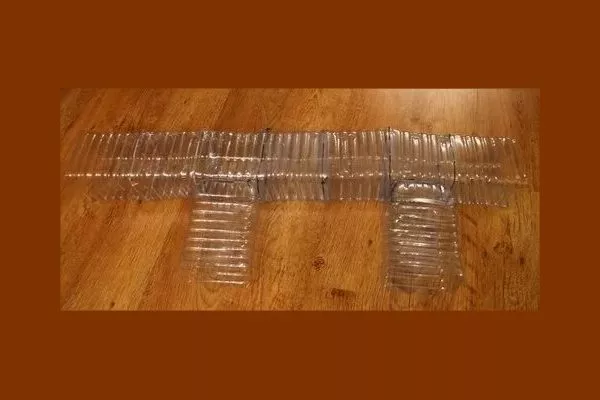
From 5-liter bottles you will get the following:
Ventilation pipes
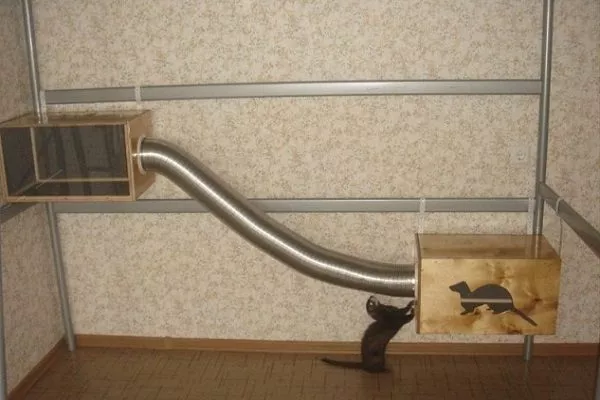
Ventilation pipe structures are easily bent, so they can be installed at any angle. A mandatory requirement is that the pipe must be corrugated. One drawback is that it's impossible to observe the animals.
Making a tunnel for your ferret is easy: just cut the required length of ventilation pipe and attach it to any part of the cage, house, or room.
It looks like this:
From plumbing fittings
This design is not cheap, as it requires several plumbing fittings. However, the big advantage is that the product will be securely fastened and will last for years.
To make it, simply connect all the elements together in any order and install it in your apartment or cage.
The options for fitting labyrinths are shown in the photo:
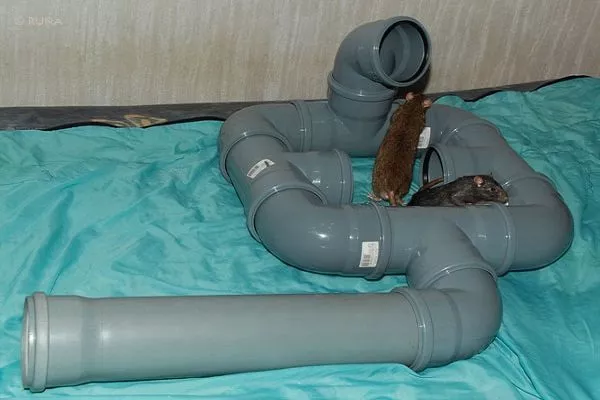
Plumbing pipes
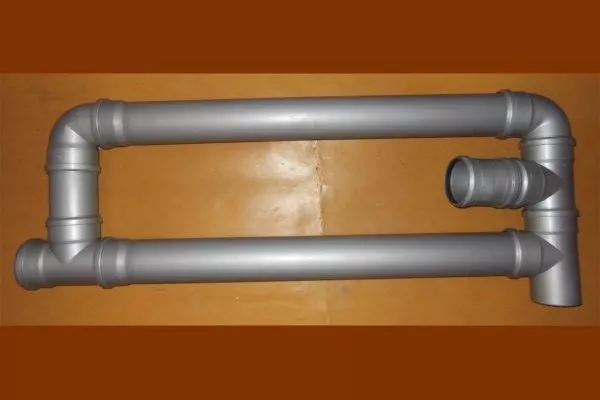
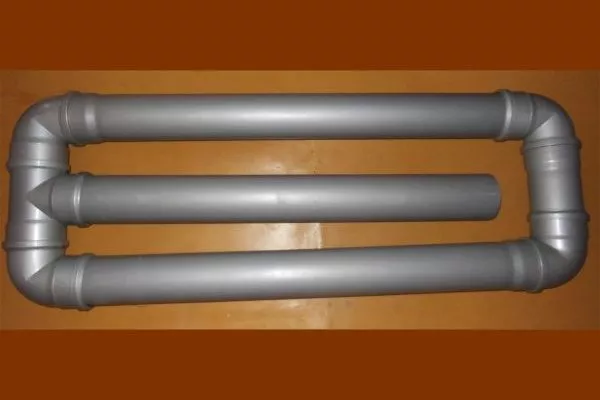
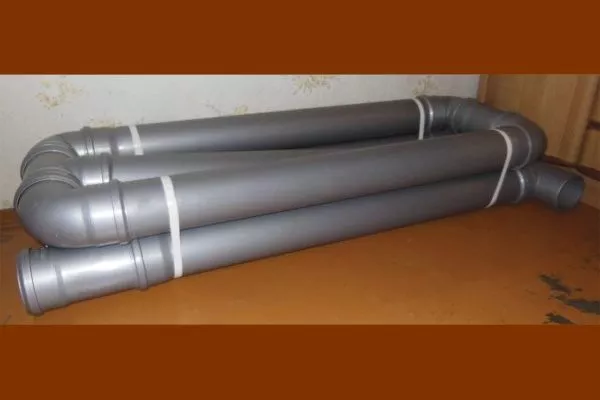
Sewer pipes can be used as building material. They are often left over after plumbing replacements. To do this, you'll need the following:
- pipes – arbitrary length, diameter not less than 104 mm;
- Connecting elements are adapters/tees/bends.
The step-by-step procedure for constructing a two-story structure:
- Assemble the first floor. Be sure to provide a transition to the second level and two entrances.
- Now build the second floor. It should have only one exit – connecting both levels.
- Connect the two floors together. To prevent the structure from wobbling, be sure to secure it with duct tape or adhesive tape.
- Wash all plastic parts thoroughly in warm, soapy water to remove manufacturing oils and dust.
- Ventilate the room after using glue or paint, even if they are labeled as safe.
- Check all edges and joints for sharp parts that could injure your ferret.
There are some features that require special attention:
- To cut the pipe, use a regular hacksaw;
- carefully sand all cuts with sandpaper - first coarse-grained, then fine-grained;
- Be sure to wash all pipes and other connecting parts with a soap solution, as they are treated with lubricants;
- to allow oxygen to enter, make holes with a hot nail;
- Since the structure is as closed as possible, shake out any debris once a week – ferrets like to bring their food there.
Made of cardboard or plywood
This is a simple method, but it's best to use plywood, as it's more durable than cardboard. If you don't have plywood, use the highest density cardboard possible.
Option No. 1 involves the use of the following materials and tools:
- as a base - a large box (for example, from household appliances);
- cardboard sheets of the same height;
- compass, ruler;
- scissors, stationery knife;
- ruler for measurements;
- Scotch tape/glue.
The manufacturing process includes the following basic steps:
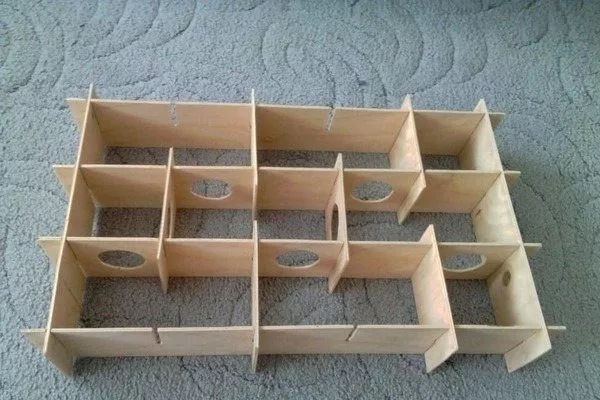
- Prepare the box. Cut off its top to the desired height.
- Draw a diagram of the future labyrinth along the bottom where the walls will be located.
- Make the walls. To do this, take some thick cardboard and cut it into strips of the desired height and length.
- Make cuts at equal distances from the top of the strips that will run the length of the box. This is necessary to connect all the elements.
- In the cardboard that will be installed across the width of the frame, make the same cuts, but at the bottom. These will act as grooves.
- Based on the design you've come up with, make round holes in some of the walls. To do this, draw circles with a compass and cut them out. Keep in mind that the ferret should be able to easily slide through them.
- Connect all the parts. Secure with glue or tape if necessary.
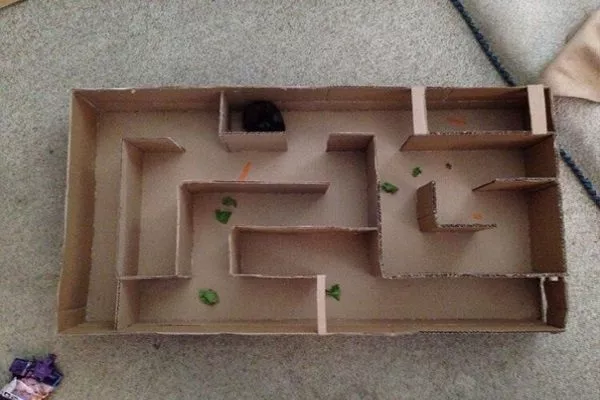
Alternatively, you can glue partitions with free passages to the bottom of the box (so as not to cut holes), as shown in the photo:
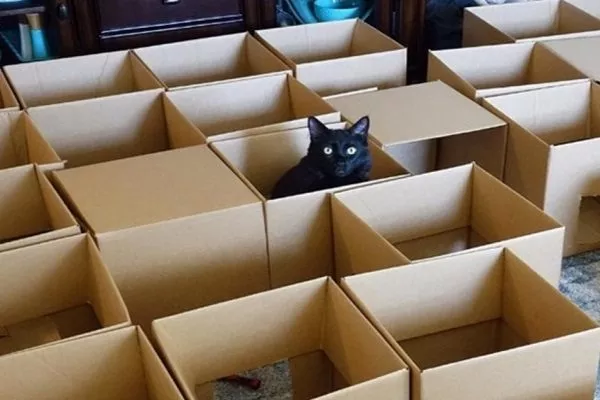
Option #2 isn't too difficult either. For it, prepare the following:
- boxes – about 10 or more pieces;
- harmless glue and tape;
- scissors and a stationery knife.
It's easy to make:
- Take the chosen number of boxes and trim them all to the same height. To prevent the cut tops from creasing, tape them on both sides. You can also use duct tape. Ideally, the boxes should be completely identical.
- Plan ahead for the exact locations of the access holes. Based on this, cut out the holes (a regular square will do).
- Now connect the boxes together so that the ferret can walk in each one, creating an entrance to the maze. To do this, apply glue to the walls and press them firmly together.
- Strengthen the structure by applying tape along the entire bottom and outer walls. Be sure to apply it to the connecting walls on top to ensure a strong adhesive bond.
A little about security
There are some unwavering rules to ensure your pets' safety. It's important not only to create a favorable environment for their enjoyment but also to ensure their health.
For example, pet stores sell products certified according to GOST, so be sure to request this documentation when purchasing a product. If you don't, you could end up buying a maze from an unscrupulous manufacturer who uses materials that don't meet safety standards.
If you are making the tunnel yourself, consider the following:
- Do not place any rubber mats on the bottom of the ferret's maze box (this is what beginners do, mistakenly believing that their paws will slip) - otherwise, the ferrets will start gnawing on them and choke on a piece or get poisoned;
- Use only safe materials and especially glue;
- If you use used plumbing fittings or pipes, be sure to remove any remaining dirt, especially any long-standing buildup on the walls (it's best to avoid using such materials);
- Do not use latex or rubber to make pipes – they are harmful;
- Don't put small objects in the tunnels (this is also what beginners do, thinking that the slight rumble during running will bring pleasure to their pets) - ferrets will easily swallow them and easily choke during periods of rapid movement.
Tubes, tunnels, mazes, and houses with passageways can be purchased at any specialty store, but if that's not possible, you can make your own. The key is to strictly follow the instructions, use safe materials, and be sure to consider the ferrets' size.