
Ferrets are active and energetic animals that, like other pets, need to be walked outside. To prevent ferrets from escaping or getting lost, their owners use special leashes for walking them. These can be purchased at the store or made at home.
Why do ferrets need a harness?
Ferrets don't behave well indoors without exercise. They need to expend energy, otherwise they become disruptive, damaging household appliances, and even aggressive toward people. Long walks have a beneficial effect on their behavior—exhausted by the fresh air, they become calm and harmless.
Ferrets differ from dogs and cats in that they absolutely cannot be left unattended—these curious creatures can dart into any crevice. If frightened, they can hide in some hiding place, where they'll be impossible to find. Unruly and active animals can even run right in front of a car.
Ferrets aren't suited for collars like dog collars. These sneaky creatures have such a unique body structure that a regular collar can easily strangle them. Furthermore, ferrets can slip out of the collar, pull it off, and run away. A safer accessory for walking ferrets is a harness.
How to make the right choice?
The best option is to bring your ferret to the store for a fitting. You'll be able to try on several styles and choose the best one. If you can't bring your ferret with you, take two measurements—neck and torso.
What to look for when choosing a ferret harness:
- Cat and dog harnesses are not suitable for animals, as they have a different body structure and are smaller in size.
- The material used is durable but not hard, so that a ferret can't chew through it. Manufacturers offer ferret harnesses made from:
- leather - it gets dirty less and is easy to clean;
- Nylon - they are easier to put on, elastic and have convenient fastenings.
Criteria for choosing material for a harness- ✓ The material must be chew-resistant, as ferrets have a habit of gnawing.
- ✓ Consider the season: choose breathable materials for summer and insulated ones for winter.
- Inspect the seams - they should be of high quality, strong, and reliable.
- The harness should be secure enough so it doesn't constrict the animal's body, but it shouldn't dangle either. Ideally, you can fit a finger between the harness and the animal's body.
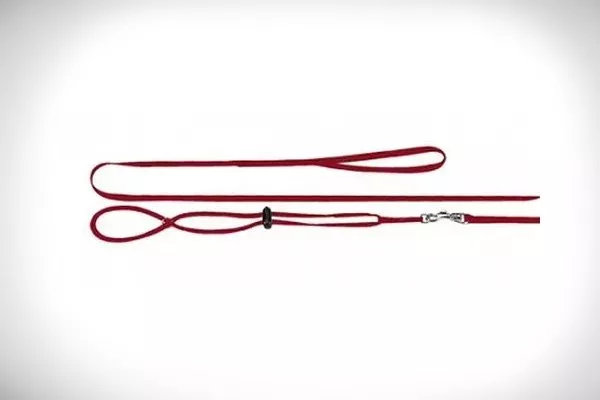
In addition to a harness, a good leash is essential for walks. The optimal length is 2-3 meters. Trendy retractable leashes aren't particularly suitable for ferrets. These nimble animals can jump into thickets, and a long leash can get tangled in the branches.
Types of leashes
Manufacturers offer ferret owners three types of harnesses: vest-style, H-shaped, and figure-eight. Each type has its own characteristics and recommendations for use.
Types of harnesses for ferrets:
- Eights. They're more suitable for smaller animals. Their design prevents ferrets from escaping on their own. These harnesses have clasps that securely fasten them to the animal's body.

- Vests. These harnesses are designed for larger ferrets. However, the size must be selected individually—these harnesses are not one-size-fits-all. These harnesses are more comfortable for adult ferrets than figure-eight harnesses. They can also provide warmth during the cold season—both summer and winter models are available in thick fabric.
- H-shaped harness. This is the most popular option today. This harness is attached on both sides—in front of the front paws and behind them.
How to make a leash with your own hands?
Harnesses are not cheap in stores, so if you have sewing skills, you can make one yourself. There are several sewing options and ideas, each with its own characteristics and advantages.
Materials and tools
To make a harness yourself, you'll need to stock up on some supplies, materials, and tools. And, of course, patience—sewing requires attention, diligence, patience, and precision.
To make a harness you will need:
- tape made of thick material, length - 3-3.5 m, width - 1-1.5 cm;
- carabiner - to attach a leash;
- half ring - to attach a carabiner;
- a pair of fasteners that are commonly used when sewing backpacks;
- a pair of regulators.
When choosing a harness material, keep in mind that the strap must be able to withstand the ferret's jerking and running. The fasteners should be secure, not flimsy Velcro that could come undone at any moment.
A ferret harness should be adjustable—ferrets always gain weight and become plump in winter and lose weight in summer.
Options for homemade harnesses
Before making a harness, grab a measuring tape and take your pet's measurements. To sew a harness for walking, you'll need two measurements: neck and chest.

The harness can be made from ribbons or as a vest. For the latter, you'll need a pattern similar to those used for sewing vests for cats and small dogs. Vest-style harnesses are only suitable for adult dogs.
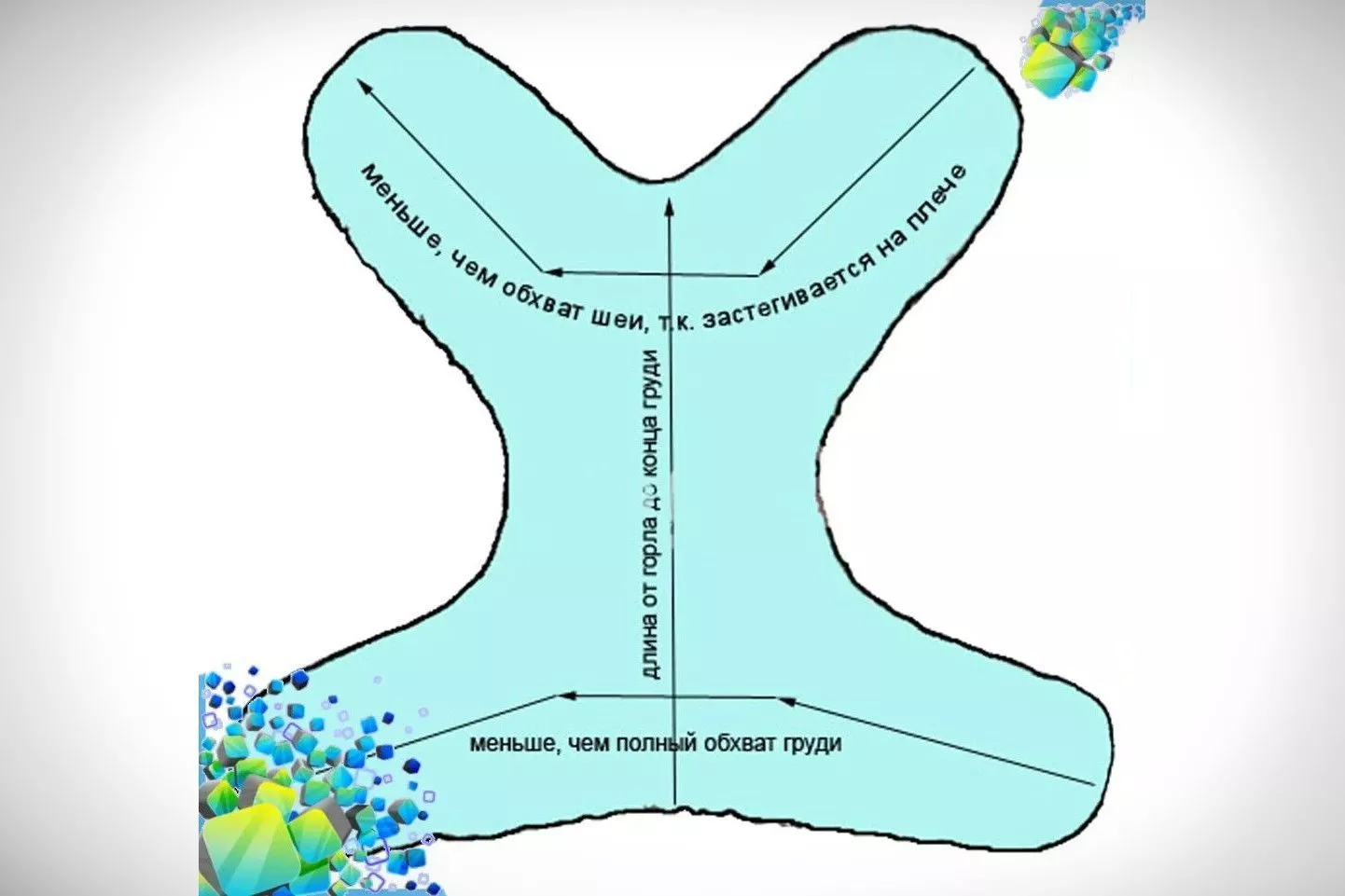
Elastic fabrics are used for vests to prevent the harness from constricting the animal's body. Summer and mid-season vests are made from thin, waterproof fabrics, while winter vests are made from warm fabrics.
Step-by-step instructions
You can make any of the existing harness options yourself. You can make an H-shaped or figure-eight harness out of ribbon, or a vest-style harness out of fabric.
How to make a harness from ribbon:
- Based on the measurements taken earlier, cut two pieces of ribbon of the appropriate length—one for the neck and one for the chest. The lengths of the pieces should match the circumference of the animal's neck and chest.
- Cut another piece of ribbon for the jumper. Its length is equal to the distance between the front legs and the neck.
- Attach adjusters and sew on fasteners to the edges of the sections that cover the chest and neck.
- Attach a ring to the jumper for a carabiner.
- Sew the pieces together with the jumper.
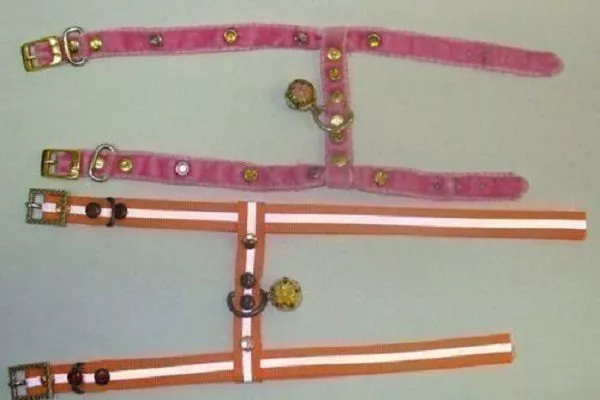
Making a leash is even easier. Cut a piece of ribbon 1.5-2 meters long. Attach a carabiner to one end of the leash, and make a loop on the other end—you'll thread your hand through this loop.
Video on how to sew a ribbon harness:
With a little more time and effort, you can sew a more versatile version of the harness—a vest. If you succeed, you can create models for different seasons—lightweight and warm.
How to sew a harness vest:
- Buy suitable fabric or use scraps found around the house—you won't need a lot of fabric for a vest.
- Using the chest and neck measurements (the same ones you used to sew the harness from durable ribbon), make a pattern on paper. It's extremely simple and resembles a rectangle with holes punched in it for the neck and paws.
- Cut out the pattern and pin it to the fabric.
- Cut out the piece, leaving seam allowances (approximately 1-1.5 cm). Stitch the edges.
- Sew fasteners to the vest—the edges will meet at the animal's belly. Unlike a belt harness, it's best to use Velcro—it will secure the animal optimally and prevent it from slipping out.
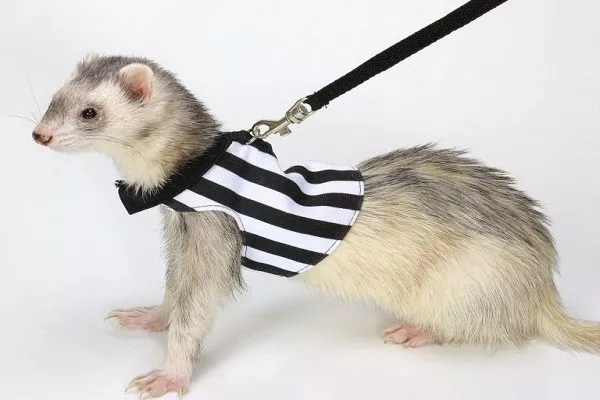
When sewing, take into account the animal's arched back. If the vest is too big, the animal will easily slip out of it and run away. Therefore, the garment should fit snugly, but not tightly, from the middle of the body to the neck. The harness can be looser in other areas.
Video on sewing a harness vest:
Harnesses and vests don't require any special investment or skill, yet they can become not only a stylish accessory but also a unique costume for your ferret. If desired, you can decorate the harness with bright ribbons, rhinestones, appliqués, and other embellishments.
How to dress and train a ferret to wear a harness?
Putting a harness on a ferret and dragging it outside without preparation will be very stressful. Two new experiences at once is too much, even for such an active animal. Ferrets should be accustomed to harnesses early on, ideally from puppyhood.
How to train your pet to wear a harness:
- Keep in mind that the ferret will resist when you start putting on an incomprehensible “unit” on it.
- Be persistent, don’t give in to the animal.
- Put the harness on, inserting the pet's head through the opening. Carefully fasten the clasps and check the tension by inserting a finger under the straps—it should fit easily.
- After putting on the harness, give the ferret some kind of treat - let him associate the action with pleasant sensations.
- Let your pet walk around the house in a harness - let him walk in it for 10-15 minutes.
- ✓ Start training in short sessions, gradually increasing the time.
- ✓ Use positive reinforcement in the form of treats after each successful putting on of the harness.
Repeat the training over and over again so that the ferret gets used to the accessory, does not resist when you put it on, and does not try to pull it off.
Once your ferret is comfortable with the harness and is comfortable with it, attach the leash and take it for a walk around the house. Once your ferret is comfortable with this kind of handling, you can safely take it outside.
Peculiarities of walking with a ferret
Outdoor walks aren't a requirement for owning a ferret. Rather, they provide additional entertainment for both the animal and its owner.
Before the walk
To ensure your walk brings only positive emotions and is not complicated by any unpleasantries, prepare for the walk in advance.
How to properly prepare for a walk:
- Your pet should be trained to wear a harness and leash. Don't take it outside without some training.
- Don't rush to take your pet outside; first, get it vaccinated against rabies and canine distemper. Wait the quarantine period prescribed by your veterinarian before going for a walk.
Don't take your pet outside if you've washed it the day before. Its undercoat won't have time to dry, and it could catch a cold.
Gradually getting to know the street
Once outside, the animals happily explore the world around them, gaining a wealth of impressions and even meeting their fellow animals if the local chorist enjoys walking in company.
To prevent your pet from getting stressed, scared, or, on the contrary, overly excited, introduce it to the outdoors gradually.
How to train a ferret to go for walks:
- Transport your ferret to the walk in a container. This will prevent the animal from escaping along the way.
- Increase your walk time gradually, especially in winter. Start with 10 minutes.
- Choose the cleanest and safest areas for walks. They should be located away from roads and dog walks. Remote, uncrowded squares and parks are the best options.
Safety
Be extremely vigilant while walking—these nimble and energetic animals will keep you on your toes. Monitor their behavior and follow the rules to prevent dangerous situations and unwanted consequences.
Safety precautions:
- Take measures against parasites. Ferrets outdoors are at risk of contracting fleas and earworms. Use a special spray on the fur. It's important to prevent the animal from licking itself after treatment.
- Take only healthy ferrets with strong immune systems out for walks.
- Do not take animals under 9-10 months of age for walks, especially if it is cold outside.
- If you do decide to let your ferret off the leash—provided there's no danger nearby—attach a bell to the harness beforehand. Its ringing will help you locate the animal. The bell's sound can be heard even through snow.
Walking rules
When walking your ferret, follow these rules to avoid any problems. It's important that walks bring only positive emotions to both the animal and its owner. Most importantly, they shouldn't negatively impact the animal's health.
Rules for walking:
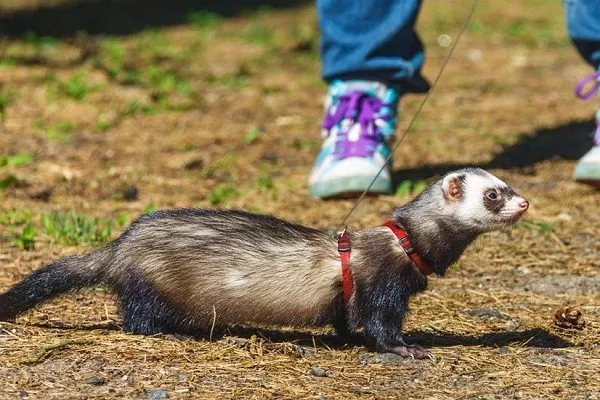
- Walk your ferrets only with a harness and leash; never let them go. Carelessness will likely result in the animal escaping—the ferret will inevitably see something of interest and give chase.
- Check the harness's tightness—it shouldn't be too tight. If it's too tight, it will be painful for your pet to walk.
- When you return home, be sure to wipe your ferret's paws and inspect it for parasites.
- You can walk your ferret year-round. The exception is extreme heat and cold. Ferrets don't tolerate high temperatures well and can even suffer heatstroke.
- If you are going to walk ferret in winter, be sure to take him for walks in the fall, accustoming him to the cold weather in advance.
What mistakes can be made?
Before getting a ferret, you need to think carefully. Their temperament is radically different from that of a cat—they're active, nosy, and even mischievous. Because of this, many ferret owners make a ton of mistakes when keeping them, including when walking them.
Typical mistakes:
- You walk for a long time the first time. Don't go on long, distant walks right away. Start with trips around the block—let your pet get used to the outdoors gradually.
- Forced to go for a walk. Don't immediately tug on the leash or force the ferret to move. If the animal hasn't been outside as a puppy, it will be extremely anxious when outside. Give it time to adjust. Be calm and patient, don't force the animal to go for walks, and don't get irritated or nervous.
- Carelessness on the street. Don't let your ferret wander too far from you when walking on sidewalks and bike paths. It's best to avoid them altogether—go to parks and squares instead. Bicycles and electric scooters that suddenly appear on sidewalks can hit your ferret without even noticing.
- Lack of supervision. If you don't keep a close eye on your ferret, it may grab and eat something dangerous or poisonous. Many plants can cause intestinal blockages and poisoning in ferrets. If your ferret starts chewing on something outside, take it away immediately.
- Inappropriate size. If you overdo it and tighten the harness too tightly, or if the vest is too small, your pet will suffer from constriction. This will negatively impact their health. Check the tension by inserting a finger under the harness.
- Communication with animals. Ferrets are extremely sociable and may be the first to approach dogs and cats. However, not all will react positively to the animal. Encounters with hunting dogs are especially dangerous. Driven by instinct, they can pounce on the ferret and kill it with a single snap of their jaws.
If you do decide to get a ferret, don't be lazy about arranging walks for it. All you need is a little patience and a harness. Daily walks will have a positive impact on both its health and yours. Fresh air and energy expenditure will exhaust the ferret, and its behavior in the house will be calmer.