
Before getting a ferret, you should purchase all the necessary accessories to ensure your pet has a comfortable and safe environment. These accessories include, but are not limited to, a water bottle and a feeder. These are available at pet stores and can also be ordered online.
Why are waterers and feeders needed?
In addition to monitoring your pet's diet, you also need to consider how the animal is fed. A properly selected feeder will not only satisfy your ferret's hunger but also help keep its cage clean.
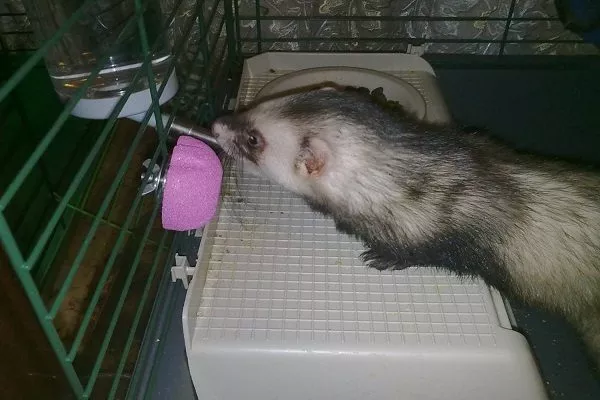
A rodent's drinking bowl is also a crucial component of the cage, ensuring a comfortable life for the animals. Establishing a comfortable drinking regimen and water consumption is essential for the pet's normal metabolism. Drinking bowls are usually attached to the wall of the cage.
Selection criteria
Feeders can be simply placed on the cage floor or attached to the bars. Ferrets can easily knock over a simple floor-mounted water bottle or bowl, scattering their contents throughout the cage. Therefore, for adult ferrets, it's best to choose an option that securely attaches to the cage walls. However, a simple bowl is suitable for young ferrets.
You can place not one, but two feeders in the cage at the same time - use one for pouring dry food and various treats, and the other for natural food (greens, fruits, vegetables).
When choosing a water bottle, make sure it doesn't leak or, conversely, doesn't obstruct the flow of liquid. It should also be easy to use and maintain. The container should be made of durable materials, as rodents will eat anything they can get their hands on.
Feeders, bowls and drinkers are made from various materials:
- tree;
- glass;
- plastic;
- ceramics;
- metal.
Size and capacity can also vary. Typically, feeders and bowls have capacities ranging from 50 to 300 ml. Bowls typically have a diameter of 8.5 cm.
As for shapes, drinkers and feeders can be in the form of:
- shells;
- house;
- ball;
- classic bowl;
- in the form of various vegetables (for example, cabbage leaves), etc.
- ✓ Make sure the waterer allows you to easily check the water level and refill it without having to disassemble the structure.
- ✓ The feeder should have an opening wide enough for the ferret to easily access the food, but not so wide that it cannot climb inside.
Types of feeders for ferrets
Ferrets need access to food 24 hours a day. However, regular bowls are not the best choice. A large rodent can tip the bowl over with its nose, causing the contents to spill out. This will leave the animals without food, and the enclosure will become unsanitary.
The best options would be:
- Hanging plastic feeder. The most budget-friendly option. Approximate cost: 150-200 rubles.

- Hanging metal or glass feeder. They'll last longer than plastic. Approximate cost: 250 rubles.
- Combined feeder and drinker. A great way to save space in the cage. The automatic model is very convenient and allows you to keep the cage tidy. Approximate cost: 500 rubles.
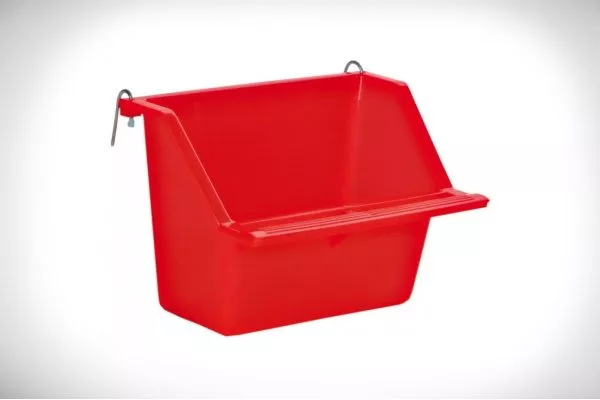
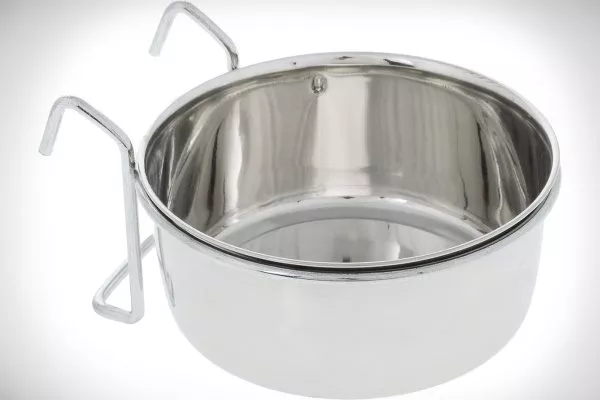
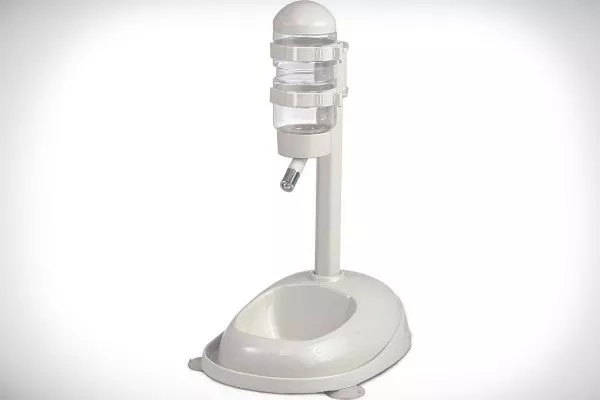
Glass products are more stable and durable because, unlike plastic containers, they can't be chewed "for dessert." It's best to buy a closed model. A dispenser is the best solution for owners who need to be away from home for long periods of time.
What types of drinking bowls are there?
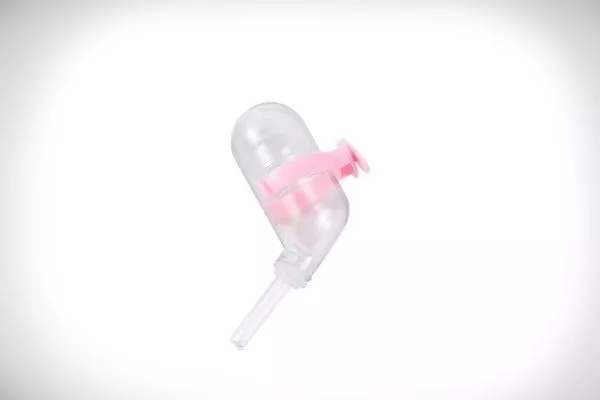
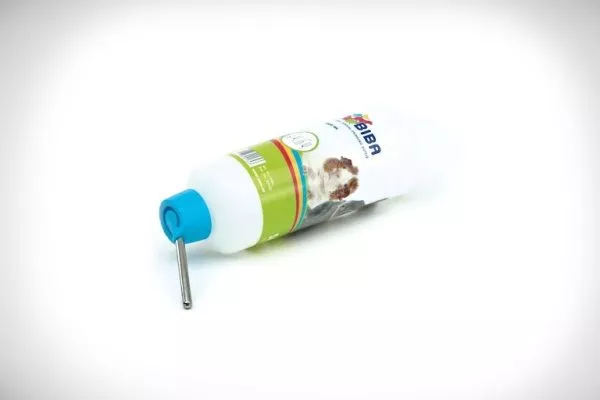
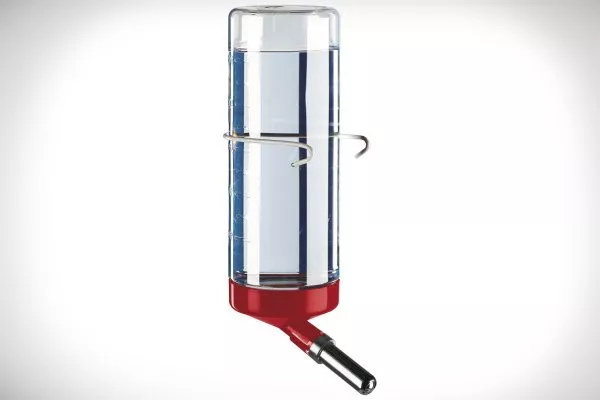
Today, consumers can choose from sippy cups made of plastic, glass, automatic feeders, and a variety of colors and shapes. But we've already discussed that. Now let's discuss the different types of these cups based on their operating principles.
Types of drinking bowls for rodents:
- Vacuum. They are made in the form of a tray with a flask filled with water attached to the top. As the liquid in the lower container decreases, it flows into it from the upper container. They cost approximately 150 rubles.
- Ballpoint. The spout of this waterer contains a special ball that opens the water channel when the animal presses it with its tongue. It costs about 300 rubles.
- Nipple. A very convenient design that meets all sanitary and hygienic standards. This model operates using a spring-loaded mechanism for dispensing drinking water. The approximate price is 300-400 rubles.
Where to buy equipment?
Ferret waterers and feeders can be purchased at any pet store, both brick-and-mortar and online. They are also available on various online marketplaces such as OZON, AliExpress, Wildberries, Yandex.Market, and others.
How to make a drinking bowl and feeder with your own hands?
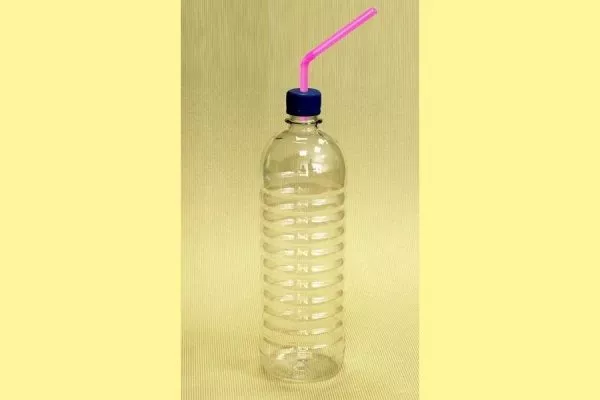
A simple water bottle can replace a store-bought drinking bowl.
What you will need for this:
- Bent cocktail straw;
- hammer;
- a knife, preferably a stationery one;
- a thick nail and a couple of screws;
- several plastic lids;
- half-liter plastic bottle.
Step-by-step instructions:
- Prepare an empty bottle. Remove all labels; animals might tear them off and eat them.
- Use a nail to poke a hole in the lid. Make sure the diameter is slightly smaller than the diameter of the straw.
- Cut off almost the entire straight section of the tube and then insert it into the hole. It should fit snugly. If there's a gap, seal it with glue or sealant.
- Fill the container with water, screw on the lid and attach the water bottle to the cage.
You can also make a 2-in-1 feeder and waterer. This device is suitable for ferrets, hamsters, rats, and other rodents, especially those who like to tip their bowls over.
What you will need:
- wooden block;
- two large diameter lids;
- a vitamin jar or other container of similar volume;
- a pair of screws and press washers;
- Phillips screwdriver;
- marker;
- manicure scissors (or just small ones).
Step-by-step instructions:
- Take a block and attach the lids to it using press washers.
- Place a vitamin jar inside one of the lids, and trace the line where it meets the edge of the lid with a marker. Draw a small arch on the jar for the handle.
- Cut along the line. This will be the water bottle. All that's left to do is fill it with water and put food in the other lid.
Video instructions:
Water bowls and feeders are essential accessories for ferret owners. Choose them wisely and with your pet's needs in mind. For example, hanging models are ideal for very active and large ferrets. A wide selection allows you to find the perfect option to best suit your pet's needs.