
Neutering a ferret is a procedure that removes the reproductive glands. This procedure is vital to the animal's survival. If the procedure is not performed promptly, the animal's health will deteriorate, and fatal cases have occurred. To avoid negative consequences, castration should be performed promptly.
Castration and sterilization of decorative ferrets
Owners are accustomed to comparing these terms. In reality, they are different operations.
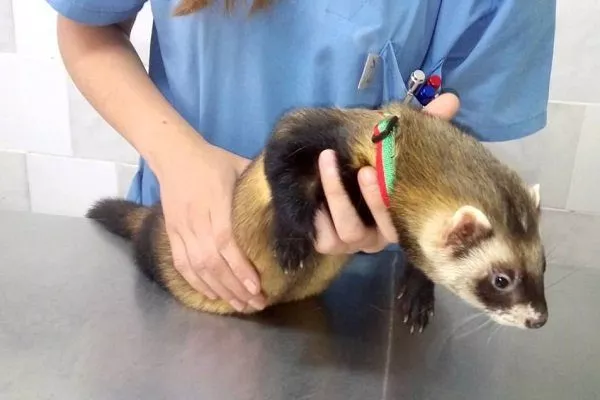
Castration Castration is "castration" (from the Latin "castratio"). In other words, it's the removal of the reproductive organs. It's performed by veterinarians. The result of the procedure is that the animals are unable to reproduce.
Sterilization – "infertility." The animals cannot reproduce, but their reproductive organs remain intact. Hormonal levels remain unchanged (unlike castration). During sterilization, the spermatic cords are tied in males.
Why spay/neuter ferrets?
Once a ferret goes into heat, it won't end until she mates. During this period, the ferret's hormonal levels change, which affects her:
- weight loss is sharp;
- the ferret starts to get sick;
- the fur falls out and becomes greasy;
- the animal itself smells bad (there is a smell of urine).
Surgeries are necessary to protect the ferret from the negative effects of heat. Delaying the surgery can result in hairlessness, lethargy, and possible internal bleeding.
Pros and cons
Many owners raise only one argument against the operation: cruelty to the animal. Furthermore, the animal will be unable to reproduce.
Veterinarians advocate for the procedure. They believe that removing the animal's sex glands is far more humane than allowing the ferret to suffer constantly from hormonal imbalances.
Breeders who are unsure whether to neuter their ferret can learn about the pros and cons of the procedure to help them make the right decision.
Positive aspects of the procedure:
- males stop marking their territory and smelling bad;
- ferrets become calm, they no longer look for a partner;
- the fights that occur between the ferrets die down;
- the life expectancy of the animal increases significantly.
The only negative factor that can be attributed to this is the possibility of complications after the procedure.
Contraindications
Since castration and sterilization are surgical procedures, the procedures have their own contraindications. Before visiting the vet, owners should familiarize themselves with the procedure's procedures.
Which ferrets should not be neutered?
- for adult animals, because anesthesia is administered, and an older heart may not be able to withstand such a load;
- If we talk about chemical castration, then it is worth limiting it for those with impaired liver function.
Ferret age for castration
Experts say the ideal period is between six months and 10 months. During this period, the animals actively begin to show the initial signs of sexual maturity.
To more accurately determine when surgery is needed, the owner should observe the animal for a while. A veterinarian should be consulted if the male begins marking indoors. Females are entering estrus.
It is not recommended to remove the glands at too early an age. At this age, ferrets' genitourinary systems are actively developing.
Castration of a male
Seven months after birth, males begin active rutting (an activity typical of mammals at the peak of sexual maturity). This rutting period lasts from six months to one year.
Even if a ferret has had sexual intercourse, he won't stop. His body will demand intimacy at least four times, and the same female won't be suitable.
To avoid negative consequences, the testicles are removed.
Experienced veterinarians advise resorting to surgery even before the very first rut begins, but not before the testicles have fully formed.
Preparing for surgery
Whether your pet is scheduled for castration or sterilization, it's best to prepare them for the surgery well in advance. Consider the following:
- 7 days before visiting the veterinarian, it is necessary to check the ferret’s health (using tests);
- 8 hours before the procedure, deprive the animal of food, and stop giving it water 2 hours before;
- cleanliness in the premises is an important component;
- change the rug in the cage;
- food and water are not allowed in the place where the ferret lives;
- A towel or blanket should be at hand; take it with you to the clinic.
Neutering of animals is performed exclusively under general anesthesia. The procedure takes half an hour. The best time for the surgery is morning. After awakening, ferrets tolerate fasting better:
Estrus and sterilization in a female ferret
Female ferrets begin their first heat cycle at 7-8 months, but not later. The best time for the procedure is during the first heat cycle.
The maximum time to take a dog to the vet is 1-2 weeks after puberty. The first sign of heat is an increase in the size of the vulva.
Removing a female from a prolonged estrus period
If the estrus period is prolonged, the animal will rapidly lose weight 30 days after the start of the rut. If this is noticed, a complete blood count will be performed before the operation. If the procedure is contraindicated or is too late, there are temporary measures:
- Mate a female ferret with a previously spayed male ferret - this will induce ovulation and a false pregnancy;
- a special drug called "Horulon" - it will also cause false ovulation (the drug can only be used once in the female's life).
Sterilization of a female ferret
It's commonly believed that females are best spayed after they've given birth. Research has shown that females spayed before giving birth live significantly longer.
Before taking your ferret to the vet, you'll need to prepare for the surgery. The procedure and guidelines are exactly the same as for a male ferret.
There are several ways to sterilize females:
- tubal ligation;
- oophorectomy - removal of the ovaries;
- Ovariohysterectomy - means removal of both the ovaries and the uterus.
- ✓ The presence of chronic diseases in a ferret may determine the choice between surgical and chemical sterilization.
- ✓ The age of the ferret influences the choice of method: young individuals tolerate surgery better, while chemical sterilization may be preferable for adults.
Removing the uterus along with the gonads is the most optimal solution. The ferret will forever forget what it's like to go into heat. Ferrets tolerate the surgery very well; the procedure takes 20 minutes. General anesthesia is used.
The incision made to remove the glands is small, just 1.5 cm. The resulting sutures are removed after a week (unless the doctor used self-absorbing silicone sutures).
The ferret recovers from anesthesia in about 3 hours without feeling any pain or discomfort.
Chemical sterilization of a female
Chemical sterilization is often used by owners who don't want to deprive their ferret of the chance to become a mother. The procedure involves administering an injection that reduces reproductive activity.
The administered drug causes a surge in peptide hormone levels. This allows veterinarians to stop the ferret's heat cycle.
The procedure has several disadvantages:
- after some time, the heat will return again and the drug will have to be administered again;
- it is possible that a false pregnancy will occur;
- the procedure is expensive.
Chemical sterilization can be performed using an implant. It is inserted into the animal's subcutaneous tissue with a needle. The mating season stops after 30 days. The drug remains effective for exactly two years.
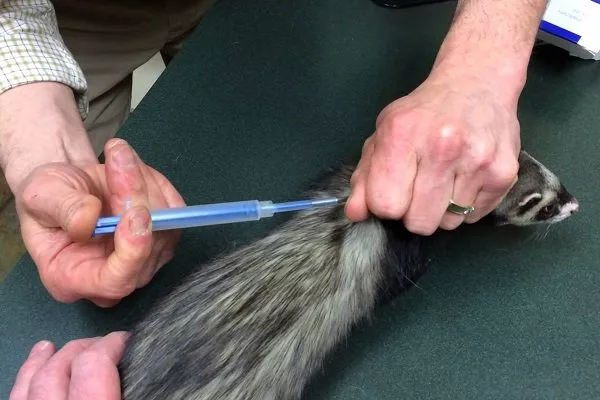
Chemical sterilization is not recommended for self-treatment. Only an experienced veterinarian can determine whether this procedure is appropriate for your ferret.
How to care for an animal after surgery?
After surgery, the ferret is transported in a blanket or shawl. The warmth helps the animal recover more quickly and adapt to its new life.
Although ferrets recover quickly from anesthesia, they still behave somewhat inappropriately for several hours. It takes about a day for the animal to return to normal.
Feeding a ferret
After testicular removal, metabolism is disrupted. Digestion slows. During this challenging period, a special balance of proteins, fats, and carbohydrates is required.
Specialized food will help ensure your pet gets the full range of vitamins and microelements. Only premium-quality food, specifically designed for sterilized animals, is suitable for these animals. These formulas are available in almost every pet store.
Economy-class pet foods can be harmful to ferrets' health. This is because they contain dyes and chemicals.
Care
A balanced diet and proper care will help your ferret recover faster. Recommendations include:
- After the operation, do not take your pet outside; wait until it has fully recovered (walking can lead to infectious diseases);
- leave the ferret alone for about 10 days;
- the cage is clean, water and food containers, change the litter several times a day;
- Ferrets are prohibited from water procedures for 20 days;
- For the first two days, watch how often he goes to the toilet. If you notice any problems, contact the veterinarian who performed the procedure;
- To prevent your pet from trying to lick its stitches, put on a special cover (sold at pet stores).
Association between surgical castration and the development of hyperadrenocorticism in ferrets
Hyperadrenocorticism (HAC) is a disease of the adrenal glands. It occurs due to sex hormones that are produced excessively and in large quantities.
Signs of HAC begin to appear after castration or sterilization. Most ferrets begin to suffer from the disease after two years of age.
In a ferret that has not been castrated, the peptide hormone of the pituitary gland acts on the testes and ovaries, causing the reproductive glands to secrete sex hormones.
After surgery, hormones are also produced in the animal's brain. But the adrenal glands take center stage, because the gonads are absent.
Hyperadrenocorticism is very common in neutered ferrets, accounting for 80% of cases.
The main signs are considered to be:
- hair loss;
- itching;
- problems with urination;
- Skin pigmentation undergoes changes.
There are several ways to rid your pet of the disease:
- using medication, i.e. a “Suprelorin” implant is installed and injected under the animal’s skin;
- surgically, the affected gland is removed.
The surgery can be performed on both adrenal glands or on just one. In most cases, only one—the left endocrine gland—is affected.
Complications that may arise
As with humans, ferrets' bodies may not cope with surgery (although this is rare). This can lead to postoperative complications.
The reasons for this are as follows:
- Infection or bleeding. The whole reason lies in:
- non-sterility of the premises;
- in poor processing of instruments for surgery;
- inexperience of the medical worker;
- failure to follow care instructions.
- Tumor formation. It will only occur if the female's ovaries are removed incorrectly, i.e. pieces of the removed organ remain in the cavity.
After chemical sterilization the following may occur:
- breast disease (proliferation of breast tissue);
- rapid weight gain;
- gastrointestinal diseases, etc.
Ferret Neutering Prices
Spaying costs vary at veterinary clinics, depending on the animal's gender. Different prices apply for the procedure for males and females:
- for males they will take no less than 1700 rubles;
- procedures for girls - minimum 3500 rubles.
Is it worth neutering a ferret at home?
Experienced veterinarians believe that the ferret will recover more easily if the surgery is performed in its natural, familiar environment. This is because:
- the ferret will experience less stress (it won’t be afraid of the road to the clinic);
- a familiar environment for the animal will help it not to panic;
- The recovery will proceed smoothly, and once the procedure is completed, the animal can be immediately placed in its cage to rest.
It's possible to neuter a ferret at home, but only if a professional is involved. Removing glands without proper training is prohibited.
A ferret owner has the right to decide whether to neuter their pet. If breeding is not planned, it's best to have the pet undergo the surgical procedure. This will help maintain the ferret's health and prolong its life. The key is to do it correctly and at the right time.