
Neutering ferrets (furos, ferrets) is a necessary measure in certain situations to eliminate unpleasant odors and maintain the pet's health. The procedure is performed on individuals not intended for breeding. The reproductive organs are removed from both males and females.
Why neuter ferrets?
The main reason for using castration surgery is to save a ferret who has no mate. The furo's body is designed in such a way that the heat can last up to six months or more, which causes the male to suffer, becoming aggressive and irritable.
This leads to the fact that he bites the owner, marks territory and, most importantly, develops a hormonal imbalance, which contributes to the development of various diseases.
There are other reasons for castration:
- During the rut, ferrets try to escape, break the cage, their sleep and general daily routine are disrupted;
- if there is a female, this does not save the situation, since the male needs 4-8 different ferrets during one mating season;
- females have difficulty coming out of heat, which in many cases leads to death;
- Due to hormonal imbalances, ferrets lose hair, become exhausted (during this period they refuse food and water), and sometimes experience internal bleeding;
- a sharp decrease in body weight occurs;
- the smell intensifies urine and other secretions.
The main indication for surgical intervention is the inability of individuals to mate, which is why all the above problems arise.
But there are other, more serious reasons:
- diseases associated with hormonal imbalance;
- diseases of the genitourinary system.
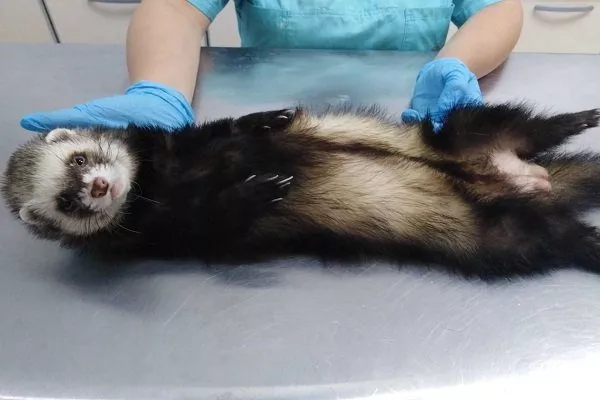
What is castration?
Neutering is a procedure in which a veterinarian removes the reproductive organs of a female or male dog, resulting in decreased sexual activity and the inability to reproduce. There are several types, each with its own pros and cons.
The difference between castration and sterilization
In veterinary practice, two terms are used: castration and sterilization. Many people confuse them, mistakenly believing that only males are castrated and only females are spayed. In fact, this is not the case.
What are the main differences:
| Type of procedure | Transcript from Latin | Who is it intended for? | The essence of the event | Result |
| Castration | Castration | Male and female | Removal of reproductive organs or administration of drugs, installation of implants. | Lack of offspring and desire, changes in hormonal levels. |
| Sterilization | Infertility | Male and female | Ligation of the seminal ducts in males and fallopian tubes in females. | Inability to conceive, partial suppression of sexual desire, since hormonal levels remain unchanged. |
Pros and cons
Only ferret owners oppose castration, citing the cruelty it poses to the animal. Veterinarians, on the other hand, recommend the procedure when indicated (eg, illness, sexual inactivity). They believe it's far more humane to remove the gonads than to subject the animal to the constant suffering of hormonal imbalances.
To decide whether to neuter your ferret or not, you need to familiarize yourself with all the advantages and disadvantages.
Pros:
- there is no aggression, sleep disturbances or other negative manifestations;
- the animals will become calmer, more affectionate and obedient;
- males will no longer mark their territory;
- individuals will not look for a partner;
- the risk of developing diseases will be reduced;
- life expectancy will increase.
Cons:
- you will have to pay for the operation;
- there is a possibility of complications;
- time is needed for rehabilitation (especially for females).
Contraindications
Veterinarians don't perform castration in all cases, as there are a number of contraindications. When will the procedure be denied?
- if the age category does not match;
- for heart diseases (surgical intervention);
- in case of liver pathologies (chemical castration).
Up to what age should you castrate?
The age for castration varies slightly between males and females, but they share a common trait: the procedure should be performed before the onset of heat. For males, this ranges from 6 to 11 months of age, and for females, from 5 to 6 months. The difference is 15 days.
Since sexual maturity begins at a different time for each individual, experts recommend paying special attention to the behavior of the animals (incipient signs).
Signs of rutting in a male and female
Every breeder is responsible for monitoring their pets' behavior to determine the onset of estrus and mating seasons in both sexes. What happens:
- aggression is displayed - the animal bites, hisses, attacks toys and its fellow tribesmen;
- run away from home in search of a sexual partner;
- they start to mark;
- sometimes they refuse to use the litter box;
- don't want to eat;
- they sleep during the day and run around fussily at night;
- the fur becomes oily and smelly, as a special secretion is synthesized in the subcutaneous glands to attract females;
- hair falls out - due to clogged pores.
- ✓ Males may experience increased aggression not only towards other animals, but also towards inanimate objects.
- ✓ In females, in addition to swelling of the labia, behavior may change, including increased activity or, conversely, apathy.
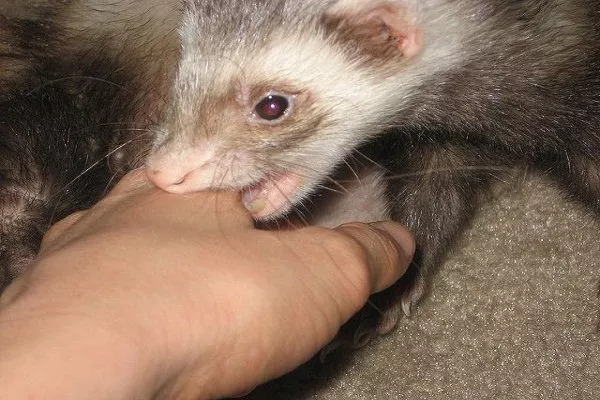
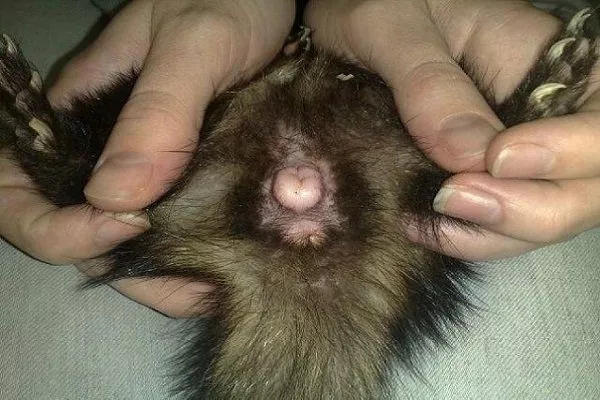
Pay special attention to the animal organs:
- females – the labia swell, increasing in size (the diameter of the loop is about 4-5 cm);
- males – the testicles increase in size.
Preparing for surgery
Preparatory measures are an important component of castration and sterilization, reducing the risk of infection and complications. Be sure to consider the following:
- 7-10 days before the procedure, take your pet to the veterinarian for an examination - there may be contraindications;
- stop feeding any food 8-9 hours before surgery;
- 2 hours before – stop drinking;
- Before leaving the house, do a wet cleaning using disinfectants;
- ventilate the room;
- thoroughly clean the ferret's cage and sleeping area, remove all food and water;
- change the tray;
- Prepare the things you need to take with you - a clean towel, blanket, diaper, and blanket.
Methods of castration/sterilization
Veterinarians use several methods for castrating and sterilizing ferrets. Each has its own advantages and disadvantages, technique, recovery period, and potential complications. Therefore, breeders are free to choose their own method based on these factors.
Chemical
This technology involves introducing special medications and implants into the ferrets' bodies, which reduce sexual activity. This method is not widely used because it has numerous drawbacks:
- the attraction does not disappear completely, but only becomes dull;
- high cost of medications;
- the need to give injections several times (the frequency depends on the activity of the individual);
- there is a possibility of a false pregnancy;
- Synthetic substances included in the preparations cause harm to the animal's liver.
The main advantage is that there's always the possibility of conception (if the breeder changes their mind and decides to breed ferrets). Other benefits:
- the procedure applies to both males and females;
- leaves no scars;
- can be done at home;
- no need for anesthesia.
What is entered:
- Hormonal agents. Gonadotropin-based medications (synthesized by the pituitary gland) and other hormones are administered intramuscularly. These medications include Suprelorin and Lupron. Symptoms of sexual activity disappear within 7-10 days, and the effect lasts for up to two months. False pregnancies almost always occur in females.
- Steroids. This medication is called Kovinan and others, which belong to the proligstone group of agents. The effects and consequences are identical to the previous version.
- Implant. This is considered the optimal option, as it additionally prevents adrenal disease. It is administered subcutaneously. It is based on the drug Suprelorin, which contains the active ingredient deslorelin. The effect stops after one month, but lasts for about two years.

Surgical
The most reliable option for those who don't want to breed ferrets but want to keep them for fun. The procedure is simple and takes 10-20 minutes.
Advantages of surgical intervention:
- speed of the procedure;
- inability to conceive;
- lack of sexual desire;
- the result remains forever;
- rapid healing of sutures – in 6-10 days;
- relatively inexpensive cost.
Among the disadvantages the following are noted:
- the need for anesthesia, from which the ferret recovers in 3-5 hours;
- rehabilitation period with the use of antibiotics.
Technique for performing surgical intervention on a male:
- the hair on the scrotum is plucked;
- the area to be operated is treated with alcohol;
- a 1.5 cm cut is made into the skin with a scalpel;
- the testicles are extracted and separated from the common membrane;
- a ligature is applied;
- the organ is cut off above the medical thread;
- the wound is treated with an antiseptic.
In females, the operation involves cutting a section of skin on the abdomen, removing the uterus and ovaries, and then applying a self-dissolving suture.
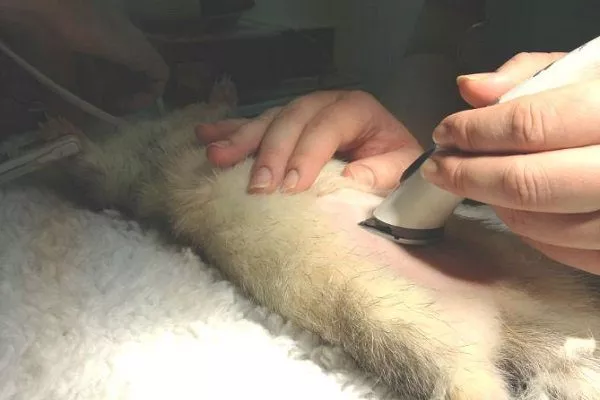
How to bring a female out of a prolonged heat?
No female ferret can come out of heat on her own. If it continues for too long, complications can occur, including death. Spaying a female ferret that has been in heat for more than a month is prohibited, as her body is already weakened.
In this case, you need to wait for the next heat, but the current one needs to be stopped immediately. What are the temporary measures?
- mating with a ferret that is spayed (to prevent a real pregnancy);
- taking the drug Horulon, which promotes false ovulation (note that a female can only take the drug once during her life, as it is too harmful for the body).
How to care for an animal after surgery?
Ferrets are transported from the veterinary clinic to their home in a cage (or carried in your arms), wrapped in a soft blanket. A blanket is placed inside the cage, and the animal is dressed in a diaper.
Rules for further care of the ferret:
- Feeding. When reproductive organs are removed or hormonal castration is performed, significant changes occur in the body – metabolism and digestion slow down, so it is important to balance the diet as much as possible in terms of proteins, fats, and carbohydrates.
Overfeeding ferrets and feeding them too many carbohydrates is strictly prohibited, as this can lead to obesity. The best option is to buy specialized food for neutered and spayed animals. - General care. To prevent ferrets from sucking or chewing through the stitches, put a special collar on them for the first 5-6 days, and do not take them for walks until they get stronger (this takes about 10 days). Other requirements:
- water procedures are prohibited for 21 days;
- the tray will have to be cleaned 2-4 times a day, which will prevent infection;
- Pay special attention to the frequency of visiting the litter box - if the ferret urinates and defecates rarely, or the feces are too hard, then contact your veterinarian.
Association between surgical castration and the development of hyperadrenocorticism in ferrets
Hyperadrenocorticism (HAC) is a pathological disorder of the adrenal glands caused by an imbalance of sex hormones (when they are synthesized in excessively high concentrations). The condition typically occurs after 2 years of age, but most often occurs as a complication following castration.
This occurs because after surgery, as before, hormones are produced by the pituitary gland, but now the peptide elements affect not the ovaries and testes, but the adrenal glands, which are not adapted for this. The absence of the gonads is to blame for this.
Symptoms of HAC:
- hair loss for no reason;
- the ferret constantly scratches and picks at its skin;
- problems with urination arise;
- the skin becomes pigmented.
The disease most often manifests itself during the warm season, and temporarily subsides when temperatures drop. The following treatment methods are used:
- surgical removal of the affected endocrine gland (on one or both adrenal glands);
- use of the drug Suprelorin (subcutaneous).
Complications that may arise
Side effects most often arise due to the characteristics of the animal's body - the healthier the ferret, the easier it tolerates surgery or chemical exposure.
Often occurs:
- Internal bleeding or infection. The reason for this is as follows:
- failure to comply with hygiene rules by the owner;
- lack of sterility in the veterinary clinic;
- inexperience of the veterinary surgeon;
- improper care of the animal.
- Tumor neoplasms. There is only one reason: elements of the removed organ remain in the cavity, that is, if the operation was performed poorly.
- Rapid weight gain. After all types of procedures, ferrets must be fed correctly and with special food.
- Diseases of the mammary glands. Due to hormonal imbalance, their tissues grow, which causes pathologies.
To ensure successful ferret neutering, it's essential to strictly follow the preparation instructions, consider the rodent's age, and follow the veterinarian's recommendations after surgery or chemical treatment. It's also important to choose a veterinarian with experience and a good reputation.