
If a ferret bites, immediate action is needed to determine the cause of the unfriendly behavior and correct the situation. Bites from this small predator can cause serious tissue damage to humans or other pets. There are many factors that can cause such behavior, from simple dominance behavior to illness.
Characteristics of aggressive behavior in ferrets
Ferrets, being predators, often use nipping to explore their surroundings. However, this should only happen when the ferret is still a puppy.
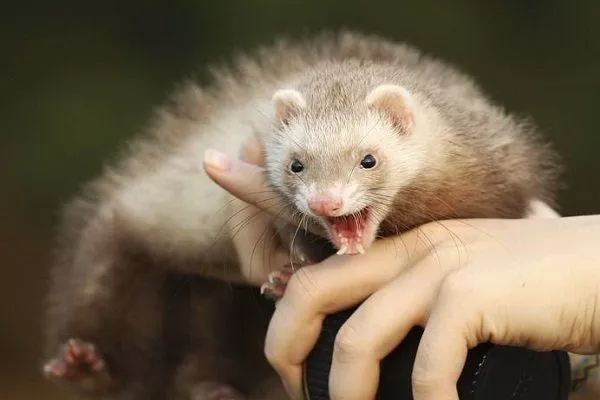
When a dog plays, it exhibits hunting instincts, which is also normal. However, if this behavior is accompanied by hostility, or if it directs aggression toward a person, this should be a warning sign.
Sometimes animals bite each other, and it's important to determine which parts of the body they're biting. If it's the scruff of the neck, the male is attempting to flirt with the female—this is what they do during the mating season. However, if fighting occurs frequently, the cause of this behavior lies elsewhere.
Behavioral characteristics of ferrets:
- The animals cannot realize how strong their bites are, so simple playful mischief is perceived as hatred;
- Puppies begin to bite for the first time at the age of 4 weeks;
- they are attracted to protruding objects (a human finger or toe is no exception), they want to immediately take possession of them;
- There are individuals with an innate aggressive character (it’s like with people here - there are good and evil ones).
Ferrets quickly become accustomed to humans and even begin to love their owners. It's important to establish this connection, and this should be done with affection and love. Ferrets are sensitive to expressions of affection.
Possible reasons for aggressive behavior in animals
Experts cite physiological and pathological factors as possible causes. Ferrets may display aggression due to their nature or for a more serious reason (if they're in pain, have a mental disorder, etc.). The key is to pay attention to when they began behaving this way.
Stress
Biting is a result of stress. Any change in the ferret's environment or routine causes it to become anxious and act aggressively.
Examples of stressful situations:
- new spouse or child in the house;
- longer working hours for the owner, causing the animal to feel lonely;
- the arrival of another ferret or pet;
- a new home or an unfamiliar place (when traveling);
- loud music, sharp sounds, scandals in the family (for a ferret this is a huge stress).
These situations make the ferret feel tense, as it doesn't understand how to act in such an unusual environment. Sometimes this triggers the animal to "turn on" self-defense (a genetic instinct).
Fear of man
Ferrets most often bite severely because they are afraid and trying to protect themselves. Young ferrets bought from a pet store (deprived of proper socialization) bite out of fear and insecurity. Perhaps naughty children poked and teased the animal, which created a negative impression of people.
Why else are these mammals afraid of humans:
- if an adult ferret was bought second-hand and the previous owner neglected the animal (as a result, it stops trusting all people and bites anyone who seems a threat);
- If the previous owner beat the animal, yelled at it and showed hatred, the ferret will remember this for a long time.
Dominance
Ferrets develop leadership skills from birth, especially in males. If a person allows the animal to do whatever it wants (bite, jump on someone's hands at the wrong moment, steal food, etc.), the animal realizes the owner's permissiveness and, most importantly, their weak character.
Disease
Another cause of biting is hormonal fluctuations. Part of the mating ritual involves the male climbing onto the female's back and grabbing her neck with his teeth. If a ferret is in sexual activity, there's a good chance it will attempt the same behavior on a human.
Other pathological disorders:
- Ferrets with adrenal disease have excess levels of sex hormones (they make the animal feel like it is in heat);
- damage to the central nervous system leads to mental disorders (animals become aggressive and irritable);
- injuries and any other illnesses accompanied by painful symptoms (in this case, the animal wants peace and quiet, and if the owner disturbs it, the ferret reacts by biting).
Behavior in the game
Ferrets of any age are prone to accidentally nipping fingers or toes when trying to grab a toy. Sometimes, ferrets will approach their owners and nip at their ankles or toes to signal that they want to play.
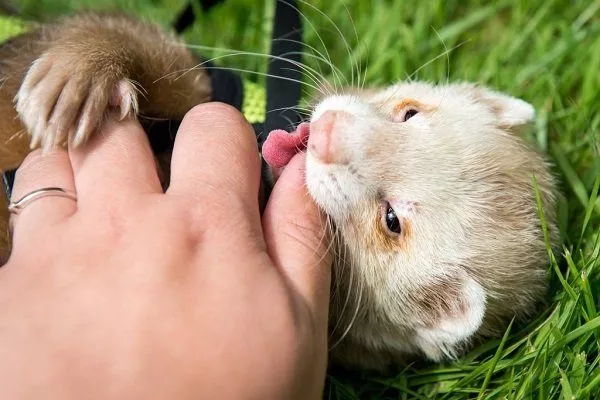
Why does this happen:
- the animal needs one-on-one interaction with its owner, especially if it is the only pet in the person’s home;
- Lack of attention from the owner forces the animal to demand it by biting.
Play is important for exercise—ferrets need time outside their cage every day to run, jump, and burn off energy. If this predator is kept in cage For many hours, this irritates him. Then, when the door is opened, the ferret bites out of boredom or frustration.
Other options
A hard, targeted bite is a different story entirely. A strong bite is usually a sign of a serious problem related to the ferret's physical condition, its cage or home environment, or the relationship between the ferret and its owners.
But there are a few other factors worth considering:
- the animal sometimes shows aggression in response to certain smells (cologne or perfume, hand lotion, soap, hairspray or nail polish, etc.);
- Some ferrets bite when they are hungry (this often happens when the owner goes to bed and the pet wants to have a second dinner).
Ways to solve the problem
The methods used to correct a ferret bite should be directed toward peaceful means. Cruelty should be avoided, as these predators are very sensitive to anger and will react in the opposite direction, becoming even more aggressive.
Walks, communication, treats
Spend more time with your pet: take them for walks in the yard or even the park. When walking in unfamiliar surroundings, ferrets often cuddle up to their owner for protection. This is how a warm relationship begins.
But keep in mind that prior to this, a long period of indoor companionship is required. Otherwise, the ferret may bite during a walk.
Communication is as follows:
- talk to him in a gentle tone;
- stroke the fur and cheeks;
- If necessary, use a stern tone to pronounce commands (no, no, no), as ferrets are easy to train;
- Get used to holding your baby from birth - first hold him for a few minutes, gradually increasing the time;
- During tactile interaction, give the animal a treat, evoking stable positive associations.
Alternative methods
One of the best ways to prevent bites is to read your ferret's body language to gauge its mood, as you need to know when to back off and leave it alone.
Be wary of his actions:
- runs with an arched back, bristling fur, and splayed front paws;
- jumps from side to side, backing away and hissing;
- licks another ferret or person just before biting.
- ✓ Hissing and arching of the back for no apparent reason.
- ✓ Aggressive behavior at certain times of the day associated with hormonal changes.
You need to know which situations bring out the worst in your pet. Be a good observer. Try to figure out what irritates them.
What radical and alternative methods are used to wean a ferret from biting:
- don't wait, punish immediately after the bite (if you don't do this, he will remember that he once got away with it and will try to bite again);
- use intonation - say a stern "no" immediately after his action;
- use the ignoring method - the animal understands when it is being offended;
- Stop playing if a bite occurs during play;
- take the initiative - start a game that develops the correct behavior of the ferret, then praise him and offer a reward (food);
- play with it every day;
- when biting, hiss like animals do or spray water on the muzzle (using a spray bottle);
- Don't stick your fingers through the wires of cages - your pet will think that your finger is a toy or a treat;
- Avoid giving treats from the palm of your hand;
- Do not allow children to hold or touch the ferret unless an adult is present;
- Never let someone who is afraid hold your pet - ferrets sense fear and can react by biting;
- When weaning off the corresponding behavior, lubricate your hands with bitter products;
- If you are sure that your pet is behaving badly due to its character, use force: grab the obstinate animal by the scruff of the neck, shake it (not too hard) or press it to a surface (floor, tabletop, etc.), temporarily depriving it of freedom;
- It is allowed to click the animal on the nose, but lightly.
Remember: your four-legged friend must develop a clear understanding of the inevitability of punishment for biting. Punish only immediately after the incident.
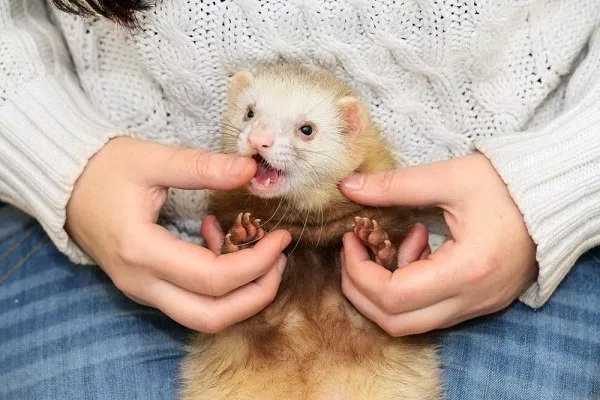
What shouldn't you do?
Ferrets are considered intelligent animals (like dogs and cats). They can and should be trained, even with punishment. But do so carefully to avoid triggering a new outbreak of aggression. A flick on the nose, for example, should not cause severe pain—otherwise, the animal will refuse to communicate at all.
What is strictly prohibited:
- hit with force;
- wear gloves, as many beginners do - this factor will lead to the fact that in the future it will not be possible to communicate with the predator without protective equipment;
- During a bite, do not try to pull the ferret away forcibly - the grip will become even stronger;
- leaving it in a cage and alone for a long time will make the pet angry;
- Give him a treat immediately after the bite - he'll think he did the right thing.
An important step in solving a ferret's biting problem is determining the cause. This is always done by considering common risk factors. However, preventative measures should also be taken, including regular medical examinations by a veterinarian and training from an early age.
First, one of the most important and common reasons for their bites is the rutting season. During this period, both males and females become aggressive, a strong odor develops, and males mark their territory. These animals are unable to emerge from the rutting season on their own, and this can lead to death. It is recommended to castrate the animal at the first signs of rutting, approximately at seven months.
Second. As in my case, I was sold a baby ferret, masquerading as a "pet" ferret, completely unaware of human handling, and exhibiting food aggression. There's only one piece of advice: patience, patience, and more patience.
It's important to get your ferret used to being handled at the first opportunity. Food aggression is difficult to deal with, but it's possible. Work on building trust, using lots of kind words and treats. Train them to obey commands; they learn very quickly. When they do it correctly, praise them and give them a treat. Be sure to express your emotions VOICEOUSLY. If you're unhappy with something, like if they've missed the litter box, explain your displeasure to the animal using their own language. Hissing, and if it's really bad, you can grab them by the scruff, but don't overdo it! And if they bite hard (during dominance displays), don't hesitate to bite back (it's a very effective method). For a more detailed study of these topics, I recommend reading up on ferret psychology (search online).
Thank you so much for such a detailed comment and helpful advice! This is invaluable to readers! We've also taken your recommendations and comments into account.