
Having a ferret as a pet has recently become very fashionable. These cute and active animals can't sit still for even a minute. But before getting a ferret, it's worth familiarizing yourself with their diet.
Ferret nutrition in the wild
| Name | Average weight of an adult | Life expectancy | Basic diet |
|---|---|---|---|
| Hamster | 100-150 g | 2-3 years | Cereals, vegetables |
| Ground squirrel | 200-300 g | 5-6 years | Nuts, seeds |
| Rabbit | 1-2 kg | 8-12 years old | Grass, vegetables |
| Field mouse | 20-30 g | 1-2 years | Cereals, seeds |
| Rat | 300-500 g | 2-3 years | Omnivorous |
| Gerbil | 50-100 g | 3-4 years | Cereals, vegetables |
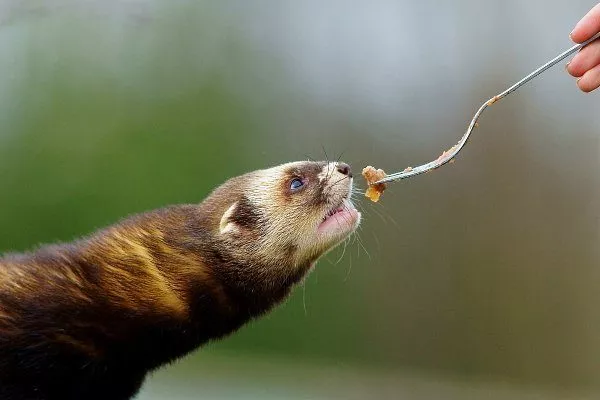
Ferrets are solitary hunters by nature. In the wild, these animals are carnivores, feeding on rodents. Their diet includes hamsters, ground squirrels, rabbits, field mice, rats, and gerbils. Ferrets easily catch lizards and frogs, and hunt venomous snakes.
These animals have the ability to stalk silently; they attack hazel grouse and destroy ground-dwelling bird nests to eat their chicks and eggs. Ferrets' favorite delicacy is hedgehogs; their spines don't frighten ferrets at all, and they eat them with great relish.
How often should you feed a ferret?
Ferrets are active animals with a high metabolism, which is why they constantly require a lot of energy. To obtain this energy, wild ferrets feed frequently, but in small portions.
In captivity, breeders follow similar principles and maintain the following feeding regime for their pets:
- Monthly animals are fed 4-5 times a day;
- young animals are fed 3-4 times a day;
- Adult pets are fed twice a day.
Ferret feeding plan
When keeping ferrets, special attention should be paid to nutrition. An improperly chosen diet can negatively impact their health. Thanks to the wide variety of options, every breeder can find a suitable feeding plan.
Natural food
| Name | Protein content | Fat content | Carbohydrate content |
|---|---|---|---|
| Chicken meat | 20-22% | 3-5% | 0% |
| Turkey | 21-23% | 2-4% | 0% |
| Red fish | 18-20% | 10-12% | 0% |
| Shrimps | 19-21% | 1-2% | 0% |
| Squid | 16-18% | 1-2% | 0% |
Ferrets are fed natural meat—chicken or turkey, raw, with cartilage and bones (excluding tubular ones), and other by-products. Breeders add dairy products, except milk, to their diet because these animals are lactose intolerant.
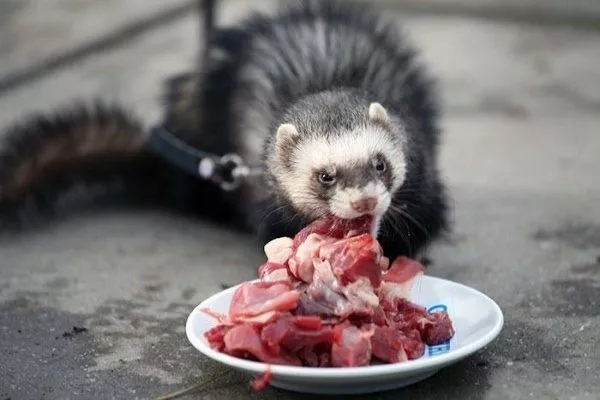
Be careful with fish. Not every type of fish is suitable for ferrets. Ferrets can be fed shrimp, squid, and red fish such as salmon and trout, but in small quantities.
Natural food should not be cooked; food products are given raw or defrosted.
Dry snacks
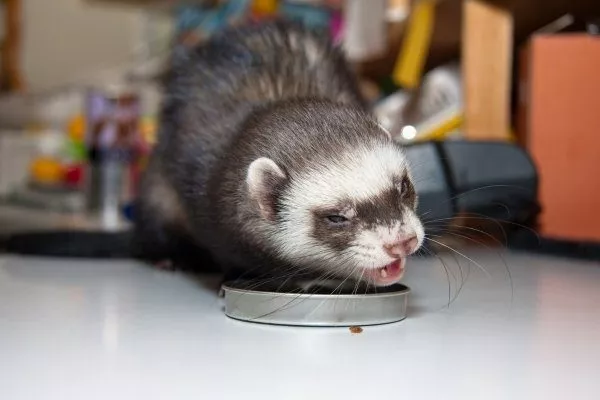
Ferret food containing poultry, which provides easily digestible non-plant protein, is considered a snack. Currently, the market offers dry food formulated specifically for ferrets. The dry food contains 32-36% protein, no more than 20% carbohydrates and fat, and up to 5% plant fiber.
If you don't have special food, you can purchase premium food for kittens and pregnant cats. Dog food is absolutely not suitable.
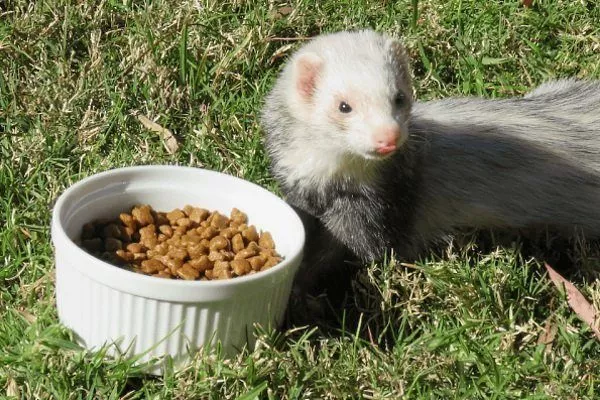
When fed dry food, a ferret drinks a lot of liquid, so you need to constantly ensure that the drinking bowl is always filled with water.
Live food
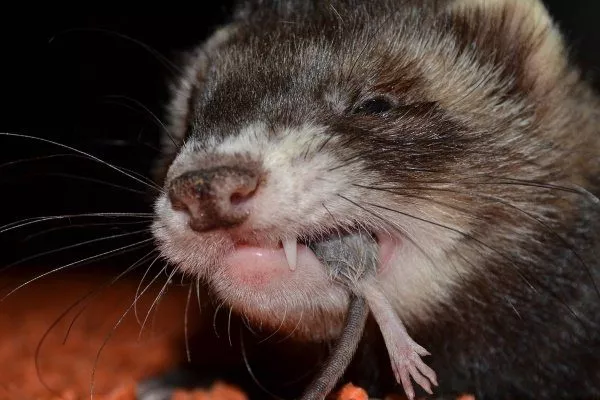
Ferrets greatly enjoy eating live food. By choosing this diet, breeders are as close as possible to the natural diet of these animals in the wild.
The following are suitable as live food, which is sold in veterinary pharmacies:
- mice;
- chickens;
- mealworms;
- marble cockroaches.
Treats
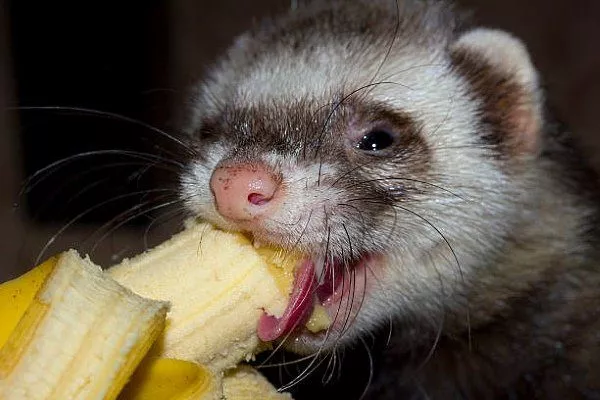
Ferrets are occasionally given various treats. They will readily eat cheese, cottage cheese, baby kefir, and quail eggs, which can be included in their diet once a week. Pieces of fruit are also allowed as treats, as ferrets love apples, bananas, and pears.
Choose treats wisely for your ferrets; don't give them treats from your table; it will only harm them. After all, in the wild, plant food only enters these animals' bodies if it's found inside their prey.
Vitamins and supplements
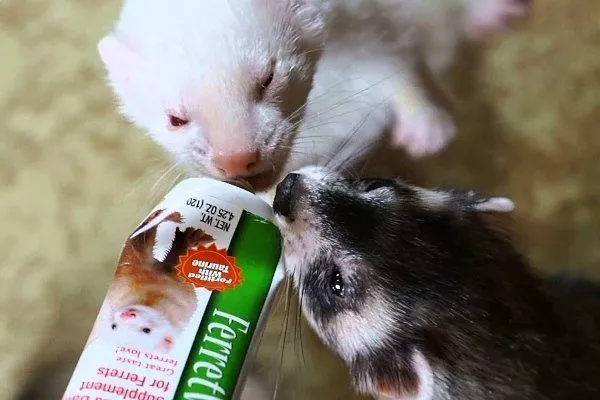
For proper development and growth, ferrets need vitamins and minerals. These are included in ready-made supplements, which come in two types:
- vitamin pastes;
- vitamin complexes.
Pastes and complexes can be given to ferrets separately or added to food.
Vitamin paste helps animals recover faster, recuperate, and regain strength after surgery. Vitamin supplements are given to ferrets year-round, with dosages varying depending on the season and the animal's age.
The vitamins and minerals included in the supplements are important during shedding, lactation, and heat. The supplements contain:
- minerals – calcium, phosphorus, magnesium, iron;
- A, E, D and other vitamins;
- brewer's yeast.
Before choosing a vitamin supplement, be sure to consult a specialist.
Recipes for minced meat
Minced porridge is a mixture often used to feed ferrets. It can contain several ingredients.
Recipe No. 1
Developed for young puppies and growing animals, this minced porridge contains:
- chicken stomachs – 1 kg;
- chicken necks – 2 kg;
- rice or buckwheat groats – 400 g.
The breeder presented the recipe for farshekashi in his video below:
Making minced meat is very simple:
- Grind the cereal into flour, then cook until completely cooked.
- Grind the offal into minced meat and mix it with the prepared porridge.
- Add vitamins to the minced porridge in the required amount.
Recipe #2
This recipe is for adult animals. The minced porridge consists of the following ingredients:
- cottage cheese – 60 g;
- fish – 150 g;
- beef heart – 100 g;
- chicken meat – 0.5 kg;
- rice – 100 g;
- poultry fat – 10 g.
The cooking process is very simple:
- Cook the rice for 2-3 hours, grind the remaining ingredients into minced meat.
- Mix the resulting minced meat with porridge, add the necessary vitamins.
- Divide the prepared minced porridge into portions and place in the freezer.
Features of feeding at different periods
Ferrets' diets vary at certain stages of their lives. However, they generally require minerals and vitamins.
Growth period
During breastfeeding, young ferrets receive essential nutrients from their mother's milk. Deprived of their mother's milk, their gastrointestinal tract becomes vulnerable to infections, which is why probiotics should be kept in the breeder's first aid kit at all times.
Ferrets are transitioned to adult feeding after 3-4 weeks of age. At this time, their baby teeth begin to erupt. To help the babies acclimate to this diet more quickly, liquid ground meat is introduced into their diet, and low-fat cream or baby kefir is added to the mother's diet.
Don't forget about vitamins—give ferrets 3-4 drops of fish oil on their tongues. If there are more male furos in the litter, add more calcium and phosphorus to their food, as males are more active.
Don't forget to give your pet vitamin pastes and supplements. Nutrient deficiencies negatively impact the growth and development of ferrets.
Moulting period
Furos shed in early spring and fall, with the exception of pregnant females, who shed on the 20th day of pregnancy, and animals experiencing hormonal imbalances. Shedding lasts 1-2 weeks and is accompanied by intense itching. In some areas of the body, hair is practically absent.
Ferrets are very clean creatures, so they lick themselves thoroughly, which can result in a large amount of hair getting into their gastrointestinal tract, leading to vomiting. To prevent this, ferrets are given hair-removing pastes. They can also be helped with shedding by brushing their fur or using a furminator.
During shedding, ferrets need vitamin complexes containing sulfur, brewer's yeast, and B vitamins. These will help their new fur grow thick and shiny.
Pregnancy period
To ensure that the offspring is born healthy, an individual diet is prepared for the pregnant female.
The menu of a pregnant female necessarily contains:
- phosphorus, calcium for strong teeth and bones;
- vitamins A, E, D and group B – in increased quantities.
When feeding a ferret a natural diet, include bone meal, calcined cottage cheese, and fish oil. If the female eats dry snacks, give her a special food for pregnant women or a product designed for cats. Overfeeding a ferret is not recommended, as this leads to obesity, but restricting her diet is also dangerous.
Before and in the first days after giving birth, a ferret's appetite decreases. A lactating ferret's diet is identical to that during pregnancy. Nutrient requirements remain high.
How to choose dry food?
Before choosing dry food, be sure to read the ingredients listed. Pay attention to the following:
- Poultry meat should be listed first; if it is premium food, there may be two types of meat.
- The content of plant fibers should be no more than 3-5%, since furos have difficulty digesting fiber.
- The ash percentage should not exceed 7%, otherwise the pet risks developing urolithiasis.
- The food should contain the amino acid taurine, which is good for the heart and eyes.
- It is best to avoid foods that contain cornmeal, especially if it is listed first.
- ✓ Check for taurine in your ferret's food to support heart and eye health.
- ✓ Ensure that the ash content does not exceed 7% to prevent urolithiasis.
What should you not give to ferrets?
There is a whole list of foods that should not be fed to ferrets.
| Products | Why not? |
| Pork, lamb | These are fatty types of meat and are difficult to digest. |
| Pike, bream, pollock, herring, hake | The listed products contain trimethylamine oxide and thiaminase, which interfere with the absorption of vitamin B1. |
| Milk | This product is not digestible and may cause loose stools. |
| Citrus | Allergen, itching and rash are possible. |
| Nuts | They are difficult to digest and can cause stomach blockage. |
Water in the diet
Ferrets drink frequently, especially if fed dry snacks. With this diet, they may visit the water bowl 7-12 times. It's important to keep the water bowl clean, and the water itself should be fresh and at room temperature. Filtered water is best, changed at least twice a day.
Ferrets should have access to water at all times, as it not only helps with thermoregulation but also protects the animal from sunstroke in the summer.
Consequences of improper nutrition of a ferret
Breeders' choice of foods high in fat and carbohydrates, as well as feeding large quantities of treats, leads to the development of various diseases, including:
- obesity;
- helminths;
- salmonellosis;
- insulinoma;
- enteritis;
- colitis;
- gastritis;
- pancreatitis;
- hypovitaminosis H, D.
We recommend that you also read our article about What illnesses do ferrets have and how to treat them?.
By providing their ferret with the right nutrition, breeders will ensure a healthy and active pet. Therefore, it's crucial to pay close attention to a ferret's diet and drinking regimen, which can change at different stages of its life.