
Ferret breeding is a labor-intensive process that requires time and money. To ensure a profitable venture, you need to consider numerous nuances and thoroughly prepare for the mating process.
How to choose the right pair?
To obtain ferrets that can be sold without problems, you need to be sure of the pedigree of both parents. Otherwise, you risk producing unwanted puppies.
- ✓ Check for a veterinary passport with vaccination records.
- ✓ Make sure that the parents do not have any genetic diseases.
Requirements for ferrets being prepared for mating:
- both animals - male and female - must be completely healthy;
- The mated animals must not be related.
- female age – 11 months;
- The male is 8 months old.
Ferrets for breeding are obtained from fur farms or pet stores. It's easy to distinguish a healthy ferret from an unhealthy one. An unhealthy animal will:
- eyes - dull;
- breathing is hoarse;
- there is a smell from the mouth;
- wool - hard.
It is prohibited to mate ferrets from the same litter.
Experienced males are usually selected for young females—this increases the chances of quick and high-quality fertilization. Conversely, young males are paired with experienced females—this ensures strong and healthy offspring.
Ferrets used for mating must be of normal weight; excessive weight or thinness negatively affects fertility and subsequently the viability of the offspring.
When breeding ferrets for commercial purposes, it's important to know the different types and colors of these animals. Therefore, we recommend reading this article.
How do you know when it's time to mate?
Mating begins when both animals are ready. The mating takes place in the male's territory. The female is introduced to him up to three times. Before mating, make sure the ferrets are ready for the process; otherwise, there's no point in their meeting; nothing but fussing and fighting will result.
For the male
The rutting season for males lasts from approximately March to September. Young ferrets may begin their rut earlier. The animal becomes aggressive, has a poor appetite, and a strong odor emanates from its fur—it's looking for a female. In the spring, the males' gonads enlarge, and their testicles become easily palpable—they harden and swell to the size of a hazelnut.
For the female
A female ferret's readiness to mate is determined by the condition of her vagina. Clear, odorless discharge is essential. Otherwise, consult a veterinarian to determine the cause.
The condition of the loop indicates the female's readiness for mating. The condition of the genitals is assessed on a 5-point scale:
- cleaning the loop from hair;
- enlargement and swelling of the loop;
- enlargement and redness of the loop;
- maximum enlargement of the loop, swelling and redness;
- drop in tension, pallor.
While the female is in heat, you need to look for a partner.
Preparing for the process
Before mating the animals, prepare for the process:
- Female dogs are vaccinated against distemper and rabies at least 10 days before mating. If the vaccination is not administered before the breeding season, it is administered later, after the dog has recovered from the birth.
- Preventive treatment against worms and fleas is carried out.
- The female is shown to the veterinarian, who must confirm her readiness for mating.
- Prepare the mating area. Remove any sharp or fragile objects from the cage. To avoid injury, it's recommended to remove the feeder and waterer. Remove any objects with corners, as they could injure the animals.
- Line the floor of the cage with soft material to prevent injury.
- Make sure the room temperature is maintained at 20-22°C.
- Provide shelter for the female in case of aggression from the male.
How does mating occur in ferrets?
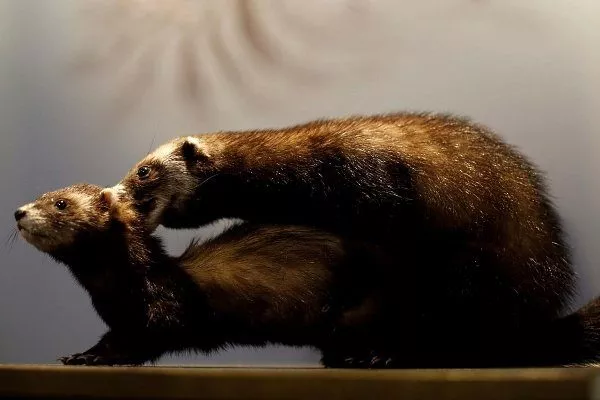
Ferrets have a noisy mating scene. The animals squeal, scream, fight, and move around vigorously. Mating ferrets exhibit various behaviors:
- The male is active and aggressive. He grabs his partner by the scruff of the neck with his teeth and pins her down.
- The female breaks free and squeals.
Mating lasts from half an hour to several hours. However, it's advisable to leave the ferrets alone for a full day to ensure fertilization.
You can clearly see how ferrets mate in the video below:
After the mating process is complete, the female is examined for wounds—they could have been left on her neck by the male's sharp teeth. If the bites are shallow, they are treated with an antiseptic. Deeper wounds require veterinary attention. The female is also checked for vaginal infections after mating.
When breeding ferrets on a large scale, introducing females to males begins in early March, regardless of the condition of their reproductive organs. The procedure for introducing females is as follows:
- every 2-3 days until the loop changes by 3 points;
- temporarily stop planting to avoid early mating;
- they are planted at a loop of 5 points.
Re-mating
If mating is successful, the loop will disappear completely within 5-8 days. If this does not happen, the female must be mated again.
When is human intervention required?
Humans don't have to interfere with the fertilization process; the male and female are left alone, and no one interferes. However, it's the female who needs further assistance.
What does human assistance consist of:
- A nest needs to be prepared for the mother. It's a good idea to line it with rags and paper. To keep the puppies warm, the mother stays in the nest at all times, maintaining a temperature of 33-35°C. If the mother takes a pup out for a walk and then forgets it, it will quickly freeze and die if not thawed promptly.
- You should be present during the birth. Complications during the birth of puppies cannot be ruled out. It's important to schedule an appointment with a veterinarian in advance so that they can quickly provide assistance if necessary.
Pregnancy period
Signs that indicate pregnancy:
- A few days after mating, the loop decreases in size, and after a week it disappears completely.
- More reliable evidence of pregnancy will appear later – in the form of a large belly and swollen nipples.
A pregnant female requires a special diet and unlimited food. Feeding guidelines for a pregnant female include:
- a lot of meat food;
- a lot of calcined cottage cheese;
- sunflower and butter feed additive;
- double the amount of vitamin supplements.
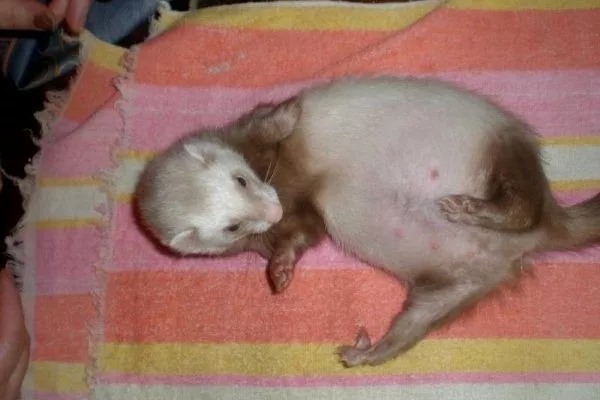
Ferrets' pregnancy lasts 42-45 days. A litter typically consists of 6-9 puppies.
Helpful tips
For beginners, there are some useful tips:
- If you're a beginner ferret breeder, don't rush into breeding your own. Research these animals thoroughly, gain experience, and carefully study the practices of experienced breeders.
- Males that you do not intend to use for breeding should be neutered.
- Don't start breeding for fun or as an experiment - it's a serious matter, and if something goes wrong, innocent animals will suffer.
Mistakes Newbies Make
Beginners can make mistakes at any stage of ferret breeding:
- the pair was chosen incorrectly - not vaccinated, not treated for worms;
- mating takes place on the female's territory;
- the animals are not given enough time to mate;
- the onset of pregnancy is not monitored and, if necessary, repeated mating is not carried out.
Myths about ferret breeding
Many beginners have no idea about breeding ferrets. Here are a few misconceptions that lead many newbies to failure.
What do newbies think about breeding ferrets – truth and myths:
| Delusion | In fact |
| Ferrets breed and reproduce on their own – it is enough to keep the female and male in the same cage. | The process requires preparation and monitoring of the animals' behavior. |
| It's better to let ferrets breed; sterilizing them is inhumane. | Uncastrated animals suffer more due to unsatisfied desire. They become aggressive, depressed, and develop physiological problems. |
| Let the female give birth once, and then she needs to be spayed. | Ferrets can be seriously harmed by developing malignant mammary tumors. |
Ferret breeding is not recommended for beginners without at least six months of experience. To become a successful breeder, you need to have a feel for your ferret, understand its behavior, and be aware of its seasonal and hormonal cycles.