
Estrus and mating seasons in male and female ferrets occur at roughly the same time, but the physiological changes manifest differently. Ignoring this process is strictly prohibited, as it can lead to undesirable consequences for the ferrets.
What is rutting and heat in ferrets?
The rut is characteristic of males, while estrus is characteristic of females. Both terms refer to the period when furos (ferrets) become ready to mate. During the rut, testosterone levels increase significantly in males, and estrogen levels in females.
Features of this process:
- Gon. Sexual dimorphism also occurs due to the activation of subcutaneous glands, which secrete a special odorous fluid that is attractive to females. This secretion spreads throughout the ferret's body, causing clogged pores and partial hair loss.
- Estrus. Estrogens are released by the ovaries during the onset of a specific menstrual cycle. Along with this, increased amounts of hormones are released by the hypothalamic-pituitary system, causing follicles to mature in the ovaries.
When does the rut and heat begin?
Numerous scientific studies have confirmed that the onset of heat in furo sheep occurs with increasing daylight hours. Therefore, estrus and mating seasons begin in March and end around August.
- ✓ The lighting level in the room where ferrets are kept should be at least 14 hours a day to stimulate the onset of the sexual cycle.
- ✓ Ambient temperature plays a key role: at temperatures below 10°C, sexual activity may decrease.
Females reach sexual maturity at 5-6 months, males at 6-8 months, and the reproductive system is fully formed at one year of age.
Signs of puberty
Due to the physiological characteristics of ferrets, not only their behavior but also their external appearance changes during the rutting season. The symptoms of rutting and heat vary for each sex.
- Measure the female's body temperature: an increase of 0.5-1°C may indicate the beginning of estrus.
- Limit contact with other animals to reduce stress.
- Consult your veterinarian to determine the method for stopping heat.
In the female
The main sign of estrus in female ferrets is an increase in the size of the genital organ, specifically the loop. This is how it manifests itself:
- first the hair on the loop disappears;
- then hyperemia occurs, and the redness becomes more intense as the heat continues;
- then there is severe swelling, which causes discomfort to the ferrets;
- mucous-watery discharge from the loop appears, transparent in color with a very slight unpleasant odor;
- then the genital organ becomes relaxed, so it becomes a little paler.
It is important to carry out mating 14-15 days after the peak of swelling and redness of the loop.
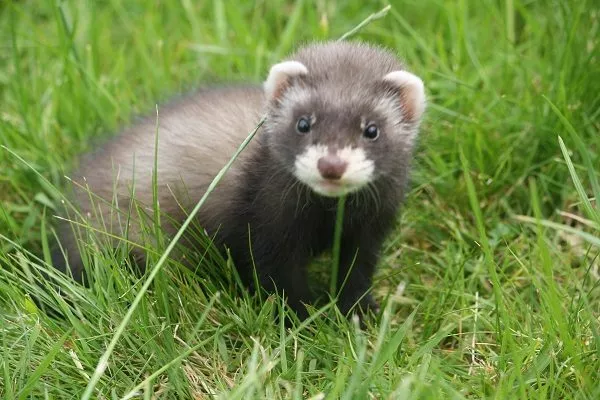
Behavior also becomes unusual:
- the female becomes more aggressive, even to the point of hissing at the owner and attempts to bite;
- if there is no partner nearby, she begins to search for him, therefore she rushes around the cage or apartment (at this time she can easily slip out of the house through an open door);
- refuses to eat;
- She changes her routine – now she sleeps during the day and walks at night.
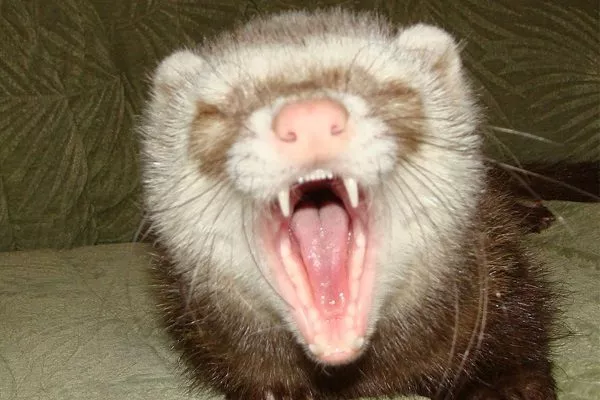
In the male
The first invisible sign of a male's rut is a particularly strong, unpleasant odor emanating from his entire body. Among the visible symptoms, breeders note the following:
- hardening of the testicle (easily palpable) and an increase in its size (up to the size of a walnut);
- swelling of the tissues located near the urethra;
- the formation of transparent secretions with a peculiar “aroma”, with the help of which the male marks;
- partial baldness - most often the hair disappears from the tail;
- appetite is disturbed;
- the ferret begins to lose weight without mating;
- constantly searches for a partner and pounces on toys, the owner’s hand and other objects, simulating sexual contact;
- puts marks everywhere;
- refuses to use the litter box.
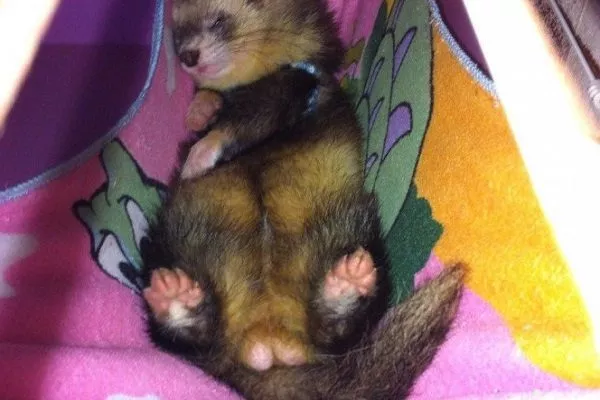
At the very beginning of the hunt, the fur becomes covered in a greasy coating, after which it emits a strong stench and begins to fall out.

Prolonged estrus and its characteristics
If a female isn't provided with a male for mating or if appropriate measures aren't taken, her estrus won't stop and will continue for several months. This can lead to a condition called prolonged estrus, which can lead to complications for the animal.
Signs
Increased estrogen synthesis promotes the manifestation of signs of estrus (heat), but if this continues indefinitely, other symptoms begin to appear.
For example:
- the vulva is hypertrophied;
- baldness is formed not only on the tail part, but also on the entire body, and on all sides;
- against this background, hair follicles also atrophy, so it becomes impossible to cure baldness in the future;
- the female becomes exhausted, loses her sense of prostration, becomes lethargic and apathetic;
- paresis occurs;
- internal bleeding is possible;
- Ferrets quickly pick up infections and often get sick.
Consequences
Signs of a prolonged heat in a ferret have serious consequences, as an excessively sharp increase in female hormones leads to the following complications:
- hyperestrogenism;
- suppression of hematopoiesis activity in the bone marrow;
- anemia;
- hypoplasia;
- aplasia;
- thrombocytopenia;
- a sharp decrease in the level of leukocytes, erythrocytes and other blood components.
Interruption of estrus
If a male is missing or the owners do not wish to breed ferrets, the heat cycle must be terminated immediately. Otherwise, a prolonged heat cycle will develop, which, as is known, leads to disastrous results. This can be accomplished in several ways.
Natural exit from heat
According to scientific research, spontaneous exit from heat is impossible. Therefore, breeders are required to take special measures to save their rodents. Despite this, there are cases where a female's heat disappears on its own, but this does not mean that the situation will not recur in the future.
Ferret mating
When a ferret becomes pregnant, many breeders resort to mating the female with a male capable of fertilizing with healthy sperm. This is a risky move, but the key is to time the process precisely.
This method is based on the fact that female ferrets, like humans, have periods when the likelihood of ovulation is high or low. Therefore, it's important to choose a time when fertilization is virtually impossible. These are the following periods after the first day of estrus:
- up to 12-15 days;
- in 30-40 days.
In this case, a false pregnancy develops, which will not bear fruit.
Injections and implants
Artificially inducing ferrets out of heat involves chemical methods. Specifically, implants are inserted under the skin or injections of solutions containing HCG and GnRH (gonadotropin). These hormonal medications inhibit estrogen synthesis and normalize the condition of the female (as well as the male).
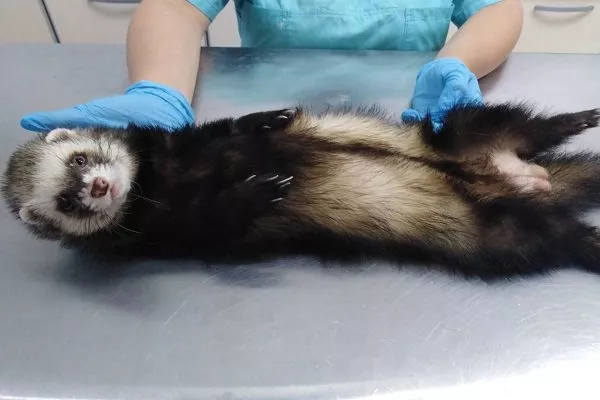
Hormonal therapy and implantation are prescribed only in cases where the owner needs to delay the time before sterilization or castration, as well as in case of prolonged estrus (as an emergency aid).
This isn't a 100% foolproof method either, as it all depends on the individual animal's body type. Furthermore, the next heat cycle may begin as little as 15-10 days after the procedure.
What is used:
- For injections. Most commonly, these are gonadotropin medications—Lupron, Suprelorin—which are based on a substance synthesized by the pituitary gland. Manufacturers claim that unpleasant symptoms will disappear within a week, and the effect will last up to 60 days. After the injection, a false pregnancy will occur.
Steroids are sometimes used (when hormonal therapy is contraindicated). These include progestone-blocking agents, such as Covinan. Their action and effect are identical to those of hormonal medications. - For the implant. Hormonal medications containing deslorelin are used as implants. These include Suprelorin and Deslorelin. The drugs have identical effects, so the specific medication is selected based on the indications and contraindications.
According to the manufacturers, the effect lasts for about 2 years, and the heat stops 30 days after the product is injected under the animal’s skin.
Mating a female with a sterilized male
This method is considered humane, as the female will be satisfied, her estrus will cease, and pregnancy will not occur. Unlike castrated males, sterile males remain capable of mating, but their sperm will not penetrate the female because the spermatic cords are ligated (after a vasectomy).
Despite this, there is a risk of false pregnancy.
Other options
Some breeders also use other methods to stop heat, but they are not very effective. These include:
- increasing the length of daylight hours – since ferrets walk at night, that is, in the dark, the best option is to make this time of day only 2-3 hours;
- change in diet – the more and more often ferrets eat, the less active and aggressive they will be;
- loop massage - in some cases it calms females, but the procedure requires special training from a veterinarian;
- transferring animals to cooler conditions – in such a room, sexual activity is slightly reduced, but you will have to make sure that the female does not get too cold;
- physical activity – Provide the animals with new toys, treadmills, mazes and tunnels so that after active games the Furo does not have the energy left for sexual desire.
What are the consequences of interruption?
Interrupting a dog's heat cycle always carries a risk, and each case is different:
- When mating ferrets. The development of a false pregnancy often contributes to the formation of oncological and benign tumors, especially if false mating is performed frequently.
- When administering injections and implants. The most common complication is weight gain, as the female is undergoing hormonal therapy. In other cases, the risk of developing cancerous tumors increases.
- When mated with a sterilized male. In this case, a false pregnancy develops (although not always) and the risk of a new heat occurring in the next 6-8 weeks increases.
Castration and sterilization
Spaying and neutering are equally applicable to both male and female cats. These procedures are necessary in several cases:
- keeping ferrets alone;
- the presence of diseases in one of the partners;
- reluctance to breed animals.
What are the differences between the procedures:
| Type of procedure | Features and essence | Result |
| Castration | It is carried out in 2 ways:
| Hormonal levels completely change, causing the animals to lose their sex drive. Mating is impossible, so mating does not occur. |
| Sterilization | It is carried out by surgical method:
| Sexual desire is partially suppressed, but it intensifies during the estrus period. Hormonal levels remain unchanged, so individuals can mate, but conception does not occur. |
Male
The optimal time for both castration and sterilization of male ferrets is between 6 and 10 months, or a maximum of 11 months, before the first rut begins. Castration, which involves removing the reproductive organs, is most often used for males, but some advocate sterilization, as it is much easier to remove the testicles.
How is an ovariohysterectomy performed?
- the male is given anesthesia, after which the doctor plucks the hairs on the scrotum;
- the surgical area is treated with an antiseptic;
- then the skin is cut with a scalpel by only 1.5 cm and a ligature is applied;
- After this, the organ is cut and the testicles are removed.
Females
Since females develop earlier than males, the timing of spaying or neutering shifts—the ideal period is between 5 and 7 months, well before their first heat. Ferrets are most often spayed by having their fallopian tubes tied, but some breeders prefer to have the organs removed immediately.
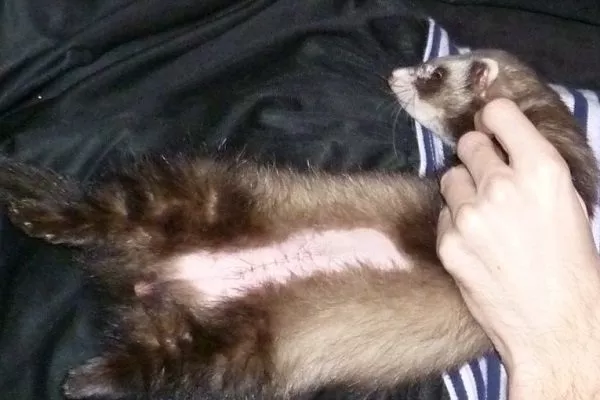
Early and late castration
Not all ferret breeders consider the need for neutering from the outset. They believe this can be postponed until problems associated with estrus and heat begin. In reality, it's undesirable to perform the surgery either earlier or later than the prescribed period.
What are the consequences for ferrets?
- Early castration/sterilization. If the procedure is performed at an age when the genitourinary and reproductive systems are not yet developed, adrenal diseases will occur, and the puppies will completely stop growing and developing.
- Late procedure. Performing surgery after a ferret has completed its estrus cycle can lead to hormonal disruptions and permanent imbalances, which can worsen existing conditions or lead to new ones. For example, urolithiasis, constipation, and hernias.
The optimal time for surgery is from late October to late February. Outside of these periods, rodents experience elevated hormonal levels, which is a contraindication for castration and sterilization.
Frequently asked questions
There are a number of questions that can be answered not only by veterinarians but also by experienced breeders who have performed spays/neuters, terminated heat cycles, and mated their dogs. Here are a few:
- What happens if you ignore an animal during the mating season? The most dangerous consequence is the death of the animal, since excess hormones in the body lead to very dire complications.
Less serious consequences are more associated with unpleasant consequences for the owner. These include chewed furniture and clothing, bitten hands and feet, markings left around the apartment, etc. - When will the female and male be ready to mate again? If the heat has stopped spontaneously or artificially, the ferrets will be ready for another mating, depending on the method used. This could be in 2 weeks or 2 years.
If we talk about the number of times individuals of both sexes go into heat per year, they go out 1 to 2 times. - Does it happen that after sterilization/castration the heat or rut occurs again? A sterilized animal may well show signs of estrus or mating season, since in this case its hormonal levels do not change.
Neutered ferrets are inherently unable to return to the ferret cycle, as their reproductive organs have been removed. However, it is possible for sexual desire to return. This may be due to the following reasons:- the body has not had time to rebuild its hormonal balance - estrus/rut will occur only once and will never occur again (you will have to wait patiently);
- the veterinarian did not remove the entire reproductive organ - if even a part remains, the adrenal glands will produce sex hormones (additional surgery will be required);
- implants were installed - in this case, the period of abstinence is limited to 2 years (it is important to repeat the procedure, but it is better to castrate or sterilize surgically, this way less harm is done to the animal).
Period of rest and recovery
Ferrets are dormant for only 5-6 months a year; the rest of the time, they are in heat or estrus. This is unless mating or artificial termination occurs. Once estrus ends, ferrets recover quickly—they become affectionate and playful again, and eat normally.
The frequency and duration of estrus or mating season in ferrets depends on many factors: breed (larger individuals are less likely to undergo this physiological process), diet, body characteristics, and the presence of individuals of the opposite sex in the apartment (these can be not only furos, but also cats, dogs, and rats).
To ensure that ferrets—and their owners—don't suffer during heat and rutting, ensure prompt spaying or neutering, create optimal conditions for mating, and learn to recognize the first signs of heat.