
Ferrets are cute and funny little creatures. Raising these animals requires not only patience and dedication, but also a certain understanding of their physiology and the proper care for newborn ferrets. If you learn all the nuances in advance, you can raise strong and healthy offspring.
Why take puppies away from their mother?
Weaning puppies from their mother is done to stop the mother from lactating. This is done to ensure the next litter is born soon and to allow the mother to recover from the illness. childbirth, at the age of 5-6 weeks, breeders already wean the puppies.
In this case, it's important to remember that the female's next "heat" begins a week after the young have been removed. Therefore, it's necessary to reintroduce a pregnant diet, and the female is again prepared for the rut and the birth of her new offspring.
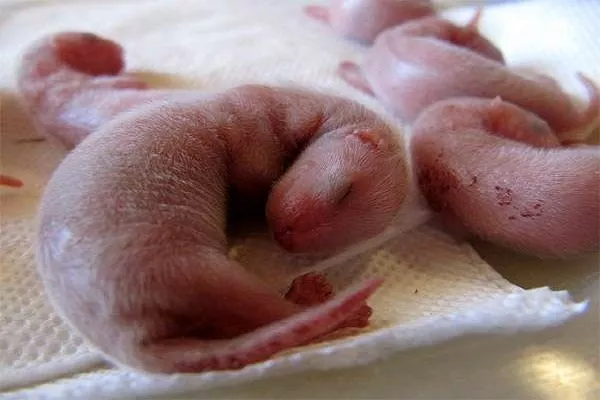
When is it time to wean puppies from their mother?
The optimal age for ferrets to grow strong enough to be raised without their mother is 40-45 weeks. This is when young ferrets begin to develop teeth and begin feeding independently.
- ✓ The presence of fully erupted teeth, which allows the puppies to feed themselves.
- ✓ The ability to maintain body temperature without a mother, which is critical for survival outside the nest.
It's important to remember that the longer ferrets nurse, the stronger and healthier they will be. If the young are well-fed, they can be kept together for a long time. They are fairly friendly animals, and fights between them are extremely rare.
How to properly separate ferrets?
To ensure the weaning of ferrets from their mother is as comfortable and painless as possible, it's important to follow a consistent process. The weaning process can be divided into several stages:
- Beginning solid feeding. At two weeks of age, the mother begins feeding the puppies "adult food." The breeder also begins to participate and assists the mother with solid feeding. By six weeks of age, they can be fully transitioned to adult food.
- Maintaining activity. At 1-1.5 months, ferrets' ear canals begin to open, their vision begins to emerge, and they begin to gradually venture out of their nest. During this period, it is recommended to pick up and play with the babies as often as possible. This will help them socialize more quickly.
- Litter box training. This is also done by the mother, but she may become tired of the litter, and then it's necessary to train the kittens yourself. This will help maintain hygiene in the home in the future.
- After the pups are separated from their mother, mandatory vaccinations should be administered. This is done to prevent common illnesses in ferrets.
If these simple conditions are met, there will be no difficulty separating the offspring from their mother. These stages will help the babies settle in, acquire skills, and grow and develop independently.
What if you separate the ferrets too early/too late?
Since ferret pups differ from other animals in their poor ability to maintain a constant body temperature, their body temperature is almost equal to the ambient air temperature. A nearby female maintains the temperature of the nest where her pups live.
For this very reason, early weaning of puppies from their mother is not recommended. The pup can quickly become cold; its fur is not yet sufficiently warm.
Serious problems are primarily caused by early weaning of ferrets from their mother. Nothing serious will happen if the ferret is weaned later; this may even be beneficial for the new owner, as the animal will likely already be litter-trained and dewormed.
But there's one caveat. If a human wasn't present during the ferret's upbringing, late weaning can lead to stress, the baby will be socially unadapted, and taming it can take several months.
Conditions for keeping motherless ferrets
Before weaning the ferrets, it's important to carefully consider their habitat. To ensure a comfortable weaning and subsequent life without their mother, the owner should determine how and where the ferret will live.
It will be necessary to adhere to the following conditions of detention:
- keep the apartment clean, regularly clean the cage and the premises;
- control the animal when training it to use the litter box;
- check for cracks and holes in the room and eliminate them;
- Remove all dangerous objects from reach, be careful with open windows, and try to keep the kitchen closed.
Arrangement of the place
Ferrets are primarily forest animals, and at first glance, keeping this agile and nimble little creature in an apartment might not seem like a good idea. In fact, ferrets thrive in apartment living; they're easy to maintain, and creating a home for your pet isn't particularly difficult.
There are several options available for keeping a ferret in an apartment:
- Cell. Although a ferret may seem like a small animal, its cage should be quite spacious. This is necessary so that it can move around and play freely. It's recommended to use wire mesh instead of wire. This will protect the animal's teeth, as it will likely try to chew through the cage.
- Sleeping place. We all love to feel comfortable while sleeping. Animals are no exception. A sleeping place should be soft and comfortable. You can lay down some rags and build something like a burrow. Special hammocks for rodents are now available at pet stores. If your pet is free to roam around the apartment, don't be surprised if they choose your bed or chair as their sleeping place. A ferret will happily rest after all their active play.
- Play area. Ferrets love tunnels and mazes. You can build one yourself or buy one at a pet store. The play area can be filled with various toys; ferrets love to play with and chew on them.
But it's important to remember that even the most comfortable and well-equipped cage is no substitute for freedom. Let your pet out of the cage for at least a couple of hours, but keep an eye on its safety.
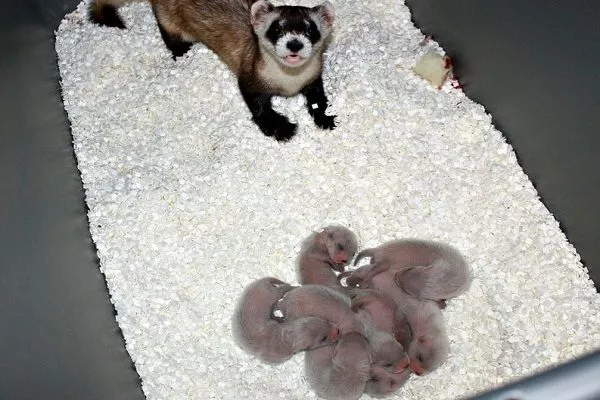
Conditions of detention
Proper care is crucial when keeping ferrets. Many factors must be considered to ensure your pet feels comfortable in your home. Let's look at the most important ones:
- Temperature conditions. It needs to be monitored. Since the domestic ferret is a subspecies of the European ferret, it doesn't respond well to heat. The most comfortable temperature for keeping it is between 10 and 25°C. Higher temperatures can cause heatstroke.
If your room faces the sunny side, then think about purchasing an air conditioner or putting a small pool for your pet so that it can cool off a little at any time;
- Air humidity. The room must be well ventilated. High humidity causes ferrets to sweat profusely and have difficulty breathing. Dry air is also harmful. The drier the air, the more dust accumulates, drying out the mucous membranes and respiratory tract. Skin may peel, and claws may become brittle. The optimal humidity is 60-70%.
- Lighting. If you keep a ferret indoors, remember that its daylight hours should be similar to those of a natural day. A proper daylight schedule will allow it to produce sufficient amounts of melatonin, a key coordinator of biological rhythms.
If there is not enough melatonin in the body, the adrenal glands begin to malfunction, which can lead to a disease called hyperadrenocorticism.
Inventory
To provide the necessary care for puppies, and later for adult animals, a breeder will need auxiliary materials. These will help create not only a comfortable environment for the pet but also ensure a comfortable and safe life for the pet in captivity.
Here is a list of the most necessary equipment:
- Cell. We previously discussed the most comfortable housing option for a ferret. Before purchasing a cage, be sure to research the housing requirements and choose the most suitable option.
- Litter tray. This accessory serves as a "toilet" for the ferret to relieve itself.
- Hammock. An accessory that brings special joy to ferrets. Regular bedding isn't as appealing to them. Ferrets prefer hammocks, which allow them to hang suspended and enjoy their slumbers.
- Drinking bowl and bowl. The main requirement is that it be securely attached to the cage bars. A ferret can tip over a regular floor bowl and water bottle, leaving everything on the cage floor. Pet stores offer a wide selection of bowls that will securely attach to the cage bars.
- Carrying case. You'll need this accessory for a long time. Walks and vet visits with the carrier will ensure your ferret's peace of mind during transport.
- Harness. Ferrets love to walk outdoors. A harness will help control the animal's movements and prevent escapes.
- Toys. To prevent your ferret from choosing your item for entertainment, provide it with engaging toys. These should be hard enough to prevent small particles from being swallowed.
All the necessary equipment for keeping a ferret can be made from scrap materials. Use your imagination and ingenuity, and you can attract your pet's attention without much effort.
Feeding the young
Ferret babies grow and gain weight quickly. At 4 months, a baby can be compared
With a one-year-old animal. For proper development, a ferret's food should be as balanced, fresh, and calorie-rich as possible.
- ✓ The food must contain at least 30% protein to meet the ferret’s carnivorous needs.
- ✓ Fats should make up about 20% of the diet to maintain energy and coat health.
Some owners feed their ferrets cat food. It's best to avoid this. Ferrets and cats have different needs. It's best to buy food specifically formulated for ferrets. It's readily available at any pet store, but be aware that ferret food can be expensive.
When can you feed ferrets?
Ferrets are mammals. The mother nurses her pups for up to 1.5 months. Until this age, the puppies are on a "milk diet." Then they can be gradually transitioned to adult food.
It's a different matter if the ferret refuses to feed her offspring. Young ferrets are very difficult to feed, as many foods, including cow's milk, are contraindicated for them. Goat's milk is recommended, but it should be diluted with water. Buckwheat or oats can also be added.
What can and cannot be given?
When feeding your pet, you should take into account the nutritional needs of ferrets and control the balance in the diet.
Ferrets' main diet consists of meat, as they are carnivores by nature. However, sometimes owners want to pamper their pet. It's important to limit the amount of treats they give and not use them as a substitute for their main diet.
Below are some foods that you can feed your ferret:
- Cucumber. This vegetable is good for the kidneys, but it should be peeled before serving.
- Chicken eggs. It's not recommended to feed them raw to your ferret. After boiling, you can give them a small piece of yolk.
- Quail eggs. Chicken is preferable, but should not be given more than once a week.
- Fruits. Strawberries, currants, and wild strawberries in small quantities. Apples, pears, and bananas should be eaten without seeds or peels. Watermelon and cantaloupe are beneficial for detoxifying.
- Cottage cheese. It is also given in small quantities and with a fat content of no more than 2%.
- Chicken gizzards. It can be given dry. A small piece of chicken fillet, pre-scalded in boiling water, is allowed.
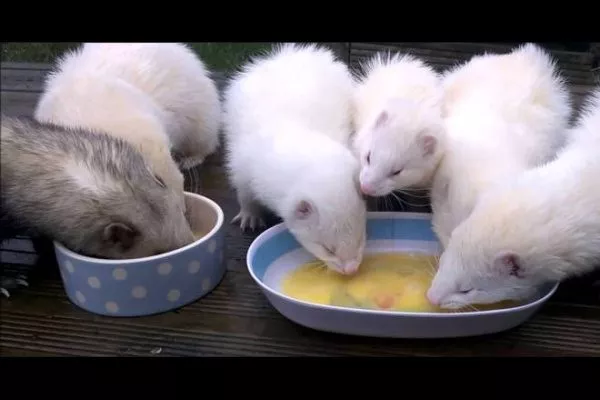
An improper diet can lead to problems in the animal's body. Therefore, it's important to know the list of foods that are contraindicated for ferrets:
- Sugar-containing products. These include sweets, chocolate, and other items. Flour products such as cookies, gingerbread, and the like are also not recommended.
- Dairy products. Of these, only cottage cheese can be given in small quantities.
- Food from the table. Fried, salty, spicy foods. Sausage, smoked meats, and pickles are contraindicated for ferrets;
- Nuts, mushrooms. They should not be given under any circumstances.
- Food for cats and dogs. Especially if it's an economy-class product. Before giving your ferret pet food, you should carefully examine the ingredients.
What should I give him to drink?
Ferrets need constant access to fresh water, especially if they eat dry food. The amount of water needed is equal to three times the amount of dry food. During warmer weather, ferrets require especially large amounts of water.
Ferrets deprived of water begin to refuse food. Make sure water is available at all times. Since young ferrets love to play in water and gradually contaminate it with food scraps, pay attention to the freshness of the water. A bottle is a convenient way to serve water.
Sample diet for puppies
Raising a baby ferret is a labor-intensive process. Typically, the first weeks of life are peaceful and the puppies don't require much attention; the mother cares for her ferrets herself.
You can see an approximate diet for puppies in the table:
| Age of the puppy | Complementary foods | Feeding frequency |
| 20-25 days | Weaning begins with liquid ground meat. Fresh ground meat can be mixed with low-fat cream or kefir until it becomes semi-liquid. Vitamins: phosphorus, calcium, vitamins A and B, and protein are essential for puppy growth. | 1-2 times a day |
| 1.5-2 months | The ground meat does not need to be diluted. It is recommended to gradually introduce all types of food. | 4-5 times a day |
| 3-4 months | Ground meat and fish, broth, chopped vegetables. It's essential to provide phosphorus and calcium for skeletal development. Frozen fish contains these vitamins. | 3-4 times |
| 5-6 months | It's now time to fully transition your ferret to an "adult diet." During this period, growth slows and the ferret begins to eat less. | 2 times |
Ferrets reach sexual maturity at 10 months. Their lifespan is estimated at 8-10 years. As they become accustomed, introduce the puppy to a single feeding area.
What vitamins do young animals need?
To ensure normal development, ferrets need vitamins. A deficiency can cause mood swings and dull fur. It's especially important to provide these little predators with vitamins and minerals during estrus, pregnancy, and lactation.
In addition to the complex supplements now available on the shelves of almost all pet stores, vitamins can also be obtained from natural sources:
- Vitamin A is found in milk, liver, and fish oil;
- Vitamin B can be obtained from liver, meat, yeast;
- Vitamin D is found in fat;
- Vitamin E is found in sufficient quantities in green peas;
- Vitamin K is obtained from seafood and broccoli;
- Ferrets have virtually no need for vitamin C. However, if they don't have sufficient vitamin A, vitamin C synthesis will be impaired.
Keeping an exotic pet at home is a rather labor-intensive and demanding process. Ferrets are very active and inquisitive. But to maintain their playful spirit, special attention must be paid to their nutrition and living conditions, especially if you decide to adopt a very young ferret.