
To ensure successful ferret breeding, it's important to pay special attention to the pregnancy and birth process, taking into account the physiological and genetic characteristics of both males and females. There are some nuances to consider here: puppies are born prematurely, and ferrets often experience false pregnancy.
Reproduction, mating features
Females reach sexual maturity between 5 and 9 months, and males between 10 and 12 months. They remain active for 5 to 6 years, but this period depends on the conditions in which they are kept.
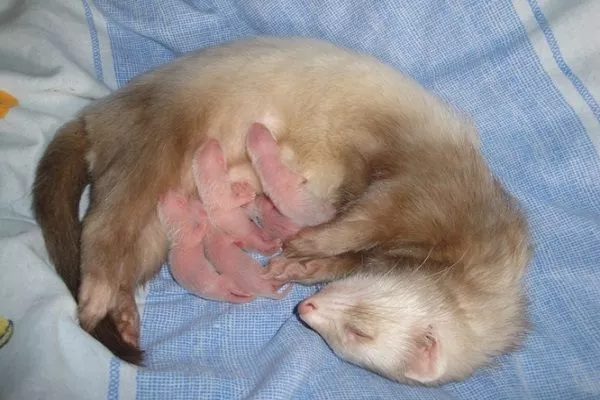
The beginning of the rut is easy to determine:
- in males the testicles increase in size, in females the genitals swell;
- an unpleasant smell appears from the animals and in the room, as they begin to mark their territory;
- aggression is shown;
- ferrets become restless and run around the cage without reason;
- the appearance of the wool changes – it looks wet.
There are knitting rules and breeding of ferrets, which must be strictly adhered to:
- take females at the age of 9-10 months, when their reproductive system is fully formed for the upcoming birth and bearing of offspring;
- choose a male who has already bred at least once;
- If a couple from different houses is mating, take the female ferret to the male ferret - he feels more confident in his own territory;
- do not introduce the male until the female’s genital loop is completely swollen (after the onset of estrus, this is approximately 3-5 days);
- do not allow mating between sisters and brothers;
- the number of litters per year should not be more than two;
- the optimal season for breeding is from late winter to mid-summer;
- If the female resists mating, it means she is not ready for it yet – wait 1-2 days;
- For a full mating, keep ferrets together for at least 2 days;
- the mating process takes 1 hour or more;
- Immediately after copulation, move the female to a separate place;
- To obtain breeding offspring, select appropriate individuals;
- Avoid breeding animals that are not vaccinated.
Without a partner, ferrets fall into prolonged depression, which leads to hair loss, exhaustion, and even death of the pet.
How long does pregnancy last in ferrets and how does it progress?
The female carries her puppies for 40-42 days. In some females, the abdomen is not visible until the birth, especially if the litter is expected to be less than five.
Nuances of pregnancy:
- the female behaves calmly, so she needs peace and quiet;
- During a normal pregnancy, the female consumes a lot of food, especially fortified food;
- 6-9 days before giving birth, the ferret searches for building material to create a nest - if there is not enough, she pulls out her fur;
- A pregnant ferret needs a lot of water.
- ✓ Temperature control in the room for a pregnant female should be within the range of 18-22°C to prevent overheating or hypothermia.
- ✓ The need to isolate the pregnant female from other animals to reduce stress and the risk of injury.
Determination of pregnancy
To determine the exact due date, it's essential to remember the mating date. Pregnancy can be detected by the following symptoms:
- the abdominal area increases in size, forming a flattened circle (but not always);
- the mammary glands swell;
- closer to labor, milk is released from the female's nipples;
- the ferret becomes sleepy and loses energy;
- hair falls out 7-10 days before birth (in the wild, hairs are used to create a nest);
- appetite increases;
- the stomach becomes denser;
- the female's movements around the cage become slower.
False pregnancy
If the egg is not fertilized during sexual intercourse, a pseudopregnancy often occurs, the causes of which may be the following:
- lack of protein and vitamin food in the diet of the future female;
- frequent stress, which causes the ferret to be constantly anxious;
- age-related changes (as the female ages);
- excessively prolonged estrus – about a month;
- hormonal imbalance in one of the partners;
- use of hormonal drugs;
- mating with a male who has been sterilized, which results in the artificial termination of estrus.
Frequent pseudopregnancies in ferrets can lead to the development of malignant tumors in the genitourinary system and mammary glands. Therefore, it is important to consult a veterinarian promptly to determine the cause and prescribe further treatment.
How does false pregnancy manifest itself in ferrets:
- as with a normal pregnancy - calmness, swelling of the mammary glands, increased appetite, drowsiness, etc.;
- the belly is rounded, but at the same time it is soft;
- the emergence of maternal instinct - the female begins to intensively care for one of the family members.
How to care for a pregnant female?
To ensure a normal pregnancy and a successful birth, the female requires special care during pregnancy. Simple but proper care is required:
- the amount of food increases by 2-3 times;
- vitamin complexes and foods rich in calcium and protein are given;
- If purchased feed is used, it must be of high quality;
- drafts and other negative factors that lead to colds and other illnesses are eliminated;
- Regular walks in the fresh air are carried out - the female cannot be kept in a closed house all the time;
- the bathing procedure is carried out as carefully as possible and always in warm water;
- Do not use cosmetic products for care and bathing, as this may cause an allergic reaction;
- the cage is kept sterile and clean;
- the nest is prepared in advance.
- Conduct a veterinary examination on the 20th day of pregnancy to assess the condition of the female and fetuses.
- Provide short daily walks to keep the female physically active.
- Introduce folic acid supplements into the diet to prevent birth defects in offspring.
How to organize a nest correctly?
Ferrets need to give birth in conditions suitable for their species. To achieve this, a nest must be built in advance where the mother and her offspring will feel completely safe.
How to do it – step-by-step instructions:
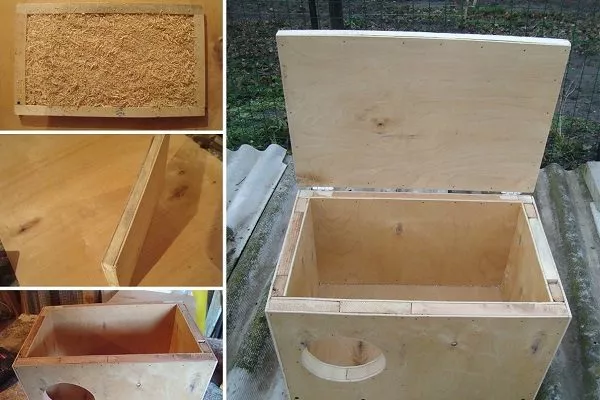
- Prepare a clean plywood box (hardboard or cardboard can be used instead). If the ferret lives in a cool room, the dimensions should be no larger than 30x30x30 cm. If the room is warm, the box dimensions can be any size, but no smaller than 40x40x40 cm.

- Get out a hot water bottle and a clean large towel.
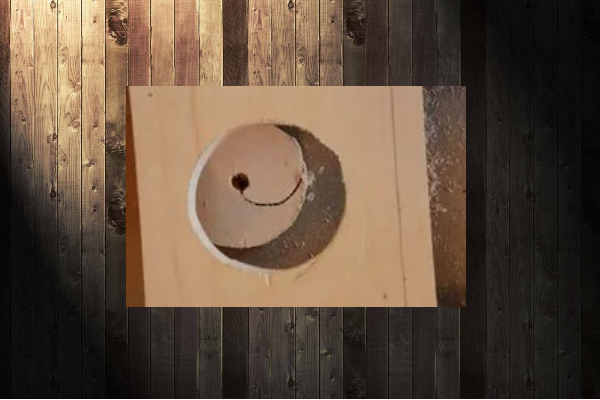
- Cut an opening in the box for entry, leaving a high threshold.
- Make the roof so that it opens.
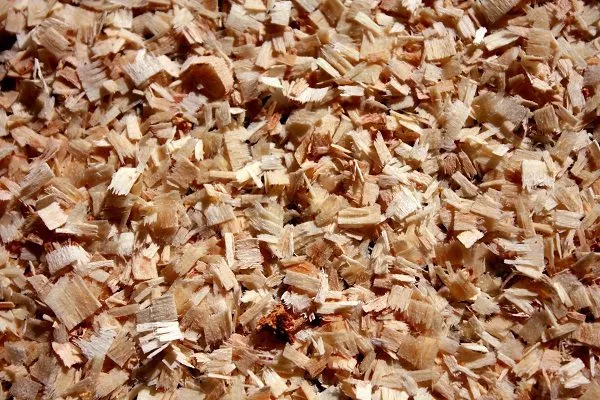
- Pour wood shavings onto the bottom in a layer of 2-4 cm.
- Scatter scraps of wool (5x5 cm in size) near the nest, which the ferret will carry into the nest on its own.

Signs of approaching labor
The end of molting and the female's increased desire to build a nest of her own fur indicate the approach of labor. But there are other signs, too:
- the ferret takes special care of its territory and cleans its cage;
- leaves the house less often;
- the plug on the nipples comes off;
- the ferret's appetite decreases;
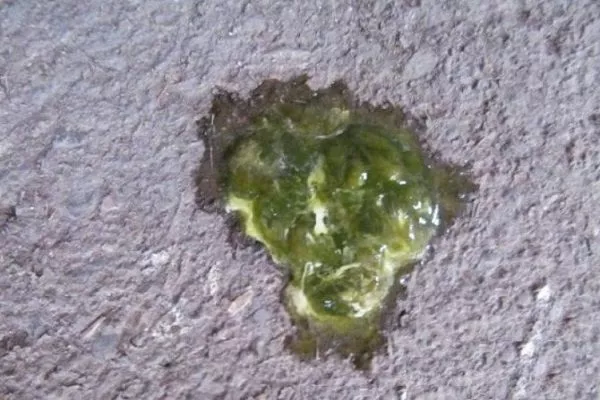
- a brownish mucus with a sticky texture forms on the genital loop;
- The female begins to behave restlessly immediately before giving birth, as contractions begin.
The process of childbirth
During labor, touching the female is prohibited, as this will provoke aggression, which can lead to biting and cannibalism of the young. A ferret can handle the labor completely on her own, requiring no additional assistance.
The birth process:
- The ferret is very worried and can't find a corner for herself.
- After the onset of painful contractions, the birth canal widens.
- The ferrets appear one after another.
- The mother bites the umbilical cord.
- The female licks her offspring and begins to feed them with her own milk.
Determining the viability of a newborn
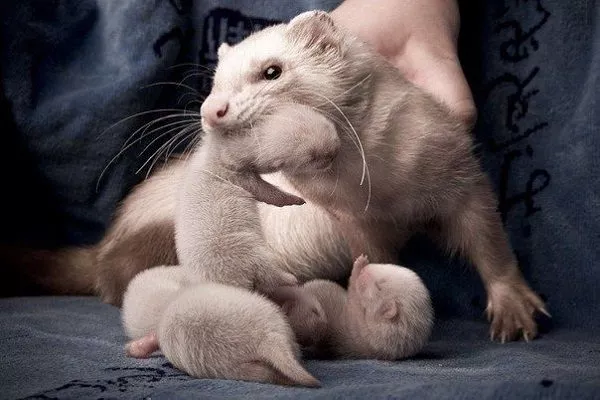
Newly hatched ferrets weigh between 7 and 15 g. It only takes 5 days for them to dramatically double their weight, and after 14 days the puppies will weigh 80-100 g.
Signs of viable newborn ferrets:
- have no teeth;
- they are blind;
- the ear canals are hermetically sealed;
- The body is covered with light-colored embryonic fluff.
A characteristic of newborn ferrets is that their body temperature is not maintained at a constant level; it depends on the ambient temperature in the ferret's home. To prevent hypothermia, the mother keeps her offspring close to her at all times. This allows the pups' temperature to be maintained at no less than 33°C.
Behavior of the female after giving birth
If the ferret has had an easy birth, without experiencing any stress, she immediately begins to care for her offspring – licking them, feeding them, hiding them, and keeping them warm.
Sometimes young females don't show maternal instincts. In this case, the owner must help the ferret. Here's what to do:
- Take the female in your arms and place her on your lap, belly up.
- Attach the puppy to the nipple.
- To help your baby develop a sucking reflex, express some milk from the breasts.
- Lubricate the baby's mouth with liquid.
Postpartum care for a ferret
The main rule for caring for a newborn ferret is to not interfere with the raising of the babies and to avoid entering the nest without a reason. The exceptions are feeding and cleaning times.
How to proceed:
- feed the female at least 3 times a day, but if there are more than 10-11 puppies, then 5 meals a day is acceptable;
- introduce broths, kefir, and milk into your diet;
- refresh the water in the drinking bowl at least twice a day;
- buy high-quality food, otherwise the mother will develop diarrhea, and the babies will not receive nutrients from the milk;
- provide sufficient heat;
- Do not take outside in cool or rainy weather.
Care of newborn ferrets
The young develop very quickly, and their immune systems strengthen rapidly. Therefore, the first few days after birth are considered the most dangerous period when offspring can die.
Rules for keeping newborn ferrets:
- Use containers with low sides for liquids (water, broth). Otherwise, ferrets may choke.
- The box is covered for the first two days. This allows the offspring to adapt more easily to the new conditions.
- It is not recommended to artificially feed the babies until they are 20 days old, provided the mother has sufficient milk and is eating a balanced diet.
- If the ferret is unable to nurse her babies on her own, they should be fed every 2 hours, gradually increasing the interval between meals.
- Until one month of age, puppies need liquid food; after 4 weeks, solid food is introduced.
- The diet of young animals consists of soft food - milk, broth, rare semolina porridge, softened dry food (for example, cat food).
- Allowed solid foods include boiled porridges (buckwheat, millet, wheat), meatballs made from boiled meat and fish. Raisins, eggs, and vegetables are also acceptable.
- When introducing solid foods, new foods are introduced gradually. Start with one meal per day and small portions.
- After a week, you can pick up the puppies.
- Hygiene procedures are carried out no earlier than one month after birth.
When to seek veterinary help?
Sometimes complications arise during pregnancy, labor, and after birth. Often, these complications cannot be resolved on your own, so a visit to a veterinary clinic is required.
In the following cases, you may need to seek veterinary help:
- delayed labor (if the female has not given birth by 43-44 days);
- red and brown discharge from the genitals;
- inability to give birth during intense contractions (the birth canal does not open);
- labor without contractions;
- cub stuck;
- excessive increase in body temperature – over 42 °C;
- stench from the female's vagina (the fetuses are frozen).
Common mistakes
A common misconception among beginning breeders is feeding vitamins and minerals after pregnancy. This is fundamentally wrong, as ferrets should be fed a complete diet at all times.
There are a number of errors to look out for:
- Exact mating dates. Mating too early can result in false pregnancy, while mating too late can result in lack of fertilization and the death of the female.
- Lack of preparation of the owner. A nest should be built in advance. It's advisable to take a day off on the days the kittens are due, as veterinary assistance may be needed.
- Incorrect nest creation. The nest box should be built at least 2-3 weeks before labor begins, as the female's reaction will need to be monitored. If she's uncomfortable, she'll begin constantly moving her offspring from place to place after birth, which could lead to the death of the newborns.
- Close proximity to other animals. As soon as the female is ready to give birth, you need to take the other pets, including the male partner, to another room.
When the newborns are born, the mother ferret senses danger and becomes nervous. This leads to milk loss and aggression. The mother may bite the babies. - Rare cleaning in the house. If before the birth of the puppies the cage was cleaned once every 2 days, now it needs to be done 1-2 times a day, as the number of animals has increased.
If hygiene requirements are not met, ferrets begin to get sick, and pathogenic microorganisms breed in their corner.
Breeding ferrets is considered a labor-intensive undertaking. But if you study the basics of pregnancy and birth in advance, take into account the physiological nuances, and strictly follow the rules for caring for the mother and newborn ferrets, you can have healthy and strong offspring.