
Ferrets are currently the subject of zoological debate. Experts disagree on the classification of these animals. Some divide them by coat color, others by color pattern, while others reject this classification altogether and divide them into groups (species). To better understand this striking member of the mustelid family, let's consider all classification options.
Types of ferrets
First, let's look at what types of ferrets there are and what criteria are used to distinguish them.
| Name | Body length (cm) | Weight (kg) | Number of pups in a litter |
|---|---|---|---|
| Steppe | 55 | 2 | 18 |
| Forest | 40-46 | 1.5 | 6 |
| American (Blackfoot) | 39-42 | 0.3-1 | Not specified |
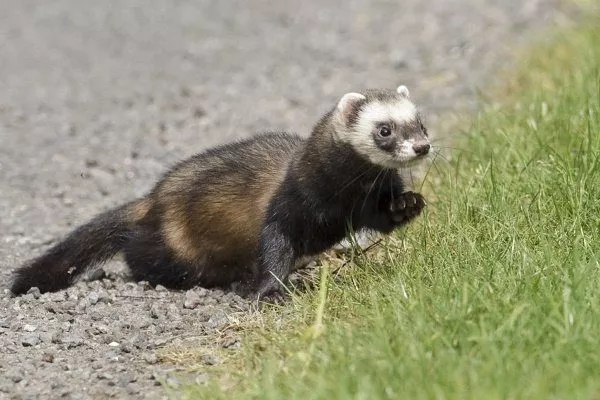
Steppe
This is the largest and most prolific species. It is found throughout Eurasia, reaching as far as the Far East. Its body length reaches 55 cm, and its tail is 15-18 cm. The steppe polecat weighs 2 kg. Its light weight allows it to move gracefully and silently. Litters can consist of up to 18 puppies.
The fur is unevenly colored. It is usually dark, ranging from brown to almost black. The underfur is lighter. The belly, paws, and tip of the tail are darker than the rest of the body. The muzzle has dark spots in the shape of a mask. The guard hairs are short and not particularly thick. It feeds on insects, rodents, snakes, and frogs.
Forest
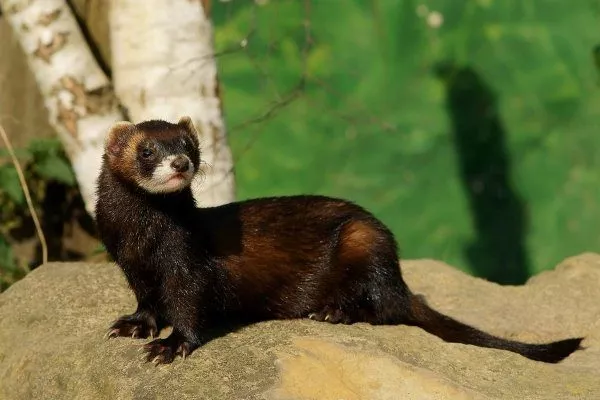
The breed's distribution range extends throughout Western and Eastern Europe, reaching the Ural foothills. It is considered the "ancestor" of domestic breeds. Its body length is up to 40-46 cm. Its tail is at least 16 cm long. It weighs 1.5 kg. A female gives birth to up to six pups in a litter. The puppies have a mane, which disappears as they grow.
In nature, there are white and red ferrets, the result of interspecies mating between forest and steppe ferrets.
The fur is brown or black, with a lighter undercoat with a yellowish tint. A white "mask" covers the muzzle. The belly and paws are darker than the rest of the coat. Like the steppe polecat, it feeds on mice, ground squirrels, snakes, and insects. European polecats also hunt birds.
Read more about this type of ferret here.
American (Blackfoot)
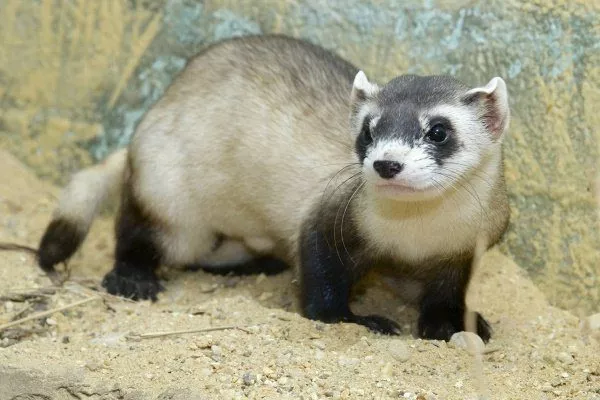
The rarest species. Native to North America. Much smaller than the "European" species. Body length: 39-42 cm. Weight: 0.3 to 1 kg. Rarely encountered in the wild. The species is critically endangered and listed in the Red Data Books of North American countries. Zoologists continue to attempt to restore the population by breeding animals in captivity and releasing them into the wild.
The fur is beautiful, with light shades ranging from cream to yellow. The belly, paws, and tip of the tail are darker than the rest of the coat, almost black. The fur and undercoat are very dense. The "mask" on the muzzle is black.
Domesticated ferrets
Domesticated European ferrets are called ferrets. They are large animals, 55-60 cm long and weighing around 2 kg. The word "ferret" is of Polish origin. Other common names include:
- Furo are albino ferrets.
- Honoriki is a hybrid of a mink and a ferret.
- Thorsofrets are a hybrid between wild and domestic ferrets. We don't know what they look like.
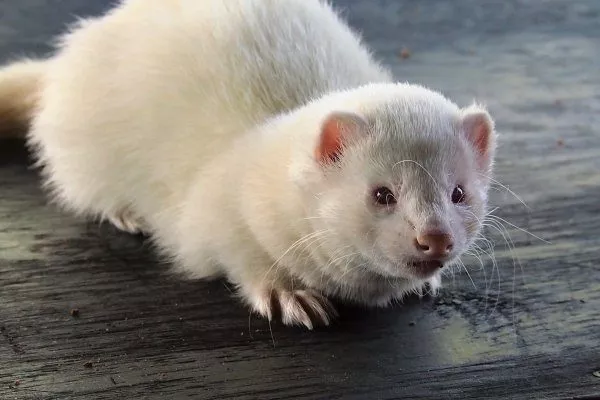
Furo albino ferrets
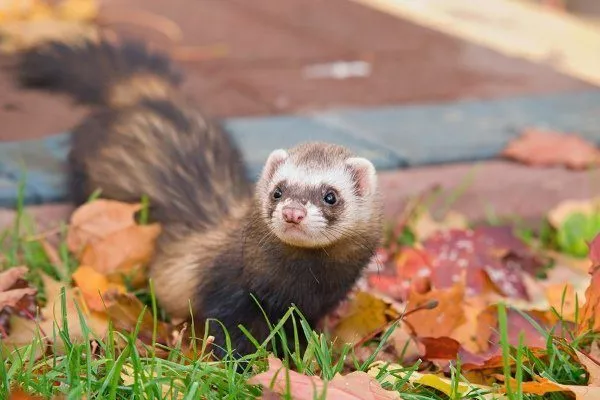
A hybrid of a mink and a ferret called Honorica
Ferrets, thanks to selective breeding, come in a wide variety of colors. These animals breed with members of their own group and with wild individuals.
Ferrets have an innate lack of fear of humans, and sleep takes up to 20 hours a day.
- ✓ Take into account the ferret’s activity and sleep time (up to 20 hours a day) to ensure comfortable conditions.
- ✓ Pay attention to the color and type of coat if aesthetics are important, but remember that character does not depend on color.
- ✓ Check for genetic disorders, especially in panda-colored ferrets, which often suffer from deafness.
Colors
There are a huge number of colors, which experts are trying to classify and organize. There are two types of color classification: the American (AFA) and the Russian, adopted in 2012.
The American classification provides for the division of ferrets according to the following characteristics:
- color;
- color scheme;
- location of white spots.
When determining what color an animal is, pay attention to the following features:
- Color. The color of the fur, undercoat, nose, and eyes.
- Markings. The presence and color of spots that differ from the base color.
- Mask. The color of the pattern on the animal's face.
The Russian classification divides ferrets into the following groups based on fur pigmentation:
- golden;
- mother-of-pearl;
- pastel;
- albinos.
In the wild, solid-colored ferrets come in a variety of colors—white, red, brown, and black. Domesticated ferrets come in a vast array of shades. When determining a breed, in addition to coat color, nose and eye color are also considered. Popular colors include:
- White Black-Eyed (DREW/DEW).Animals of this coloring resemble albinos—they have the same white fur. However, their eyes are black, not red. Their noses can be any color—usually pink or black.
- Albino.They have white or light cream fur, red eyes, and a pink nose. Their underfur is white. These beautiful animals are active and energetic, but they like to take an afternoon nap.
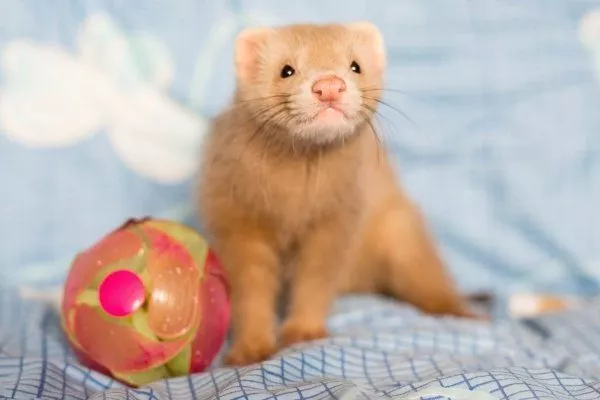
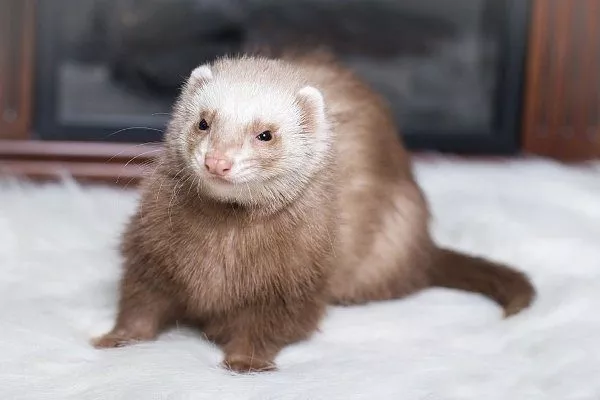
- Champagne. The base color is beige or milky chocolate. The undercoat is white, golden, or soft cream. The eyes are pink, beige, or light brown. The nose is pink or light brown.
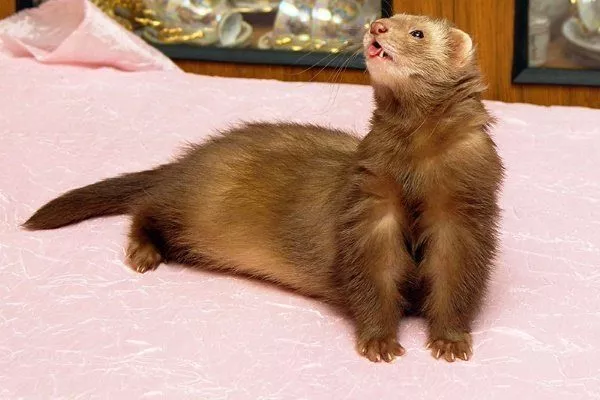
- Cinnamon. The base of the guard hairs is white, the edges are rich brown with a reddish or auburn tint. The undercoat is cream or white. The eyes are of any color, and the nose is beige or brown.
- Cinnamon self. The guard hairs are rich brown with a red or orange tint. Differences in body and paw color are acceptable. The mask is almost invisible. The undercoat is cream. The eyes are of any color, and the nose is brown.
- Chocolate.Chocolate ferrets have brown guard hairs. Slight variations in body and paw color are acceptable. The mask is almost indistinguishable from the rest of the coat. The undercoat is cream and chocolate shades. Eyes can be any color, but are usually black or ruby. The nose is brown or pink.
- Black.The guard hairs are uniformly black, dyed a single color along their entire length. The mask is almost invisible, blending in with the base color. The undercoat ranges from light cream to gray-brown. Eyes are of any color, and the nose is black.
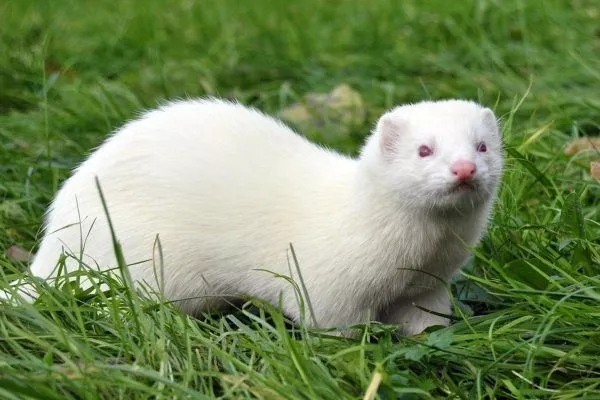
Albino
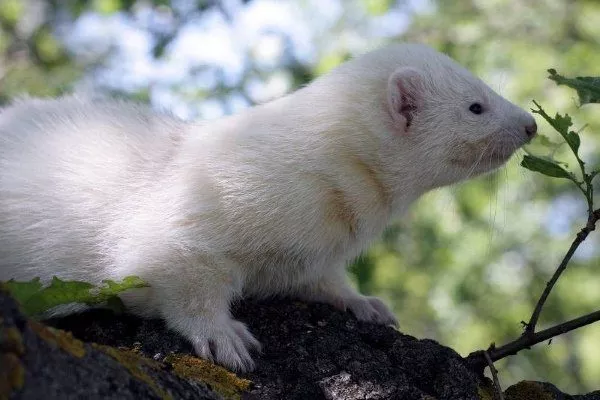
White Black-Eye or Dew (DEW)
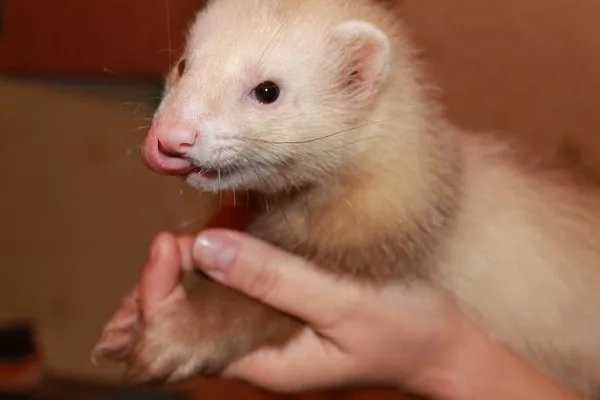
Champagne
Cinnamon
Cinnamon self
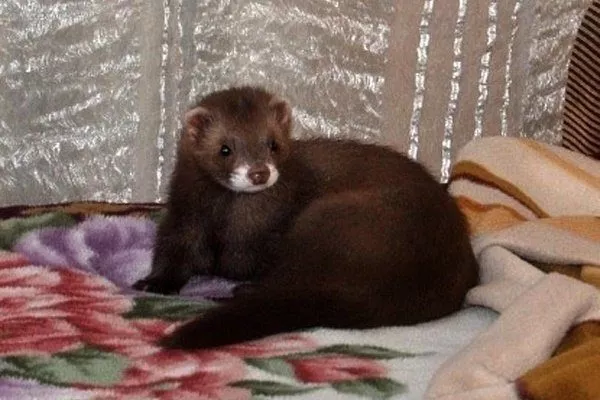
Chocolate
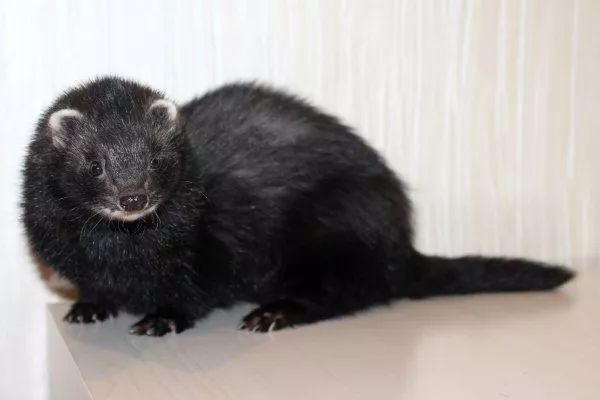
Black
The prefixes "self" and "solid" indicate slight variations from the standard color. For example, the prefix "self" indicates that the undercoat is slightly lighter than the base coat, making the mask virtually invisible. In contrast, the "solid" color has a dark undercoat, making the mask completely invisible.
The variegated colors are presented below:
- Sable.The awns are unevenly colored—the base is light, white or light yellow. The edges of the awns are dark—brown or black. The underfur is light, white and cream-colored. The eyes can be any color, and the nose can be pink or black.
- Golden. The bases of the awns are white, the edges are brown or black. The underfur is yellow or orange. The eyes and nose are dark.
- Light pastel. The awns are white at the base, with beige or light beige edges. The underfur is white or light cream. The eyes are black or brown, and the nose is pink.
- Pastel. It differs from the light pastel coat in that it has darker guard hairs, which range in color from beige to light brown.
- Dark pastel. The bases of the guard hairs are white. The edges of the guard hairs range from milky chocolate to dark chocolate. The undercoat is white or light cream. The eyes are dark, and the nose is pink or brown.
- Pearl. The bases of the awns are white, the edges are dark, grayish, or black. The underfur is white or light gray. The eyes are dark, the nose can be any color.
- Dark mother-of-pearl. They are distinguished by the darker edges of their guard hairs—they are black. The nose is dark, and the eyes are of any color.
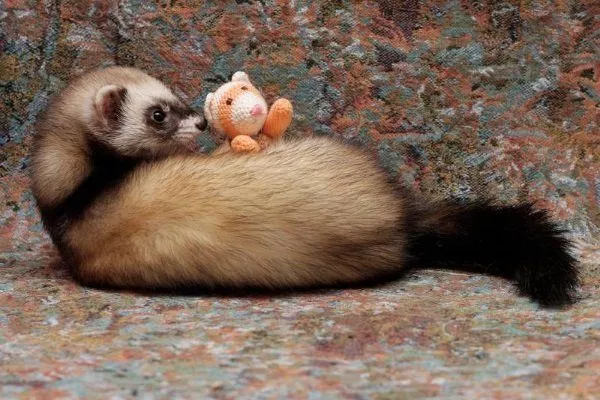
Sable
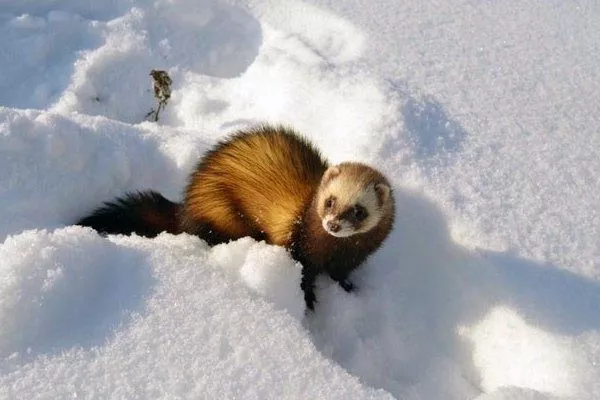
Golden
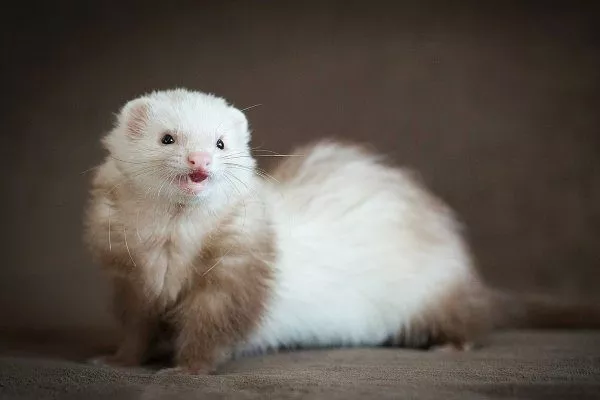
Light Pastel (Champagne)
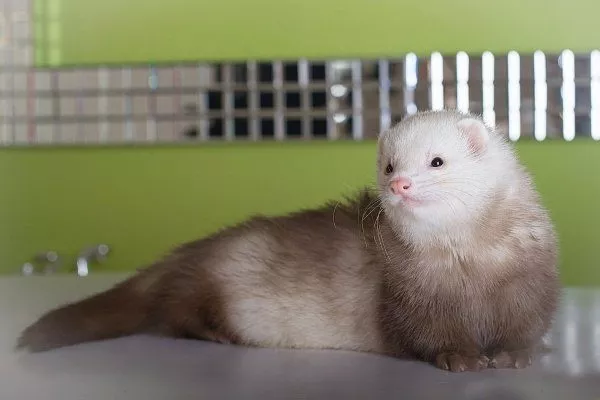
Pastel
Dark Pastel (Chocolate)
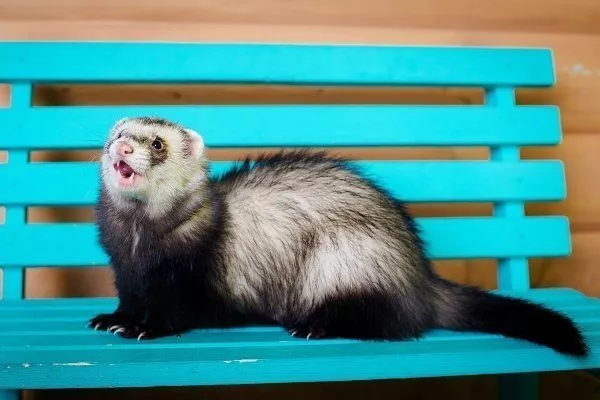
Mother of Pearl (Steel)
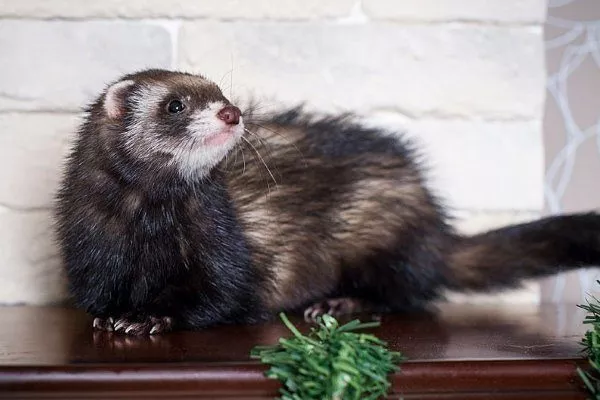
Dark Pearl (Titan)
Colors
Among domestic ferrets, distinctively patterned ferrets are particularly popular. The variety of colors is grouped into four main groups:
Standard.The guard hairs and undercoat are pigmented. White makes up no more than 10%. The coat can be any color. The coloration can vary in intensity—this feature distinguishes standard-colored ferrets from solid-colored ones.
Roan.Ferrets with this coloring have half their hair white. The white hairs may be evenly distributed along their entire length, or appear only at the base. Along with the white hairs, gray hairs may be present, alternating with pigmented hairs. A mask is present on the muzzle.
Siamese.Like Siamese cats, Siamese ferrets have a tail and paws darker than their body, and a V-shaped "mask" on their face. The nose is light and may have spots. The mask can also be T-shaped. Siamese cats range in color from light brown to dark brown. Other shades, such as champagne, are also common.
Solid.There is no white fur. The guard hairs and undercoat are the same color. Color is any. The intensity of the color is uniform throughout the body, while in all other colorings, the paws, belly, and tail are more intense. These animals do not have masks of this coloring. The eyes match the color of the fur.
Location of white spots
One of the criteria for classifying domestic ferrets is the location of the white spots on the body.
There are three options:
- Flash.A flash is a coloration in which white spots are located on the head. The color of the eyes and nose is not important.
- Panda.Pets of this type have a luxurious appearance. They have a white head, shoulders, and chest. The tips of the paws are also white. The paws themselves are dark, and the tail is also dark. There may be dark circles around the eyes. The nose is pink, and the eyes are dark brown, rarely ruby. A disadvantage of this type is the frequent occurrence of deafness. Breeders are currently working to eradicate this genetic defect.
- Mittens/socks.The mitten/sock type includes ferrets with white spots on their paws. Their fur, eyes, and nose can be any color.
Ferrets have poor eyesight, but this deficiency is compensated for by their keen hearing and excellent sense of smell.
Types of wool
The color of the fur, nose, and eyes aren't the only differences between domestic ferrets. These animals can have different coat types. While working to achieve different colors and patterns, breeders have developed ferrets with long fur—their fur remains fluffy without much maintenance.
Wool options:
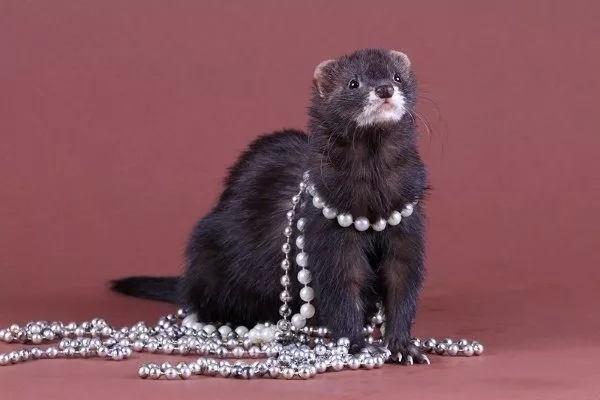
Angora.The guard hairs reach a length of 7-12 cm. Males have longer guard hairs than females, giving them a fluffier appearance. Ferrets with Angora hair have a distinctive feature: their nostrils have an unusually twisted shape.
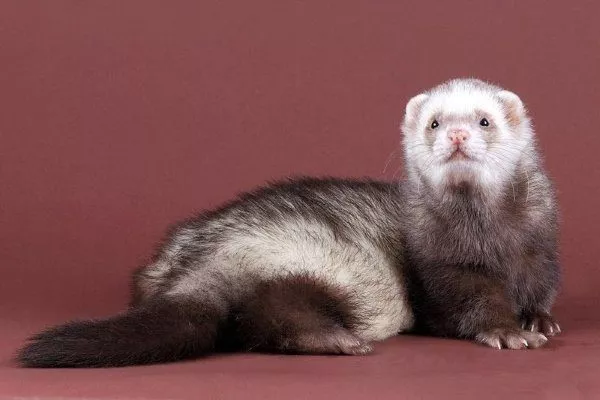
Half-angora.In semi-Angora ferrets, hair reaches a length of 5 cm, with 3.5 cm on the belly. The phenotype of semi-Angora ferrets is assessed based on the results of the spring shedding, as 3.5 cm corresponds to the length of the coat of normal-haired ferrets in winter.
Normal-haired.The hair length in winter is 3.5 cm, in other seasons – 3 cm. Normal-haired animals have a dense and thick undercoat.
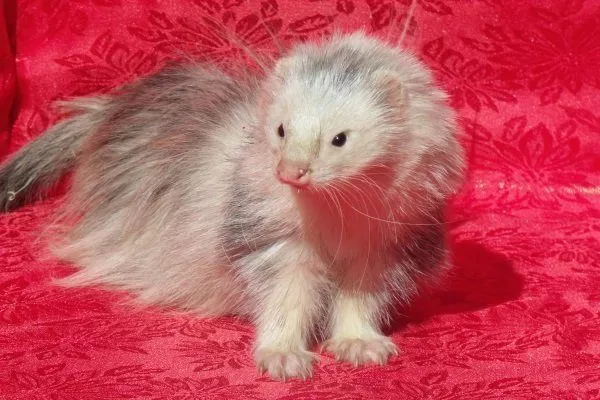
Angora ferret
Half-Angora
Normal-haired ferret
Markings
Each color group is distinguished by various markings, giving the animals a refined appearance. Depending on the coat color, its shades and intensity, and the presence of markings and spots, the following colors are distinguished:
- Badger. There is an uneven, interrupted stripe on the head.
- Point. The paws are a distinct color from the main coat. A V-shaped mask may be present.
- Mitt. They have white "socks" on their paws. Their chest has a "bib." The tail may have a white tip. They also have white markings on their belly and elbows. The markings may be asymmetrical.
- Milk mauf. There is a contrasting spot around the mouth and nose. It often extends to the eye and neck area. The nose is always pink.
- Silver. Found only in pearl-colored ferrets, the awn consists of equal parts gray (rarely black) and white hairs, evenly alternating across the body.
- Marked. The awn is colored no more than 40%.
- Blaze. There is a white stripe on the head, and white spots on the belly and tips of the paws.
- Pinto Panda. The head and neck are milky white, and may also have small spots. White "slippers" appear on the paws.
- Roan. 80% of the coat is pigmented (along the entire length or only at the tips), the rest is white.
- Harlequin. The spots are scattered over the body - uneven and asymmetrical (thus, the color does not fit any of the types of markings described above).
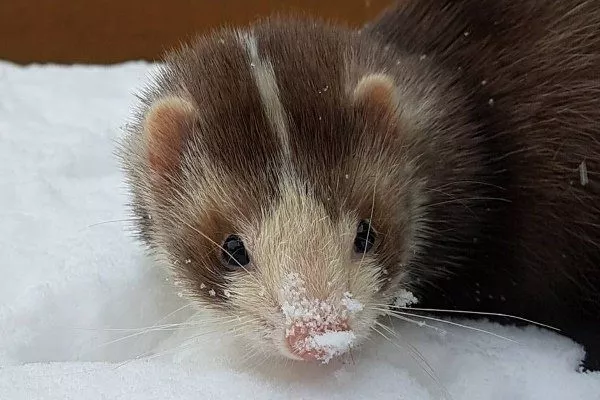
Badger
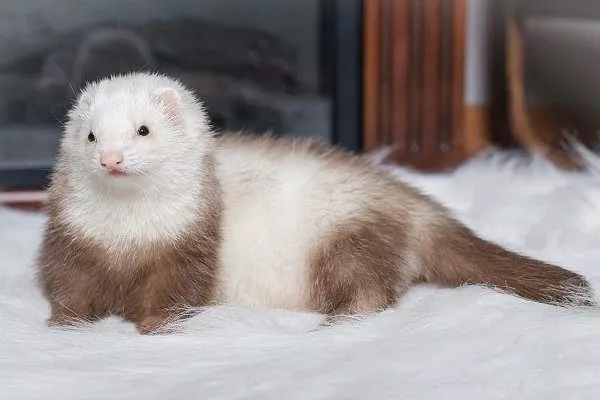
Point
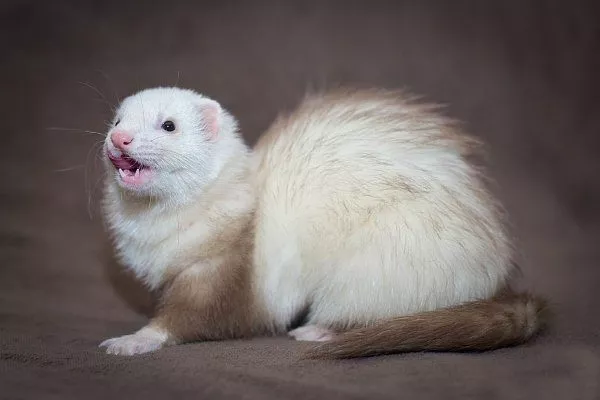
Mitt
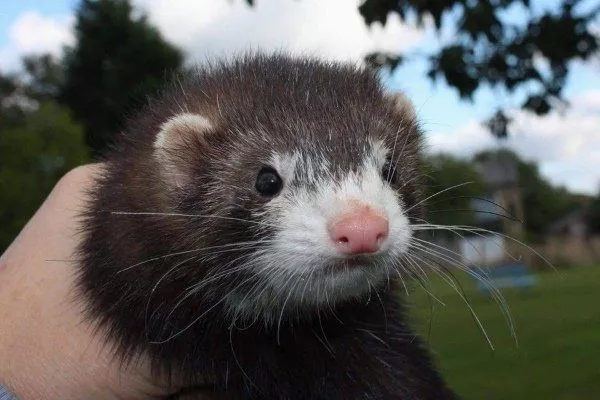
Milk mouth
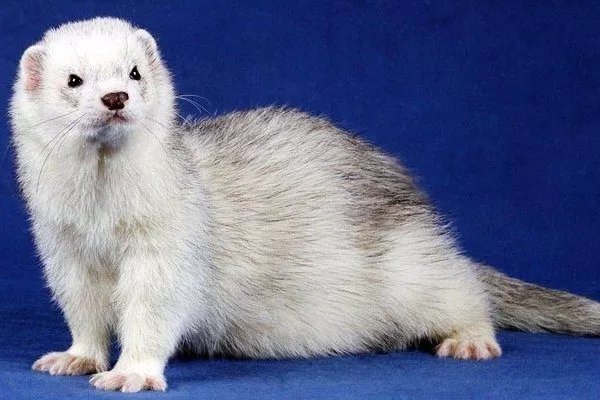
Silver mitt
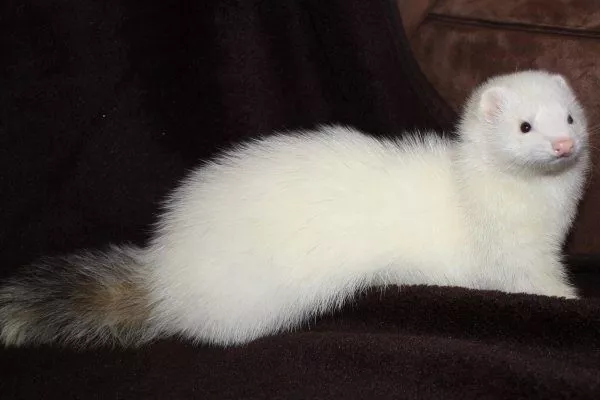
Marked
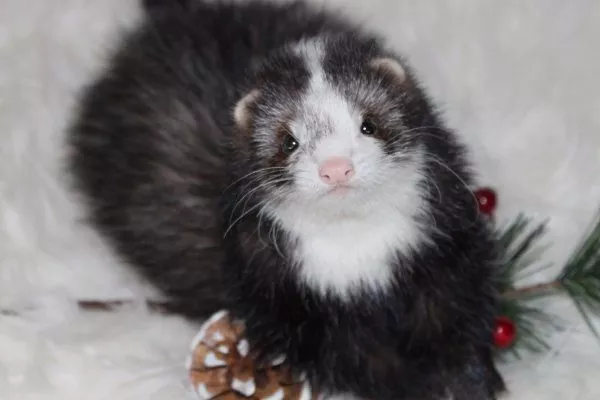
Blaze
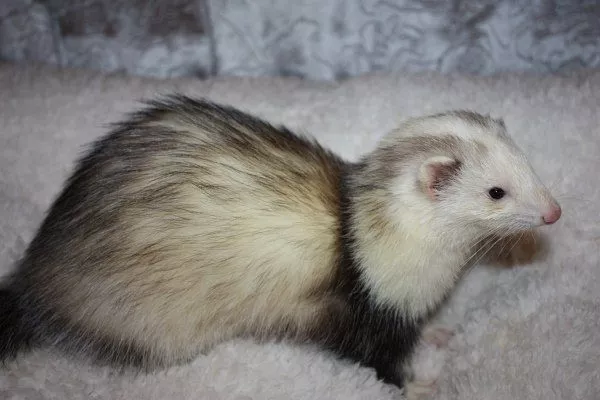
Pinto panda
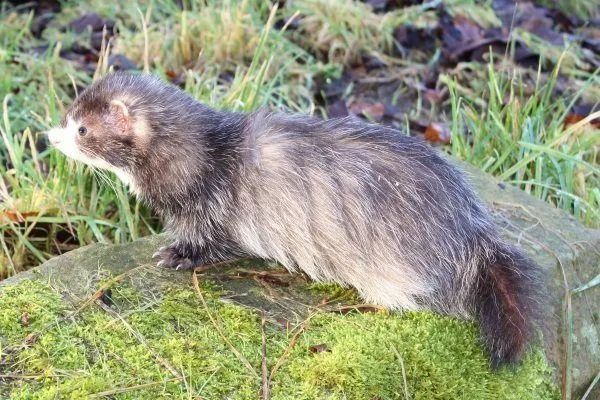
Roan
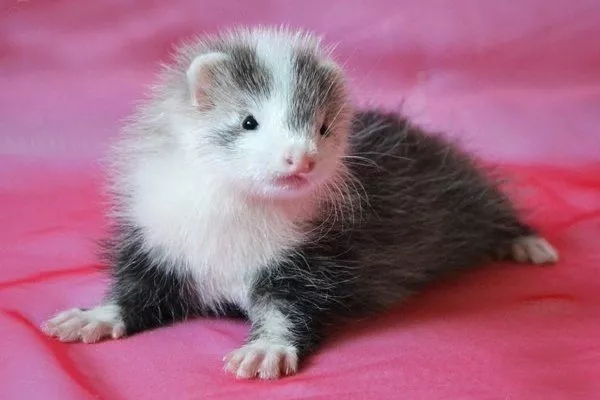
Harlequin
Color is the primary criterion for a detailed classification of ferrets. Despite the vast variety of colors, patterns, and spotting patterns, all domesticated ferrets are distinguished by their gentle disposition and attractive appearance. They make excellent companions for both children and adults.