
The steppe polecat has a dual significance for humans. On the one hand, it is valuable commercially for its fur, but on the other, it actively destroys pests such as mice and rats and deserves protection.
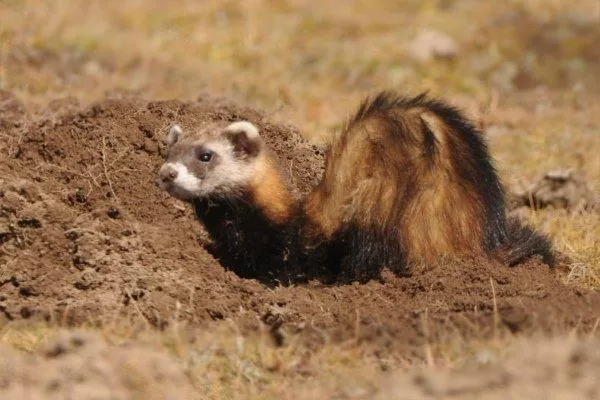
Description and habits of the steppe polecat
The steppe, light, or white polecat is a predominantly nocturnal mammal. This species belongs to the genus of polecats and weasels of the mustelid family.
The animal's Latin name is Mustela eversmanni. It honors E. A. Eversman, a Russian scientist, physician, and explorer.
Appearance, color
The steppe polecat's appearance is quite typical compared to other mustelids. The length of an adult animal can range from 40 to 55 cm, with a tail length of 17-18 cm, and it weighs approximately 2 kg. Males are larger and heavier than females.
This is the largest of all the ferret varieties. The steppe ferret's fur is relatively long, blackish-brown underneath and lighter elsewhere, but sparse. The undercoat is thick and light-colored. The paws and tail are dark, and the face has a distinctive mask.
Character
The steppe polecat is a predator with a distinctly nocturnal hunting habits. By nature, it's a curious animal, ready to explore everything in its path. Human dwellings are no exception. The animal is especially attracted to outbuildings near the house: barns, granaries, bathhouses, and the like.
Life expectancy
In the wild, steppe ferrets live up to 6 years. In captivity, some individuals can live up to 12 years if their owners provide proper care and living conditions, as well as preventative measures. ferret diseases.
Area and habitat
The steppe polecat's range is extremely wide: this animal and its subspecies are found throughout the temperate zones of Europe and Asia, all the way to the Far East. It can live at altitudes of up to 2,500 meters. In the European part of the continent, the mammal is divided into two main populations.
West of the Carpathian Mountains, the subspecies Mustela eversmanni hungarica predominates. This animal can be found in the following countries and regions:
- Czech Republic;
- eastern part of Austria;
- southern Slovakia;
- south of Ukraine;
- Hungary;
- Yugoslavia;
- north and west of Romania.
The eastern subspecies have spread to the following areas:
- Northern Bulgaria;
- southern Romania;
- Moldova;
- east and north of Ukraine;
- south-east of Poland;
- south of European Russia;
- Kazakhstan.
The steppe polecat's favorite habitats are plains, mountain steppes, gentle slopes of gullies, and livestock grazing areas.
Subspecies of steppe polecats
Eurasian polecat subspecies are genetically very close to each other, allowing them to interbreed freely. For this reason, animals similar to the steppe polecat, but with different coloring, can be found in habitats where they coexist.
However, the most common subspecies of the steppe polecat are:
- Amur (Mustela eversmanni amurensis) - in Russia it is distributed throughout the territories of the middle Amur, adjacent areas to the Zeya, Bureya, Selemdzha rivers, in northeastern China;
- European (Mustela eversmanni hungarica) - inhabits the southwestern territories of Europe;
- Baikal (Mustela eversmanni michnoi) - distribution area along the shores of Lake Baikal;
- Kherson (Mustela eversmanni occidentalis) - found in the steppes of southern Ukraine;
- Nogai (Mustela eversmanni satunini) - distributed throughout the eastern Ciscaucasia;
- Turkestan (Mustela eversmanni talassicus) - inhabits the Mangyshlak Peninsula, areas of Balkhash;
- Transbaikal (Mustela eversmanni michnoi) - habitat includes the territories of Transbaikalia, Mongolia, and Tien Shan.
Survival in the wild
The steppe polecat adapts well to any habitat, the most important thing being sufficient food. This animal can be found equally often on flatlands and in the mountains.
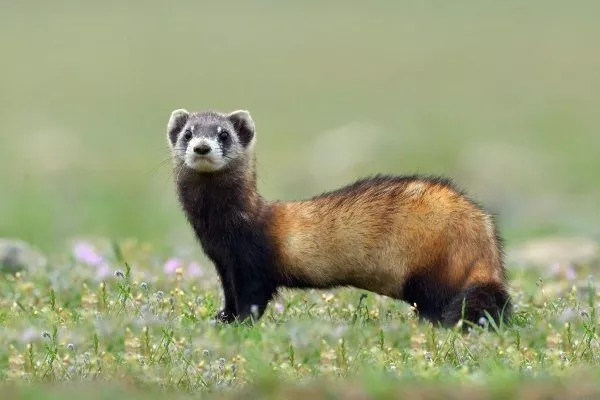
The animal often settles near human habitation, especially near farmsteads. Hollow trees, abandoned burrows, and cracks and crevices in the ground can serve as homes for ferrets. If necessary, ferrets can dig their own burrows.
The steppe ferret moves by jumping, and the animal also climbs and swims well.
Hunting and the steppe polecat
The steppe polecat's fur is aesthetically pleasing and warm. For this reason, the animal is hunted for its fur. However, some subspecies, such as the Amur polecat, are protected and hunting is prohibited.
Enemies of the steppe polecat
The ferret's main natural enemies are birds of prey (owls, hawks) and foxes. Stray and herding dogs also pose a threat. When necessary, the animal defends itself by emitting a highly foul-smelling fluid. Human activities, such as plowing, pesticides, and toxic chemicals, cause significant damage to the ferret.
Home care
Domesticated ferrets thrive in apartment conditions. Here they are kept in cells, and free-range. The latter is the preferred option, but the pet still needs a home.
- ✓ Make sure the room is protected from drafts and has a stable temperature.
- ✓ Provide secluded resting areas that mimic natural shelters.
The ferret is an active and curious creature, so keeping it outside a cage requires specific preparation of the territory, in particular:
- all holes and cracks are sealed so that he cannot get in there;
- wires, flowers and other objects that the animal can damage are removed;
- Access to the balcony and kitchen is completely restricted to prevent the pet from falling out or getting burned on the stove.
Even the measures taken may not be enough due to the ferret's high activity level. You need to keep a close eye on the animal and always know where it is. While the animal doesn't have good eyesight, it's also quite agile, so it can slip off a chair or get stuck under a sofa.
It's easy to train your pet to use a litter box. Ferrets mostly sleep during the day and become active in the evening.
Nutrition
What does a ferret eat?The steppe polecat is a carnivorous predator. Its body does not digest plant matter. In the wild, it forages for:
- small rodents - gophers, marmots, hamsters, pikas, mice, water voles, gerbils, muskrats, moles, rats, jerboas, shrews;
- small birds and their eggs;
- snake;
- frogs;
- insects;
- snails;
- fish.
- ✓ Include raw meat and organ meats in your diet to provide essential nutrients.
- ✓ Avoid feeding your ferret dairy products due to lactose intolerance.
Less frequently, honey, fruits, and carrion are included in the diet.
A steppe polecat consumes up to a third of its body weight in food per day. It stores food for future use.
The predator can cause damage to poultry farming, but usually only minor. On the other hand, ferrets destroy small and medium-sized pests, such as rats and mice.
Reproduction
The mating season for steppe ferrets begins in March. This period is marked by play between males and females. Rival males often engage in fights over food. knittingThe female's pregnancy lasts two months, after which she gives birth to 4 to 5, rarely up to 6 cubs.
The mother tenderly cares for her children, protects them from enemies, fearlessly attacking anyone who approaches the nest, including humans, in case of danger.
After six weeks, the grown-up young go out with the adults to search for prey, and after three months, the puppies almost catch up with their parents in size.
If you're considering getting this pet, watch this video about what's useful to know about ferrets and the challenges you'll face when keeping one:
The steppe polecat is a fairly common species of the mustelid family. However, as a result of human activity, some subspecies, such as the Amur polecat, are critically endangered and protected by law.