
Ferrets are animals that require special care. Before bringing one into your home, it's important to know what diseases they're susceptible to, how to treat them, and how to protect them from illnesses by keeping them up-to-date on vaccinations.
Common diseases of ferrets
Most ferret diseases are viral and infectious in nature and are caused by poor nutrition. Inappropriate treatment can lead to a high risk of death.
| Name | Incubation period | Symptoms | Treatment |
|---|---|---|---|
| Rabies | Up to a year | Depression, increased salivation, diarrhea, fever, vomiting | It is not treatable |
| Aleutian disease | Not specified | Anemia, temperature 41-42°C, depression, growth retardation, bleeding ulcers | Immunosuppressants, antibacterial drugs, vitamins, probiotics |
| Flu | Week | Chills, fever, increased body temperature, loss of appetite, weakness, nasal discharge | Antiviral drugs, vitamin therapy |
Rabies
Rabies is a viral disease that disrupts the central nervous system. The pathogen is transmitted from an infected animal to a healthy one through bites, saliva, or blood.

The incubation period can last up to a year. Symptoms of the initial stage of rabies include:
- oppression;
- increased salivation;
- diarrhea;
- increase in body temperature by 1-3 degrees;
- vomit.
Ferrets develop a fear of water and begin swallowing objects. In the final stages, the animal begins dragging its hind limbs and tail, and convulsions occur, ultimately resulting in death. Rabies, a disease that cannot be treated with medication, is not amenable to treatment.
At the first sign of deterioration in your pet's health, you should immediately take him to the veterinarian.
To prevent the disease, ferrets are vaccinated with canine vaccines such as Nobivac and Trivirovac, starting at 2.5 to 3 months of age. The dosage is 1/3 of the dog dose.
Aleutian disease
Plasmacytosis is a contagious disease of ferrets caused by parvovirus. The infection is transmitted by recovered ferrets who are carriers of the disease. The virus is excreted in feces, urine, and saliva, and is transmitted during mating and in utero. The animal dies from cachexia (emaciation).
During the acute stage of the disease, death occurs suddenly. The chronic form is characterized by the following symptoms:
- anemia;
- temperature 41-42°C;
- oppression;
- growth retardation;
- the presence of bleeding ulcers on the oral mucosa.
Ferrets are treated with immunosuppressants, antibacterial drugs, vitamins, and probiotics, along with glucose solutions and a diet. Disease prevention includes maintaining sanitation standards and disinfecting the premises with a 1% iodine solution or a 4% hot formalin solution. Food dishes must be disinfected, and sick individuals must be isolated.
Influenza in ferrets
Influenza is one of the most common viral diseases, easily transmitted from humans to ferrets via airborne droplets. With prompt treatment, a full recovery is achieved.
A week after infection, the pet develops the following symptoms:
- chills, fever;
- increase in body temperature;
- lack of appetite;
- weakness;
- nasal discharge.
The sick animal is isolated in a warm room, treated with antiviral medications, children's nasal decongestant drops, and vitamin therapy. In the most severe cases, when a bacterial infection occurs, antibiotic treatment may be necessary.
Lack of proper treatment for influenza leads to bronchitis and pneumonia.
Disease prevention involves providing ferrets with a balanced diet and good living conditions. This is crucial for developing a strong immune system.
| Name | Symptoms | Treatment | Prevention |
|---|---|---|---|
| Infectious diseases: tracheitis, bronchitis, adenovirus | Cough, difficulty breathing, runny nose, wheezing in the chest, sore throat, diarrhea, loss of appetite | Antiviral drugs, fever reduction | Deworming, routine vaccinations, proper nutrition |
| Inflammation of the paranal glands | Itching in the anal area, fever, swelling, purulent discharge | Glandular cleansing, anti-inflammatory, antibiotics | Complete nutrition |
| Salmonellosis | Decreased appetite, depression, lethargy, elevated body temperature, watery eyes, frequent diarrhea | Probiotics, antibacterial drugs, eye treatment | Vaccination, hyperimmune serum |
Infectious diseases: tracheitis, bronchitis, adenovirus
The pathogens are viruses that invade the ferret's trachea and bronchi. Tracheitis and bronchitis are accompanied by a cough (similar to vomiting), and the ferret's breathing becomes labored. Adenovirus causes a runny nose, wheezing, sore throat, diarrhea, and loss of appetite for 2-10 days. A ferret's temperature may rise with any of these conditions.
Antiviral therapy is administered, and fevers above 39.4°C are brought down. It is important to constantly provide the ferret with room-temperature water.
Effective prevention includes periodic deworming, routine vaccinations and a balanced diet.
Inflammation of the paranal glands
This disease only affects ferrets that do not empty their glands. This normally occurs spontaneously during play or defecation. However, if the ferret has frequent digestive problems, the thick secretion from the anal glands does not pass. It is important that the stool be of normal consistency and that there is no constipation or diarrhea. If left untreated, abscesses and ulcers may develop.
Ferrets exhibit the following signs:
- itching in the anal area;
- increased body temperature as a sign of inflammation;
- swelling in the anal area;
- discharge with pus.
Treatment is effective only in the early stages of the disease. The anal glands are cleaned manually. Ferrets are given anti-inflammatory medication and, if necessary, antibiotics. In advanced cases, the anal glands should be removed—an emergency measure that should not be allowed to progress. Prevention involves a balanced diet. Regular bowel movements are essential.
You can see how a veterinarian cleans the anal glands in this video:
This procedure is painful for the animal, so it is better to prevent inflammation of the paranal glands or its aggravation.
Salmonellosis
Salmonellosis is an infectious disease caused by bacteria of the genus Salmonella. Ferrets aged two months are primarily susceptible to the disease. The pathogens are found in contaminated meat, milk, and raw eggs. Ferrets that recover from the disease become carriers of the bacteria and can infect others.
In the acute form of the disease, up to 60% of animals die within two weeks. The following symptoms precede death in ferrets:
- loss of appetite;
- depressed state;
- inhibition;
- elevated body temperature (up to 41-42°C);
- tearfulness of the eyes;
- frequent diarrhea.
Atypical salmonellosis is typical for adult ferrets, who experience growth retardation and loss of appetite. The chronic form of the disease leads to death within four weeks. Ferrets experience anemia, purulent conjunctivitis, weakness, diarrhea, and matted, dull fur.
Ferrets are given probiotics and antibacterial drugs for treatment, and their eyes are treated with a weak antiseptic solution.
Hyperimmune serum against paratyphoid fever is used for prophylaxis in piglets and calves (1 ml of the serum is administered subcutaneously, followed by the rest half an hour later). Females are vaccinated on the 20th to 30th day of pregnancy. Month-old puppies are given 3-5 ml of the vaccine subcutaneously twice, one week apart.
Leptospirosis
Ferret jaundice is an infectious disease. It can be transmitted through the gastrointestinal tract, damaged skin, or rodents. Ferrets with this disease develop a yellowish tint to their mucous membranes, refuse to eat, become restless, lose appetite, and develop enlarged lymph nodes.
The acute form of the disease is rare, during which the ferrets' temperature rises to 41.5°C, vomiting, diarrhea, and convulsions begin.
Treatment is administered by a veterinarian in a hospital setting (using IVs). Ferrets are given a polyvalent vaccine for prevention and undergo regular checkups.
Rickets
Rickets is a non-contagious disease caused by a lack of vitamin D. It may be accompanied by symptoms such as:
- growth retardation;
- unhealthy appearance;
- bloating and diarrhea;
- deformation of the limbs and spine.
Ferrets are treated with 3-4 drops of fish oil on the tongue, a small amount of cottage cheese, vitamin premixes, and walks in the summer. A balanced diet for puppies and lactating mothers is an effective preventative measure.
Plague
An acute viral disease with varying clinical manifestations is called plague. It is transmitted by animals that have recovered from the disease and those that are sick.
Depending on the form of the disease, various symptoms appear:
- The pulmonary form of the disease has symptoms similar to pneumonia. Animals experience wheezing, a dry cough that develops into a wet one, vomiting, diarrhea, poor appetite, and ruffled fur.
- In the catarrhal form, the ferret suffers from rhinitis, conjunctivitis, serous and purulent discharge from the nose appears, the hair around it falls out, and the breathing is wheezy.
- The nervous form is characterized by seizures, cuts, and dermatitis. During a seizure, the animal screams, spins, and dies.
Treatment involves prescribing immunostimulants and vitamin pastes, and administering solutions to restore the ferret's water and electrolyte balance. Prevention involves securing the ferrets' habitats from stray animals, administering vaccinations, and adhering to sanitary regulations.
Anemia
Prolonged estrus leads to increased white blood cell counts and decreased red blood cell counts, resulting in aplastic anemia in ferrets. This condition slows the body's metabolism and reduces oxygen supply to all organs, negatively impacting the heart and brain. In severe cases, it can be fatal.
Ferrets are treated with antibiotics, blood transfusions, and iron supplements. Animals not intended for breeding are castrated or spayed to prevent anemia. Otherwise, 50 IU of gonadotropin is administered to lower hormone levels.
Gastroenteritis
This disease is an inflammation of the gastric mucosa. It is caused by parasites, bacteria, viruses, and poor nutrition. Gastroenteritis causes increased mucus production and bleeding, which leads to digestive problems, making it difficult to absorb nutrients and water.
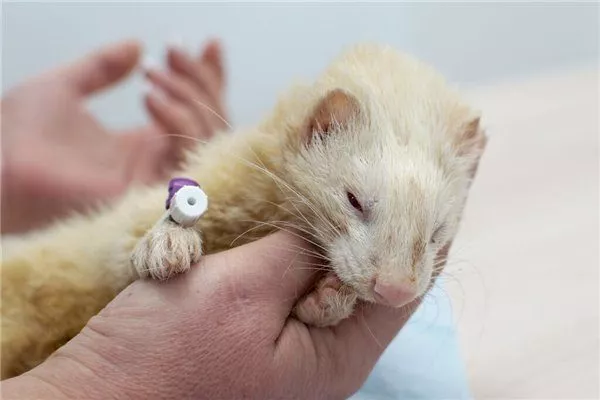
Ferrets are treated with glucose and saline solutions and kept on a diet for 24 hours. For prevention, animals are vaccinated, given anthelmintics, and fed appropriately.
Cardiomyopathy
Cardiomyopathy is a heart disease that occurs in hypertrophic and restrictive forms in ferrets over 4 years of age. In the hypertrophic form, the animal's heart is enlarged, with shortness of breath and fluid accumulation in the lungs. The restrictive form is characterized by thickening of the ventricular walls, no symptoms, and the disease progresses almost immediately to a crisis.
Ferrets are treated with vasodilators, medications to normalize blood pressure, and a diuretic (Furosemide, 2 mg every 8-12 hours). Prevention involves a balanced diet.
Urolithiasis
Poor nutrition and genetic predisposition can lead to urolithiasis. This causes sand to form in the kidneys, which then develops into stones. When stones move, they can become lodged in the urethra, blocking the flow of urine. When the stone moves, the ferret experiences pain along the entire path of the stone along the urinary tract.
The disease doesn't always have outward signs. However, after 1.5 years, the following symptoms appear:
- frequent or difficult urination;
- urine with blood.
Ferrets are treated with painkillers, antispasmodics, and plenty of fluids. Once the stone passes, the pain will stop. In severe cases, stones are removed surgically.
A balanced diet and proper hydration regimen are excellent preventative measures; neutered males are fed food designed for neutered cats. It's also important that your pet is active and gets adequate regular exercise.
Diarrhea of varying severity
Diarrhea is a symptom of various illnesses or dietary problems. It manifests as loose, foul-smelling stool. A change in food, cold food, and meat with long bones can cause mild diarrhea lasting 7-10 days. Chronic diarrhea lasting more than 10 days causes ferrets' stool to become green and bloody.
For mild diarrhea, ferrets are treated with a low-protein, low-moisture diet and probiotics. Chronic diarrhea is life-threatening, as it causes dehydration. Ferrets are given oral rehydration saline, probiotics, a special diet, and antibiotic therapy (if a bacterial infection is suspected).
Maintaining a calm, stress-free lifestyle and proper nutrition are the best prevention of diarrhea.
Stomach ulcer
Gastric ulcers are caused by stress and poor nutrition, and are caused by the growth of the Helicobacter mustelae bacteria. The main symptom of the disease is black stool. The animal becomes apathetic, has a poor appetite, and loses weight.
Treatment involves a diet, frequent but small meals, and antibiotics, such as amoxicillin. Maintaining a calm lifestyle and a balanced diet is the most effective way to prevent the development of stomach ulcers.
Cataract
Cataracts, a disease that begins with clouding of the lens, ultimately leads to blindness. Ferrets often develop cataracts due to a genetic predisposition (someone in their ancestors had the condition), which isn't immediately apparent. A deficiency in vitamins E, A, and protein in the diet can lead to the development of cataracts. A characteristic feature of the disease is a discoloration of the lens to light blue.
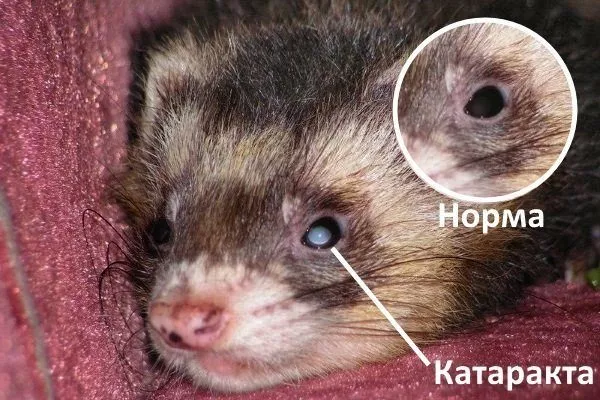
Ferrets have poor vision, and cataracts don't cause them any particular discomfort. Cataracts are treated only surgically, but this type of surgery is not performed on ferrets. Instead, the eye is monitored for complications such as uveitis, lens dislocation, and glaucoma. Uveitis is treated with 1% prednisolone acetate topical twice daily. Lens dislocation is treated surgically.
Prevention involves providing proper care for the ferret's health and avoiding long-term use of steroids.
Pathologies of the endocrine system
This category includes hyperadrenocorticism—excessive secretion and imbalance of sex hormones. The causes of this pathology include photoperiod imbalance and early castration. Ferrets experience changes in sexual behavior, comedones, and itching.
Melatonin, gonadotropin analogs, and estrogen and androgen receptor blockers are prescribed for treatment. Synthetic gonadotropin analogs are used for prophylaxis starting at age 3.
Tumors in ferrets
Ferrets over 3 years of age are prone to tumors that are difficult to treat and require surgery. Only a veterinarian can diagnose the condition, so it's important to bring your pet in for regular checkups.
Lymphoma
Lymphoma is an oncological disease of ferrets, occurring in juvenile and classical forms.
In the classical form, the symptoms are not specific and include:
- drowsiness;
- poor appetite;
- weight loss.
The disease progresses slowly, and the lymph nodes are enlarged upon palpation. Juvenile lymphoma occurs in young animals and progresses rapidly. Ferrets experience difficulty breathing, coughing, vomiting, and diarrhea.
Animals are treated with corticosteroids, such as prednisolone. Chemotherapy is administered with drugs such as asparaginase, cyclophosphamide, and vincristine.
Young individuals are difficult to treat and have a high risk of death.
Adrenal tumors
Due to the production of large amounts of hormones, benign and malignant tumors of the adrenal glands appear.
The following are some of the symptoms of the disease:
- difficulty urinating in males;
- dystrophy;
- the ferret's skeleton and bones stand out;
- baldness of body parts other than the muzzle and paws.
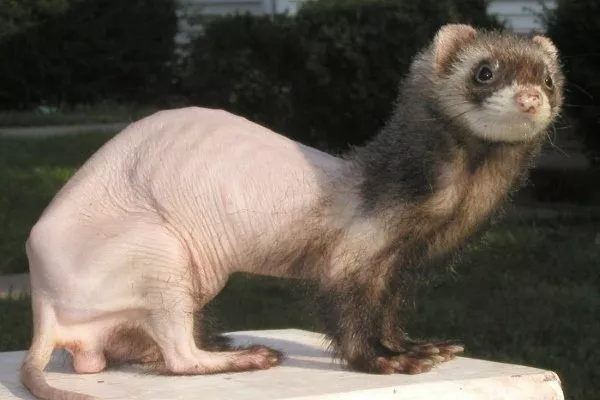
Lysodren temporarily reduces symptoms, so surgical removal of the adenoma is recommended. As a preventative measure, ferrets under 6 months of age should not be neutered; daylight hours should be increased using artificial lighting.
Insulinoma
Hypoglycemia is a condition affecting adult ferrets that causes low blood sugar. It begins with subtle symptoms and progresses to an incurable form. Initially, ferrets experience weakness, stare, and drag their hind legs. As the disease progresses, profuse salivation, a chewing reflex, and face-rubbing behavior develop. Death occurs as a result of increasingly frequent seizures and coma.
Medical treatment involves prednisolone and diazoxide. A strict diet is followed, and sometimes surgery is required. To prevent the development of this disease, the animal is provided with a proper diet low in simple sugars.
Vaccination
Vaccinations protect pets from infectious diseases, but they don't guarantee 100% freedom from them. Healthy ferrets are vaccinated starting at two months of age. Ferrets are dewormed a week before vaccination. The vaccination is repeated two weeks later, and thereafter, ferrets are vaccinated once a year.
- ✓ The interval between deworming and vaccination should be at least 7 days to ensure complete elimination of toxins.
- ✓ After vaccination, a quarantine period of at least 14 days is required to monitor possible allergic reactions.
Vaccinations are performed under the supervision of a veterinarian. During quarantine, after vaccinations, allergic reactions and recurrences of diseases that were latent before vaccination are possible.
Advice from the pros
By following professional advice, a breeder can prolong the life of their pet. The following recommendations are worth considering:
- Find contact with animals, play active games more often.
- Choose the right and balanced nutrition for your pet.
- Provide ferrets with dark shelter and do not leave them alone.
- To identify a sick animal, pay attention to external and behavioral signs - hair loss, changes in stool and urine, loss of appetite and dental health, depression, coughing, and other atypical symptoms indicate that something is wrong with the pet.
Remember, don't prescribe medications yourself; it's best to isolate your pet and keep it calm until the veterinarian arrives. Maintain proper hygiene and feed your pet properly, and you'll keep it healthy.