
When a ferret goes bald, the owner should pay attention to its behavior and accompanying signs, which can be used to determine the underlying causes of hair loss. These include dangerous (due to illness) and harmless (due to physiological processes).
Natural causes of baldness
If a ferret's hair loss isn't caused by a disease, it doesn't present any serious symptoms. Each type of physiological alopecia also has its own characteristic symptoms, which are usually not life-threatening.
Molting
Replacing the coat is a natural process of preparing the animal for summer and winter periodThe rate of hair loss varies—slow or rapid. In all cases, it's normal.
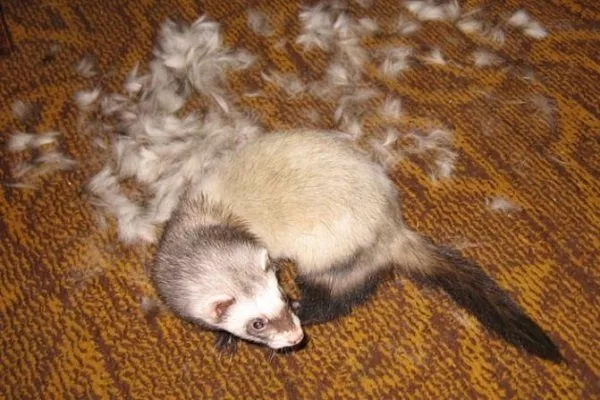
Ferrets (ferrets) molt 2 times a year:
- in spring – from mid-February to the end of March;
- in autumn – from August to early December.
How does molting manifest itself:
- baldness starts from the tail;
- in places where old hair falls out, new, shiny hair appears at the same time;
- the ferret is scratching itself;
- If an animal pulls out its hair, it falls out in clumps, which is called alopecia areata.
- ✓ The presence of new, shiny hair in areas where hair has fallen out.
- ✓ Absence of inflammatory processes on the skin.
Shedding does not require treatment, but the owner should help the pet by brushing it.
Clogged pores
Ferrets' pores become clogged for the following reasons:
- poor maintenance – dirt in the room, failure to carry out hygiene measures;
- hormonal imbalance – in males during mating season, in females during estrus/pregnancy;
- castration/sterilization.
To diagnose this cause, look for the following signs:
- the skin becomes covered with small black or reddish spots;
- dry scabs form.
What is used for treatment:
- brown laundry soap;
- a scrub made from crushed oatmeal, almonds and sour cream, taken in equal proportions.
What to do:
- Apply the product to the skin.
- Rub in with massaging movements.
- Rinse with water.
Poor nutrition
A lack of a balanced diet leads to nutrient deficiencies, causing the animal's coat to become dull and brittle. This contributes to dry skin, itching, and hair loss.
- give high-quality feed;
- Introduce minced meat, offal, vegetables and fruits, cheeses, fish, boiled eggs, cereal porridge and fishmeal into your diet;
- alternate meat and fish;
- under no circumstances give food intended for humans – fast food, smoked foods, fried foods, etc.;
- do not feed dog or cat food;
- Ask your veterinarian to prescribe a vitamin and mineral supplement.
Avitaminosis
The main cause of vitamin deficiency, which causes ferrets to go bald, is a disruption of phosphorus and calcium metabolism, and a lack of vitamin D. Symptoms:
- diarrhea or constipation;
- loss of appetite;
- bloating;
- growth retardation of young animals.
If left untreated, mammalian predators first experience bone pain (felt upon touch), followed by a stiff gait, and deformed paws, pelvis, and ribs. In the later stages of vitamin deficiency, anemia and tachycardia develop. Animals breathe with a wheezing and snoring sound.
Treatment methods:
- Include in your diet foods rich in vitamins A and D, protein, phosphorus, calcium and other minerals;
- Give your pet fish oil at a rate of up to 0.5 g per 1 kg of weight three times a day for a week;
- Use Trivitamin solution (orally 6-8 drops, intramuscularly 2 ml) every other day.
- ✓ Stopping the growth of young animals.
- ✓ Curvature of the paws, pelvis and ribs.
For preventative purposes, do not forget to periodically give vitamin premixes.
Stress
Ferrets experience nervous tension due to their increased sensitivity to external factors. The main symptoms include fearfulness, apathy, and refusal to eat. Causes and solutions:
- Reduced activity when the animal is forced to remain in a small space for long periods of time. Set aside time daily for active play.
- Feeling lonely if the owner doesn't spend enough time with the pet. Interact with them more often.
- There's no shelter, making the ferret feel unprotected. Install a house in the cage.
- A sudden change in environment frightens the ferret. Stay nearby during this period.
- Introducing another ferret that is dominant and aggressive. Introduce the animals gradually.
- Arguments, fights in the house, the introduction of new loud sounds (music, drilling, etc.). Remain calm around your ferret, and remove it from the room during loud events.
Parasites
The first sign of lice, fleas, and nits before hair loss is intense scratching. A careful examination of the animal's body is sufficient for diagnosis. In addition to itching, papules will appear on the skin.
To combat this, buy special products from a veterinary pharmacy (not human ones): Stronghold, Advantage, Frontline, Bolfo, Inspector, Fiprex, etc. They are available in 3 types:
- drops - applied to the withers;
- spray – the entire surface of the body is treated;
- collar – put on the neck.
Allergic reaction
Ferrets also have allergies, which can occur when household chemicals are used indoors or when cosmetics are applied to the ferret's body.
Some individuals develop allergies to the materials used to make toys, houses, bedding, food, food products, parasite bites, etc.
How does an allergic reaction manifest itself:
- redness and peeling of the skin;
- carding;
- formation of scabs;
- rashes;
- stickiness and dampness of the body;
- scratched wounds.
Allergies are not only skin-related:
- on the mucous membranes of the eyes – inflammation of the inner eyelid, purulent foci, increased lacrimation or dryness;
- on the respiratory system – congestion and swelling of the nasopharynx, heavy breathing, sore throat.
An allergic reaction can sometimes lead to suffocation, which can be fatal. At the first sign of an allergic reaction, call your veterinarian immediately, who will determine the allergen and prescribe the appropriate medication.
What diseases cause ferrets to go bald?
More serious causes of alopecia are illnesses. These conditions can cause ferrets to exhibit warning signs indicating a particular pathological disorder. Self-medication is unacceptable in this case, as only a specialist can accurately diagnose the disease after an examination.
Neoplasia
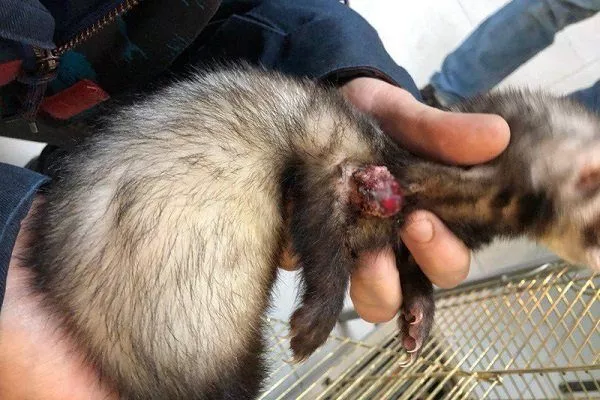
Hair loss in ferrets occurs due to a skin growth called neoplasia, which manifests itself as follows:
- severe itching;
- scratching areas with tumors until wounds form;
- In the bald area, the skin rises and turns very red.
Surgical methods are used for treatment - removal of the formation.
Adrenal diseases
Adrenal inflammation in ferrets most often occurs after three years of age. There are several causes:
- Castration of the male and sterilization of the female. The disease develops if this occurs too early—before 6-7 weeks. The body mounts a compensatory response: follicle-stimulating hormones from the pituitary gland act on the testes.
In rare cases, adrenal disease occurs during castration after the ferret's reproductive system has fully developed. - Increased daylight hours, higher air temperatures. When the photoperiod is artificially prolonged, the adrenal glands do not respond to secretory hormones, which causes tissue growth and hyperplasia to develop.
How to diagnose:
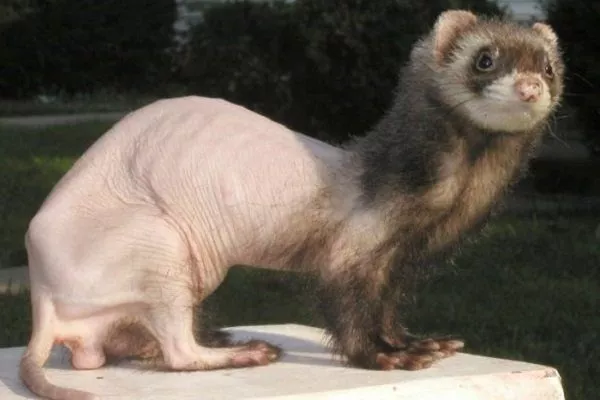
- the hair falls out in a symmetrical pattern or a diffuse pattern (it is impossible to identify specific areas);
- severe thinning of hair;
- lethargy of the animal and weakening of the paws;
- lack of appetite;
- itching and a smell with musky “notes”;
- translucency or permanence of the epidermis;
- ulceration;
- increased sexual desire, even if the male is castrated (tries to mate with other individuals and any objects, showing aggression);
- Vaginal swelling in females;
- difficulty urinating;
- constant thirst;
- muscle loss and abdominal enlargement.
There are three treatment methods:
- Hormonal therapy. The doctor implants a capsule containing a hormonal medication (the hormone is selected based on the specific adrenal disease), which continuously releases its contents. This normalizes the patient's condition.
- Surgical intervention. If tumors or other lesions are present in the organ, they are removed. The surgery is performed using an open technique.
- Combined technique. This is the most optimal option, since surgical intervention is used and a hormonal capsule is inserted.
Mycosis
The disease develops as a result of infection with various skin fungi. Localizing in the epidermis, the spores penetrate the hair follicles, sucking out the keratin, causing the hairs to die and fall out.
The main cause is the transfer of pathogens from other animals and poor hygiene. Signs of skin lesions appear within a month of infection:
- increased dryness of the skin of the body;
- itching and, accordingly, scratching.
Detecting this type of parasite is only possible using fluorescent testing. Treatment involves shaving off all hair, and applying topical ointments to the skin. Antifungal medications are selected based on the specific fungal strain. In advanced cases, antibiotic therapy is used.
Otodectosis
The condition is characterized by infestation of the outer ears by Otodectes mites. The symptoms are specific:
- severe itching;
- bald spots in the scalp area;
- black discharge from the ears;
- head twitching;
- refusal of food, even the most favorite;
- When a tick enters the hearing aid, the eardrum ruptures;
- depressed state.
To determine the cause of baldness, scrapings are taken and then examined under a microscope. Therapy:
- ear treatment with Amitrazine, Tsipam;
- Aurikan drops.
Sarcoptic mange
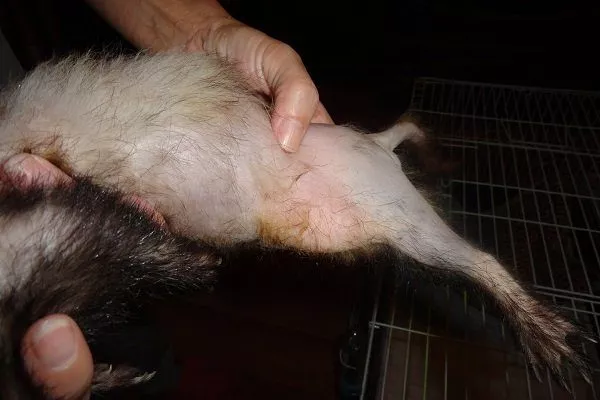
This is a type of scabies that develops as a result of infestation by mites of the genus Sarcoptes. In addition to hair loss and itching, it manifests itself with the following symptoms:
- redness of the skin;
- increased dryness of the skin;
- roughening of the epidermis;
- discharge with purulent exudate;
- loss of appetite;
- weight loss.
As with otodectosis, it is diagnosed microscopically. Treatment includes Amitrazine, Ivermectin gel, Advocate drops, Stronghold, and other medications.
Skin tumors
Ferrets rarely develop malignant tumors. In addition to neoplasia, which is considered the most common disease, the following types of tumors can develop:
- Basal cell type. It is recognized by clearly defined swellings that stand on legs and are covered with ulcers.
- Mastocytosis. It manifests itself as colorless spots, itching and ulcers.
Very rarely, cystic adenoma, fibrosarcoma, fibroma, polyps, lymphosarcoma, and adenocarcinoma occur.
Treatment involves exclusively surgical intervention.
Rabies
The disease can occur in ferrets of any age. It poses a danger not only to other ferrets but also to humans. It is important to receive appropriate vaccinations on a timely basis.
Infection occurs through contact between the animal and infected individuals. The pet then infects other animals, pets, and people.
The incubation period ranges from 10 to 20 days, but there are cases where the disease remains asymptomatic for 2-3 months or even a year. Symptoms are pronounced and progress gradually:
- increased lethargy, up to difficulty moving;
- excessive salivation;
- vomiting and diarrhea;
- increase in body temperature by 3 degrees;
- changes in behavioral reactions, manifestation of aggression;
- hair loss;
- attack on any objects, person;
- manifestation of a tenacious grip, which leads to rupture of gums and breakage of teeth;
- stopping drinking, as hydrophobia develops;
- swallowing small objects;
- refusal to eat due to paralysis of the jaws and larynx;
- immobilization of the hind legs;
- convulsions;
- death.
If you notice the first signs of rabies, act immediately. What to do:
- Place the ferret in a separate cage. cageEven better, move them to another room, which will protect you and the other animals from infection.
- Without removing the animal from the cage, take it to the veterinary clinic.
- Have your pet's blood tested.
- Give permission for euthanasia, as rabies cannot be cured.
- When you return home, treat all surfaces with bleach and water.
- Burn the bedding on which the patient lay and all things with which he came into contact.
- Visit a clinic and get yourself and all your family members vaccinated against rabies.
Adrenal endocrinopathy
This is a non-infectious disease that occurs as a result of a tumor in the adrenal glands. The primary cause is genetic predisposition, but the etiology remains unclear. Ferrets over 3 years of age are at risk.
Manifestation of adrenal endocrinopathy:
- rapid hair loss, starting from the tail;
- manifestation of an increased craving for hum;
- swelling of the genitals in females;
- difficulty urinating in males.
The pathology is diagnosed through laboratory tests (hormones are examined). Treatment involves removal of the adrenal gland.
Plague
This is a dangerous and fatal disease common to members of the mustelid family. Infection occurs through direct contact with infected individuals or those in the incubation period (up to three weeks).
The pathogen initially enters the respiratory and gastrointestinal tracts. Symptoms begin to appear there. Subsequently, the central nervous system is affected, causing the symptoms to be more pronounced.
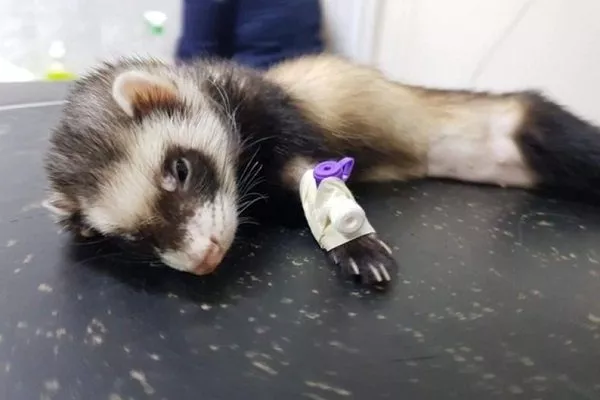
Features of manifestation:
- loss of appetite;
- inflammation of the conjunctiva;
- discharge of yellow-green mucus from the eyes;
- fever and increased body temperature;
- shortness of breath, snoring;
- redness of the skin on the chin, hair loss;
- hyperemia of the anus and lips;
- the formation of red spots in areas of baldness, which begin to become covered with a dry crust;
- discharge of purulent fluid from the nasal passages;
- vomiting, sudden weight loss;
- paralysis.
Young individuals are at risk, as their immune system is not fully developed and the body is unable to fight infection. Laboratory tests are used for diagnosis.
There is no treatment for plague. The animal usually dies by the end of the incubation period, but there are cases of mustelids dying within 2-3 days of infection. If plague is detected, euthanize the animal.
What to do?
If you notice hair loss, pay attention to other symptoms. If the shedding is normal, the owner can help the pet independently, depending on the cause. If there is a medical condition, consult a veterinarian immediately.
When to see a veterinarian?
There are a number of signs that indicate a trip to the veterinary clinic. Pay special attention to them:
- a sharp decrease in appetite and weight loss;
- lethargy, lack of interest in toys and surrounding factors;
- redness of the skin on bald spots;
- aggressiveness;
- the presence of seals on the body;
- dry skin;
- purulent and other discharges from the body;
- constant scratching of the animal.
Diagnostics
It's impossible to independently identify the cause of hair loss and other symptoms. A veterinarian must conduct diagnostic tests. The first step is a visual examination of the ferret.
If infection is suspected and other diseases Conducts laboratory testing. This includes various samples, scrapings, and tests. Various biological samples are collected—saliva, blood, hair, skin, etc.—depending on the suspected pathology.
Preventive measures
It's much easier to prevent baldness and any disease than to deal with the problem later. Here's what to do:
- keep the cage and room clean;
- Wash toys and other ferret care items more often;
- Get vaccinated on time;
- Monitor your diet and, if necessary, take vitamins in the form of supplements;
- bathe and comb the animal;
- Avoid contact with potential allergens, especially if your animal has shown signs of allergic reactions;
- protect from stressful situations;
- Communicate with your pet more often, pay attention to it, and if this is not possible, get a dog or a cat (these types of animals get along well with each other).
Don't panic if your ferret is losing hair, as this can have both pathological and physiological causes. The key is to promptly recognize any symptoms and, if necessary, visit a veterinarian.