
Like any animal, ferrets can scratch for a variety of reasons. Don't consider it abnormal if your ferret is actively scratching itself after waking up—it's normal; it's just grooming itself. If your pet is scratching more often than usual, it's worth considering—there may be a health problem.
Seasonal molting
Ferrets shed their fur twice a year. This occurs due to the shorter and longer duration of daylight and night. In the fall, the animal's body prepares for the cold weather by shedding its fur for winter, and in the spring, it sheds its winter coat, replacing it with summer fur.
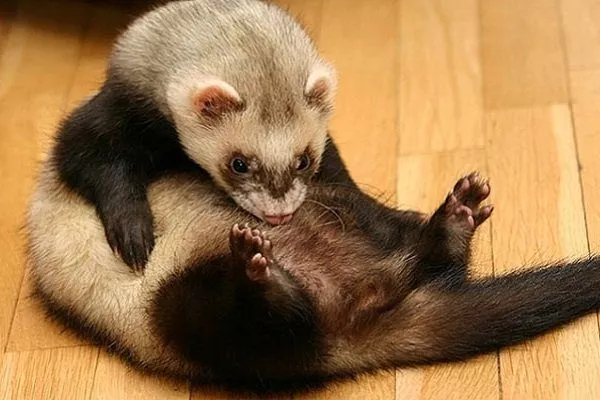
During shedding season, a ferret's entire body itches due to the growth of a new coat. Patches of old fur can be found throughout the ferret's habitat:
- where the pet rests;
- takes food;
- just moves, runs and plays.
- ✓ Use only brushes with soft bristles to avoid damaging your ferret's skin.
- ✓ Increase the frequency of brushing to 2-3 times a day during peak shedding periods.
You can ease its suffering by brushing out any old fur. However, this must be done very carefully to avoid damaging the animal's skin, which it already scratches quite a bit. Special brushes, similar to those used for brushing dogs and cats, are suitable for this purpose.
During the fall and spring shedding seasons, your pet especially needs a proper diet. The menu should include:
- food rich in nutrients, vitamins and minerals;
- special vitamin and mineral complexes;
- drugs that will facilitate the passage of hair from the gastrointestinal tract (GIT), since the ferret absorbs a huge amount of it when licking itself.
Veterinarians recommend giving medications specifically designed for ferrets, not other animals. For example:
- Skin and coat ferret food supplement from 8in1 - especially for ferrets, should be given every day, mixed with food (for adults 4 ml, for young ferrets, weakened or pregnant females 8 ml);
- FerretVite vitamin paste – should be given in the morning and at night as additional nutrition like liquid food for cats and dogs;
- nutritional yeast supplements – It is recommended to give 1-2 tablets per day.
Sometimes a pet skips the seasonal shedding entirely. This is not a big deal, as seasonal shedding can shift in any direction, depending on the region and the ferret's living conditions.
Unscheduled molting
There's also such a thing as unscheduled shedding. It occurs after castration and before giving birth. It's caused by hormonal imbalances.
This phenomenon is physiological and therefore does not require any medical intervention. Regular gentle brushing and a balanced diet with vitamin and mineral supplements are sufficient.
Allergy
Ferrets are much less susceptible to various allergic reactions and manifestations than cats or dogs. However, when caring for a ferret, it's important to be aware of which allergens can trigger skin hypersensitivity.
The allergen substance can be found in:
- dyes and additives in low-quality, cheap food;
- tray filler flavors;
- products for bathing your pet or washing its accessories.
In this situation, it's important to remember what preceded the pet's itching to eliminate the trigger. In severe cases, veterinary assistance is required.
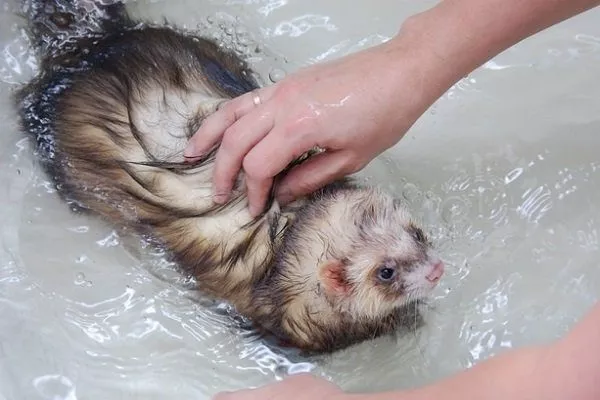
Ferrets should be bathed no more than once every 2-3 weeks. If bathing is done more frequently, this may be the cause of the itching. Allergic reactions can be triggered by:
- too frequent use of bathing products;
- use of low-quality shampoos.
It's not even an allergy. The itching occurs because the animal's delicate skin is overdried, which is why it itches.
Clogged pores
A condition such as clogged pores can have two causes:
- hormonal changes;
- The ferret does not take care of its own fur.
Identifying clogged pores is very easy. To do this, carefully inspect the animal's body and tail. If there are black or red spots, the pores need to be cleaned. You can do this yourself:
- Prepare a scrub from almonds or hazelnuts and oatmeal, pre-ground in a coffee grinder or mixer.
- Add sour cream to the resulting mixture.
- Apply the prepared scrub to the animal’s skin.
- After cleaning the clogged pores, bathe your ferret.
If you don't have the necessary ingredients on hand, use regular laundry soap. Apply it with a soft toothbrush.
Stress
Stressors that create discomfort and an unsettled environment not only influence behavioral changes but also weaken the ferret's immune system. As a result, the ferret loses fur, develops itchy skin, and develops itching.
- ✓ Loss of appetite or refusal of favorite treats.
- ✓ Unusual aggression or, conversely, apathy.
It is necessary to protect your pet from stress triggers such as:
- Underactivity. Ferrets are naturally active creatures. They need to expend energy on movement, play, and exploring their surroundings. A decrease in activity can negatively impact a pet's mood, and eventually, their well-being.
- Lack of personal space. Build a house inside the cage so your pet can feel secure and know they have somewhere to hide in case of danger.
- Loneliness. Your pet may be feeling lonely and unwanted. Give them more attention. They need affection and playtime.
- New neighbor. When a new pet is introduced, a ferret may feel fear or even jealousy. Monitor the new pet for any aggression toward the existing one. Allow the animals to gradually acclimate to the new addition without invading their personal space.
- New unfamiliar environment. Changing the cage's location, introducing new food, or introducing unfamiliar odors can all negatively impact your pet's psychological well-being. If a change of environment is necessary for objective reasons, try to implement all procedures gradually, carefully, and methodically.
- Noise. This category includes shouting, raised voices, loud, frightening noises, and excessively loud music. Try to avoid these.
Wrong diet
If your ferret's diet is improper (due to a lack of vitamins and low-quality food), their fur will become dull, brittle, and begin to fall out. Their skin will become extremely itchy due to dryness.
To support the animal’s immunity and restore the former splendor and shine of the coat, should be included in the diet:
- minced meat and offal as a base, can be periodically replaced with boiled eggs and fish;
- In slightly smaller quantities, the ferret needs vegetables and cheese;
- Meat should be served as part of porridges containing cereals to support digestion processes.
Ectoparasites
Itching can be caused by the presence of microparasites and mites in the ferret's fur:
- Sarcoptic mange and notoedrosis (also called scabies). They appear as a result of mite infestation in the subcutaneous space. These diseases are quite rare in domesticated ferrets.
- Demodicosis. Ferrets don't have it often, but it can cause a lot of problems. Demodicosis is difficult to treat because it's difficult for a veterinarian to deliver medication to the parasite. Hair follicles can also interfere.
- Otodectosis. The parasite here is an ear mite. This condition is common in ferrets. Itching in the ears and head provokes the animal to scratch intensely. Earwax darkens. The condition can lead to complications such as otitis.
If you suspect ticks, you should immediately contact a veterinarian for a scraping test. Treatment should only be initiated after a definitive diagnosis.
They prescribe the use of insectoacaricidal sprays, complex preparations for kittens or puppies such as:
- Frontline - applied to the withers area (to prevent the ferret from licking) once a day for 4-6 weeks.
- Stronghold (used in the same way as Frontline).
Mycoses
Mycoses are skin fungi. By feeding on the keratin found in a pet's skin and fur, they destroy the coat. Mycoses reproduce through spores, which, if left untreated, can lead to new lesions spreading across a large area of the affected animal's body.
Why did fungal disease appear:
- the ferret "caught it from another animal";
- unsuitable conditions of detention.
The incubation period lasts for a month, after which signs of the disease can be observed:
- hair falls out;
- the skin is itchy;
- dry skin;
- peeling of the affected areas.
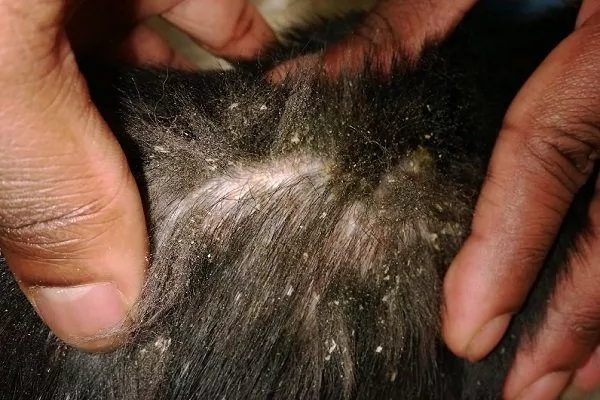
To detect a fungal infection and make an accurate diagnosis, a fluorescent lamp test is necessary. Only with this can one reliably determine that a fungus is the cause of the animal's itching.
The treatment continues for more than a month:
- The hair is cut off from the affected areas.
- Antifungal ointments and sprays are used.
- Veterinarians prescribe medications to treat mycoses in dogs and cats.
- If the disease is not advanced, gels, ointments and other fungicidal preparations are rubbed into the affected areas:
- OKVET® medicated shampoo with chlorhexidine (used for cats, dogs, and ferrets), do not allow the product to come into contact with eyes or mucous membranes, use no more than once every 5 days);
- Exekont ointment – applied once a day to the affected areas of the skin, is a good antifungal and healing drug;
- If external treatment does not help, Griseofulvin is prescribed in tablets from 20 to 150 mg/kg per day, divided into 2 doses (the drug is contraindicated for ferrets in heat or pregnant women).
- In more serious cases, injections are prescribed (Vakderm, Polivak-TM, Microderm - doses are individual for each case), while the use of external treatments is not stopped.
When treating mycosis in ferrets, it is essential to adhere to the regularity of procedures and under no circumstances should the prescribed course of treatment be interrupted, even if external signs indicate recovery.
Adrenal tumor
Adrenal tumors are a fairly common condition in individuals aged 3-4 years. The tissue degenerates, leading to disruption of the adrenal glands. Neoplasms, both benign and malignant, develop.
The list of symptoms may include:
- dullness of the coat;
- disheveled;
- untidiness;
- nervous behavior;
- excessive self-combing;
- hair loss on the tail, stomach and back;
- even in sterilized females the loop increases in size;
- Males experience difficulty urinating.
The problem can be solved:
- having removed the adrenal glands;
- long-term use of chemicals, supported by vitamin complexes (prescribed by a veterinarian on an individual basis).
Preventive measures
To prevent severe itching in your ferret, follow these simple preventative measures:
- Monitor both your pet's physical and psychological condition - note changes in behavior, introduce new things into its life, for example, by changing its food, but only gradually and unobtrusively;
- choose the right nutrition;
- organize your communication with your pet so that it feels protected;
- monitor the sanitary condition of the animal's habitat;
- Take your pet for regular walks.
Accurate diagnosis of itching is crucial in treating skin diseases in ferrets. Don't skimp on testing and treatment by qualified specialists if your suspicion of a serious condition is confirmed.