
The indoor chrysanthemum is a perennial plant (garden chrysanthemums can be annuals) belonging to the Asteraceae/Compositae family. It is grown on windowsills in apartments and houses, and is also cultivated in greenhouses. It consists of several species and requires slightly different care and planting rules than garden flowers.
Features of indoor chrysanthemums
Chrysanthemums grown indoors are shrubby plants with decorative flowers. In summer, they can be transplanted into the ground or moved outdoors in their pots.
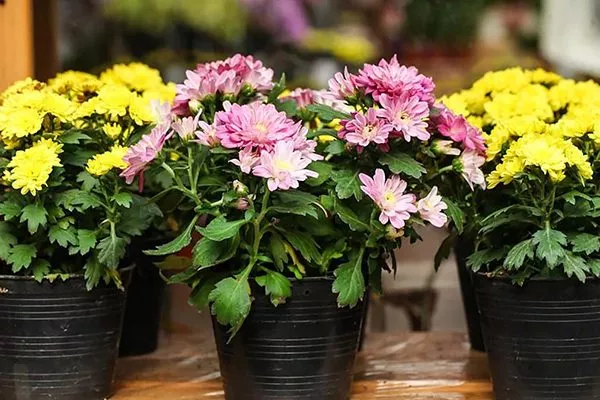
Unlike their garden “relatives,” domestic ones are completely unpretentious in cultivation and have special characteristics:
- Bush. It is compact and short – about 15-30 cm. However, tall specimens also exist – reaching up to 80-100 cm in height.
- Flowers. They can be simple or double, large or small – from 2.5 to 5 cm in diameter.
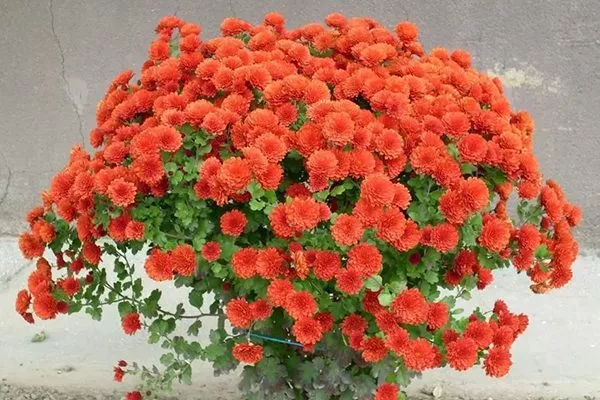
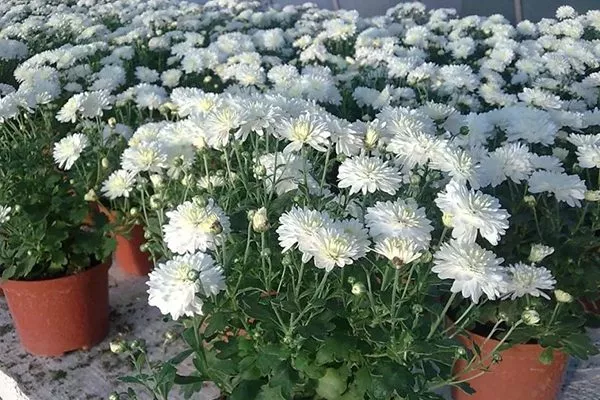
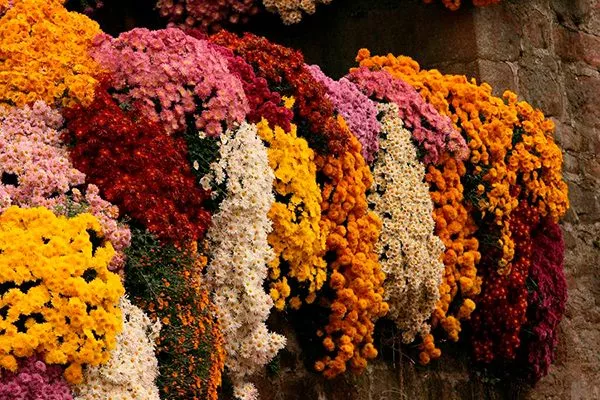
- Shade. They can come in a wide variety of colors—white, pink, orange, red, purple, green, etc. There are single-color, two-color, and multicolor specimens, but the gradient flowers are especially impressive. The shades are often very vibrant.
- Leaves. They vary in texture, shade, and shape. The most common colors are green, purple, reddish-brown, and grayish. Shapes include regular, figured, serrated, and feathery. The surface is matte or shiny.
- Stem. Typically straight and stiff, very strong. Depending on the species, the surface is smooth or covered with hairs. Miniature varieties may have thinner stems.
What are potted chrysanthemums used for?
Indoor chrysanthemums are completely frost-resistant and are grown indoors as perennials or annuals. These flowers come in a wide range of colors, making them suitable for any interior. But potted chrysanthemums aren't just for windowsills. They can be used for other purposes:
- for decorating terraces and balconies during warm periods;
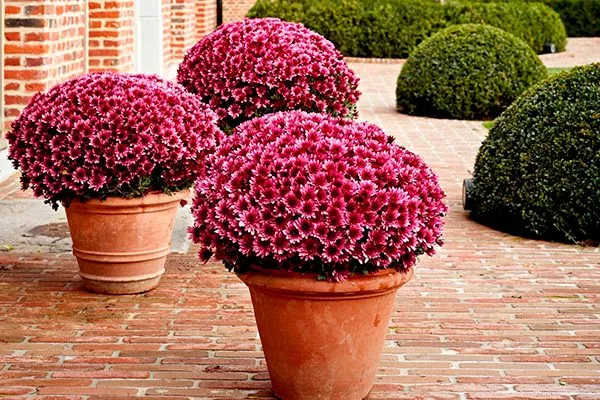
- place pots along paths, near the house and gates, on the water and in gazebos;
- to create a still life in any recreation area.
Many gardeners use chrysanthemums as a bactericidal plant, as they produce antibacterial substances. Traditional healers recommend using the leaves as infusions and decoctions for the treatment of periodontal disease, etc.
Types of domestic chrysanthemums
Indoor chrysanthemums come in several varieties, each subdivided into different cultivars. The most popular varieties are:
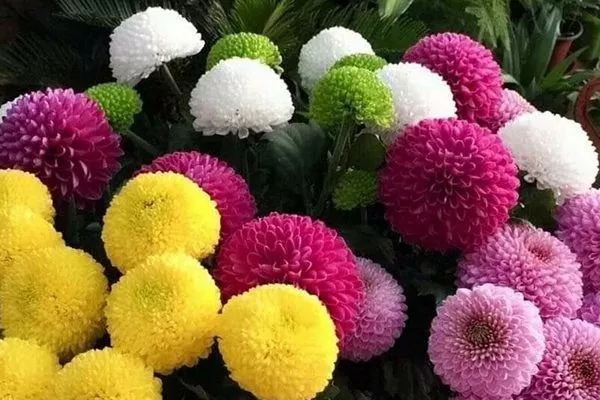
- Pompom chrysanthemums. They are characterized by the shape of their flowers, which resemble small balls. They are most often about 6 cm in diameter.

- Decorative chrysanthemums. They are distinguished by large and always bright flowers up to 20 cm in diameter. The shape can vary.
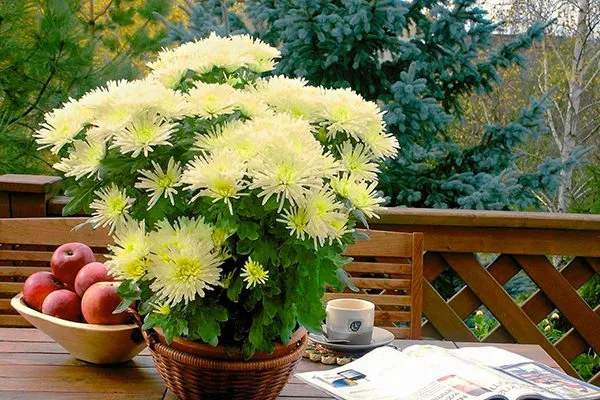
- Feathery chrysanthemums. The main feature is the feather-like petals (narrow and elongated), varying in diameter from 10 to 15 cm. At the same time, the bud is very voluminous and lush.
- Pansies. This is a miniature species with flowers measuring 2 cm in diameter. A mandatory detail is the inclusion of eye-like spots.
- Japanese chrysanthemums. It is characterized by double flowers, shortened petals and a large node in the center, while the shape of the bud can be very different.
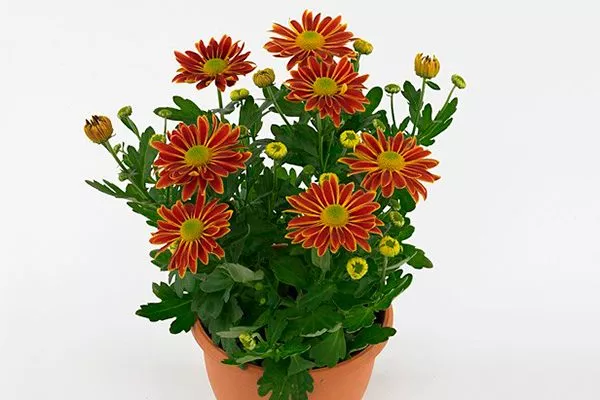
- Ryzhikovye chrysanthemums. The main difference is the bright red-orange spot in the center. The flower sizes and shapes vary.
- Chinese. The most common type, also known as mulberry-leaved, is considered compact and has single or semi-double petals.
- Korean shorties. Another popular variety with us, with bright spherical flowers of varying diameters.
- Indian. It has the longest flowering period and a miniature bush. It resembles daisies in appearance, but is only white or pinkish in color.
- Cascading. It is characterized by drooping shoots with small flowers, which is not typical for chrysanthemums.
- Spherical. They have medium height and small flowers (diameter does not exceed 2.5 cm).
- Shrubby. The tallest indoor variety, reaching 100 cm in height. The flowers are 5-7 cm in diameter and have simple petals.
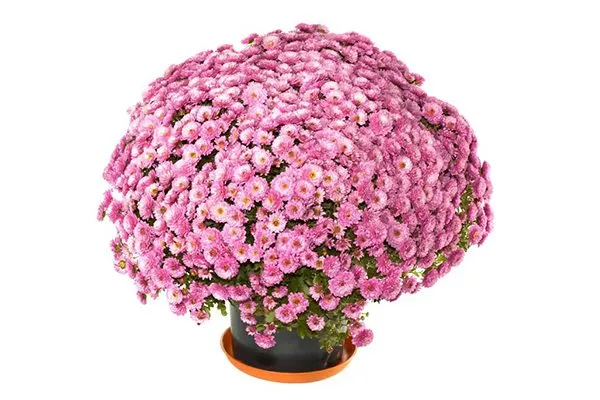
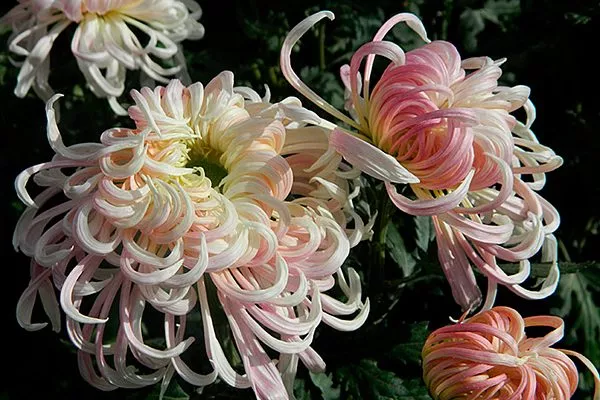
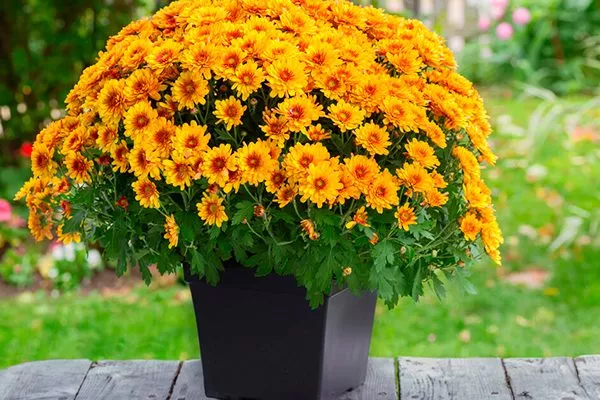
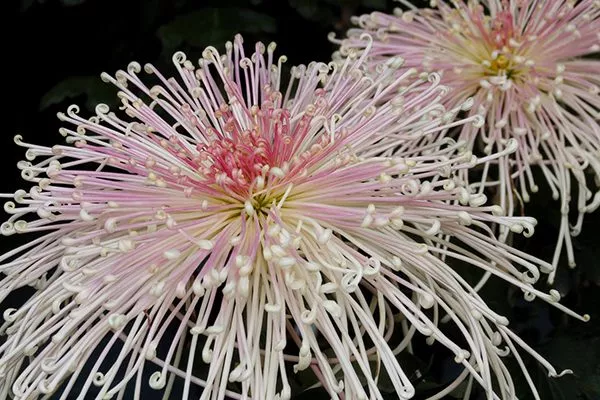
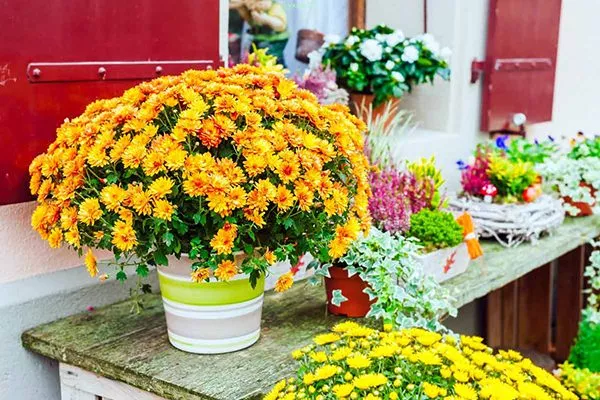
- ✓ For small spaces, choose miniature varieties up to 30 cm in height.
- ✓ Pay attention to the duration of flowering, which varies from several weeks to several months depending on the variety.
Caring for chrysanthemums at home
Caring for indoor chrysanthemums is easy, but choosing the right location for the pot is crucial. The key is avoiding heat and direct sunlight, so the location should be cool.
On the other hand, northern windows don't allow the plant to receive enough natural light. Therefore, northwest- or northeast-facing windowsills are the best option.
Temperature conditions
Chrysanthemums won't thrive, much less bloom, in hot conditions. It's important to pay attention to temperature conditions at different times of the year:
- summer – maximum +23 degrees;
- spring and autumn – +18 degrees;
- winter – from +15 to +17 degrees.
Lighting regime for potted chrysanthemums
The indoor chrysanthemum prefers plenty of light, but not too much, so it should be diffused. However, the flower thrives on short daylight hours—up to 10 hours per day maximum. Optimally, 8 hours is ideal.
Please follow these guidelines:
- During flowering and the growing season in general, place the pot on a sunny windowsill, but shade the windows in the afternoon;
- During the winter period (the time of rest and dormancy, when flowering has already ended), the flower needs much less light, so give preference to semi-dark rooms;
- It is permissible for the plant to be exposed to sunlight in the morning and evening; moreover, this is beneficial for the chrysanthemum.
Watering and humidity
Chrysanthemums also prefer high humidity. The room where they are grown should have a humidity level of 70-80%. If the air in the room is drier, place a humidifier, a container of water, etc. near the pot.
- ✓ Optimal air humidity should be maintained at 70-80%, which is critical to prevent leaves from drying out.
- ✓ The temperature regime must be strictly observed: in summer no higher than +23°C, in spring and autumn around +18°C, in winter from +15 to +17°C.
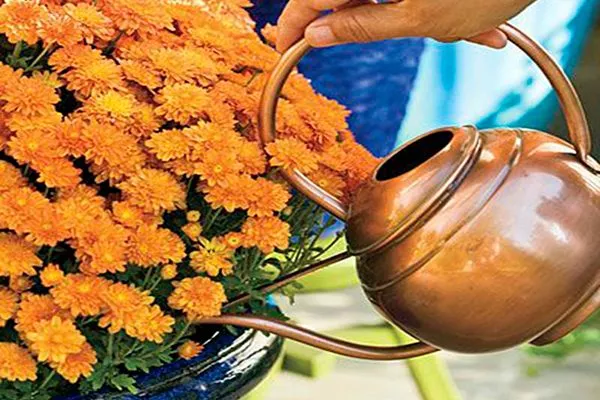
As for watering, the soil should be kept moist, but there should be no standing water. To prevent water retention, the soil should be well-drained. Watering guidelines:
- During the plant’s development, that is, after awakening from hibernation, add water 3 times a week;
- during flowering - twice;
- in winter it is enough to water once every 3-4 weeks, depending on the air temperature in the apartment;
- In extreme heat, you can moisten every other day, but in small quantities, and you also need to spray the green mass.
If you make mistakes in watering, the following will occur:
- if there is a lack of water, the stem part withers, the leaves turn yellow, and the buds fall off;
- If there is an excess of liquid, the root system begins to rot, then the green mass begins to rot, and fungal diseases develop.
You cannot water chrysanthemums using the tray method - only from above.
Do chrysanthemums need to be sprayed?
Misting chrysanthemums is not contraindicated. This procedure is especially beneficial during dry summer months. This will increase the humidity level around and within the plant.

There are rules:
- The crown is sprayed using a spray bottle with water at room temperature, but not higher than +25 degrees.
- In spring, you can spray once a day.
- In summer, twice or three times.
- In autumn, once every two or three days.
- Spraying is not carried out in winter.
Transplanting chrysanthemums
Indoor chrysanthemums are repotted annually until they reach adulthood; after that, it's sufficient to repot them once every three years. The optimal time for this is spring, when the plant awakens and emerges from dormancy.
Thanks to replanting, the plant receives complete nutrition, the root system becomes stronger, the bush blooms more abundantly and develops faster.
Soil requirements
You can buy potting soil at any flower shop, but experienced gardeners prefer to make their own. The key is to use a soil mixture that's neutral in pH, fertile, light, and loose.
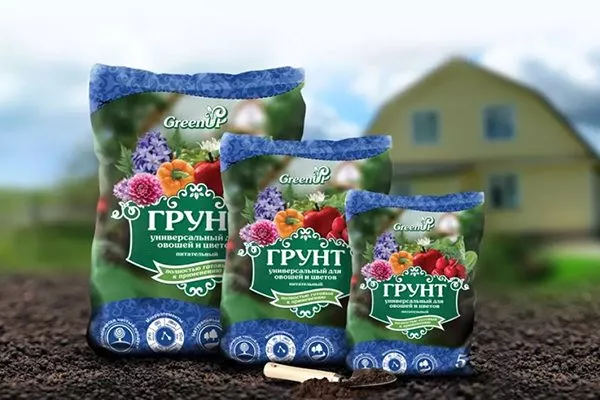
Potting mix options:
- 4 parts of turf soil and garden soil, 1 part of humus and white sand (you can add a little dry bird droppings for fertility and lushness);
- in equal proportions – river sand, peat and garden soil;
- leaf and turf soil – 2 parts each, peat and sand – 1 part each, Superphosphate – according to the instructions.
What kind of pot do you need?
A mandatory requirement for a container for indoor chrysanthemums is drainage holes to allow water to drain after watering. It's also important to consider the material the pot is made of:
- Ceramics. It's natural and breathable, but it's heavy, making it more suitable for taller flowers. It's expensive, but the selection is impressive.
- Clay. This is also a natural material, which is ideal for large indoor bushes.
- Metal. It is absolutely not suitable, since it cools the soil in cold weather and overheats it in hot weather.
- Plastic. A good option for chrysanthemums—affordable and lightweight. However, it does have its drawbacks: it doesn't allow air to pass through and promotes slight warming of the soil.
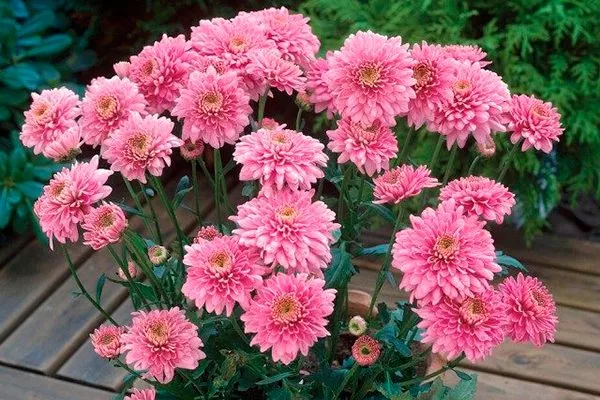
Parameters depend on the variety and species, but the height should be approximately 15 to 20 cm. Each time you repot, it's important to select a pot that's 1.5 to 2 cm wider in diameter than the previous one.
The transplant process
To help the plant quickly adapt to its new container, follow the repotting instructions:
- Before starting work, slightly moisten the soil in the old pot.
- On the day of transplantation, disinfect the new container.
- Place a drainage layer of about 5-6 cm on the bottom.
- Fill the pot with pre-prepared substrate to about half its height.
- Remove the flower from the container by transshipment.
- Gently shake the soil away from the root system, but don't remove it completely. This is necessary to ensure the roots are positioned in their natural soil.
- Place the bush in the new pot and sprinkle with the remaining soil, lightly compacting it with your hands.
- Water the flower.
- Move it to a slightly shaded place for a couple of weeks.
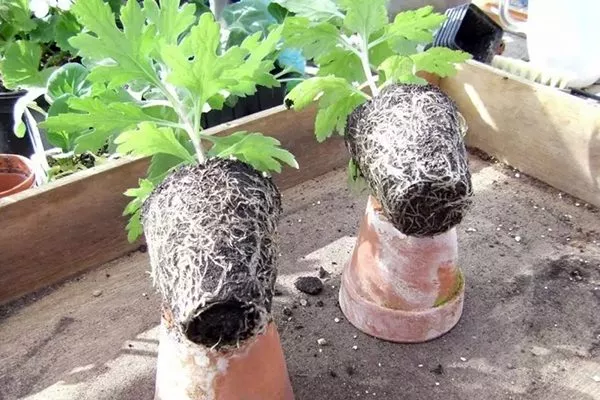
If the plant is young, cover it with a plastic bottle or plastic sheet for the first 3-4 days. This will help the chrysanthemum root more quickly in the new medium.
Fertilizers for potted chrysanthemums
Star flowers prefer fertile soil and quickly absorb nutrients from it, so it is important to fertilize them periodically.
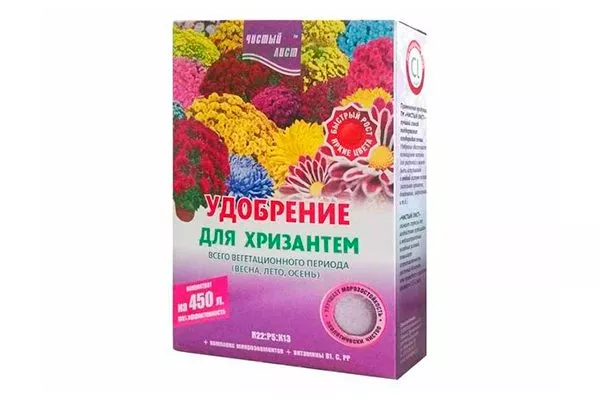
You can buy ready-made fertilizers designed for indoor flowering plants or make your own. The key is to make sure the fertilizer contains 1 part nitrogen, 2 parts potassium, and 3 parts phosphorus.
Pruning and shaping bushes
Pruning indoor chrysanthemums is necessary to shape the crown and for sanitary and hygienic purposes. This procedure is performed twice a year:
- First time. The best time to plant is in spring, immediately after awakening or planting/repotting. Remove the growing point on the upper shoots. This will allow the stems to grow laterally. Repeat the procedure after 30 days. Keep in mind that spherical chrysanthemums are not shaped, as their crowns always grow beautifully.
- Second time. This is a sanitary autumn pruning that applies to all types of chrysanthemums. It is necessary to remove all dried, rotted, or damaged branches. Any remaining branches are shortened by one-third.
Post-flowering care
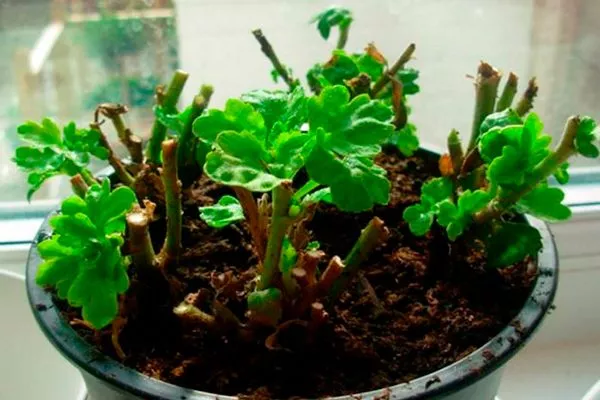
When the buds fade, they are carefully cut off, and the bush itself is pruned. After this procedure, the plant should be watered and stored for the winter.
Wintering
During a dormant period, chrysanthemums should not bloom or actively develop, so they need to be given appropriate conditions. Specifically, they need to be moved to a cooler location.
For indoor flowers, you can use one of the following wintering methods:
- Moving to another room. This should be a room with a temperature between +3 and +8 degrees Celsius. The lighting should be standard, but the daylight hours should be about 5 hours. This could be a hallway/veranda, a glazed loggia/balcony, or a window in the entryway.
- Moving to the basement. This is the best option, if available. Darkness won't be a problem in this case. However, keep in mind that the air humidity in a basement is high, so you should carefully check the plant for rot and mold. Pay attention to the soil surface as well.
- Leave everything as is. Specifically, in the same room and on the same windowsill. In this situation, the plant is pruned drastically—the stems are cut back to the root.
Methods of reproduction
Potted chrysanthemums can be propagated both vegetatively and generatively, but each method has its own unique subtleties and nuances that need to be learned in advance.
Propagation of chrysanthemum by cuttings
This is the most popular and effective method used by experienced gardeners. It's also ideal for beginners, as the cuttings always take root successfully. It can be used for absolutely any type and variety of indoor chrysanthemum.
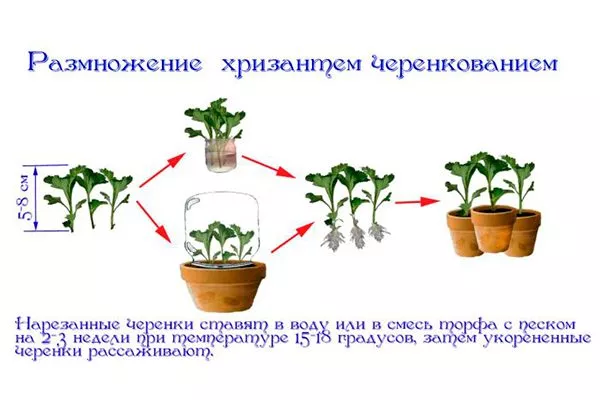
How to Properly Propagate Chrysanthemum Cuttings – A Brief Guide:
- Cut the shoot at an angle. The length depends on the variety.
- Treat the cut with crushed activated carbon.
- Leave on a paper towel to dry.
- Prepare a substrate from garden soil, peat and sand.
- Place it in a container.
- Insert the cuttings 1.5 cm deep.
- Water it.
- Wrap in plastic wrap and leave to root.
Ventilate the plants daily and moisten them periodically. Remove the covering after 15-20 days. Transplant them to their permanent location after another 1-1.5 months.
To speed up the process of root formation, treat the cut areas with any rooting agent (Epin, Kornevin, Heteroauxin, etc.).
Dividing the bush
Another popular method allows you to immediately obtain up to seven seedlings with already formed roots. The best time to propagate using this technique is autumn.
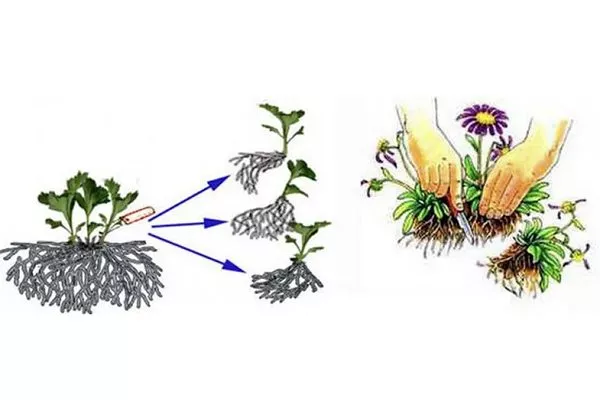
The process looks like this:
- Prepare pots and substrate.
- Water the bushes the day before propagation.
- Remove the kut and cut it into several pieces.
- Treat the cut areas with a manganese solution or charcoal.
- Plant each section in the standard manner.
Growing from seeds
The seed method is rarely used because it is labor-intensive and time-consuming. However, it can be used to produce a new variety, as the parent plant's characteristics are not preserved.
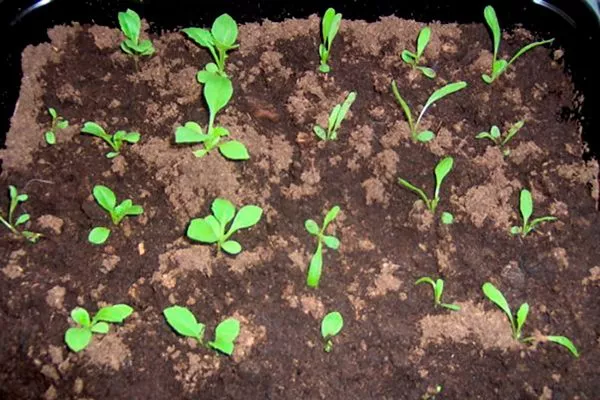
The process is as follows:
- you need to collect or buy seeds;
- planting material must be prepared - disinfection, selection, etc.;
- now you need to plant it in a substrate of peat and humus, cover it with glass and grow it for at least 15 days until seedlings appear;
- After the leaves appear, picking is carried out and only after strong shoots have formed can they be transplanted to a permanent location.
These chrysanthemums usually bloom the following year, but this depends on the specific variety.
Chrysanthemum diseases
Chrysanthemum disease resistance varies depending on the variety. However, there are a number of common diseases encountered by gardeners.
Fungal diseases of chrysanthemums
Fungal infections occur due to overwatering, so it's important to learn how to water your crops properly. Other negative factors include lack of ventilation, increased soil acidity, excessive heat, and nutrient deficiencies.
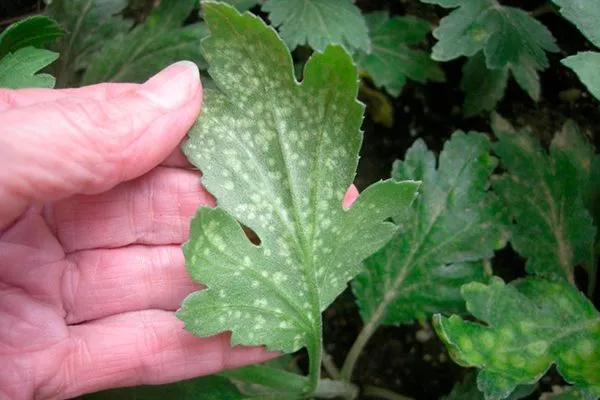
What could be:
- Leaf spot, or septoria leaf spot, of chrysanthemums. It appears as yellowish spots on the foliage, which later turn black. This results in death (necrosis).
- Rust. The main symptom is orange-powdery spots on the upper side of the leaves. Additionally, the plant fails to bloom, and wilts.
- Chrysanthemum leaf wilting. This Fusarium wilt is characterized by wilting foliage and brownish spots. Flowering ceases, and the plant stops growing.
- Powdery mildew. A powdery gray coating appears on the surface of the leaf blades.
Systemic fungicides are used to combat diseases.
Viral diseases of chrysanthemums
The only viral disease that frequently affects chrysanthemums is mosaic. It manifests itself as drooping and yellowing foliage. The inflorescences also become smaller, and the bush stunts growth. Fungicides are also used for treatment.
Chrysanthemum pests
Chrysanthemums are not often attacked by harmful insects, but sometimes they are attacked by the following pests:
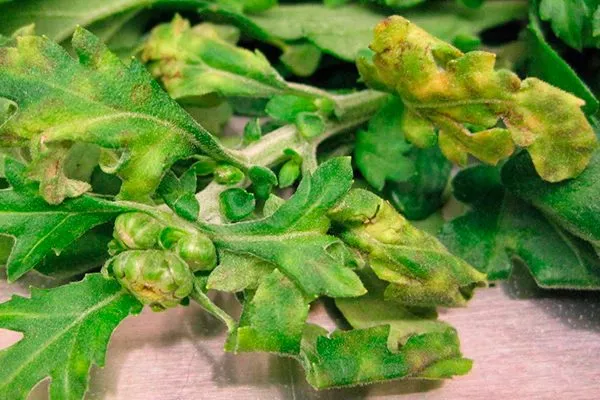
- Leaf nematode. These are very small worms that live in the soil and attack the green parts of the plant, leaving behind brownish spots.
- Aphids and spider mites. These insects feed on the chrysanthemum juice, causing it to dry out.
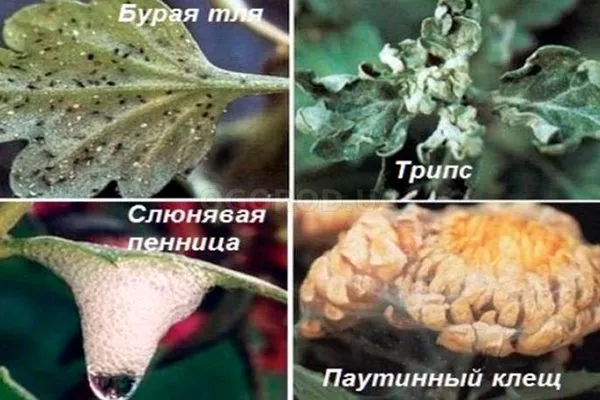
To get rid of pests, insecticides or copper sulfate are used.
Reviews
Potted chrysanthemums are divided into different types and varieties, allowing you to choose the best option for your needs based on color, size, inflorescence type, etc. Caring for this flower variety is not difficult, but it is important to adhere to basic growing guidelines such as watering, humidity, and lighting.