
The steppe oyster mushroom, or king oyster mushroom, is a member of the oyster family, but bears little resemblance to its relatives. Its scientific name is eryngii. It's not particularly popular among mushroom pickers, but it has a satisfactory taste.
Description of the steppe oyster mushroom
Eryngii mushrooms have distinctive appearances. Their distinctive features include taste and smell. They can be distinguished from other types of mushrooms (not oyster mushrooms) by their cap, stems, spores, and flesh.
hat
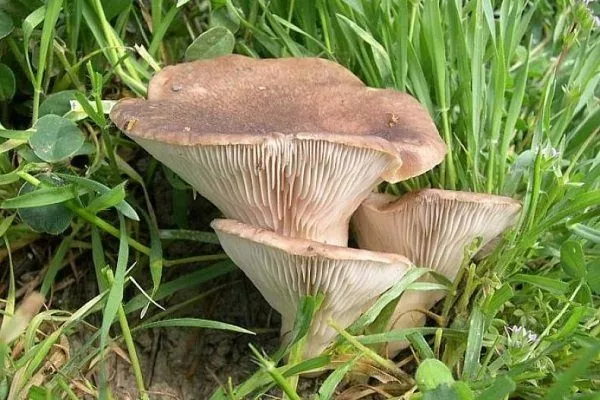
The circumference of this part of the fruiting body varies depending on the mushroom's age. Young specimens have a cap diameter of 4.5 cm, while older specimens have a cap diameter of 13 cm.
At the beginning of growth, there is a small tubercle in the center of the cap; over time, it turns into a depressed spot.
Color:
- young mushroom – red with brown and russet shades;
- Adult - pale ocher, cap edges white.
Hymenophore
This part of the mushroom's fruiting body is highly developed, allowing it to produce the maximum number of spores. Therefore, the steppe oyster mushroom grows in large colonies, which in turn brings joy to mushroom pickers and farmers when growing them.
The gills located under the cap partially extend onto the stem. They are densely spaced. The color is pink with a creamy tint. The margin is entire. The spores are beige and cylindrical.
Pulp
The steppe oyster mushroom is large in size and has impressive tissue volumes. This gives it a meaty appearance. The flesh of young mushrooms is dense, while that of mature mushrooms is loose. Its color is white or pale yellow, sometimes with brown or pink specks.
Leg
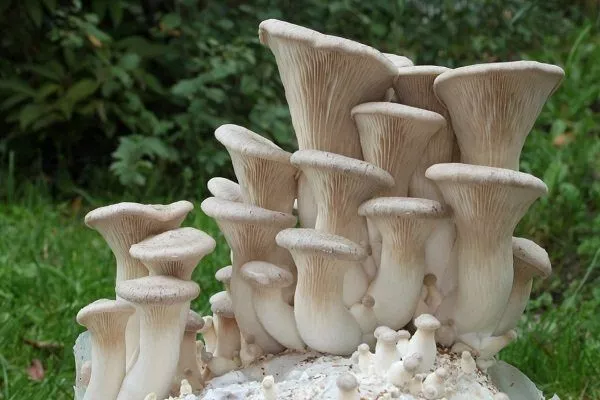
The oyster mushroom stem is 2 to 5 cm tall and no more than 2.5 cm in circumference. It is located precisely in the center of the cap, but can occasionally shift. The mushroom is cylindrical in shape, thickening at the base. Young mushrooms are white, while mature mushrooms are brown with an ochre tint.
Period and place of fruiting
In the wild, the steppe oyster mushroom grows in many countries, including Russia. Its natural habitat is considered to be:
- Central Europe;
- Mediterranean;
- Western Asia;
- India.
The mushroom's name speaks for itself. It grows in steppe zones on plant debris (stumps and root stalks of umbelliferous plants). Oyster mushrooms can often be found where smooth mushrooms and eryngiums once grew.
The fruiting period is spring. In southern regions, the mushroom can be harvested as early as early March.
Are there false doubles?
The king oyster mushroom bears no resemblance to poisonous mushrooms. However, it may resemble other eukaryotic organisms popular with mushroom pickers. All of them are edible.
Experts say the oyster mushroom is similar to the field champignon or milk mushroom. The distinguishing feature is that the steppe mushroom has more tender flesh.
Evaluation of properties
The steppe oyster mushroom is a highly nutritious mushroom. Its nutritional value is almost equal to that of chicken. The flesh contains amino acids, proteins, various vitamins, and enzymes.
Energy value:
- proteins – 3.31 g;
- fats – 0.41 g;
- carbohydrates – 4.17 g.
If you consume the mushroom regularly, then after a short period of time you will notice changes in your body:
- the body was cleansed of salts and heavy metals;
- the immune system began to work more actively;
- problems related to the gastrointestinal tract disappeared;
- blood cholesterol levels decreased;
- Men's potency improved.
Possible harm and contraindications
The steppe oyster mushroom is not harmful to human health, but it does absorb harmful and toxic substances found in the soil. For this reason, it should not be collected in polluted areas or near highways.
It is recommended that the following individuals limit their consumption of the mushroom:
- For children under 12 years old. The chitin contained in the mushroom is not fully absorbed, which can cause intestinal upset and stomach pain.
- Those with diseases of the stomach and duodenum. In this case, the product should be completely abandoned, as it will worsen the condition of the large one.
- Who have been diagnosed with gastritis. You can't eat fried mushrooms.
- People with biliary dyskinesia. Oyster mushrooms stimulate bile production. After eating, you may experience pain in the hypochondrium and severe itching.
Preparation
The steppe oyster mushroom has a pleasant flavor, making it popular in cooking. Processing and cooking have their own unique characteristics:
- Cleaning. This process requires no special preparation. Wipe the mushroom with a dry cloth, but a paper towel will do. Separate the cap from the stem. Cut into pieces of any size.
- Cooking. Place the peeled oyster mushrooms in a pot of boiling salted water. Let them simmer for 15 minutes. For a piquant flavor, add lemon juice, acid, or vinegar.
Growing at home and in the garden
The steppe mushroom has been grown indoors for quite some time. It can be planted indoors, on tree stumps, in substrate, or in garden beds. The main advantage of this mushroom is that its mycelium grows quickly, requires little care, and produces high yields.
How does the steppe oyster mushroom reproduce?
The steppe oyster mushroom reproduces in three ways:
- Vegetative. The process involves mycelium, which is located beneath the soil. Mycelial threads have the ability to separate from the rest of the mass, but they continue to grow independently, expanding their own filament system.
- Asexual. The main component is a spore with flagella. In windy weather, these flagella are dispersed over long distances. The spore penetrates deep into the soil and begins to grow rapidly, but only if the climate permits.
This is how new mycelium forms. For young oyster mushrooms to grow, two spores need to be close to each other. - Sexual. The reproductive period is the formation of secondary mycelium, when the primary threads form pairs. This creates additional mycelium in the soil, from which young mushrooms will emerge.
Conditions for growing white steppe mushrooms
The most common way to grow steppe mushrooms at home is to use a log, which should not be rotten.
Other requirements:
- the ideal circumference of a log is 15-30 cm, length – 30-50 cm;
- temperature range – +10-27ºС;
- the best time for planting is from mid-spring to mid-autumn;
- humidity is about 90%, after the first rudiments of the fungus appear, this figure should be reduced to 80%.
- ✓ The temperature regime must be strictly observed: +10-27°C for optimal growth.
- ✓ Air humidity should be at least 90% until the first mushrooms appear, then decrease to 80%.
Planting process and care
The technology for growing steppe mushrooms at home using a log is as follows:
- Make several holes in the log. They shouldn't be larger than 1 cm. To speed up the process, it's best to use an electric drill.
- Place several strands of mycelium into each hole. Wear gloves when performing this procedure.
- Fill the holes with wax or plug them with wooden plugs.
- Place the logs in the open air.
Water the entire log every other day to maintain vital moisture levels.
Eringi can be grown using a substrate in bags. To do this, purchase ready-made mycelium in the form of grains. Place them in containers with sawdust or straw and create the right temperature conditions.
How to store?
Before storing the mushroom, it needs to be cleaned. There are several ways to store steppe oyster mushrooms at home:
- In plastic containers. You can place both fresh and cooked mushrooms in such a container. Storage place - refrigerator or freezer.
- In dried form. This is an inexpensive and most effective method for preserving the mushroom's flavor and nutritional properties. Drying can be done in the oven or outdoors, but avoid direct sunlight.
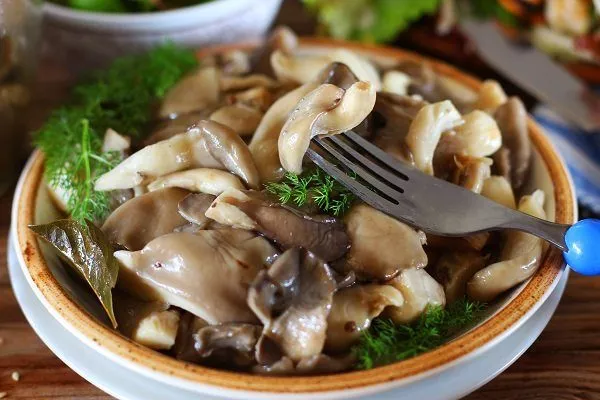
- In the form of pickles. Mushrooms can be salted using either the hot or cold method. For the cold method, they should be boiled, placed in jars, sealed with lids, and stored in a place where the temperature does not exceed 8ºC.
When cold salting oyster mushrooms, rinse them, soak them in salt water for a week, then roll them up and store them. - PicklingYou'll need a saucepan and jars. You can use mushrooms boiled in salted water or fresh ones, which are first boiled in a marinade and then canned.
The steppe oyster mushroom is unlike its relatives in the oyster family. It has a pleasant taste and a subtle aroma. It grows in many countries around the world. While there are no poisonous lookalikes, some individuals should exercise caution when consuming this mushroom.