
The autumn oyster mushroom is a delicious treat, a favorite among true connoisseurs of the quiet hunt. Inexperienced mushroom pickers are unlikely to notice this unsightly mushroom, but in vain—it grows during periods of slow mushroom season and is never worm-eaten.
Description and characteristics of autumn oyster mushroom
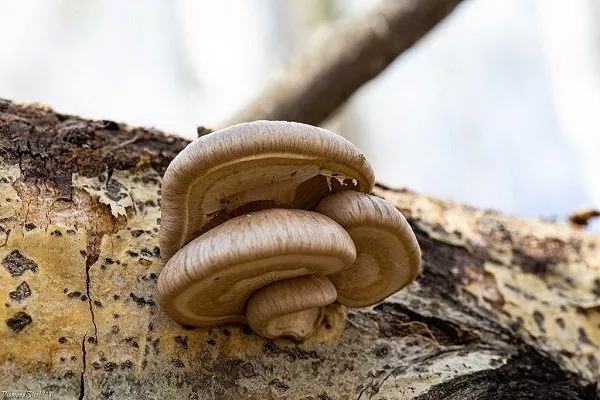
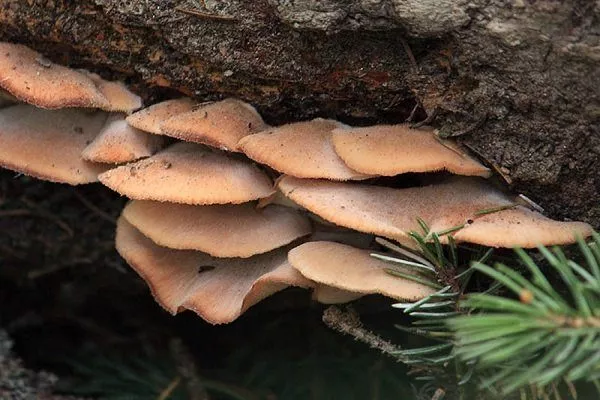
The autumn oyster mushroom (also known as the late/alder oyster mushroom and willow oyster mushroom) belongs to the Mycenaceae family and is a conditionally edible mushroom. It rarely grows alone, but rather in groups.
hat
The oyster mushroom is a gilled mushroom with a lobed cap. Its shape resembles an ear. The cap is thick, juicy, and solid, reaching 8-15 cm in size. The lower portion of the cap is covered with closely spaced gills. These gills are fused to the stem and have jagged edges.
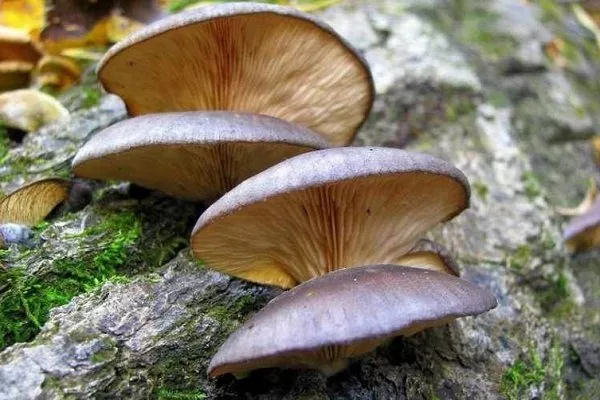
The caps are smooth, shiny, and the edges are curled inward on young mushrooms. As they mature, the caps become spread out, lose their shine, and acquire a matte finish. The edges of older oyster mushrooms become jagged and thin.
Possible cap color:
- gray-brown with an olive-green or yellow tint (darker at the edges, yellow-brown in the center);
- rarely - purple;
- after frosts - reddish.
Plate coloring:
- in young mushrooms - orange;
- in adults - from gray-yellow to white.
The color of the spore powder is white.
In damp and rainy weather, oyster mushroom caps become slimy and slightly sticky.
Pulp
The autumn oyster mushroom has firm, moderately firm flesh. Rainfall softens the flesh as it absorbs moisture, making it watery. Old mushrooms have firm, creamy or white flesh, almost rubbery. Odor is weak or absent. Oyster mushroom flesh has a pleasant, mushroom-like flavor. It is rarely bitter.
- ✓ The presence of scales on the stem is a distinctive feature of the autumn oyster mushroom.
- ✓ The cap changes color after frosts – it becomes reddish.
Leg
The mushroom has a short lateral stalk—about 2-3 cm long. It has a curved, cylindrical shape. Some mushrooms lack a stalk altogether. The surface is scaly, slightly pubescent, and has a dense texture.
The stem is always darker than the cap due to its dense scales. The flesh of the stem, like that of the cap, is virtually odorless and tasteless.
Where do autumn oyster mushrooms grow?
A distinctive feature of the late oyster mushroom is its prolonged fruiting period. This mushroom can be found in the forest throughout the fall. It bears fruit until frost and the appearance of stable snow.
These mushrooms can appear even after November if the air temperature rises to +5°C. During a thaw, individual oyster mushrooms appear in February-March.
Where it grows:
- forests - deciduous and mixed;
- area — the mushroom is widespread in the Leningrad region, the Caucasus, Central Asia, the Far East, Ukraine, Western Europe, and North America;
- trees — the fungus prefers rotting wood of oak, alder, elm, birch, maple, willow, poplar and other deciduous trees.
Can you eat autumn oyster mushrooms?
Oyster mushrooms are conditionally edible, so they can only be eaten after cooking. They are not eaten raw. According to the mushroom classification, oyster mushrooms belong to category 4, indicating their rather modest taste.
Young specimens have a delicate, grassy aroma and a slightly bitter flavor. Mature mushrooms have slimy, unpleasant-to-the-touch skins. The flesh is tough, and after frost, it becomes intensely bitter.
To ensure mushrooms are tasty and safe, they are prepared immediately after harvesting:
- Sort and clean out any debris - leaves, needles, etc.
- Inspect each mushroom for damage, cut off any darkened or dry areas.
- Cover the cleaned mushrooms with water, add a pinch of salt and simmer over low heat for 20 minutes.
- Drain the mushroom broth - you cannot eat it, it contains substances that can harm the body.
- Rinse the boiled mushrooms under running water.
Once the temperature drops below 0°C, mushrooms lose some of their flavor, but they are still edible. If frost follows frost, don't pick them—even though they may look good, they'll turn sour inside.
False doubles
| Name | Fruiting period | Preferred trees | Cap color |
|---|---|---|---|
| Autumn oyster mushroom | September-November | Oak, alder, elm, birch, maple, willow, poplar | Gray-brown with an olive-green or yellow tint |
| Orange | Not specified | Not specified | Orange |
| Green | Not specified | Not specified | Greenish |
| Oyster | Not specified | Not specified | Gray-white, possibly with a purple tint |
| Covered | Not specified | Not specified | Not specified |
| Wolfsbane | Not specified | Not specified | Yellow-orange-red color scheme |
There are no poisonous oyster mushroom analogues in Russian forests, so there is no danger in picking these mushrooms. The main thing is to follow the rules for picking, preparing, and eating them.
A dangerous analogue of the autumn oyster mushroom grows in Australia, while in Russia, only false varieties of this tree-dwelling mushroom are found. However, it's difficult to confuse the autumn oyster mushroom with other mushrooms, as it grows when the mushroom season in the forest is almost over.
False oyster mushrooms:
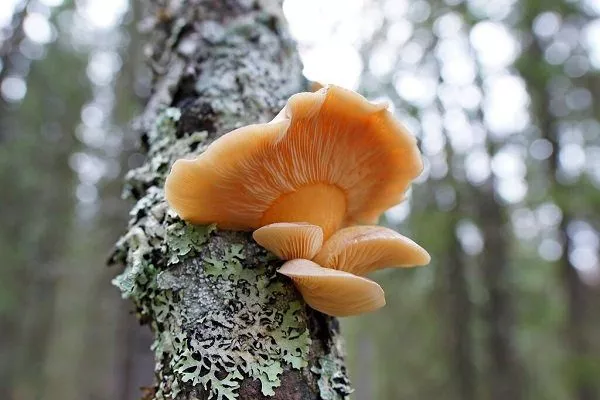
- Orange. It has tough flesh, which is practically inedible. However, this mushroom is very decorative and is often grown as a garden ornament. It's almost impossible to confuse this brightly colored mushroom with the inconspicuous autumn oyster mushroom. It's inedible and non-toxic, smelling like rotten fruit.

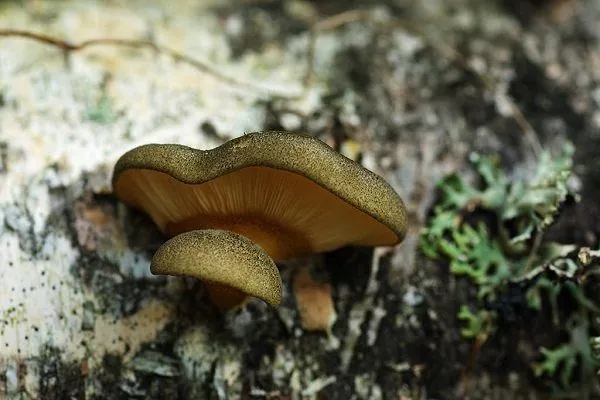
- Green. These mushrooms differ from late-ripening oyster mushrooms in color—they have greenish caps. If you taste the mushroom, you'll find that its flesh is extremely bitter.
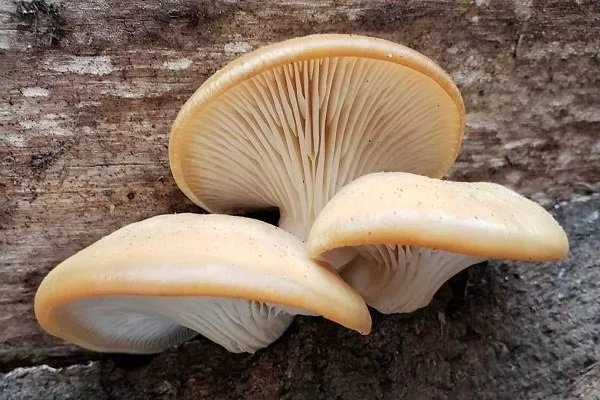
- Oyster. This edible mushroom has a smooth, varnished, gray-white cap. A purple tint may be present. The flesh has a pleasant mushroom aroma.
- Covered. Its flesh smells like raw, peeled potatoes. The spore-bearing layer has a sheath (hence the name). The mushroom is edible.
- Wolfsbane. Inedible, but not poisonous. It has rich, bitter flesh. It smells like rotten cabbage. Its color ranges from yellow to orange to red.
Collection rules
Only young mushrooms are suitable for consumption. Overgrown specimens are not suitable.
How to properly collect oyster mushrooms:
- the best time to collect - dry weather, when the caps are not slippery and the flesh is not saturated with moisture;
- mushrooms are cut with a sharp knife - the trunk part of their legs, shake off the debris and place them in a basket in rows, with the plates facing up, so that they do not get crushed.
Once harvested, oyster mushrooms are cooked immediately; storing them even in the refrigerator is not recommended. freeze for the winter It is possible, after placing them in containers.
Benefits of oyster mushrooms
If you collect and prepare autumn oyster mushrooms correctly, you can get a product that is not only tasty, but also healthy.
Benefits of eating oyster mushrooms:
- contain many vitamins, as well as fatty acids that reduce cholesterol levels in the blood;
- mushrooms contain easily digestible carbohydrates;
- Thanks to polysaccharides, mushrooms have an immunomodulatory effect;
- The pulp contains substances that kill microbes and have an antiparasitic effect.
Oyster mushrooms are low in calories due to their high fiber content. They can be consumed during diets aimed at combating obesity. 100 grams of fresh mushrooms contain 33 kcal.
Possible harm
When consuming oyster mushrooms, one should be aware of the conditional edibility and other characteristics of this mushroom that can be harmful to the body.
Limitations and possible harm:
- The pulp contains chitin, which is almost not absorbed by the child’s body, so oyster mushrooms should not be given to children under 5 years of age;
- Children over 5 years old can be given mushrooms, but in small quantities;
- It is not recommended to eat oyster mushrooms for people with problems with the liver, gastrointestinal tract, pancreas, or kidneys;
- People prone to allergies should collect and handle oyster mushrooms with caution - mushroom spores, if they enter the body, can provoke an allergic reaction;
- Oyster mushrooms will not cause harm if you eat them no more than 2 times a week.
How to cook autumn oyster mushrooms?
Autumn oyster mushrooms can be used to prepare a variety of dishes, including boiling, pickling, and frying. They can also be dry, and then use it to prepare soups, fillings, salads, casseroles, etc.
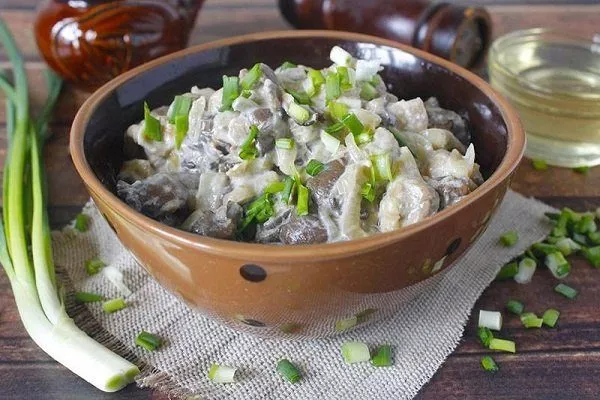
Fried oyster mushrooms in sour cream
The easiest way to cook oyster mushrooms is to fry them with onions. But you can make a more sophisticated dish by adding sour cream.
Ingredients:
- boiled mushrooms - 0.5 kg;
- sour cream - 75 ml;
- onions - 75 g;
- garlic - 1-2 cloves;
- oil/lard - for frying;
- salt and pepper to taste.
How to cook:
- Wash and peel the ingredients. Cut the onion into rings, and finely chop the garlic or crush it in a garlic press.
- Heat a frying pan and add oil, then oyster mushrooms. Fry the mushrooms until all the liquid has evaporated.
- Season the mushrooms with salt and pepper, pour in the sour cream, and add the garlic. Cover the mushrooms and simmer over low heat for about half an hour.
- Turn off the stove and let the dish sit for 10-20 minutes. Sprinkle the mushrooms with chopped herbs, if desired.
Fried oyster mushrooms in sour cream can be served as a separate dish or with a side dish - buckwheat porridge, potatoes, rice, pasta.
Fried oyster mushrooms in batter
This recipe is perfect for both everyday meals and festive feasts. It's easy to prepare, and the whole process doesn't take much time.
Ingredients:
- mushroom caps - 1.2 kg;
- flour - 75 g;
- eggs - 3 pcs.;
- vegetable oil/ghee;
- salt and spices to taste.
How to cook:
- Salt the caps and sprinkle with spices.
- Prepare the batter by mixing eggs with flour and salt. Stir until smooth.
- Heat a frying pan. Add oil or fat. Add enough oil to cover the bottom of the pan by 5-8 mm. Otherwise, the mushrooms won't cook through properly.
- Dip each cap in batter and fry on both sides until golden brown.
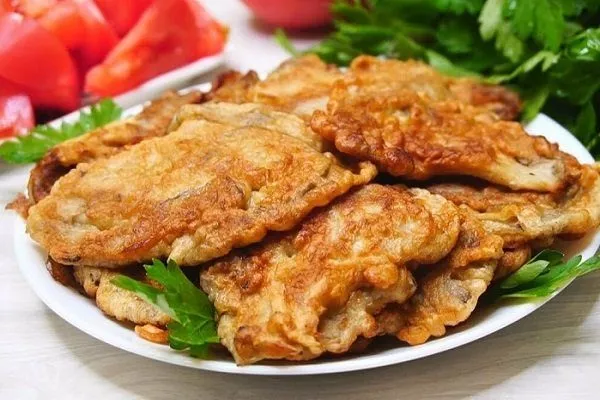
Place the cooked oyster mushrooms on a napkin to drain excess oil. Serve the battered mushrooms with sour cream, sauce, and herbs.
The autumn oyster mushroom is an affordable and widely available mushroom, unique in that it grows during cold, non-mushroom season. Thanks to this late-season mushroom, you can enjoy fried mushrooms until December.