
Truffle oil is considered a delicacy and an elite product, widely used in more than just cooking. It has a piquant flavor, imparting a hint of truffle mushrooms to dishes. It is produced in large factories, but you can also make your own.
Truffle oil – what is it?
Truffle mushrooms are most commonly used in French cuisine, sold in restaurants as prepared dishes and fresh in some specialty stores. When preparing soups, sauces, and similar dishes, chefs resort to a clever trick: using truffle oil instead of the real mushroom.
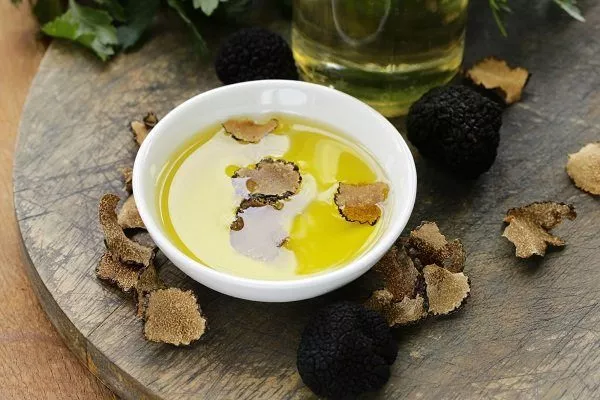
It is produced using 3 technologies:
- Natural. For production are used truffles and high-quality olive oil. The mushrooms and their processing remains are steeped in an oil base and then left to infuse. The infusion is then mixed again with olive oil. This is the most expensive option.
- Synthetic. Olive oil and artificial additives, most often 2,4-dithiapentane, are used to create a taste and aroma completely identical to real truffles. This is the most common type.
- MixedThe manufacturer combines two or three types of oil, usually grapeseed and olive oil. The aroma and taste are similar. It's inexpensive, but not particularly popular.
The cost of real truffle oil depends on the type of mushroom—black, white, winter, etc.—but the rarer the variety, the more expensive the finished product.
Brief description
The main purpose of truffle oil is to impart a refined mushroom aroma and flavor to dishes. It is added to cooked foods, as frying is prohibited.
Description:
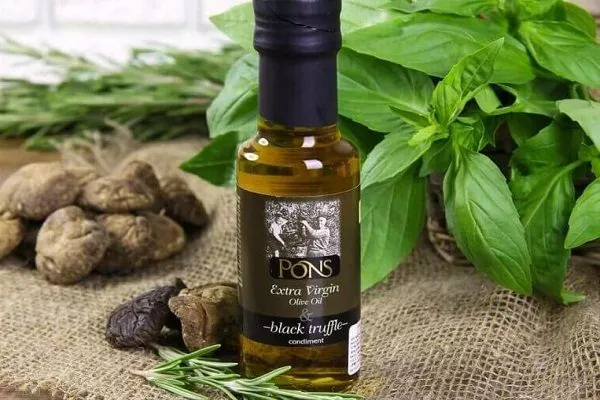
- Appearance. The oily liquid is clear and has a golden hue. It is packaged exclusively in glass bottles. The percentage of mushrooms in the tincture is always indicated on the packaging.
- Taste and aroma. Very multifaceted and unusual, it combines flavors of foliage, moss, nuts, berries, cheese, garlic, and seaweed. The flavor depends on the truffle variety.
The synthetic product is more pronounced, sometimes smelling of chemicals (if the concentration of artificial additives is too high), while the natural one is delicate, but the most aromatic in this category – made from white truffle.
Composition and caloric content
Truffle oil is considered a high-calorie product, containing between 800 and 900 kcal per 100 ml. It consists of almost 91-92% fat, as it is based on olive oil. It contains no protein, dietary fiber, carbohydrates, or water.
If the product is made from truffles, it contains the following components:
- fatty acids;
- vitamin E;
- vitamin K;
- vitamin B.
There are other microelements in the composition, but they are in such minimal quantities that they are of no value.
Useful properties and applications
Thanks to truffle oil, chefs around the world have expanded the menu of dishes in their restaurants. These include a variety of soups, sauces, risottos, pastas, pizzas, meat and fish dishes, and variations with potatoes, pumpkin, beans, and more.
Since truffles grow seasonally, it's impossible to use them year-round. This idea is realized with oil.
Truffle oil is widely used in cosmetology as a standalone treatment, massaged into the skin. This restores the epidermis's moisture balance, leaving the skin firm and elastic. According to cosmetologists, the effect is noticeable after just 7-10 treatments.
Thanks to fatty acids and vitamins, truffle oil has the following beneficial properties:
- improving the condition of skin and hair – due to fatty acids, which promote the production of elastin and collagen;
- antioxidant action – removal of free radicals;
- acceleration of metabolism at the cellular level;
- normalization of the nervous system;
- reducing the risk of developing cancerous tumors.
The oil is recommended for use during pregnancy, as it has a positive effect on fetal development. Some sources claim that truffle oil mixed with spices acts as an aphrodisiac for both women and men, stimulating libido, increasing fertility, and improving potency.
If the product is artificial, the benefits depend on the composition of the olive or other oil.
Contraindications and possible harm
The recommended daily dose of truffle oil is 30-50 ml. Exceeding this dose can lead to adverse reactions, including:
- allergy – skin rash, itching, redness, etc.;
- exacerbation of chronic diseases;
- obesity.
There are no direct contraindications, but people with the following problems and conditions should take the product with caution:
- allergy to mushrooms;
- children up to 5-7 years old;
- pregnancy and breastfeeding;
- diseases of the digestive system;
- diabetes mellitus and excess body weight.
If you're trying the product for the first time, start with just 1 drop, as your body needs to adjust to the new food. Monitor your condition closely to avoid any allergic reactions.
How to make truffle oil yourself?
Making truffle oil requires a basic technique, which involves soaking the mushrooms in an oil-based mixture. If a farmer grows truffles, they can easily make their own.
Manufacturing process:
- Prepare the ingredients: for 500 ml of oil (experts recommend using olive oil, as it brings out the best flavor of the mushrooms), you will need 100 g of truffles.
- Clean the mushrooms of any dirt. Don't wash them, as this will absorb moisture, which won't bond with the oil base. Simply wipe them with a soft cloth and brush off any dust.
- Chop as finely as possible, but do not use a meat grinder or blender, as a lot of valuable product will remain on the dish.
- Place the mushrooms in a glass container, which you have previously sterilized.
- Gently warm the olive oil in a water bath.
- Pour it into the jar with the truffles.
- Cover with a sterile lid.
- Place in a dark place for 15-20 days (the finer the mushrooms are cut, the less time is required).
There is another way to make truffle oil – a quick one:
- Prepare the mushrooms and oil as in the previous case.
- Mix them in a glass or ceramic bowl.
- Place in a water bath, but do not let it boil.
- Blend the ingredients over low heat with the lid closed for 1 hour.
- Let it steep for 7 days.
- Filter the finished oil.
The most delicious oil comes from white truffles. If you make it from black truffles, you'll achieve a musky, mushroomy aroma.
Profitability of production on your farm
The price of oil is rising every year due to the lack of truffle farmers. The approximate cost of oil is 5,000 rubles per 500 ml, so producing the product by growing your own mushrooms is considered a profitable venture.
It's known that a farmer can harvest up to 500-800 truffles from a 20-hectare plot, which is a huge amount. It's not always possible to sell them right away, as the product is so specialized. But the key is that fresh mushrooms have a shelf life of up to six days when kept cool, so they can be processed into truffle oil without losing money.
Today, truffle oil has begun to gain popularity among Russians, so it can be sold in the following ways:
- in a restaurant chain - if the quality is good, the customers will be regular;
- through online stores;
- on business platforms with private ads.
What foods and dishes does it go with?
The flavor of truffle oil is unpredictable—when combined with different foods and processed, it produces aromas of sunflower seeds, fried onions, nuts, and mushrooms. That's why chefs are constantly inventing new recipes to add variety.
The oil is best combined with:
- meat;
- fish;
- potatoes;
- celery;
- pumpkin and zucchini;
- absolutely all legumes;
- mushrooms;
- pasta.
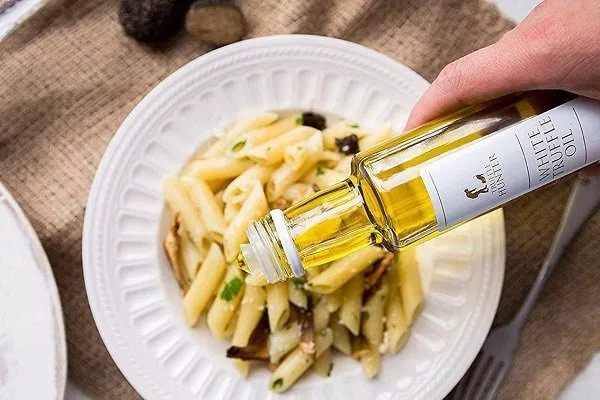
It is not recommended to add truffle oil to complex soups (borscht, rassolnik, kharcho, etc.), dishes with seafood (especially scallops, squid, shrimp).
How to choose?
Every consumer wants to buy a natural product that will only benefit the body. There's a common misconception that to get real truffle oil, you need to turn to online retailers, especially foreign ones, since it's only available in other countries.
In fact, butter is also produced in our country—both artificial and natural. It's sold in large supermarkets on the deli shelves. Therefore, it's important to know the rules for choosing:
- inspect the appearance of the oil structure - it should be uniform and have a small amount of sediment at the bottom (pieces of mushrooms are acceptable);
- the oil must be sold exclusively in a transparent glass bottle;
- study the label - the manufacturer is obliged to indicate the type and variety of truffles, list all additives, and provide information on the percentage of mushroom content relative to oil;
- pay attention to the expiration date: real butter is stored for 3 to 6 months, artificial butter – 24 months;
- Consider the cost – the higher it is, the more natural the product.
- ✓ Presence of sediment or pieces of mushrooms at the bottom of the bottle.
- ✓ Short shelf life (up to 6 months).
- ✓ High price due to the rarity of truffles.
How and how long to store?
The shelf life of truffle oil depends on the production technology used. Artificial truffle oil has a shelf life of up to 2 years, while natural truffle oil has a shelf life of 3, 4, 5, or 6 months, depending on the manufacturer. If you make your own truffle oil or purchase it from a private farmer, the shelf life is up to 1 year.
To prevent opened oil from spoiling, it is stored under special conditions:
- temperature range – from 0°C to +5°C;
- location – shelf on the refrigerator door;
- lighting - complete darkness.
Truffle oil is prized by gourmets; it's used to prepare the most exquisite dishes, so the price is appropriate. To save money, experienced gardeners grow their own truffles, and after harvesting, they produce the precious oil and enjoy its flavor year-round.