
The summer truffle (Tuber aestivum in Latin) is an edible mushroom. It belongs to the order Marsupial, the family Truffleaceae, and the genus Truffle. It is considered a delicacy. This variety is rare in the wild, which is why it is listed in the Red Book of Russia.
Description
The summer truffle is the only member of its genus native to Russia. This mushroom has other names:
- summer black;
- Saint-Jean;
- scorzone;
- edible;
- Burgundy.
Appearance
| Name | Fruit body shape | Color | Size (diameter, cm) |
|---|---|---|---|
| Summer black | tuberous | brown-black | 2.5-10 |
| Deer truffle | irregular spherical | yellow-ocher | 2-4 |
| Truffle toadstool | spherical | cream | 1-8 |
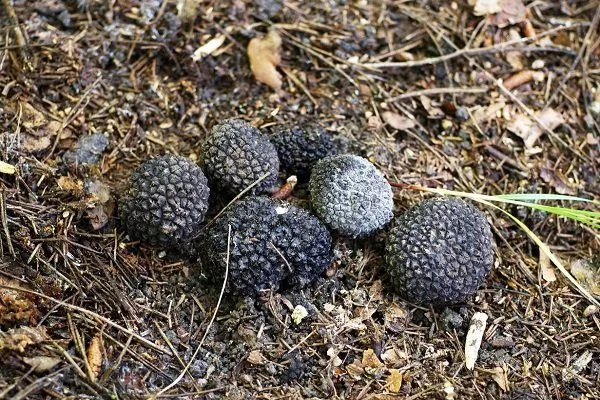
All truffles are similar in appearance. You can recognize a summer truffle by the following characteristics:
- uneven shape of the fruiting body;
- the shape of the mushroom is tuberous;
- diameter – from 2.5 to 10 cm;
- the surface of the mushroom is tuberculate, with pyramidal warts;
- color – from brown-black to deep black;
- the fruiting body is elastic in young mushrooms, loose in older ones;
- the color is yellow or gray, changing to yellowish-brown as it matures;
- the cut has white veins that create a marbled pattern;
- spores are oval-shaped, yellow-brown in color.
Nutritional qualities
The summer truffle smells like seaweed or fallen autumn leaves. It tastes sweet. This variety of truffle is the least prized by connoisseurs of delicacies.
The mushroom is most often used in cooking. It is used to prepare:
- sauces;
- pates;
- pie fillings;
- the famous dish "truffles in champagne".
It is also used as a seasoning for seafood and poultry.
This delicacy mushroom is served with dishes that lack a distinct aroma of their own. Before using, the truffle is cleaned of any remaining soil, chopped into thin pieces or shavings, and spread over the prepared food.
Due to the heat emanating from the dish, the mushroom better reveals its flavor qualities and does not lose its beneficial properties.
Composition and properties
Summer truffle composition (per 100 grams):
- proteins – 3 g;
- carbohydrates – 2 g;
- fats – 0.5 g;
- dietary fiber – 1 g;
- water – 90 g.
Mushrooms contain vitamins:
- PP;
- C;
- B2;
- B1.
The delicacy is beneficial for the human body:
- The pheromones contained in the summer truffle have a positive effect on mood;
- mushroom juice helps cure eye diseases;
- the pulp of this delicacy relieves gout pain;
- Antioxidants rejuvenate the body.
The mushroom is sometimes used as an aphrodisiac. Summer truffles are not contraindicated for weight loss. The energy value of the mushroom is only 24 kcal per 100 grams.
Only those who are not allergic to penicillin can eat truffles.
Prevalence
Summer truffles don't grow regularly throughout Russia. This delicacy is found in abundance only in the Caucasus, along the Black Sea coast, and in the forested areas of the Crimean Peninsula. Isolated instances of growth have been recorded near the following cities:
- Tula;
- Podolsk;
- Belgorod;
- Pskov;
- Moscow.
In the late 19th century, the mushroom was common in the Podolsk province. Local residents collected it for sale. Over time, the summer truffle became less common.
Time and place of fruiting
The mushroom's name refers to the time of fruiting. Summer truffles are harvested throughout the summer and into early autumn. In some regions of the Caucasus, the mushroom produces fruit from mid-summer until late November.
This delicacy grows exclusively in forested areas. Deciduous and mixed forests, where the soil is rich in limestone, are considered optimal for the mushroom. It is less common in coniferous forests.
It can grow both singly and in groups. It's recommended to look for the mushroom near oak or beech trees. You might also stumble upon this delicacy near birch trees.
Uses of the mushroom
White truffles are used for more than just culinary purposes. They have a wide range of uses:
- For the production of cosmetics (due to high amino acid content):
- creams;
- hair masks.
- As a remedy for the eyes. The mushroom has found such use in countries where Islam is practiced.
- To increase potency. In Rome, people believed that pheromones helped men become more virile and gain stamina. In ancient times, summer truffles were placed on the marital bed. The mushroom was believed to improve circulation and relax the body.
Collection and storage rules
Since this delicacy grows underground, it's not easy to find. Truffles have a distinct aroma, but humans can't detect it due to the foliage and soil. Therefore, animals are actively involved in mushroom harvesting.
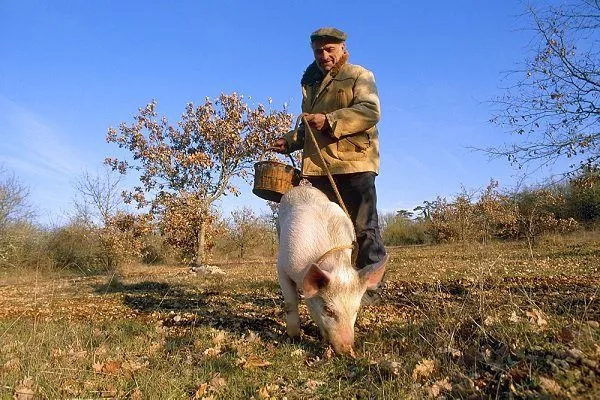
Wildlife locate mushrooms by scent and begin digging them up. When using this method of harvesting, keep in mind that pigs are voracious eaters and are eager to indulge in the delicacy themselves. The main goal is to prevent the animal from eating the truffle.
When collecting, pay attention to:
- stunted terrain;
- areas of land with a grey tint;
- midges (insects circle over the places where the mushroom is located);
- minor bumps.
This summer delicacy reveals its full flavor only when fresh, so store it properly. At home, it can last no more than 10 days. The shelf life is directly related to the temperature and storage conditions.
If the mushroom is stored in a humid environment, it will spoil within a few hours. Wrapping it in a dry cloth or paper can extend its shelf life by up to one month.
There are several options for preserving the product:
- In a container that does not allow sunlight to pass through. Place the mushroom in a container, cover with rice, and refrigerate in a dark corner. The rice will absorb the mushroom's aroma. Olive oil can be used instead of rice.
- Freezing. Frozen mushrooms retain their beneficial properties and unique flavor. There are several ways to freeze mushrooms:
- wrap each fruit in foil;
- distribute the entire collected batch into a vacuum bag;
- cut into pieces and place in an airtight container.
The mushroom is stored at temperatures below -15 degrees.
- In the sand. Fill a plastic container with sand to cover the delicacy, cover with a damp cloth and close the lid tightly.
- CanningPlace the mushroom in a glass container and cover with alcohol. The alcohol should just cover the mushrooms. This delicacy can be stored in this form for about two years. After this time, the alcohol will degrade the truffle's properties.
How to distinguish false doubles?
Some types of truffles can be dangerous to humans. They are similar in appearance to the summer truffle. It is often confused with:
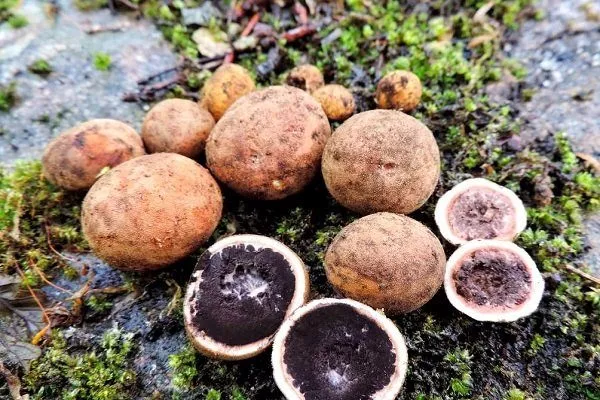
- Deer truffle. It grows primarily in forested areas of Europe and North America. It can cause abdominal pain and gastrointestinal upset. It can be recognized by the following symptoms:
- the fruit has an irregular spherical shape (sometimes wrinkled);
- diameter – from 2 to 4 cm;
- the rind on the cut is grey, with a pink tint;
- covered with warts;
- the color of the mushroom is from yellow-ocher to brown with ocher inclusions;
- the flesh is white, turning black when fully ripe;
- spores are black and spiked.

- Truffle toadstoolThe most dangerous of the lookalikes. It bears fruit in all regions of Europe, Asia, and North America. In Russia, it grows in the Novosibirsk region and in the Almaty area. Characteristics:
- the fruit is spherical;
- diameter – from 1 to 8 cm;
- the tuber is cream or yellow in color, turning black as it matures;
- the surface is smooth, sometimes the skin feels like a melon, i.e. it has a mesh structure;
- The flesh is beige or cream-colored, later darkening.
You can distinguish a false mushroom from a real delicacy by its unique properties: - the toadstool can be easily squeezed in a fist and returns to its original shape in a matter of seconds;
- the fruiting body is tactilely reminiscent of a sponge;
- has a fruity smell.
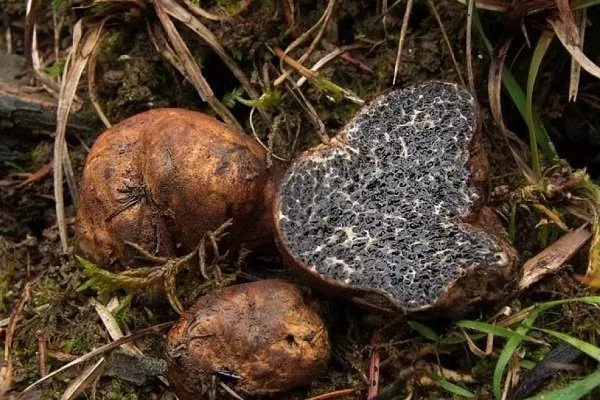
- ✓ The presence of a specific aroma, reminiscent of a mixture of nuts and cheese, is a key sign of a real summer truffle.
- ✓ The marble pattern on the cut should be clear and contrasting, which distinguishes it from its counterparts.
Growing at home or on the plot
In its natural habitat, the summer truffle reproduces at the expense of forest dwellers. These creatures find ripe mushrooms and eat them. Along with their feces, the fungal spores are released into the soil and tree roots, where they begin to germinate.
White truffles cannot be cultivated. They grow and bear fruit only on their own, and growing them in an artificial environment is virtually impossible.
Summer truffle cultivation is practiced in some European countries, but it's almost nonexistent in Russia. To grow this delicacy in your own garden, create optimal conditions:
- Suitable climate. Low humidity and air temperature from +16 to +22 degrees.
- Substrate. The soil should have a pH of 7.5-7.9, high calcium and humus content, and be free of other fungal spores.
- The necessary trees. Use hazelnut or oak cuttings infected with mycelium. You can inoculate seedlings artificially, but the flavor will be significantly different from a truffle grown in the forest.
It takes several years to grow a single batch of summer truffles. Growing the mushroom at home is considered an unprofitable investment, but it's worth trying as a home experiment.
The summer truffle is a delicacy of the truffle family. It is the only species native to Russia. It is used in cooking and the cosmetics industry, and has beneficial effects on the human body. There are lookalikes, so be careful when harvesting.