
The truffle (Tuber) is a member of the ascomycetes, as its spores mature in specialized single-celled sacs called asci. It is a very rare and expensive member of the fungal kingdom.
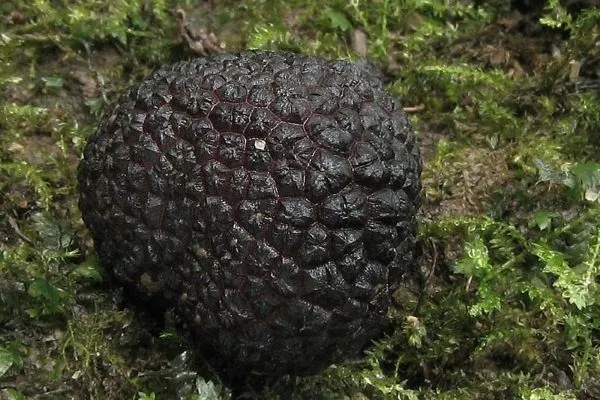
Summer truffle (black)
Features of the mushroom
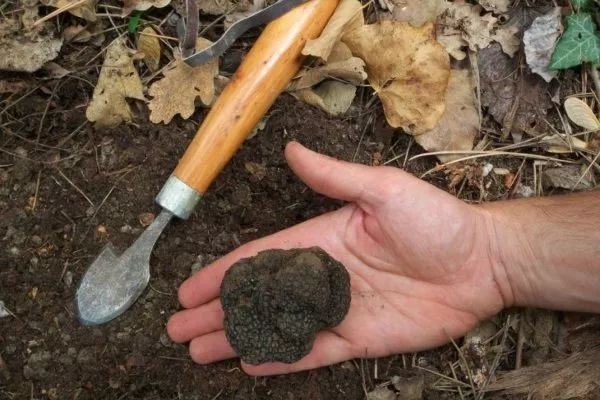
Truffles are unusual, primarily because the fruiting bodies form not on the ground, but inside it. These round or tuberous mushrooms have a fleshy, cartilaginous texture. Their distinctive feature is a marbled pattern—alternating light and dark streaks when cut. The light veins are called internal veins, and the dark ones are called external veins. Spore asci form on the internal veins and are also distributed in nests within the fruiting body. Mushrooms grow to varying sizes, ranging from the size of a walnut to the size of a potato tuber.
Young mushrooms have a smooth, whitish skin that turns yellow and light brown over time. The surface is covered with various folds, cracks, and hard "warts." The yellowish-white, dry flesh, with numerous brownish veins and convolutions, turns brown when heated, acquiring a chocolate hue.
Truffles are a first-class edible mushroom with the best consumer and culinary qualities. They are most often used fresh to make aromatic soups, sauces, and gravies.
Nutritional value
Caloric content of 100 g of product is 24 kcal.
Chemical composition of truffle:
- proteins - 3 g;
- carbohydrates - 2 g;
- fats - 0.5 g;
- dietary fiber - 1 g;
- water - 90 g.
It also contains vitamins PP, C and B2, a small amount of B1, but there are practically no macro- and microelements in the composition.
Where do truffles grow and how to collect them?
Truffles are difficult to find in the forest; they hide well underground. Summer mushrooms are collected in the summer and fall, with the peak season being August–September. Winter varieties are harvested in February and continue to be sought until March.
The mushroom grows in deciduous and mixed forests in Europe, less commonly in coniferous forests, as well as in northern Africa, Asia, and the Americas. It thrives in moderately moist clay-calcareous soils with sparse grass cover, where it forms mycorrhiza with the roots of various tree species. Truffles typically grow in small clusters of seven.
Experienced truffle hunters spot hidden mushrooms by subtle external signs, such as raised soil and dried grass. In France, it's common to search for them using truffle flies, which lay their larvae in the soil near the mushroom. The flight of these insects and their large numbers indicate the proximity of truffles.
But not everyone is such a "tracker," so trained animals, capable of sniffing out the distinctive scent of truffles from 20 meters away, have been used to find this delicacy since ancient times. Sows are the best at finding the mushrooms, but they tire quickly, and the "silent" hunt ends before it even begins. In Italy, dogs are used for searching, with poodles and mongrels proving to be the best. Interestingly, trained bears searched for truffles near Moscow until 1869.
Varieties of truffle
There are a huge number of varieties of mushrooms, here are the most common:
- Italian truffle (Tuber magnatum), the true or "Piedmontese" mushroom, is native to Piedmont (a region of Italy). It grows near birch, linden, and elm trees. It is the most expensive mushroom in the world. It is prized for its pleasant taste and cheesy-garlic aroma.
- French black (Tuber melanosporum), the "Périgord truffle," is found in groves of hornbeam, beech, and oak trees. It is considered second in value, second only to the Italian truffle. This reddish-brown or brownish-black truffle is angularly rounded and covered with large warts and small depressions. The flesh is reddish, later turning purple. Its distinctive feature is the numerous white and black veins bordered by red when cut. The mushroom has a slightly bitter taste and a strong aroma.
- Black truffle "Burgundy" (Tuber uncinatum) is a variety of French black tea with a nutty aroma and chocolate flavour, grown throughout Europe.
- Summer truffle (Tuber aestivum), the "Black Russian," is recognized by its nutty flavor and sweet, seaweed-like aroma. It can be found on the Black Sea coast of the Caucasus, in broadleaf forests of Scandinavia, Central Europe, Ukraine, and in some regions of Central Asia. It ripens in the summer months.
- Winter truffle (Tuber brumale) ripens between November and February. Hidden in the soil, it is not damaged by frost, but if it somehow ends up on the surface, it freezes and loses all its flavor. This happens even with the slightest frost. It grows in Switzerland, Italy, France, and the Crimean mountains. Young mushrooms are reddish-purple; mature ones become almost black and develop numerous small warts. The ash-gray flesh has white veins and a musky aroma.
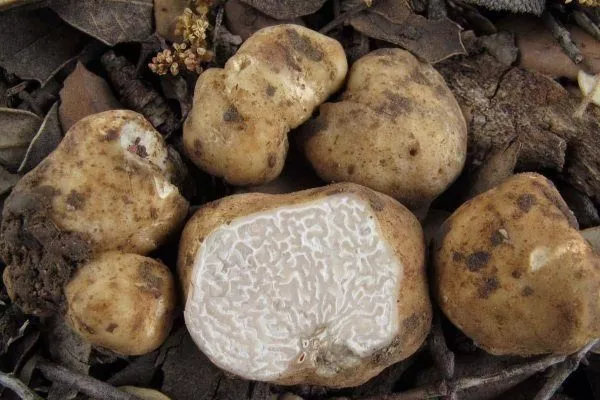
- African truffle (Terfezia leonis) grows exclusively in North Africa and certain parts of the Middle East. The whitish-yellow mushrooms are round. The flesh is light, starchy, with white veins and numerous dark spots. When ripe, it becomes moist.
| Name | Habitat | Taste | Aroma | Harvest season |
|---|---|---|---|---|
| Italian truffle | Piedmont (Italy) | Nice | Cheese and garlic | — |
| French black | Groves with hornbeams, beeches and oaks | Bittersweet | Strong | — |
| Black Burgundy | Europe | Chocolate | Walnut | — |
| Summer truffle | Black Sea coast of the Caucasus, Scandinavia, Central Europe, Ukraine, Central Asia | Walnut | The sweet aroma of seaweed | Summer |
| Winter truffle | Switzerland, Italy, France, Crimea | — | Musky | November - February |
| African truffle | North Africa, Middle East | — | — | — |
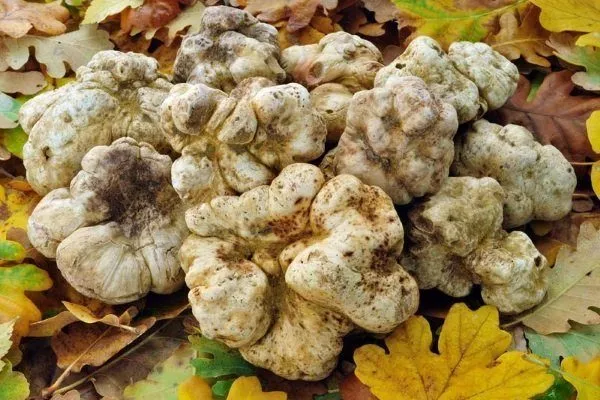
Italian truffle mushroom
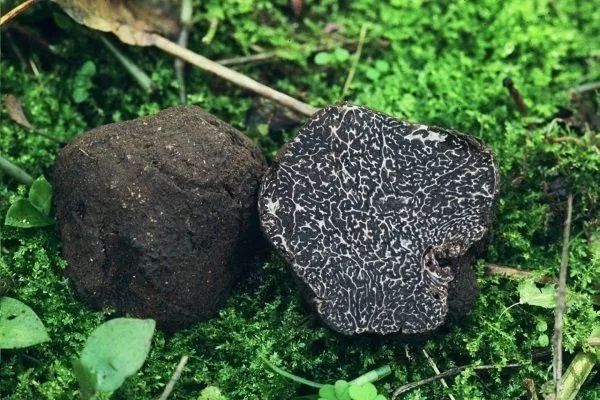
French black truffle mushroom
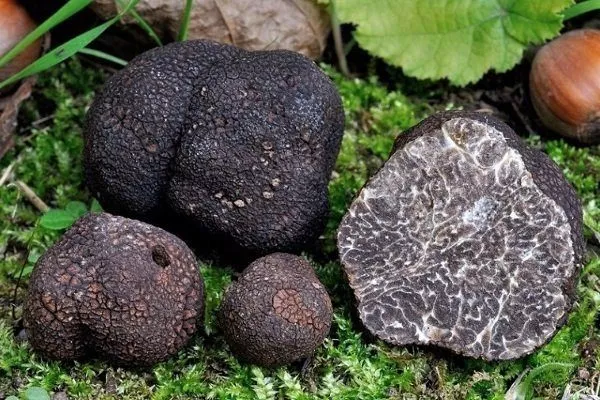
Black truffle mushroom "Burgundy"
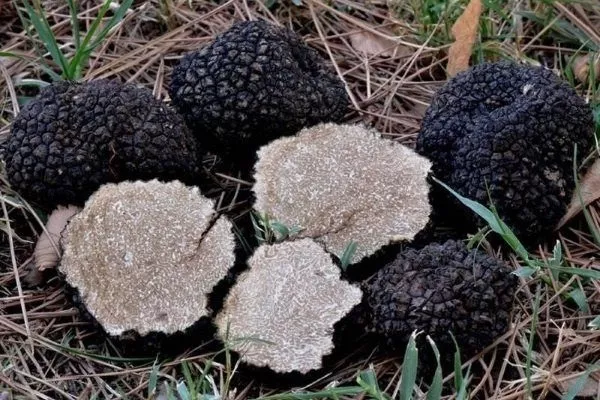
Summer truffle mushroom
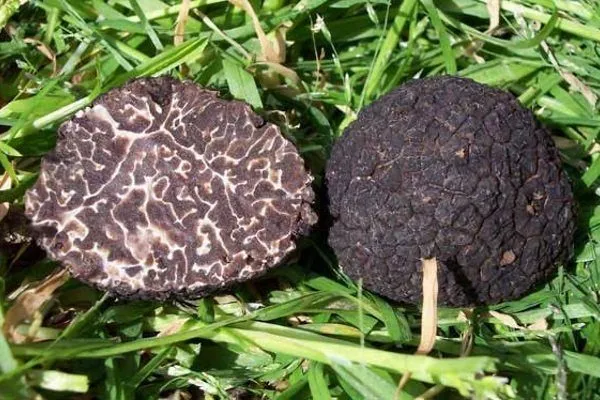
Winter truffle mushroom
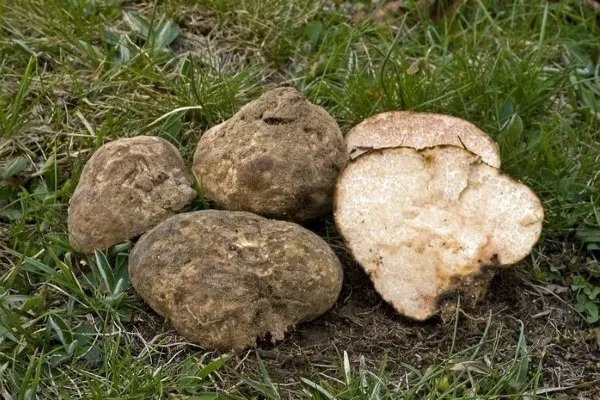
African truffle
Benefits of mushrooms
Thanks to its vitamin content, truffles boost immunity and combat intestinal disorders. They have a beneficial effect on the nervous system, act as an antioxidant, and act as an aphrodisiac, enhancing male potency.
The harm of truffles
The mushroom poses no harm to human health. The only possible contraindication is an intolerance to the product. It's also important to pay attention to where it was collected. Any mushroom, like a sponge, absorbs not only beneficial but also toxic substances from the environment, accumulating toxins.
Growing at home
The difficulty of finding truffles has led experts to consider their artificial cultivation. For several centuries, attempts were unsuccessful, but in the early 19th century, cultivation was successful. However, only the "black" species grow in an artificial environment; "white" truffles cannot be cultivated.
The main requirement is a favorable climate. It should be moderate, warm, and without sudden temperature fluctuations. Regions with hot summers and frosty winters are not suitable for this purpose. It's best to buy seeds from a specialty store, but they are not cheap. Spores are usually grafted onto the roots of hazel or oak seedlings.
You can try growing mycorrhiza yourself. Beech or oak sawdust is inoculated with mycelium and placed in a warm, sterile place until mycorrhiza forms, but this won't happen for at least a year.
- ✓ Moderate, warm climate without sudden temperature changes
- ✓ Absence of other shrubs, trees, flowers on the territory
- ✓ Alkaline soil, rich in humus, calcium and saturated with air
A site for planting trees is selected—one that is protected from wind and direct sunlight. Other shrubs, trees, and flowers should not be growing in the area. Truffles are particularly intolerant of spruce, chestnut, and poplar trees. The site should be protected from animal intrusion. Truffles prefer alkaline soil; if it is acidic, lime should be added. The soil should also be rich in humus, calcium, and aerated.
The seedlings are planted in the spring. The soil is not fertilized beforehand to prevent the mycelium from dying. Weeds and stones are cleared, and holes 75 cm deep are dug and watered. The seedlings are then planted, covered with soil, and watered again. Mulch the soil with last year's oak leaves 40 cm from each seedling. The temperature should be between 20°C and 22°C.
Fertilizing with potassium and nitrogen fertilizers is recommended. These should be added not directly to the mushroom planting site, but rather to the soil near the tree's roots where they grow. Mulch is essential for winter to protect them from frost. In spring, feed them with mineral fertilizers rich in boron, copper, zinc, calcium, and iron.
The harvest time depends on the mushroom variety planted. They are found at a depth of 20 cm below the surface. If the mushrooms are rotting or losing their nutritional value, they may be growing too close to the surface. In this case, it is recommended to cover the surface with clean, dry sand. Truffles are dug up with a small shovel. Mushrooms grow not only near tree roots but also among them.
Growing truffles in a greenhouse or basement is an expensive undertaking. To create optimal conditions, a humidification system, heating, and ventilation are installed, along with specialized soil and additional disinfectants. These costs will be worth it if truffle growing becomes your business.
Storing truffles
Their shelf life is short. If you need to preserve them for a special occasion, store them in an airtight container. Clean them of soil and sprinkle them with rice. Place the container in the refrigerator. They will keep this way for up to 7 days. Alternatively, you can preserve them in olive oil.
Besides cooking, truffles are used in cosmetology. Italian specialists use them to create various creams and masks. Therefore, truffle cultivation is considered a very profitable, albeit challenging, business.
Truffles are a rare and delicious mushroom. However, due to their high cost, not everyone can enjoy their unique flavor. However, if you learn how to find or grow them correctly, you can reap a handsome income and enjoy culinary pleasure.