
The black truffle is one of the most expensive mushrooms in the truffle family. This member of the eukaryotic kingdom is not particularly attractive in appearance. Its value lies in its flavor and nutritional properties. Its high price is due to its low natural abundance and the expense of artificial cultivation.
Description of the mushroom
Black truffles are sometimes called black gold, prince truffles, and diamond truffles. There are over 30 species in the wild, but only eight are edible.
The characteristics of the black truffle vary depending on the type, but in general the mushroom has the following characteristics:
- body shape is disproportionate, with 4 to 6 edges;
- tuber diameter - from 3 to 20 cm (average - 6-8 cm);
- weight - 200-600 g (main mass - 400-450 g);
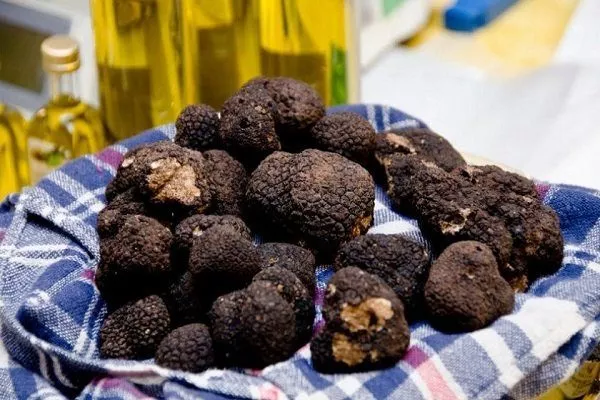
- a special feature - there are no stems or caps, like the mushrooms we are all familiar with (in appearance it is similar to a potato, a stone, a tuber);
- surface - rough and wrinkled (like warts);
- the structure of the pulp is marbled, as it consists of a huge number of veins of different light shades, the main tone is dark;
- spores are oval or spindle-shaped in shape, microscopic in size, and dark brown in color;
- taste - pleasant, distinct.
The black truffle is often compared to the white variety of the truffle family, but they are different mushrooms.
Differences:
- different shapes and colors - white on the outside can be brown, but always light inside, and the shape resembles Jerusalem artichoke;
- place of distribution - the black truffle is considered French, the white one - Italian;
- the light brother has a richer aroma and taste;
- Black mushrooms are more affordable (25–50 euros per dish in a restaurant serving this delicacy), while white mushrooms are rare and expensive – you'll have to shell out at least 200–300 euros in a restaurant.
A distinctive feature of the black truffle is that as the plant develops, the mushroom's surface color changes. Initially, it's dark brown, but when it reaches full maturity, it becomes coal-black. When you press on the body, the top layer takes on an orange-rusty hue.
Types of black truffle
The mushroom is divided into two main types—winter and summer—but in reality, there are many more black truffles. There are also false truffles in the mushroom kingdom. They are very similar to Tuber melanosporum in appearance and other characteristics.
| Name | Fruiting period | Body diameter | Pulp color |
|---|---|---|---|
| Winter | November-February | 7-20 cm | purple with a red tint |
| Summer | June-October | 10-12 cm | yellow-brown |
| Burgundy | September-December | 3-9 cm | milk chocolate |
| Himalayan | December-February | 2 cm | black and purple |
| Chinese | November-March | 2-10 cm | dark brown |
Winter
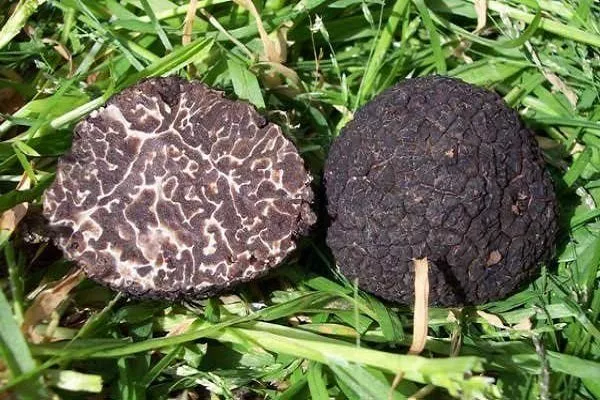
The Latin name of this variety is Tuber brumale. It bears fruit from early November to mid-February. In the wild, it grows in Ukraine, Italy, France, and the southwestern regions of Switzerland. It prefers the proximity of linden or hazel trees.
Peculiarities:
- the diameter varies from 7 to 20 cm;
- minimum weight - 120 g, maximum - 1500 g;
- surface color - purple with red highlights;
- shape - spherical;
- body structure - with growths;
- aroma - with notes of musk.
Summer
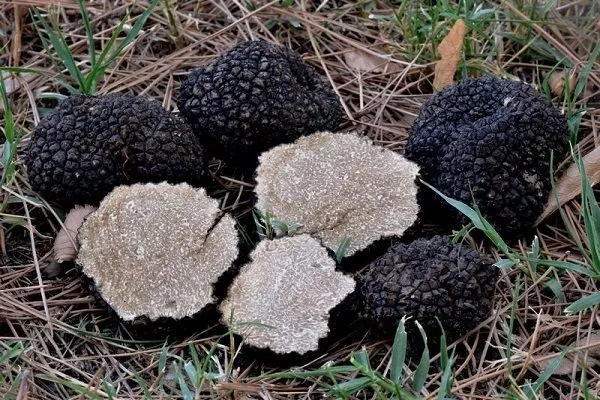
The scientific biological name is Tuber aestivum. It is common in Crimea, European Russia, the Caucasus, and Europe. It grows under oak, pine, and hazel trees. It bears fruit from June to mid-October.
It has the following characteristics:
- body diameter - maximum 10-12 cm;
- weight - 400–450 g;
- the color of the pulp is initially light, but as it grows it becomes yellow-brown or gray-brown;
- The taste and aroma are nutty and sweet with subtle hints of seaweed.
Burgundy
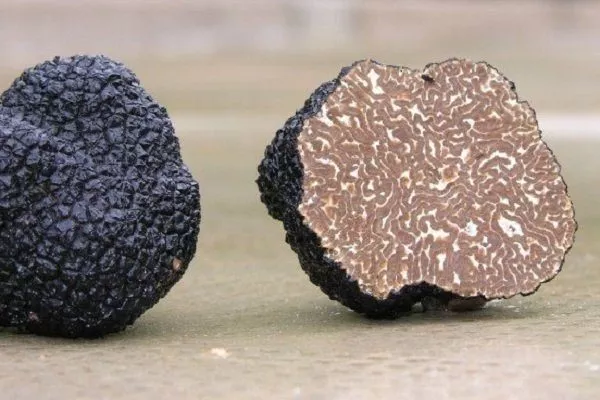
The scientific name is Tuber mesentericum or uncinatum. It is considered native to France. It grows underground under deciduous trees and is sometimes found under pine needles. Fruiting period is from early autumn to early December. It is generally considered an autumn mushroom.
Indicators:
- diameter - 3-9 cm;
- the weight of one mushroom is up to 320 g;
- pulp color - light brown (milk chocolate);
- The taste is reminiscent of cocoa, but with a slight bitterness.
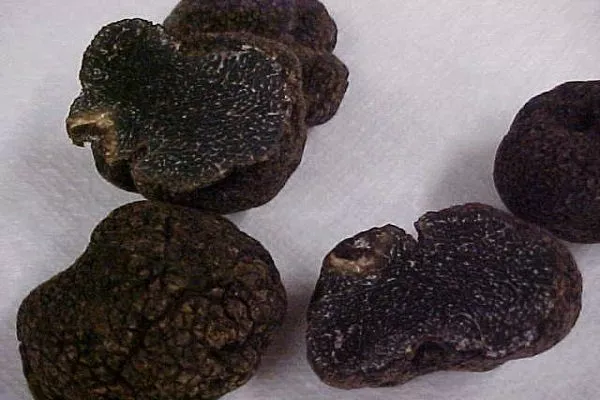
Himalayan
The Latin name is Tuber himalayensis. It is considered a winter species, as the harvest occurs in December–February. Its native land is Tibet, hence the name. It forms a symbiotic relationship with oak or pine.
Peculiarities:
- body diameter - maximum 2 cm (because of this it is rarely used in cooking);
- mushroom weight: 5–50 g;
- flavor - nutty (very rich, but disappears quickly);
- The color of the pulp is black-purple.
Chinese
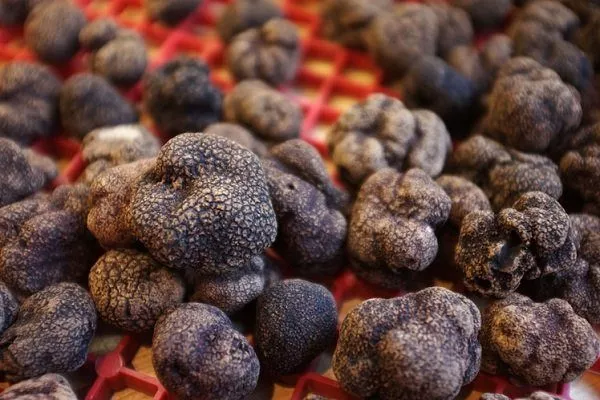
Tuber indicum grows in southwest China under pine, chestnut, and oak trees. If conditions are favorable, it bears fruit from November to March. In unfavorable weather, it only bears fruit from December to February.
Characteristic:
- diameter - from 2 to 10 cm;
- body weight - from 20 to 500 g;
- color - dark brown;
- aroma and taste - practically absent, no specific ones.
False truffles
| Name | Dimensions | Color | Peculiarities |
|---|---|---|---|
| Melanogaster Bruma | 2-8 cm | light cream to dark brown | soft but elastic |
| Deer | 1-4 cm | very dark | granular surface |
The difference between this category of mushrooms and the black truffle is their class and family. While the latter belongs to the truffle genus, the former are unrelated. Most often, false truffles are inedible.
There are many of them, but only two species are most similar to the real black truffle:
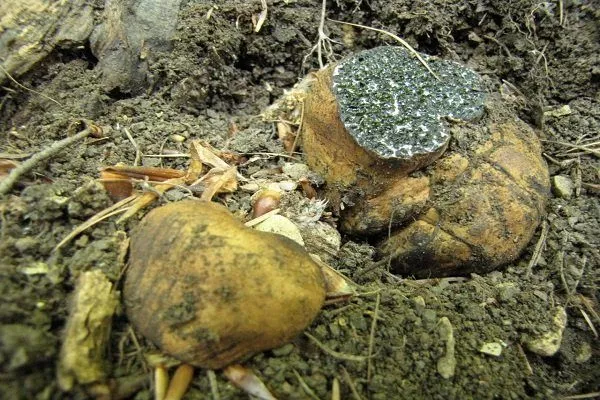
- Melanogaster Bruma. Another name is the truffle toadstool. The tubers are 2–8 cm in diameter and weigh 20–400 g. When young, the color is light cream, and at the end of the growing season, it turns dark brown, with a net-like surface.
The mushroom is unique: it's very soft yet elastic. If you squeeze it in your hand and immediately release it, it will instantly return to its original shape.

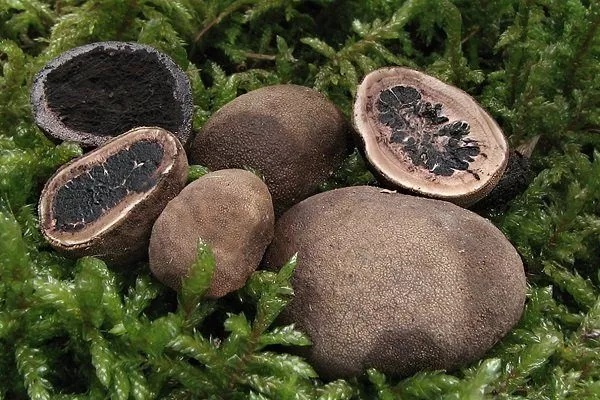
- Deer. Other names include Pargo, Elaphomyces, and Pargushka. They are small, ranging from 1 to 4 cm in diameter and weighing 10–50 g. When harvested, the mushroom is very dark in color and has a grainy surface.
Ecology and distribution
Black truffles grow almost everywhere in the world, as they have been cultivated artificially. In the wild, they are always found in France (Périgord, Dordogne, Gironde, Lot, and Vaucluse). They are also abundant in Italy, Spain, Belarus, and Romania.
There are relatively few of them in China. They are most often artificially grown (Chinese truffles are considered the most inexpensive).
Environmentalists claim the fungus has a devastating impact on nature, as it causes the death of all vegetation in areas where the mycelium grows. This is the primary indicator for detecting a black truffle.
There are other factors that indicate the presence of a valuable product:
- Areas dug up by wild boars. Mushrooms emit a distinctive odor. Wild boars search for them by digging in the soil with their noses. They don't eat all the mushrooms from the holes, but they do facilitate the spread of spores.
- A cluster of insects. Red flies are attracted by the scent of the animal-made holes. They lay their eggs in the micelles, which attract other insects.
These signs are primarily noticed by amateur mushroom pickers. Those who forage professionally (as a business) use different methods. This approach is based on the assumption that truffle quality is not impaired (after being dug up by wild boars or by a buildup of flies (and their larval spores), the product is unfit for sale).
To collect mushrooms without damage or other defects, "hunters" use assistants:
- Pigs. They can "smell" the aroma of truffles from 25 meters away and find the delicacy in minutes. But there's a downside: their excessive love of truffles can drive them crazy. Sometimes, the pigs are unstoppable (they simply eat everything and trample it).
- Dogs. Four-legged friends won't gnaw or trample on mushrooms. Training begins at birth, and the process takes a long time (puppy's are given milk laced with black truffles to get used to the smell and develop a love for it). These sniffer dogs are very expensive.
Useful properties and calorie content
Black truffles are a dietary product. 100 grams contain only 25 kcal, 3 grams of protein, 2 grams of carbohydrates, and 0.5 grams of fat. The mushroom contains many beneficial elements:
- vitamin C, PP, group B;
- pheromones;
- dietary fiber;
- antioxidants;
- minerals - iodine, sulfur, magnesium, calcium, selenium, phosphorus, iron, potassium.
Taken together, the nutrients have the following properties:
- improve the psycho-emotional state, eliminating depression, irritability and apathy;
- strengthen the immune system;
- have a beneficial effect on the heart and blood vessels;
- restore the function of the large intestine;
- regenerate the surface layers of the skin;
- accelerate metabolic processes;
- reduce the level of harmful cholesterol in the blood;
- reduce sugar in diabetes;
- slightly relieve pain from gout;
- improve the performance of the endocrine and nervous systems, adrenal glands;
- enhance libido and potency;
- contribute to the restoration of vision;
- slow down aging;
- normalize the functionality of the female reproductive system.
However, not everyone is allowed to consume black truffles. There are contraindications:
- age category up to 12 years;
- gastric ulcer and duodenal ulcer;
- pregnancy;
- breast-feeding;
- allergic reaction to a mushroom.
What does the mushroom taste like?
The first thing gourmets notice is the exquisite aroma and flavor. The specific notes depend on the subspecies of black truffle. Some have a cocoa-like aroma, others a nutty one, others a musky one, and so on. Based on these characteristics, chefs around the world use specific mushrooms for specific dishes.
To experience the full harmony of mushroom flavor, it is only possible with the right approach to preparation:
- the product is thoroughly washed under running water (there is sometimes sand inside, so experienced chefs first soak it in water for 30–40 minutes);
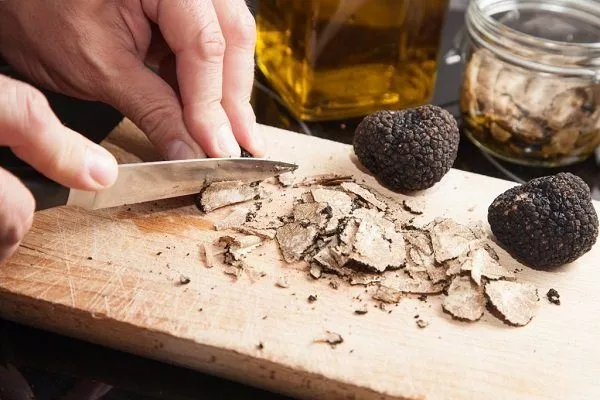
- they cut it into slices, but not with a knife, but with a special tool with a blade, resulting in translucent slices;
- The chopped ingredients are sprinkled on dishes or used for cooking (cut into pieces and fried).
Add to:
- fish and meat when frying and stewing;
- vegetable dishes, risotto;
- first courses;
- salads;
- pizza, hamburgers;
- desserts – puddings, ice cream, etc.;
- truffle sauce;
- black caviar as a topping;
- champagne;
- sushi;
- khachapuri;
- in French fries.
Black truffles are used in a variety of dishes, but rarely as a stand-alone ingredient due to their high cost. They are baked, stewed, boiled, fried, and even eaten raw.
Application in cosmetology and medicine
Due to the black truffle's high content of nutrients, which have healing and restorative properties, the mushroom is widely used in medicine and cosmetology. It is included in several products aimed at:
- to relieve gout and joint pain;
- to restore male potency;
- to strengthen the female reproductive system (against infertility);
- to improve visual acuity.
Cosmetic manufacturers produce moisturizing and rejuvenating (anti-wrinkle) creams, serums, and oils. Black truffles are used in shampoos and conditioners, and are also added to perfumes.
Mushroom prices
The price of a black truffle depends directly on the mushroom subspecies and the country where it's sold. In Europe, 1 kg of the most valuable variety sells for between $1,500 and $2,000, while in the Russian market, the price is much lower—around $1,000–$1,500.
For many people, these are unimaginable figures, but there is an explanation for such price levels:
- Due to its specific aroma and taste, the mushroom attracts people to itself in a similar way to drug addiction;
- it doesn't grow just anywhere;
- it is difficult to obtain and grow it yourself;
- symbiosis is possible only with certain trees;
- To get the mushroom, you need to dig a hole;
- specially trained dogs are used for search;
- short fruiting season;
- instantaneous decrease in the weight of the truffle due to the evaporation of moisture from it;
- too short a shelf life - it is forbidden to use it after 12-15 days;
- in society it is a matter of status and luxury.
Black truffles are rarely grown artificially for personal consumption. They require significant labor and financial investment.
Mycelium is most often cultivated for business purposes. This type of production is highly profitable, with profit margins reaching nearly 250%.
But creating the conditions and purchasing the mycelium requires a significant initial investment. Furthermore, the full return on investment will take at least 3-4 years, once the farmer has harvested a full crop.
How to grow black truffles in your garden?
Growing black truffles like other mushrooms is impossible. While simple eukaryotes can easily parasitize the root system of any plant, truffles require a symbiotic relationship with a specific tree.
But with great desire and the right conditions, it's possible to grow this valuable product yourself. Below are the rules for artificial mushroom cultivation.
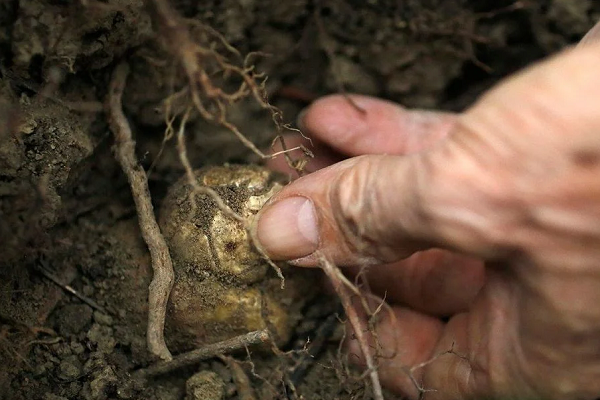
- ✓ The soil pH level must be strictly within 7-8, otherwise the mycelium will not take root.
- ✓ The air temperature during the growing season should not fall below +22°C or rise above +25°C.
Choosing a location
The growing area should resemble the natural environment as closely as possible. Site requirements:
- absence of weeds and other types of mushrooms grown nearby;
- surface slope - no more than 13°;
- height of soil mixture - 30–50 cm;
- the presence of trees - pine, oak, etc., depending on the type of black truffle;
- the distance between trees is 5–7 m;
- area with an altitude of at least 100 m above sea level.
Soil preparation
Truffles are planted in greenhouses, basements, and open ground, but in all cases, proper soil preparation is essential. Mushrooms do not tolerate high acidity—the ideal pH is between 7 and 8. Most often, soil is taken from the base of trees, where the soil consists of composted fallen leaves.
Soil mixture composition:
- Soil from a garden or forest. Make up about 60% of the total soil mixture. Be careful to ensure there are no foreign myceliums. Disinfect the soil. Since you'll need a lot of soil, use a steam generator instead of the usual gardening methods (oven, etc.).
- Sawdust, sand. The wood shavings should be from the symbiotic tree. Sand is needed to create looseness. Use 15% of each component.
- The leaves have fallen. Use a well-rotted component. Leaves are sufficient, making up 10% of the total soil content.
Selection of planting material
Mycelium serves as seeds. It is available for purchase at specialty stores, online, or from mushroom farmers. There are two types of planting material:
- dry — storage period is not limited;
- alive — shelf life is 5–6 months.
The cost of the material is calculated as follows: 100 g of dry material equals 150 g of live material. For this weight, you'll pay between 500 and 1,500 rubles (depending on the variety and seller).
Mycelium already embedded in wood is available commercially, but it's twice as expensive. This is the best option if you need a harvest soon, as it takes 11 to 13 months to establish the mother culture and mycorrhiza.
Mycorrhiza planting technologies
The optimal planting time is from early May to late August, when warm weather stabilizes. Temperatures during the planting and growing season range from 22 to 25°C. Depending on the location where the mycorrhiza will be grown, specific conditions must be created.
Into the greenhouse
Since truffles are grown indoors year-round, build the greenhouse out of polycarbonate and equip it with a heating and ventilation system. Also consider the following:
- prevent sunlight from penetrating - it will destroy the mycelium (make a canopy over the greenhouse, hang curtains or simply cover it with a dark cloth);
- avoid drafts, especially in winter - seal all cracks;
- The minimum indoor temperature at night is + 15°C.
Into open ground
Black truffles are grown in gardens in southern regions (the mushrooms die in cold climates). In this case, it's important to plant trees if there aren't any. The layout is 4 x 5 m (1 hectare will yield about 500 seedlings). Features:
- Monitor the soil moisture level - it should be 70-75% (in open areas it is impossible to control this process; after watering the trees, apply a mulch layer of up to 5 cm);
- the seedling planting depth is at least 70–80 cm;
- Every 2 months, fertilize the soil with rotted manure, especially in the root zone of the partner (seedling) - the tree absorbs nutrients and then transfers them to the fungi;
- clear the area where the mycelium will be laid from debris and grass.
To the basement
When growing black truffles in a cellar, be careful to keep pests out. Periodically disinfect all components of the cellar.
Peculiarities:
- whitewash the walls and ceilings with lime;
- Initially, divide the room into two parts - one will be used for cultivating mycelium, and the other for growing truffles;
- To make the most of the space, install shelves up to the ceiling, but not made of wood, but of metal-plastic (it won’t rot);
- Before sowing, fumigate the basement with sulfur, then ventilate it;
- make ventilation;
- Hang fine mosquito netting over all unavoidable cracks and openings to prevent pests from getting in.
You'll also need fluorescent lamps, thermometers, hydrometers, heating, and water pipes for irrigation. Don't forget to build boxes on the shelves to hold the potting mix and inoculate the spores.
Step-by-step planting instructions
The mycelium planting technique is almost identical for all locations. For a greenhouse and basement:
- Fill the artificial beds first with sawdust, then with a mixture of soil, leaves and sand.
- Take the mycelium and mix it in equal proportions with the soil mixture.
- Sprinkle over the surface of the “garden”.
- Sprinkle a small layer of sawdust on top.
How to plant mycelium in open ground:
- Dig holes 20 to 60 cm deep (these parameters are indicated on the planting material packaging for the specific species). The layout is 2 x 2 m.
- Moisten and allow moisture to be absorbed.
- Place the seeds, sprinkle with soil and then add sawdust on top.
- Be sure to keep it under plastic film for the first month to create a normal level of humidity.
Watch this video to see how Russians plant mycelium in their gardens:
Care
Caring for truffle mushrooms is easy. Simply maintain humidity and temperature, periodically loosen the soil, remove weeds, and water. If trees become overgrown and shade the planted area, trim the branches.
- Check the soil moisture weekly, it should be 70-75%.
- Every 2 months, add rotted manure to the root zone of the symbiotic tree.
- Remove weeds regularly around the planting area.
Pests and protection
Truffles' main enemies are weevils and cockroaches. To prevent them, avoid planting wildflowers and similar crops nearby, and seal cracks in the basement. There are two methods for control:
- chemicals (their range is huge), but in this case harmful substances will get into the soil;
- folk remedies - mix boric acid with honey, roll into balls and spread over the mycelium.
Harvesting and processing
The first harvest will appear exactly one year after the mycelium is established, but it will be meager. However, after 3-4 years, the black truffle will delight you with full germination—9 to 15 kg can be harvested from 80-100 square meters.
Pick only fully ripe mushrooms. To determine ripeness, look at the ground in the growing area—if the mushroom is ripe, gnats will be swarming around it (in an open area), the soil will be raised, and the grass will dry out.
How to assemble correctly:
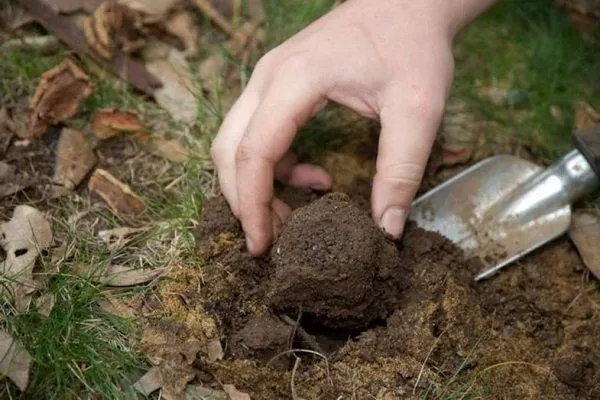
- Use a shovel to dig up the soil around the mushroom.
- Lift it up and, holding the truffle with one hand, cut it with a knife with the other so that the root remains in the ground.
Storage conditions and rules
Black truffles will keep in the refrigerator for no more than 5-6 days, and under other conditions, for up to 14 days. What you'll need:
- wrap each mushroom in a napkin or cloth;
- place in a container;
- Change the “wrapper” every day.
It's possible to preserve the product for 5-7 months. For this type of storage, mushrooms are dried at home:
- cut into thin slices;
- spread on a baking sheet in 1 layer;
- dry at 45–50°C with the oven door slightly open;
- Readiness is determined as follows: the product becomes very fragile.
Growing black truffles isn't as difficult as it seems at first glance. Waiting for results is much more challenging. For this reason, this type of business is underdeveloped in Russia, but competition is also low. Before starting cultivation, it's important to thoroughly study the production process and assess your own capabilities and financial capabilities.