
Drying mushrooms has always been beneficial, as it prevents spoilage and allows you to prepare a delicious soup or other dish with this aromatic ingredient at any time. There are many methods for drying mushrooms, suitable for both home and industrial use.
Benefits of drying mushrooms
Drying mushrooms allows you to maximize their benefits. Mushrooms are dried until all moisture is removed, preventing the growth of microorganisms and bacteria. This process preserves all the beneficial substances.
Dried mushrooms retain all the vitamins, minerals, and antioxidants that help strengthen the immune system. Drying mushrooms allows for long-term preservation, which can then be used as food.
- ✓ Mushrooms must be fresh, without signs of worms or rot.
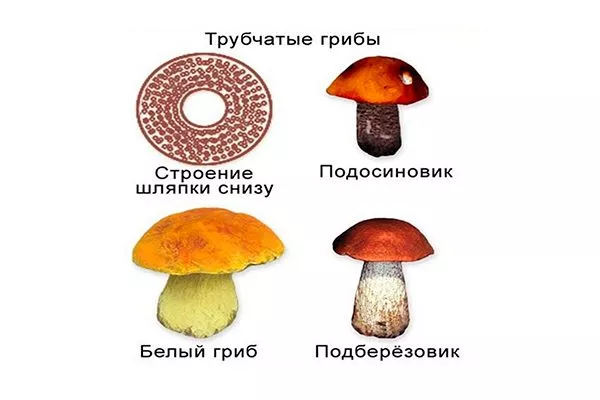
- ✓ Preference is given to tubular mushrooms, such as porcini mushrooms, aspen mushrooms, birch boletes, butter mushrooms and boletus mushrooms, due to their better taste after drying.
- ✓ Avoid drying mushrooms with a high water content, such as honey mushrooms and chanterelles, as they may become bitter.
What mushrooms can be dried?
| Name | Type of mushroom | Harvest season | Drying Features |
|---|---|---|---|
| White mushroom | Tubular | Summer-autumn | Preserves aroma |
| Aspen mushroom | Tubular | Summer-autumn | Dries quickly |
| Birch boletus | Tubular | Summer-autumn | Requires humidity control |
| Butter dish | Tubular | Summer-autumn | Sticky cap |
| flywheel | Tubular | Summer-autumn | No pre-cleaning required |
To obtain a high-quality product during drying, it's important to consider which mushroom types are suitable for this process and how to properly store them after drying. The volume of dried mushrooms decreases significantly (by approximately 10%) compared to their original weight.
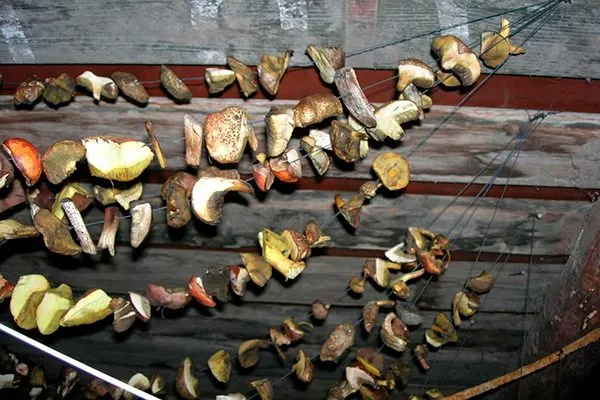
In general, most mushrooms can be dried using this method. Truffles and morels are also ideal when dried. There are exceptions, such as honey mushrooms and chanterelles, which can develop a bitterness that is difficult to remove even with soaking.
Preparing mushrooms before drying
Mushrooms intended for drying must be fresh, and it's important to avoid those with signs of worms or rot. Harvesting such mushrooms is prohibited. Mushroom preparation can be accomplished using several methods.
Helpful tips:
- Contrary to popular belief, mushrooms do not need to be washed for drying, as this can cause them to swell and prolong the drying process.
- While washing can remove insects and debris, it can impart bitterness and reduce flavor. Instead, thoroughly clean the mushrooms of leaves, soil, and debris, removing any damaged areas with a stainless steel knife to prevent darkening of the mushroom's surface.
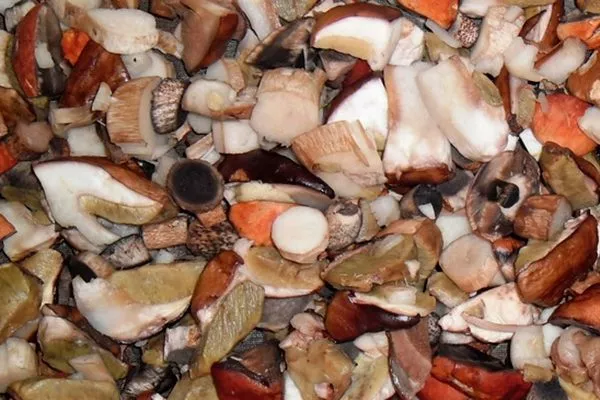
- Depending on the drying method, mushrooms can be dried whole or cut into pieces. When processing mushrooms, some stems may not be suitable for drying and should be removed. Small mushrooms are left whole, while larger ones are recommended to be divided into 4-5 pieces.
Bruised and damaged mushrooms can be used for freezing and subsequent frying.
Methods for drying mushrooms at home
There are several ways to dry mushrooms, and the choice of a specific method depends on conditions and preferences. Let's look at the main methods that are preferred for home use.
How to dry mushrooms in a gas oven?
Drying mushrooms in the oven involves several important steps, which, if followed correctly, ensure a high-quality and delicious product. While significant amounts of moisture are released, experts note that over 70% evaporates during the drying process.
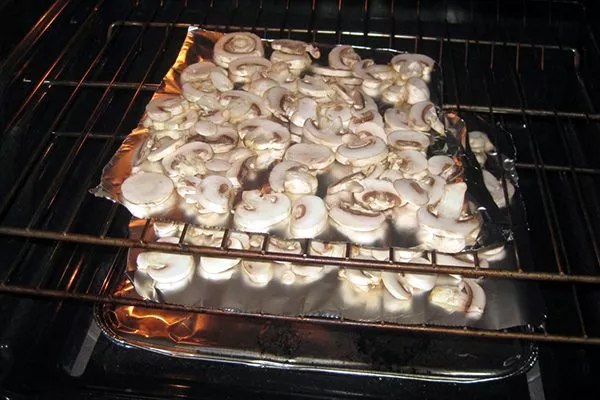
For easier placement of mushrooms on a baking sheet, we recommend using parchment paper or foil, with the shiny side facing up. There are several methods for placing mushrooms in the oven:
- On a thick thread: stretches over the baking tray, allowing free air circulation around the mushrooms.
- On wooden needles: Like shashlik on skewers, you can leave it lying over a baking sheet or stick it vertically into the sand.
It's important to maintain a certain distance between the mushrooms to ensure even drying. If the mushrooms are simply laid out on a baking sheet, leave a gap of 2-3 cm between the slices. If using thread or knitting needles, maintain a distance of 1 cm between them, and 6 cm between threads or knitting needles.
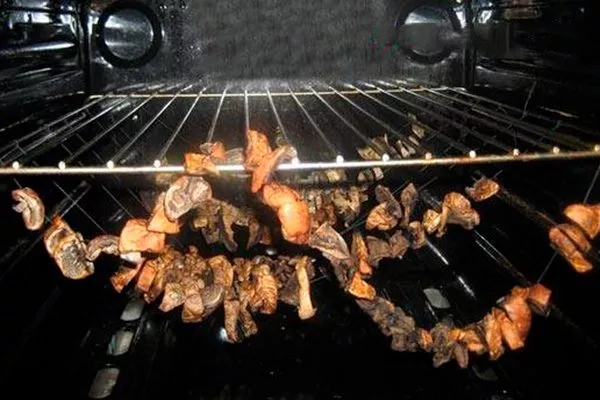
The drying process takes place in several stages:
- Withering. The mushrooms are kept in the oven at 40-50°C with the door slightly ajar to allow air circulation. This stage takes a couple of hours and is complete when the mushrooms' surface no longer feels sticky.
- The main stage. Close the oven door and raise the temperature to 75 degrees Celsius (60 degrees Celsius with convection). Check the mushrooms periodically and, if necessary, turn them over or remove them. The process can take 5-6 hours, depending on the type of mushrooms and the oven's specifications.
- Finishing outdoors. If possible, drying can be completed outdoors in the sun.
Compliance with these steps allows you to obtain dried mushrooms with a rich taste and aroma.
This video provides instructions for drying mushrooms in a gas oven:
How to dry mushrooms in an electric oven?
This method has found widespread use in city apartments with electric ovens equipped with heating elements. It's an effective way to quickly dry food for long-term storage. Some electronic ovens feature a convection mode, which significantly speeds up the cooking process.
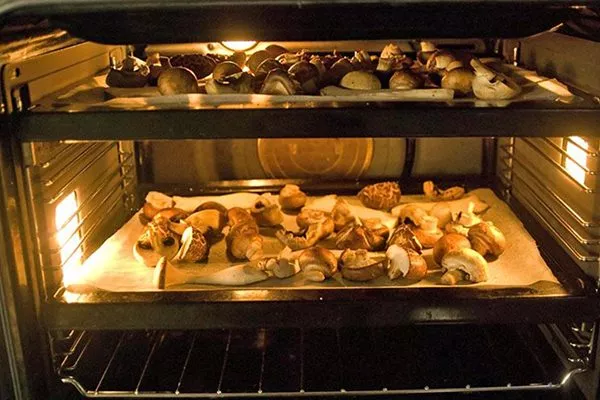
Technology:
- Place the thoroughly cleaned and, if necessary, chopped pieces of product on a wire rack or a suitable baking sheet, previously covered with parchment.
- Turn the pieces over during the drying process to ensure even drying.
The temperature is set at 45-50°C. If the convection mode is not selected, open the door slightly to allow moisture released during the drying process to evaporate freely.
Harvesting mushrooms using an electric dryer
Drying mushrooms using an electric dehydrator remains the most convenient and effective method at home. These devices typically operate at temperatures ranging from 30 to 70°C, allowing for a gentle and careful setting.
Stages of drying mushrooms in an electric dryer:
- Distribute the mushrooms evenly across the drying trays. It's recommended to do this in batches, placing smaller mushrooms on one tray and larger ones on another.

- Turn on the dehydrator and set the temperature to 30-35°C. Let the mushrooms dry at this temperature for 1-2 hours, until they appear wilted.
- Gradually increase the temperature to 40°C and dry the mushrooms for another 4-5 hours. You can take short breaks from drying the mushrooms, speeding up the process by varying the temperature. If you need to reduce the drying time, increase the temperature to 45°C.
- During the drying process, rotate the trays to ensure even drying of the mushrooms.
- Select and harvest completely dry mushrooms. The finished mushrooms should have a consistency that doesn't break or crumble, but rather folds easily.
- Once drying is complete, allow the mushrooms to cool completely at 21-24°C for 2-3 hours.
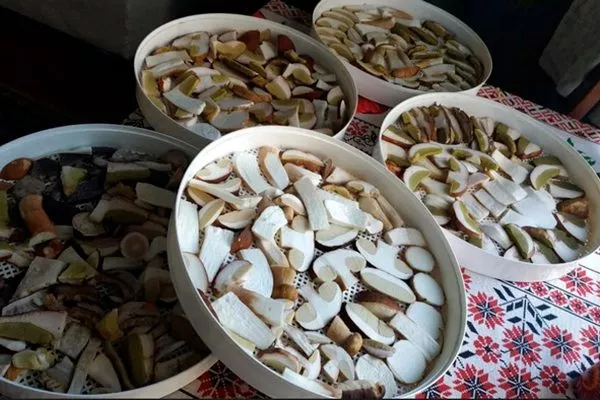
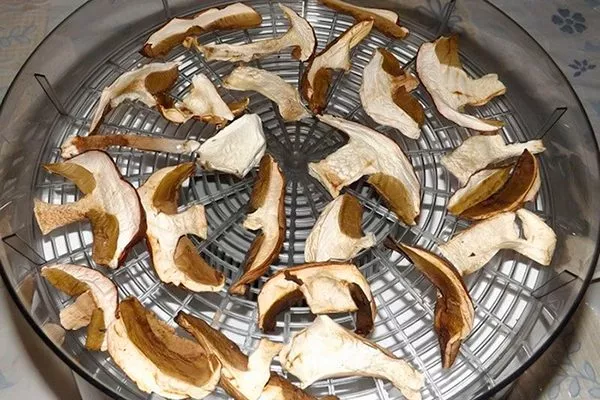
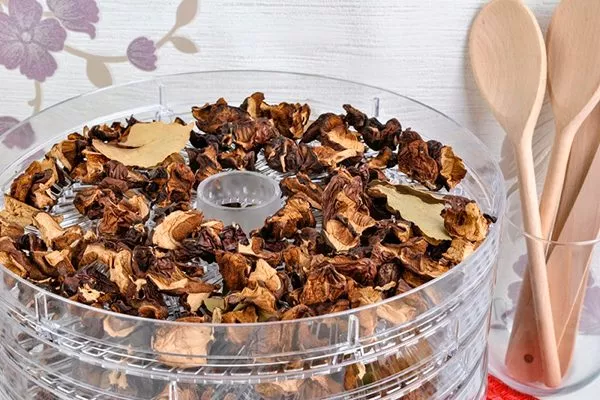
The finished mushrooms can be packaged and stored.
Drying mushrooms in the microwave
If you have enough time, it's recommended to dry mushrooms in the sun before microwave drying. Follow these recommendations:
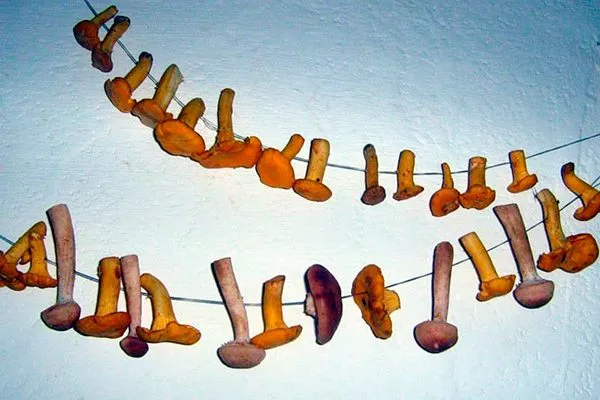
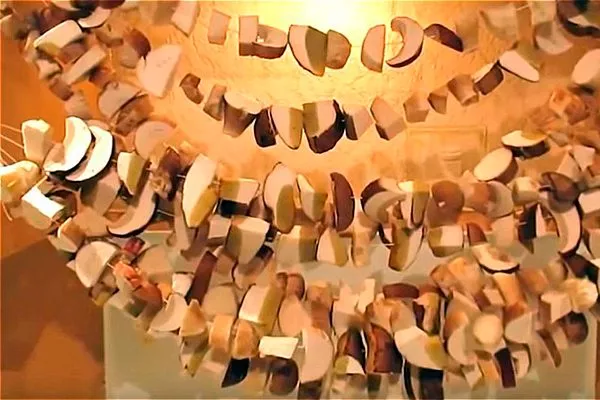
- String the mushrooms onto a coarse thread or fishing line, leaving space between them and avoiding contact.
- Hang them outdoors. This preliminary step will allow the fruit to dry gradually, which will improve the quality of the final product. While this step is not necessary, it will improve the drying process.
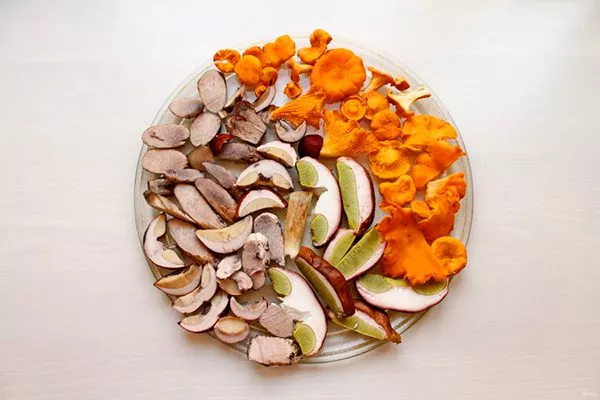
- Cut clean, fresh, or pre-dried mushrooms into equal pieces. Caps are usually cut into wedges, and stems into slices approximately 2 cm thick.
If you are preparing to dry honey mushrooms, chanterelles or butter mushrooms, it is advisable to leave only the caps, but morels and gyromitra are best dried whole, without cutting.
- Evenly distribute the cooked mushroom pieces on a glass tray or a flat microwave-safe plate. Microwave for 20 minutes at 100-180 watts.
- After the microwave oven turns off automatically, drain the released liquid to prevent the mushrooms from cooking, and leave the microwave door open for ventilation for 5 minutes.
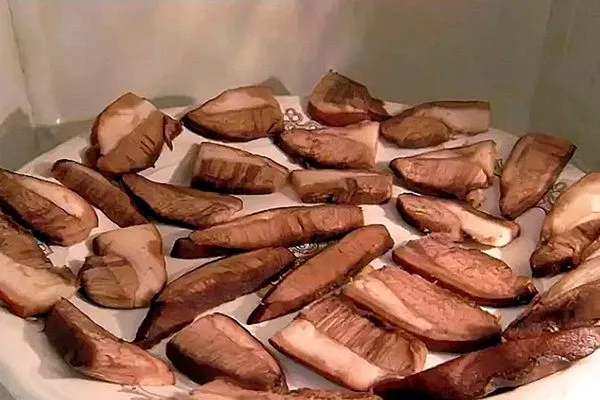
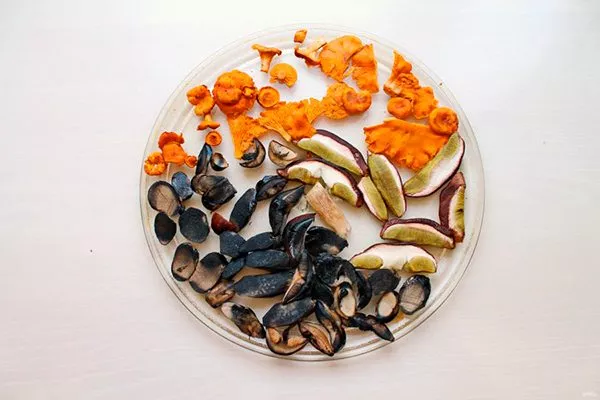
This drying process is not yet complete, and it is recommended to repeat the following microwave and air cycles several times depending on the size, variety and thickness of the mushroom pieces.
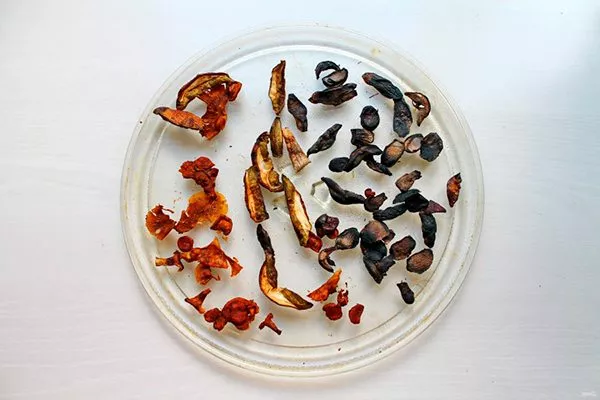
Drying mushrooms naturally
Mushrooms can be dried naturally in any warm, dry place. The following options are suitable:
- Attic of a country house.
- Well ventilated veranda.
- Partial shade or any sunny place.
- Bathhouse.
Before drying, sort the mushrooms and thread them onto thick Mylar threads. It's best to gather mushrooms of different sizes onto separate threads. Thread the mushrooms, leaving knots between them to allow for free air circulation.
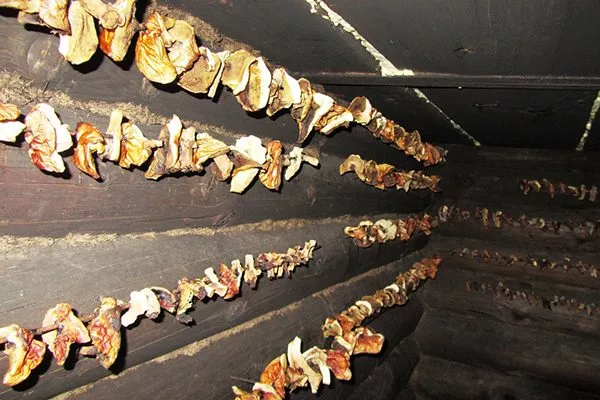
The natural drying process for mushrooms typically takes 2 to 4 days. During this time, check the mushrooms regularly for readiness, removing the strings containing the dried mushrooms for future storage.
Check out this natural way to dry mushrooms:
In the sun
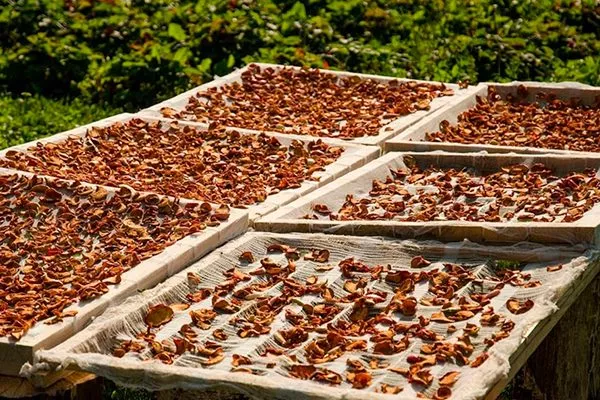
Sun-drying mushrooms is a natural and easy way to preserve food. Here's a step-by-step guide:
- Clean the mushrooms first, removing any soil or debris. If they are large, it's recommended to cut them into smaller pieces for more even drying.
- Choose a well-ventilated, sunny location. Avoid direct sunlight to prevent the mushrooms from overheating. Use trays or mesh baskets for easy distribution.
- Spread the mushrooms evenly over the surface, preferably on wooden or mesh trays to ensure good air circulation.
- Dry mushrooms at temperatures between 25 and 35°C. Avoid drying at excessively high temperatures to preserve the quality of the product. Sun drying can take anywhere from several days to a week, depending on sunlight intensity and air humidity.
Turn the mushrooms regularly to ensure even drying. If humidity is high, it's best to store the mushrooms indoors overnight to prevent them from getting damp. By following these steps and taking drying precautions into account, you'll ensure your mushrooms are preserved with excellent flavor and a long shelf life.
This method has several advantages:
- natural process;
- energy saving;
- does not require electricity or special equipment;
- preservation of nutrients.
The process is highly dependent on weather conditions. Rain or high humidity can delay the process. Furthermore, there's a risk of contamination of the mushrooms by dust or insects when drying outdoors. There are no other drawbacks.
In the shadows
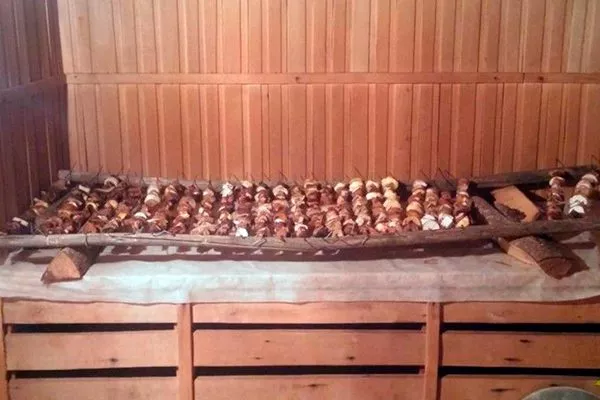
To dry mushrooms in the shade, follow a few simple guidelines. Follow these instructions:
- Clean the mushrooms from soil and debris, if necessary, cut them into small pieces for even drying.
- Choose a shady but well-ventilated location. Balconies, verandas, or other areas where the mushrooms will be protected from direct sunlight are suitable.
- Spread the mushrooms evenly over the surface, using trays or mesh baskets to ensure good air circulation.
- Dry the mushrooms at a temperature of 20 to 30°C. Make sure the environment is not too humid. Shade drying can take anywhere from several days to a week. The time depends on the size, type of mushroom, and humidity.
Above the stove
This is an unusual but quite effective method that uses heat and airflow from the stove. Here are the steps to help you through the process:
- Clean the mushrooms of soil and debris. If necessary, cut them into small pieces to ensure even drying.
- Spread the mushrooms on a dry, clean surface set above the stove. This can be a rack, a stand, or even just a sheet of paper.
- Adjust the height of the mushrooms above the stove. The idea is to use the heat and airflow from the stove to dry the mushrooms. The optimal height depends on your stovetop configuration.
- Turn on the ventilation or the oven's exhaust setting. This will improve air circulation and speed up the drying process.
- Set your stovetop temperature to low or medium. High temperatures may cause the mushrooms to brown quickly but won't ensure even drying.
- As they dry, turn the mushrooms periodically to ensure even heat exposure. They're ready when they're completely dry and crisp. This can take several hours, depending on the type and size of the mushrooms.
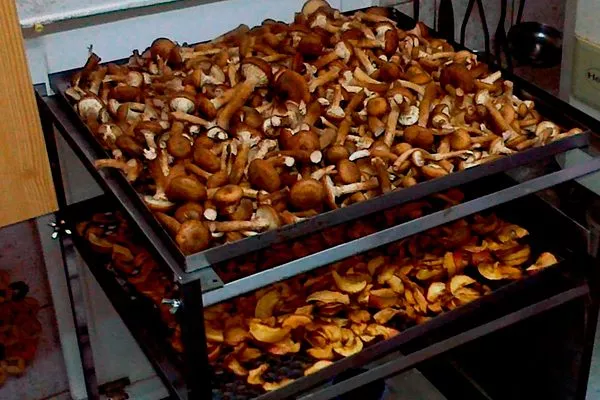
The advantages of this drying method are its simplicity and accessibility, as well as the ability to use common kitchen utensils. However, there are some disadvantages: the process can take some time, and it's not as effective as some other drying methods.
Is it possible to dry mushrooms in a Russian oven?
If you have a Russian stove, the optimal method for drying mushrooms is to use this device, which can impart a unique, light smoky aroma to the product, as if it were cooked over an open fire.
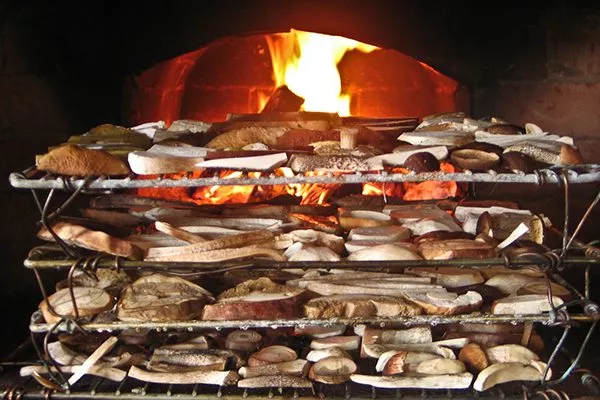
Recommendations:
- Preheat the stove thoroughly until it is fully heated, remove any coals and sweep out any ashes thoroughly.
- Place the mushrooms on special structures or distribute them across trays and grates.
- Wait until the temperature inside the firebox reaches 65-70°C, then place the prepared trays inside.
- Close the mouth with a damper, leaving a gap of 2-4 cm to ensure ventilation.
- After 2-3 hours, the oven temperature will begin to drop. Remove the mushrooms and, while they cool, repeat the process, reheating the oven.
Repeat this cycle as many times as necessary to complete the drying process. The drying process takes between 6 and 14 hours.
Industrial-scale mushroom drying technology
Industrial-scale mushroom drying technology involves the use of specialized drying units and drying chambers. The industrial mushroom drying process typically involves specific stages.
Infrared drying equipment for mushrooms
One of the best methods for preserving mushrooms is drying them, and using infrared rays from an infrared oven increases the product's shelf life and preserves up to 95% of its nutrients. Thanks to innovative equipment, you can obtain ready-to-use dried products.
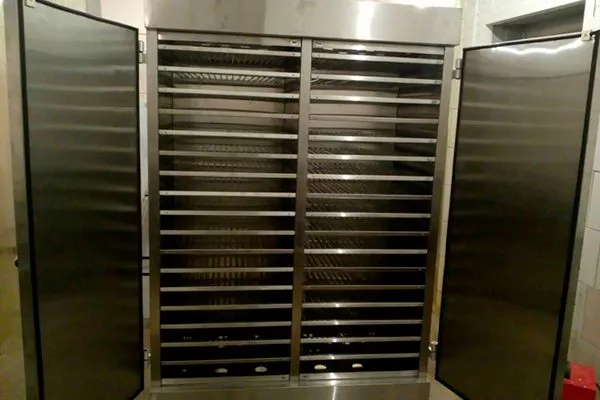
Drying imparts a rich aroma and flavor to the products thanks to the penetration of infrared rays. The equipment also removes some harmful microelements.
Before you begin the drying process, it's important to consider the variety of mushrooms, as drying methods and conditions may vary depending on the type:
- The temperature is maintained within 50-60°C.
- Large mushrooms are cut into pieces ranging from 2 mm to 7 mm. Smaller mushrooms are separated into pieces, the stems cut into strips, and the caps into rings. These mushrooms are also dried whole, depending on the desired result.
Infrared drying equipment allows for more efficient drying than other devices. Typically, drying mushrooms takes 12 to 16 hours.
Drying chambers for drying mushrooms AKS
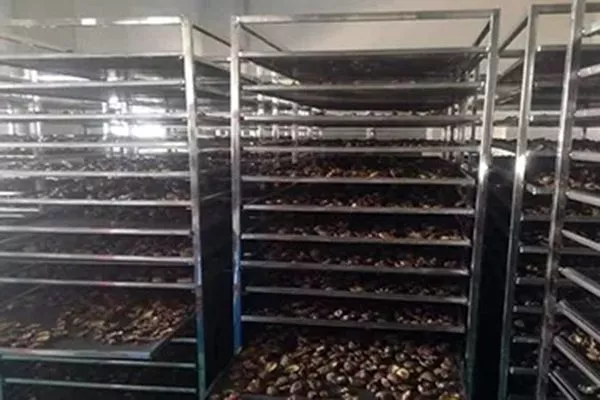
AKS (convection) drying chambers offer an effective method for drying mushrooms, ensuring uniform heat distribution and airflow within the chamber. The mushroom drying process in these chambers typically proceeds as follows:
- The mushrooms are cleaned of dirt, leaves, and other debris. If necessary, they are cut into uniform pieces.
- Next, the mushrooms are evenly distributed on trays or racks in the drying chamber. Ensure sufficient space between the pieces to ensure good air circulation.
- The optimal temperature and humidity for drying mushrooms are selected. Typically, temperatures in the range of 40°C to 70°C and relative humidity from 20% to 60% are used.
- Activate the convection mode to ensure even heat distribution inside the chamber.
- The mushrooms are left in the drying chamber for a specified time. Drying time may vary depending on the type of mushroom, its size, and the selected drying mode.
- The mushrooms should become brittle and light. Once dried, they are allowed to cool and then packaged in special packaging for long-term storage.
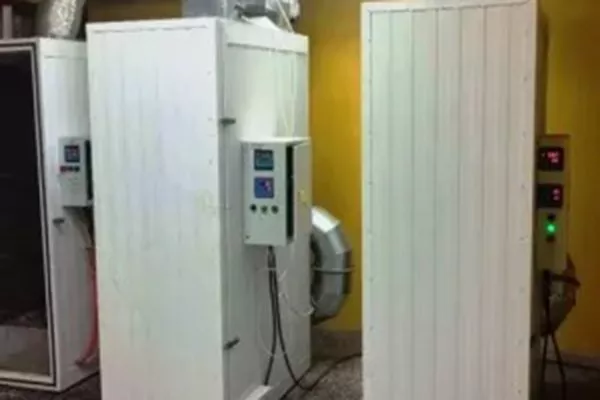
Advantages of AKS drying chambers:
- temperature and humidity control;
- fast and even drying;
- saving time.
The disadvantage of this method is the need for special equipment, and, accordingly, there will be high costs for its acquisition and maintenance.
Chamber dryers for berries, fruits and mushrooms KST
The process of drying mushrooms in chamber dryers typically involves certain heating stages. The process is the same as drying in convection dryers, but in this case, the temperature ranges from 50°C to 70°C.
Advantages of KST dryers:
- relative ease of use;
- effective drying when set correctly;
- the ability to dry large volumes of products.
Cons:
- manual temperature and humidity adjustments may be required;
- Some models may be less energy efficient.
Another disadvantage is that you will have to carefully monitor the drying process.
How do you know when they are dry?
You can easily tell if the mushrooms are ready: after they've cooled completely, they should become brittle and not bend easily. They should also lose a significant amount of weight. If a piece crumbles easily in your hand, it's too dry. Don't throw away overdried mushrooms—they can be chopped up for seasoning.
How to store dried mushrooms?
Dried mushrooms are best stored for no more than 2-3 months under suitable conditions. They can be stored in paper bags, canvas bags, cardboard boxes, or glass containers with loose-fitting lids. Store at a temperature of 15 to 20°C.
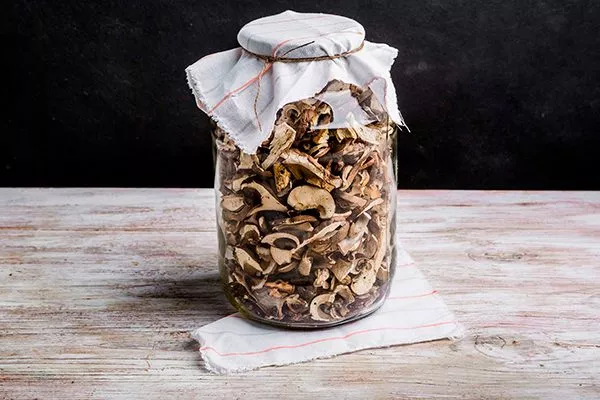
The choice of a specific drying method may depend on available resources, time, taste preferences, and personal preference. It's important to consider the specifics of each method to ensure high-quality results and long-term preservation of mushrooms. With a variety of drying methods available, every mushroom lover can find the best option.